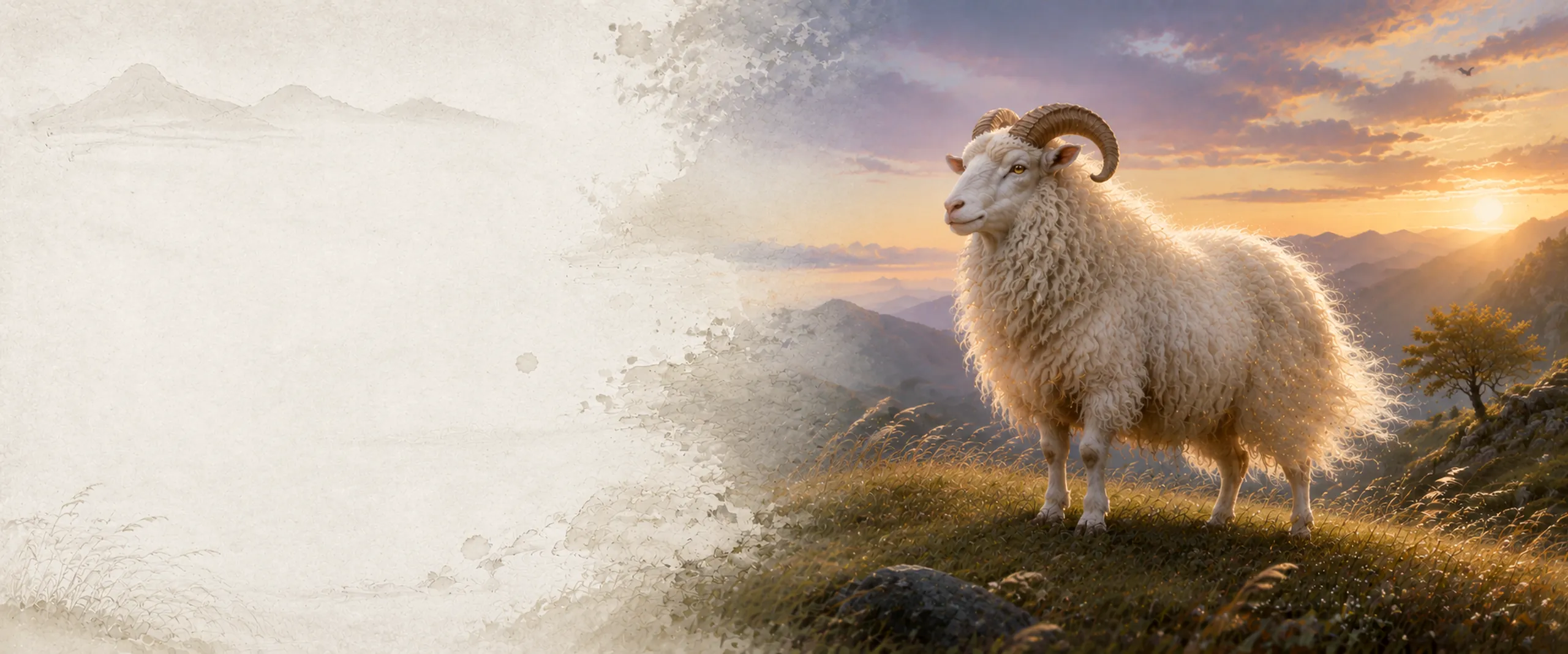
Goat

GoatCompatibility

「 Gentleness is not weakness;<br>stillness can hold its own strength. 」

People born in the Year of the Goat are often gentle, kind-hearted, and compassionate, with a strong artistic sensibility. Soft-spoken on the outside yet resilient within, they value family and emotional bonds and quietly hold to what matters to…
Goat / Compatibility
Innate Tendencies · Not a Verdict of Fate

Zodiac pairing is part of traditional folk culture and is offered for reference only. A proper marriage reading must consider all four pillars — year, month, day and hour — so judging a match by zodiac signs alone is incomplete. Zodiac pairing shows an innate energetic tendency, not an absolute verdict on destiny. What truly determines the quality of a relationship is always mutual understanding, respect and care between two people.

Introduction

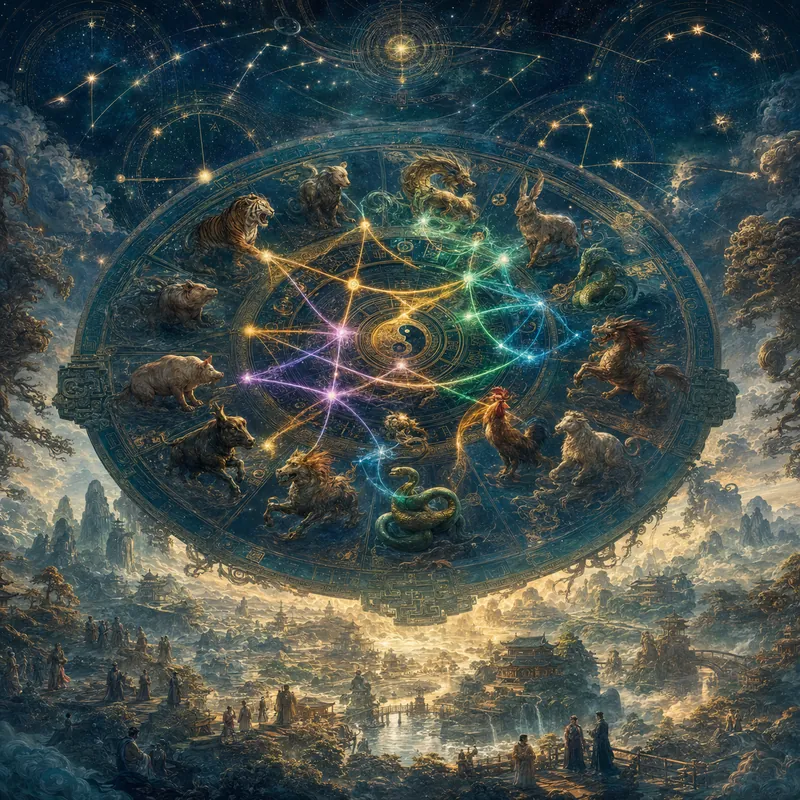
Six Harmonies & Three Harmonies · Quick Reference
Relation Type Paired Zodiac Match Score Note
六合 Liùhé · Six Harmonies 属Horse ★★★★★ Top-tier marriage match; the most ideal pairing
三合 Sānhé · Three Harmonies 属Pig, Rabbit ★★★★☆ Highly favorable marriage match; harmonious rapport
Moderate 属Dragon, Rat, Tiger, Monkey, Snake, Rooster ★★★☆☆ Moderate compatibility; can be cultivated
相破 Xiāngpò · Break 属Dog ★★★☆☆ Moderate compatibility, but with some depletion
相刑 Xiāngxíng · Punishment 属Ox, Dog ★★☆☆☆ Below-average marriage match; frequent discord
相冲 + 相刑 Clash + Punishment 属Ox ★★☆☆☆ Below-average marriage match; two layers of conflict overlap
相害 Xiānghài · Harm 属Rat ★★☆☆☆ Below-average marriage match; requires substantial adjustment

Wèi Goat Compatibility Overview

Chinese Zodiac Pairings · Pair-by-Pair Analysis
Pair 01 / 12
Six Harmonies

Wèi Goat (未羊) × Wǔ Horse (午马)

★★★★★
六合 (Liùhé, Six Harmonies) — 午未合化土 (Wǔ–Wèi Hé Huà Tǔ)
Five Elements Analysis

The Wǔ Horse belongs to Fire, while the Wèi Goat belongs to Earth. Since Fire generates Earth (火生土), this is a natural generative relationship. Their Six Harmonies bond gives this pairing the ideal energy of “Fire and Earth generating one another and bringing out the best in each other”: Wǔ Fire shines upon Wèi Earth like the blazing sun, while Wèi Earth flourishes under its warmth, full of vitality and continuous growth. It is a deep relationship of mutual nourishment and mutual fulfillment, traditionally regarded as one of the most harmonious combinations among the twelve zodiac signs.

Relationship Portrait

Like the sun and the earth—the sun, representing the Wǔ Horse, shines upon the earth with light and warmth, while the earth, representing the Wèi Goat, brings forth abundant life under the nourishment of sunlight. One is passionate, uninhibited, and full of vitality; the other gentle, tolerant, grounded, and steady. Each nourishes the other in a different dimension, together creating the warmest of homes.

Strengths
  • Perfectly complementary personalities: The Wǔ Horse is passionate, energetic, and quick to act, but can sometimes be impulsive and impatient; the Wèi Goat is gentle, delicate, and understanding, and can effectively “buffer” the Horse’s impatience. One charges forward; the other provides stability.

  • The Goat’s gentleness softens the Horse’s sharpness: Goats are naturally gentle and tolerant and can understand the Horse’s impulsiveness and passion without taking every burst of temper personally. When the Horse is rushing ahead, the Goat can gently say, “Slow down and look at the road.” For the Horse, this gentle companionship is an especially comfortable safety net.

  • The Horse’s vitality encourages the Goat to move forward: The Goat can sometimes become too comfortable and lack initiative. The Horse’s passion and decisiveness can encourage it to leave its comfort zone and explore new possibilities. Together, they combine the Horse’s drive with the Goat’s steadiness, allowing both career and daily life to flourish.

  • They satisfy each other emotionally: The Horse needs to be “followed and admired,” while the Goat is willing to appreciate and applaud the other person. The Goat needs to be “protected and cared for,” while the Horse often has a strong protective instinct and is willing to shield those it loves from hardship.

  • Highly compatible family values: Both place great importance on family. The Horse is the family’s “pioneer” and “protector,” while the Goat is its “source of warmth” and “emotional center.” One ventures outward; the other tends the home, each contributing what it does best.

  • A combination of romance and warmth: The Horse’s romance and passion can make the Goat feel cherished, while the Goat’s attentiveness gives the Horse a harbor where it can safely rest after “running itself tired.”

Potential Challenges
  • The difference in pace between the Horse’s impatience and the Goat’s slower temperament. The Horse wants to act immediately; the Goat needs time to think. The Horse may find the Goat “too slow,” while the Goat may find the Horse “too hasty.”

  • Friction between the Horse’s broad strokes and the Goat’s sensitivity. The Horse is easygoing about details; the Goat is delicate and may dwell on an unintended remark.

  • The Horse has many friends and a wide social circle, while the Goat prefers quiet and family life. Social arrangements require coordination.

  • The Horse’s dependence on the Goat may exceed expectations. The Horse appears free while running outside the home, but once it returns, it may rely heavily on the Goat’s emotional support. If the Goat cannot continually provide that support, the Horse may feel empty.

How to Get Along
  • The Wǔ Horse should learn to “slow down.” Before an important decision, pause and ask, “What do you think?” so the Wèi Goat feels that its opinion is respected.

  • The Wèi Goat should learn to “speed up.” Not everything requires repeated deliberation; occasionally following the Horse into an impulsive decision can reveal another side of life.

  • The Horse should listen more to the Goat before acting. The Goat’s intuition is often accurate and may help the Horse avoid unnecessary pitfalls.

  • The Goat should learn to soothe the Horse gently when its emotions rise. The Goat’s composure is often the Horse’s best “sedative.”

  • In major decisions, the Horse can handle the “direction”—what to do—while the Goat handles the “feeling”—whether doing it is good for both of them. Only by combining the two can they make decisions with both passion and warmth.

Traditional destiny reading:

People born under the Goat sign are traditionally considered especially compatible with those born under the Horse sign. This is a top-tier marriage match. 午未合土, the Wǔ–Wèi union associated with Earth, is regarded as having the highest degree of compatibility, promising a harmonious marriage and lasting good fortune.

Pair 02 / 12
Three Harmonies

Wèi Goat (未羊) × Hài Pig (亥猪)

★★★★☆
三合 (Sānhé, Three Harmonies) — 亥卯未三合木局 (Hài–Mǎo–Wèi Sānhé Mù Jú)
Five Elements Analysis

The Hài Pig belongs to Water, while the Wèi Goat belongs to Earth. Earth controls Water (土克水). In the Five Phases, this is a controlling relationship; however, within the Hài–Mǎo–Wèi Three Harmonies Wood Formation, the Goat and Pig belong to the same Wood configuration and their energies resonate. The controlling relationship between the elements is softened by the harmony of the formation, creating a special energetic structure of “harmony within control, and feeling within harmony.” Both are gentle and emotionally sensitive types, making soul-level resonance especially easy between them. They are among the zodiac pairings most capable of understanding one another deeply.

Relationship Portrait

Like a valley and a stream—the stream, representing the Hài Pig, winds through the valley, nourishing every stretch of land; the valley, representing the Wèi Goat, holds the stream and gives it a stable channel. One flows freely with tolerance and gentleness; the other quietly protects and treats the other with tenderness. On a shared frequency, they discover an echo of the soul.

Strengths
  • Soul-level resonance: Both are extremely gentle, sensitive, and emotionally oriented. Very little explanation is needed for one to understand the other’s feelings. A glance or a sigh is often enough for the other to immediately sense the emotion behind it.

  • Highly compatible emotional needs: The Wèi Goat needs to be treated gently and cared for attentively; the Hài Pig is naturally one of the most tolerant and broad-minded signs. Every emotional fluctuation of the Goat can be steadily received by the Pig. This feeling of being “completely accepted” is deeply satisfying for the Goat.

  • Highly aligned values: Both value family, harmony, and emotional or spiritual fulfillment. Neither seeks a dramatic or turbulent life; both simply want a warm and stable everyday existence. Their lifestyles and life aspirations contain very little fundamental conflict.

  • Rich inner communication: Both enjoy deep conversations about life, art, feelings, and similar subjects. They are unlikely to “run out of things to say”; instead, they may have endless thoughts and feelings to share.

  • They nourish rather than consume one another: Both are naturally “giving” types, willing to make sacrifices and think of the other person. Each wants to “treat you well,” rather than keep score over who has given more.

  • A warm atmosphere in daily life: The Pig’s tolerance and the Goat’s gentleness combine to create one of the most healing and reassuring relationship atmospheres in the zodiac. Home feels soft, warm, and always lit by a light waiting for you.

Potential Challenges
  • They are too similar: Both are too gentle, too sensitive, and too conflict-avoidant. When problems arise, both may silently endure them, with neither willing to speak first. The surface remains calm while hidden currents may already be moving underneath.

  • Lack of a strong decision-maker: Neither is especially forceful or decisive. They yield to each other over small matters and hesitate together over major ones. Without someone willing to make the final call, they may fall into decision paralysis.

  • Emotions spread between them: Feelings are contagious. The Goat’s sadness can affect the Pig, while the Pig’s anxiety can spread to the Goat. When one person is low, the other may follow downward, causing them to “drag each other down” instead of lifting one another up.

  • Excessive idealization: Both can imagine the relationship as more perfect than reality allows. When practical frictions appear—financial pressure, division of household work, and similar issues—they may find them harder to accept and handle than more pragmatic pairings would.

  • A closed social circle: Two inward-oriented people together may gradually shrink their social circle. Both may prefer remaining at home in their “world for two,” but prolonged isolation can slowly reduce freshness in life.

How to Get Along
  • Create a rule that “we must speak”: When either person has feelings to express, both should agree to say something no matter how difficult it is. Even saying, “I’m a little unhappy right now, but I don’t want to explain why yet,” is better than silence.

  • Take turns being the decision-maker: Even if neither person is naturally forceful, both should deliberately practice making decisions. This week one person makes the decisions; next week the other does. Do not let choices remain suspended forever.

  • Expand the social circle together: Join hobby groups, book clubs, community activities, or similar gatherings. Do not remain only inside the “world for two.” Fresh stimulation helps preserve vitality in the relationship.

  • Learn to handle practical problems: In financial planning, division of household work, children’s education, and other real-world matters, both need to cultivate practicality and reason so that “emotion” does not overwhelm “rationality.”

  • Remind each other to “look at the positive side”: When one person falls into a low mood, the other should become the one who “gives a hand,” gently helping the partner see the positive side of the situation.

Traditional destiny reading:

People born under the Goat sign are traditionally considered well matched with a Pig or Rabbit. 亥卯未三合木局, the Hài–Mǎo–Wèi Three Harmonies Wood Formation, indicates a high degree of compatibility and a happy, favorable marriage.

Pair 03 / 12
Three Harmonies

Wèi Goat (未羊) × Mǎo Rabbit (卯兔)

★★★★☆
三合 (Sānhé, Three Harmonies) — 亥卯未三合木局
Five Elements Analysis

The Mǎo Rabbit belongs to Wood, while the Wèi Goat belongs to Earth. Wood controls Earth (木克土). In the Five Phases, this is a controlling relationship; however, within the Hài–Mǎo–Wèi Three Harmonies Wood Formation, the Goat and Rabbit belong to the same Wood configuration and their energies resonate. The controlling relationship between the elements is softened by the harmony of the formation, creating a special energetic structure of “harmony within control, and feeling within harmony.” Both are gentle and emotionally sensitive types, making soul-level resonance especially easy between them. They are among the zodiac pairings most capable of understanding one another deeply.

Relationship Portrait

Like flowers and a sheep in a meadow—the flowers, representing the Mǎo Rabbit, bloom beautifully across the grassland, while the sheep, representing the Wèi Goat, strolls peacefully among them. One is delicate and elegant; the other gentle and kind. On a shared frequency, they find an echo of the soul.

Strengths
  • Soul-level resonance: Both are extremely gentle, sensitive, and emotionally oriented. Very little explanation is needed for one to understand the other’s feelings. A glance or sigh can immediately reveal the emotion underneath.

  • Highly compatible emotional needs: The Wèi Goat needs to be treated gently and cared for attentively; the Mǎo Rabbit is naturally one of the most delicate and understanding signs. Every emotional fluctuation of the Goat can be steadily received by the Rabbit. This feeling of being “completely understood” is deeply satisfying for the Goat.

  • Highly aligned values: Both value family, harmony, and emotional or spiritual fulfillment. Neither seeks an overly dramatic life; both simply want a warm and stable everyday existence. Their lifestyles and life aspirations contain little fundamental conflict.

  • Rich inner communication: Both enjoy deep conversations about life, art, emotion, and related topics. They are unlikely to “run out of things to say”; instead, they often have endless thoughts and feelings to exchange.

  • They nourish rather than consume one another: Both are “giving” types, willing to make sacrifices and think of the other person. Each wants to “treat you well” rather than calculate who has contributed more.

  • Highly compatible aesthetics and taste: Both value beauty in daily life and enjoy refined, warm, high-quality surroundings. They can find countless common interests in home design, clothing, art, and aesthetic preferences.

Potential Challenges
  • They are too similar: Both are too gentle, too sensitive, and too conflict-avoidant. When problems arise, both may silently endure them, with neither willing to speak first. The surface remains calm while hidden currents may already be moving underneath.

  • Lack of a strong decision-maker: Neither is especially forceful or decisive. They yield over small matters and hesitate together over major ones, leaving no one willing to make the final call.

  • Emotions spread between them: The Goat’s sadness can affect the Rabbit, while the Rabbit’s anxiety can spread to the Goat. When one person feels low, the other may follow, causing them to “drag each other down” rather than lift one another up.

  • Excessive idealization: Both can imagine the relationship as too perfect. When practical frictions appear—financial pressure, household work, and similar concerns—they may find them harder to accept and handle.

  • A closed social circle: Two inward-oriented people together may gradually shrink their social world. Both may prefer remaining at home in their “world for two,” but prolonged isolation can reduce freshness in life.

How to Get Along
  • Create a rule that “we must speak”: When either person has feelings to express, both should agree to say something no matter how difficult it is. Even saying, “I’m a little unhappy right now, but I don’t want to explain why yet,” is better than silence.

  • Take turns being the decision-maker: Even if neither person is naturally forceful, both should deliberately practice making decisions. This week one makes the choices; next week the other does. Do not let decisions remain suspended forever.

  • Expand the social circle together: Join hobby groups, book clubs, community activities, or similar gatherings. Do not remain only within the “world for two.” Fresh stimulation helps the relationship remain alive.

  • Learn to handle practical problems: In financial planning, household responsibilities, children’s education, and other real-world matters, both need to deliberately cultivate practicality and reason so that “emotion” does not overwhelm “rationality.”

  • Remind each other to “look at the positive side”: When one person falls into a low mood, the other should be the one who “gives a hand,” gently helping the partner see the positive side of things.

Traditional destiny reading:

People born under the Goat sign are traditionally considered well matched with a Rabbit or Pig. 亥卯未三合木局, the Hài–Mǎo–Wèi Three Harmonies Wood Formation, indicates high compatibility and is regarded as a highly favorable marriage match.

Pair 04 / 12
Moderate

Wèi Goat (未羊) × Sì Snake (巳蛇)

★★★☆☆
General
Five Elements Analysis

The Sì Snake belongs to Fire, while the Wèi Goat belongs to Earth. Fire generates Earth, so the Five Phases form a generative relationship—the Snake’s Fire can “warm” the Goat’s Earth. Both are gentle, inward-oriented, and attentive to feelings and emotional experience. The Snake’s depth and the Goat’s gentleness resonate well energetically, though some personality differences still require adjustment.

Relationship Portrait

Like candlelight and a meadow—the candlelight, representing the Sì Snake, burns quietly in the dark, illuminating a small stretch of grassland, representing the Wèi Goat. The candle needs the meadow’s companionship so that it does not seem too lonely; the meadow needs the candle’s light to see its own outline. They treat each other gently, yet both can remain immersed in their own inner worlds. Deliberate conversation is needed for these two “quiet souls” to truly connect.

Strengths
  • Deep emotional resonance: Both are among the zodiac signs most attentive to feelings. The Sì Snake may appear calm outwardly but possesses rich inner emotions; the Wèi Goat is gentle, delicate, and highly empathetic. Together, they can often understand each other without extensive explanation.

  • Mutual nourishment: The Goat’s gentleness and tolerance can help the Snake lower its defenses and reveal its softer side; the Snake’s wisdom and insight can give the Goat security and guidance.

  • Compatible life rhythms: Both enjoy quiet and comfortable ways of living and dislike intense conflict or frequent upheaval. Their daily pace is relatively easy to align.

  • A shared pursuit of a life with “texture and quality”: Both care about quality of life and enjoy refined, warm, tasteful surroundings. They can find much in common in home design and aesthetic interests.

  • High emotional stability: Neither is naturally fickle. Once a relationship is established, both tend to invest seriously and work carefully to maintain it.

Potential Challenges
  • Friction between the Goat’s indecision and the Snake’s persistence: The Wèi Goat can hesitate and weigh matters repeatedly before making decisions; once the Sì Snake chooses a goal, it tends to advance steadily. The Goat’s “let me think again” may make the Snake wonder why the decision is taking so long, while the Snake’s push forward may make the Goat feel unprepared.

  • Communication difficulties between two inward-oriented people: Neither is naturally inclined to initiate difficult conversations or confront conflict. When something goes wrong, the Snake chooses to “process it internally,” while the Goat chooses to “endure.” Both become accustomed to carrying things alone and forget that a relationship is something two people must carry together.

  • The Goat’s emotionality versus the Snake’s rationality: The Goat is easily affected by mood; when it feels good, everything seems manageable, but when it feels low, it can sink deeply. The Snake tends to respond to life through reason and logic. The Goat needs “empathy,” while the Snake offers “analysis.” The Goat may feel that the Snake is “too cold,” while the Snake may feel that the Goat is “too emotional.”

  • Decision-making deadlock: The Goat wants to wait; the Snake wants to move. In matters that are not major but still require a choice, one says “let’s wait and see,” while the other says “let’s just choose this.” Neither can persuade the other, and the matter may simply drift unresolved.

  • Both can become emotionally absorbed: When one person feels low, the other may also be affected. Between two people with strong empathy, emotions flow easily—low moods can double, and joy can double as well.

How to Get Along
  • The Sì Snake should learn to “empathize first, analyze second.” When the Goat expresses emotion, begin with “I understand how you feel.” Only after the emotion settles should both discuss how to solve the problem. The Goat needs to feel understood before it needs a solution.

  • The Wèi Goat should learn to “give the Snake a deadline.” When you need time to think, provide a specific point: “Give me two days; I’ll answer you Sunday evening.” This reassures the Snake that you are not avoiding the issue.

  • Create a system of rotating leadership in decisions: take turns deciding smaller matters; discuss major ones together. When it is the other person’s turn to lead, try cooperating once even if you do not completely agree.

  • Develop the habit of saying things aloud. Both need to express what they feel instead of merely “enduring” or “processing it internally.” Speaking does not burden the other; it creates a chance to come closer.

  • When one person falls into a low mood, the other should actively take the role of the “one who lifts.” Use companionship, listening, and gentle encouragement to help the partner out rather than sinking together.

Traditional destiny reading:

Goat and Snake are considered moderately compatible. They neither directly clash nor form a direct harmony. If they can build the habit of proactive communication, they can maintain a good relationship.

Pair 05 / 12
Moderate

Wèi Goat (未羊) × Shēn Monkey (申猴)

★★★☆☆
General
Five Elements Analysis

The Shēn Monkey belongs to Metal, while the Wèi Goat belongs to Earth. Earth generates Metal, so the Five Phases form a generative relationship—the Goat’s Earth provides a foundation for the Monkey’s Metal. Their personalities differ considerably: the Goat is gentle, tolerant, and seeks stability, while the Monkey is clever, lively, and drawn to change. Together, the Goat’s gentleness can accommodate the Monkey’s quickness and ingenuity, while the Monkey’s vitality can enliven the Goat, though many differences still require adjustment.

Relationship Portrait

Like a field and a squirrel—the field, representing the Wèi Goat, is broad and peaceful, while the squirrel, representing the Shēn Monkey, darts and leaps across it with lively intelligence. One provides a stable foundation; the other brings vivid movement. Together they seek a balance between “protecting” and “exploring.”

Strengths
  • The Goat’s gentleness can accommodate the Monkey’s cleverness: The Wèi Goat is naturally tolerant and can accept the Shēn Monkey’s changeable personality and occasional unreliability. Around the Goat, the Monkey does not need to wear a mask or constantly “perform intelligence”; it can relax and be itself.

  • The Monkey’s vitality can enliven the Goat’s life: The Goat can sometimes become “too quiet.” The Monkey’s optimism and energy bring freshness and joy into its life. Exploring new things and trying new experiences together gives them more to look forward to.

  • Shared values: Both value sincerity and emotion and dislike hypocrisy and excessive calculation. Their ways of expressing themselves differ, but at heart both are people who “treat others sincerely.”

  • They can cooperate professionally: The Monkey handles “finding opportunities”—expansion, creativity, adaptability—while the Goat handles “stabilizing the situation”—maintenance, relationships, and emotional support. One opens territory; the other secures the rear.

Potential Challenges
  • The Monkey is too lively; the Goat too quiet: The Monkey enjoys socializing, excitement, and constantly trying new things; the Goat enjoys quiet, home life, and familiar surroundings. Their lifestyle differences may be greater than expected.

  • The Monkey’s changeability makes the Goat feel insecure: The Goat needs stable, predictable relationships. The Monkey’s shifting nature may make the Goat feel unable to “hold on”: “You say you love me today—will that still be true tomorrow?”

  • The Goat’s slowness makes the Monkey impatient: The Monkey pursues efficiency and change, while the Goat needs time to decide and adapt. The Monkey may feel the Goat is “dragging things out,” while the Goat may feel the Monkey is “too rushed.”

  • The Monkey’s jokes may hurt the Goat: People born under the Monkey sign often speak humorously and may make jokes they consider harmless. The Goat is sensitive and may take the joke seriously, quietly feeling hurt.

  • The Monkey’s social life may make the Goat feel neglected: The Monkey has many friends and social obligations; the Goat prefers companionship that is fewer in number but deeper in quality. The Monkey’s wide social circle can make the Goat feel, “You spend more time with other people than with me.”

How to Get Along
  • The Shēn Monkey should learn to be “a little steadier” around the Wèi Goat. Do not produce a new idea every day; give the Goat a period of predictable stability so it can feel secure.

  • The Wèi Goat should learn to be “a little livelier” around the Monkey. Accept some of the novelty the Monkey brings and occasionally join it in an “adventure,” adding more color and variation to life.

  • Establish rules around personal space: the Goat does not need to attend the Monkey’s social activities, but should not prevent them; the Monkey should respect the Goat’s quiet time and not forcefully interrupt it.

  • The Monkey should use care with jokes, especially those involving feelings, appearance, or ability. The Goat may not object immediately, but may be hurt inside.

  • In major decisions, the Monkey proposes the “possibilities,” while the Goat identifies the “risks.” Only by combining the two can they make decisions that are both creative and secure.

Traditional destiny reading:

Goat and Monkey are considered moderately compatible. They neither directly clash nor form a direct harmony. If they can understand each other’s different lifestyles, they can maintain a good relationship.

Pair 06 / 12
Moderate

Wèi Goat (未羊) × Yǒu Rooster (酉鸡)

★★★☆☆
General
Five Elements Analysis

The Yǒu Rooster belongs to Metal, while the Wèi Goat belongs to Earth. Earth generates Metal, so the Five Phases form a generative relationship—the Goat’s Earth provides a foundation for the Rooster’s Metal. Yet their personalities differ sharply: the Goat is gentle, tolerant, and seeks harmony and beauty, while the Rooster is rigorous, critical, and pursues perfection and efficiency. This difference can create complementarity, but it can also become a source of continuing friction.

Relationship Portrait

Like uncut jade and a master carver—the uncut jade, representing the Wèi Goat, is warm and gentle; the carver, representing the Yǒu Rooster, has a sharp eye and precise technique. The carver sees the jade’s potential and wants to polish it into a perfect work, yet the jade must endure the sharpness of the carving process. One seeks “perfection”; the other wants “ease.”

Strengths
  • Shared values in some areas: Both value quality and refinement and both pursue “good things.” The Goat emphasizes “feeling,” while the Rooster emphasizes “standards.” They therefore have a strong basis for deeper conversations about what makes something truly good.

  • The Goat’s gentleness can buffer the Rooster’s sharpness: The Wèi Goat is highly tolerant and can accommodate the Yǒu Rooster’s critical and demanding nature. Around the Goat, the Rooster may feel “permitted” to relax rather than constantly striving for perfection.

  • The Rooster’s shrewdness can compensate for the Goat’s casualness: The Rooster is skilled at planning and careful calculation, while the Goat is more relaxed and sometimes insufficiently detailed. The Rooster can provide order and structure, preventing the Goat’s life from becoming chaotic through excessive spontaneity.

  • They can cooperate professionally: The Rooster handles “quality control”—setting standards and guarding quality—while the Goat handles “atmosphere”—maintaining relationships and providing emotional support. One ensures things are “done correctly”; the other ensures they are “done well.”

Potential Challenges
  • The Rooster’s criticism can break the Goat’s heart: The Goat is sensitive and highly vulnerable to criticism. The Rooster pursues perfection and likes to point out “what is not good enough.” The Goat may hear “this could be better” as “you are not good enough,” quietly feeling hurt without showing it.

  • The Goat’s slowness makes the Rooster impatient: The Rooster seeks efficiency and speed; the Goat needs time to decide and time to feel. The Rooster may have finished three things while the Goat is still “working up” to the first. The Rooster thinks the Goat is “too slow”; the Goat thinks the Rooster is “too rushed.”

  • Mismatch between the Goat’s “feelings” and the Rooster’s “standards”: The Goat judges things by feeling—“I think this is pretty good.” The Rooster judges them by standards—“this is still ten percent short of perfect.” The Goat’s “feeling” seems too casual to the Rooster; the Rooster’s “standard” seems too demanding to the Goat.

  • Different attitudes toward spending: The Rooster values brands and quality and is willing to pay heavily for “good things”; the Goat cares more about whether something is worth buying and whether it brings happiness. They may argue over whether something “should be bought.”

  • Different social styles: The Rooster enjoys refined, small-scale social settings; the Goat prefers relaxed, family-style gatherings. Both styles have their merits, but they need coordination for both people to feel comfortable.

How to Get Along
  • The Yǒu Rooster should “change the way it expresses criticism.” Before pointing out a shortcoming, first affirm what the Goat did well: “You’ve already done very well; if this part were adjusted slightly, it would be even better.” The Goat is not unwilling to accept suggestions; it simply needs suggestions wrapped in sugar.

  • The Wèi Goat should understand the good intentions behind the Rooster’s “pickiness.” The Rooster criticizes because it cares and hopes the Goat will improve. Translate “pickiness” into “concern,” and “strictness” into “trust.”

  • Financially, the Rooster handles long-term planning—saving and investing—while the Goat handles daily enjoyment—quality of life and small pleasures. Each manages its own area without excessive interference.

  • Take turns choosing social arrangements: this week attend the Rooster’s preferred small gathering; next week stay home and host the Goat’s preferred warm family meal.

  • Regularly hold “criticism-free conversations.” Agree that at certain times, the Rooster will not offer suggestions or point out shortcomings, but simply share feelings and appreciation.

Traditional destiny reading:

Goat and Rooster are considered moderately compatible. They neither directly clash nor form a direct harmony. If they can understand their different “standards of perfection,” they can maintain a good relationship.

Pair 07 / 12
Moderate

Wèi Goat (未羊) × Yín Tiger (寅虎)

★★★☆☆
General
Five Elements Analysis

The Yín Tiger belongs to Wood, while the Wèi Goat belongs to Earth. Wood controls Earth. In the Five Phases, this is a controlling relationship—Yín Wood takes root in Wèi Earth, creating a pattern of “control accompanied by depletion.” Their personalities differ considerably: the Tiger is bold, decisive, and seeks challenge; the Goat is gentle, inward-oriented, and seeks stability. Considerable understanding and tolerance are required.

Relationship Portrait

Like a high mountain and a valley—the mountain, representing the Yín Tiger, is majestic and steep; the valley, representing the Wèi Goat, is broad, gentle, and beautiful. One pursues height and challenge; the other seeks spaciousness and peace. Their natural lifestyles differ.

Strengths
  • The Tiger’s strength and the Goat’s softness can complement one another: The Tiger’s courage can protect the Goat; the Goat’s gentleness can soften the Tiger’s sharpness. In the Goat’s company, the Tiger can learn to “take off its armor.”

  • They can satisfy each other emotionally: The Yín Tiger needs admiration and support, and the Wèi Goat is willing to appreciate and applaud the other. The Goat needs protection and care, and the Tiger possesses a strong protective instinct.

  • The Goat’s tolerance can accommodate the Tiger’s forcefulness: Goats are naturally broad-minded and not inclined to keep score, making them capable of tolerating the Tiger’s occasional dominance or bad temper.

  • Shared family values: Both care deeply about family and are willing to invest time, energy, and money into it.

  • They can learn from one another: The Tiger can learn the Goat’s “slowing down” and gentleness, while the Goat can learn the Tiger’s courage to “go out into the world” and face challenges.

Potential Challenges
  • Energetic depletion from Yín Wood controlling Wèi Earth: The Tiger’s “sharpness” continually strikes the Goat’s “softness.” Every forceful statement by the Tiger may create pressure for the sensitive Goat. Over time, the Goat may feel suppressed and depleted.

  • The Tiger is too strong; the Goat too weak: The balance of power in the relationship may become severely unequal. The Tiger becomes accustomed to leading everything; the Goat becomes accustomed to passive acceptance. This pattern of “the strong growing stronger and the weak growing weaker” may gradually cause the Goat to lose itself.

  • Very different emotional expression: The Tiger is passionate and direct; the Goat restrained and inward. The Tiger may find the Goat “too closed,” while the Goat may find the Tiger “too rough.”

  • Different lifestyles: The Tiger enjoys adventure and challenge; the Goat prefers stability and comfort. The Tiger’s constant “stirring things up” exhausts the Goat, while the Goat’s lack of change feels boring to the Tiger.

  • The Goat’s sensitivity versus the Tiger’s broad strokes: The Goat is delicate and easily hurt; the Tiger speaks directly and is not always good at noticing the other’s emotions. A careless remark from the Tiger may make the Goat quietly sad for a long time.

How to Get Along
  • The Yín Tiger should deliberately become “gentler.” Speak more softly, think more about the other person’s feelings before making decisions, and avoid always expressing itself as though “the tiger is roaring through the mountains.”

  • The Wèi Goat should deliberately become “firmer.” Learn to express needs and boundaries rather than endlessly yielding. The Tiger needs to know what you are thinking instead of watching you endure everything alone.

  • The Tiger should actively notice changes in the Goat’s emotions rather than waiting until the Goat finally “explodes.”

  • The Goat should learn not to “take the bait” when the Tiger is emotionally agitated. Wait until the other person calms down before discussing the issue instead of hurting each other in the heat of emotion.

  • In major decisions, the Tiger proposes the idea while the Goat provides the feeling. The Tiger asks “Can we do it?” while the Goat asks “Will it be good for us?” Only by combining the two can they make decisions that are both viable and humane.

Traditional destiny reading:

Goat and Tiger are considered moderately compatible. As long as the Tiger can restrain its forcefulness, the marriage can remain stable and peaceful.

Pair 08 / 12
Moderate

Wèi Goat (未羊) × Chén Dragon (辰龙)

★★★☆☆
General
Five Elements Analysis

The Chén Dragon belongs to Earth, and so does the Wèi Goat. They therefore share the same element and possess a natural closeness and similarity. But Chén Earth is yang Earth, like a towering mountain, while Wèi Earth is yin Earth, like cultivated land. One is majestic and powerful; the other warm and gentle. They are “of the same type, but of different quality.”

Relationship Portrait

Like a high mountain and a valley—the mountain, representing the Chén Dragon, overlooks the world with magnificent force, while the valley, representing the Wèi Goat, embraces all things with warmth and serenity. They can complement one another, but also need mutual understanding: the mountain cannot do without the valley’s nourishment, while the valley benefits from the mountain’s protection.

Strengths
  • The Dragon’s grandeur and the Goat’s gentleness form a harmonious complement: The Dragon’s strength and decisiveness can give the Goat security and support; the Goat’s gentleness and thoughtfulness can soothe the Dragon’s exhaustion after struggling in the outside world.

  • Shared values: Both care about family and emotional bonds and seek a life of quality. They can easily agree on major directions.

  • They can satisfy each other emotionally: The Dragon needs “to be needed,” and the Goat is willing to rely on the other; the Goat needs “to be cared for,” and the Dragon has a strong protective instinct. Their emotional needs fit naturally.

  • Their life rhythms can be coordinated: The Dragon may be busy with career matters but still values family life; the Goat enjoys a quiet domestic atmosphere and is willing to invest time and energy in the home.

  • They can learn from one another: The Dragon can learn the Goat’s softness and attentiveness; the Goat can learn the Dragon’s breadth and foresight.

Potential Challenges
  • The Dragon is too strong; the Goat too weak: The Dragon’s decisiveness and forcefulness may unconsciously suppress the Goat’s space for expression. The Goat’s nature inclines it to yield and say “never mind,” but long-term suppression of its opinions can accumulate resentment.

  • The Goat’s indecision makes the Dragon impatient: The Goat may hesitate for a long time and repeatedly weigh options before deciding; the Dragon is accustomed to deciding quickly. The Goat’s “let me think again” may simply look like “dragging things out” to the Dragon.

  • The Dragon is too busy; the Goat too accommodating: The Dragon may have a broad social life and demanding career and can sometimes overlook the Goat’s emotional needs. The Goat may not openly complain, but disappointment can accumulate internally.

  • The Dragon thinks the Goat’s “vision is too small,” while the Goat thinks the Dragon is “not caring enough”: The Dragon pursues large goals and distant ambitions; the Goat values warm daily life and delicate emotional experience. Their priorities can differ.

  • The Dragon’s “lecturing” pressures the Goat: The Dragon likes sharing opinions and giving advice, sometimes expressing concern through “teaching.” The sensitive Goat may interpret this as “you do not trust me.”

How to Get Along
  • The Chén Dragon should actively pay attention to the Wèi Goat’s emotions and not overlook the gentleness beside it simply because it is “busy.” The Goat’s contributions need to be seen and appreciated.

  • The Wèi Goat should learn to state its needs proactively. The Dragon is not necessarily uncaring; it is often absorbed in its own affairs. If you need something, say it clearly.

  • Before major decisions, the Dragon should consult the Goat more. Even if the final decision does not change, the act of consultation itself helps the Goat feel respected and valued.

  • When the Dragon is busy, the Goat should use “support” instead of “complaint”; when the Dragon is free, it should offer “companionship” instead of “the phone.”

  • The Dragon provides security—economic resources and social standing—while the Goat provides happiness—family atmosphere and emotional nourishment. Each becomes the other’s strongest support within its own domain.

Traditional destiny reading:

Goat and Dragon are considered moderately compatible. If they can treat each other with consideration, they can maintain a good relationship.

Pair 09 / 12
Harm

Wèi Goat (未羊) × Zǐ Rat (子鼠)

★★☆☆☆
相害 (Xiānghài, Harm) — 子未相害 (Zǐ–Wèi Xiānghài)
Five Elements Analysis

The Zǐ Rat belongs to Water, while the Wèi Goat belongs to Earth. Earth controls Water. In the Earthly Branches, 子未相害, Zǐ and Wèi form a relatively serious Harm relationship. Both are gentle, sensitive, and inward-oriented, yet within a Harm relationship their “gentleness” and “sensitivity” can consume one another rather than nourish one another. Folk tradition has the saying “羊鼠相逢一旦休”, roughly, “When Goat and Rat come together, the bond may soon come to an end.”

Relationship Portrait

Like a deep well and a garden—the well, representing the Zǐ Rat, is deep, difficult to fathom, calm, and rational; the garden, representing the Wèi Goat, is gentle, fragrant, and full of life. The well wants to irrigate the garden, yet its water carries a chill; the garden wants to draw close to the well, yet its roots cannot reach the water. Both want to come closer, yet each carries its own thorns—approach too closely, and each may wound the other.

Strengths
  • Both are gentle and inward-oriented: When they first become friends, they may feel remarkably compatible. Both hold beautiful expectations toward love and seek stable, warm emotional lives.

  • Similar personalities: Both are relatively restrained, thoughtful, and inclined to consider matters from several angles. Their temperaments are mild, and neither likes intense confrontation.

  • They can understand each other’s sensitivity: Both are delicate in thought and can understand why the other might think so much over a small matter. Empathy requires little explanation.

Potential Challenges
  • The core conflict of the Harm relationship: Trouble can arise even without obvious cause; arguments may occur frequently and affect the relationship. In marriage, disagreement is common and conflicting opinions can emerge easily.

  • “Harmony mixed with Harm”: Without a deep emotional foundation or mature communication skills, the relationship can easily move toward rupture.

  • Significant personality differences: The Rat is quick-witted, agile, and decisive in action; the Goat is gentle, restrained, and emotionally delicate. Their differences can create conflict in daily pace and emotional expression.

  • Both are highly sensitive: Both care about face and can be easily hurt. Once conflict appears, neither wants to bow first.

  • The Rat’s “calculation” makes the Goat uncomfortable: The Rat likes careful budgeting and thinking everything through before acting; the Goat cares more about “feeling” and “atmosphere,” and may find the Rat “too rational and not warm enough.” The Rat may find the Goat “too emotional and not practical enough.”

How to Get Along
  • Great patience is required: This is a difficult pairing. If neither person is willing to yield, the path of love may be difficult to sustain.

  • Build a mature communication system: When disagreement occurs, avoid cold wars and instead express feelings gently.

  • The Rat should restrain excessive shrewdness: Do not calculate every matter or keep score over every detail; learn to yield on smaller points.

  • The Goat should become appropriately firmer: Do not simply keep giving way; learn to express needs and boundaries.

  • Find a shared “third interest”: Shift attention away from “how different we are” and toward shared hobbies or interests, reducing friction.

Traditional destiny reading:

Goat and Rat form a Harm relationship. Traditionally, people born under the Goat sign are advised against choosing a Rat partner; this is regarded as a below-average marriage match. Folk tradition says: “羊鼠相交一旦休,男女匹配多忧愁”—“When Goat and Rat unite, the bond may soon end; their pairing brings many worries.”

Pair 10 / 12
Punishment

Wèi Goat (未羊) × Chǒu Ox (丑牛)

★☆☆☆☆
相冲 (Xiāngchōng, Clash) — 丑未相冲 (Chǒu–Wèi Xiāngchōng) + 相刑 (Xiāngxíng, Punishment) — 丑未戌三刑 (Chǒu–Wèi–Xū Sānxíng)
Five Elements Analysis

The Chǒu Ox belongs to Earth, and so does the Wèi Goat. Since both share the same element, they might ordinarily be expected to harmonize. Yet in the Earthly Branches, 丑未相冲, Chǒu and Wèi form a direct Clash: although both are Earth, their opposite directions—Chǒu in the northeast and Wèi in the southwest—and their opposing yin-yang dynamics create an intense confrontation. At the same time, Chǒu and Wèi also take part in the 恃势之刑 (shìshì zhī xíng, “Punishment of Relying on Power”) within the Chǒu–Wèi–Xū Three Punishments. With two layers of conflict overlapping, this becomes one of the least harmonious pairings in the Chinese zodiac. Folk tradition has the saying “牛羊不到头”, “Ox and Goat do not make it to the end.”

Relationship Portrait

Like two mountain peaks facing one another—both appear to be Earth, both are mountains, yet because they are evenly matched, neither will yield. Each tries to “overpower” the other, yet neither can truly suppress the other, and both become depleted through the prolonged struggle.

Strengths
  • Initial attraction between similar types: Because both are Earth signs, they may feel a natural closeness when first meeting and may think the other is “very easy to talk to.”

  • Similar values in some respects: Both value family, emotional bonds, and a stable life. They share common ground in the broader direction of life.

  • Both have restrained and gentle temperaments: Neither likes intense conflict or confrontation, making it relatively easy to maintain surface-level peace.

Potential Challenges
  • The core conflict of Chǒu–Wèi Clash: When two Earth signs meet, they do not necessarily merge; instead, they directly oppose one another. Like two enormous rocks colliding, neither wants to step back. In marriage, disagreement is common and conflicting opinions arise easily.

  • Opposing ways of thinking: The Ox is practical, calculating, and focused on material foundations; the Goat is emotional, attentive to inner experience, and seeks quality of life. Their attitudes toward spending and values may create differences that are difficult to reconcile.

  • A relationship in which each sees the other as the source of suffering: The Ox thinks the Goat is “unrealistic,” while the Goat thinks the Ox is “too cold.” Both believe they are “not wrong,” and neither can persuade the other.

  • A long war of attrition: Conflict tends not to explode suddenly but accumulates slowly, wearing away at affection like chronic depletion. The ending may not be “one huge argument and a breakup,” but rather, “I’m tired; forget it.”

  • The Ox is too hard; the Goat too soft: The Ox’s stubbornness and hardness do not soften before the Goat’s gentleness; they may become even harder. The Goat does not rebel against the Ox’s hardness but becomes softer and more yielding. One grows harder while the other grows softer—soft enough to lose the self, hard enough to stop feeling the other.

How to Get Along
  • If the conflict cannot be reconciled, ending the relationship in time may be the rational choice.

  • If both still wish to try, one side will need to make substantial compromises and changes. Traditionally, the Ox is advised to loosen some stubborn insistence, while the Goat is advised to become more practical.

  • Find a trusted third-party mediator: When conflict becomes serious, ask a family member or friend trusted by both sides to help mediate.

  • Do not try to “change” the other: Accept that the other person is genuinely different from you. If those differences cannot be accepted, it may be better to let go with dignity.

Traditional destiny reading:

Goat and Ox form a direct Clash, and Goat people are traditionally advised most strongly against choosing an Ox partner. This is regarded as one of the least favorable marriage matches. Folk tradition says “牛羊不到头”, “Ox and Goat do not make it to the end,” and the pairing is associated with repeated disagreement and conflict.

Pair 11 / 12
Punishment

Wèi Goat (未羊) × Xū Dog (戌狗)

★★☆☆☆
相刑 (Xiāngxíng, Punishment) — 丑未戌三刑 (Chǒu–Wèi–Xū Sānxíng) + 相破 (Xiāngpò, Break) — 未戌破 (Wèi–Xū Pò)
Five Elements Analysis

The Xū Dog belongs to Earth, and so does the Wèi Goat. Yet in the Earthly Branches, 未戌相刑 and 未戌相破 apply simultaneously. Between these two Earth signs there is both the pressure of Punishment and the depletion of Break, creating repeated tension between “principles” and “feelings.” Both value loyalty and family deeply, but one is “hard” and the other “soft,” producing significant differences in how they express themselves.

Relationship Portrait

Like two guardians standing back to back, each facing a different direction while protecting the same home. One faces outward, alert to danger—the Xū Dog; the other faces inward, warming the household—the Wèi Goat. Their goal is the same, but their directions are opposite. Unless they turn around and face each other, it is difficult for either to truly see the landscape in the other’s eyes.

Strengths
  • Highly aligned core values: Both place great importance on honesty, family, and responsibility. On major questions of life, they are unlikely to differ greatly—both believe “family is the most important.”

  • Mutual respect: Because their values are similar, they tend to respect one another’s character and are less likely to doubt each other’s integrity.

  • Stable and grounded daily life: Life together can be orderly, steady, and reassuring, as long as no major conflict of principle arises.

  • They can become reliable professional partners: Both are practical, responsible, and trustworthy. Cooperation does not require constant supervision or repeated confirmation.

  • The Dog’s protective instinct and the Goat’s need to feel protected naturally fit: The Dog wants to guard; the Goat wants to be guarded. This supply-and-demand dynamic can be very harmonious in the early stages.

Potential Challenges
  • The core conflict of Wèi–Xū Punishment: A smooth bridge is often missing between the Dog’s “rules” and the Goat’s “feelings.” The Dog insists, “This is what should be done,” while the Goat cares about, “Does doing this feel right?” Both believe their own method is “correct,” and neither easily persuades the other.

  • The Dog’s “management” makes the Goat feel suppressed: Out of concern, the Dog may manage the Goat’s affairs through reminders, suggestions, or even intervention. The Goat thinks, “Do not control me,” while the Dog thinks, “I am doing this for your own good.”

  • The Goat’s emotionality is difficult for the Dog to understand: The Goat is strongly affected by mood—when it feels good, everything seems fine; when it feels low, it may withdraw. The Dog responds to everything by “solving the problem” and may not understand why the Goat cannot “be more rational.”

  • The Dog is too hard; the Goat too soft: The Dog’s stubbornness and directness can seem overly harsh beside the Goat’s softness; the Goat’s avoidance and retreat can seem too weak beside the Dog’s principles.

  • Silent depletion: When the Goat feels hurt, it may silently endure; the Dog assumes “everything is fine.” The Goat’s repeated yielding convinces the Dog that there is “no problem.” When the Goat finally cannot endure anymore, the Dog may be shocked to discover how much resentment has accumulated—and by then, it may be too late.

How to Get Along
  • The Xū Dog should filter its words before speaking. Not every “I think” needs to be said directly. Asking “What do you think?” more often helps the Goat feel respected.

  • The Wèi Goat should learn to express feelings in time. Do not suppress every dissatisfaction until it explodes. Saying, “I feel a little uncomfortable right now; it may not be your fault, but I want you to know,” is far better than bringing up old grievances later.

  • Build a habit of regular heart-to-heart conversations. Sit down once a week and talk about feelings, not only “things around the house.”

  • The Dog should learn to “empathize first, solve second.” The Goat needs “I understand you,” not immediately “here is what you should do.”

  • The Goat should learn to become “a little firmer.” The Dog respects people with clear opinions. The more the Goat avoids expressing itself, the more the Dog may assume “you do not care.” Firmly stating your thoughts may actually earn more respect.

Traditional destiny reading:

Goat and Dog form both Punishment and Break. Traditionally, Goat people are advised against choosing a Dog partner; this is considered a below-average marriage match. For the relationship to last, substantial tolerance and communication are required.

Pair 12 / 12
Moderate

Wèi Goat (未羊) × Wèi Goat (未羊)

★★☆☆☆
自刑 (Zìxíng, Self-Punishment) — 未未自刑 (Wèi–Wèi Zìxíng)
Five Elements Analysis

Both belong to Wèi Earth and carry the same energy. Two Goats together may appear to illustrate “like attracting like,” but in the Earthly Branches, 未未自刑 constitutes Self-Punishment. Two people who are equally gentle, equally sensitive, and equally accustomed to “enduring” and “yielding” can create inner depletion and friction precisely because they are “too alike.” Warmth thins out within doubled silence, while problems quietly take root within doubled avoidance.

Relationship Portrait

Like two vines leaning against one another—they wrap around each other and support each other, yet because they grow too close, they also compete for the same sunlight and the same patch of soil. Both want to shield the other from wind and rain, yet neither is the first to reach out and untangle them. Over time, in their prolonged entanglement, it becomes harder to distinguish “yours” from “mine,” and the word “I” gradually begins to disappear.

Strengths
  • Deep mutual understanding: Very little explanation is needed for one to understand the other’s sensitivity, hesitation, and delicacy. Both know “why you think this way,” saving much effort otherwise spent explaining.

  • Compatible lifestyles: Both enjoy quiet, warm, high-quality living and a gentle domestic atmosphere. Their pace of life, aesthetic taste, and attitudes toward spending are highly aligned.

  • Few intense conflicts: Neither likes arguments or confrontation. Even when disagreements arise, they tend to handle them through “silent negotiation” rather than explosive quarrels.

  • Highly aligned values: Both value family, emotion, and spiritual fulfillment, and their understanding of happiness is often nearly identical.

  • A warm emotional atmosphere: Two gentle people together create a home that feels warm, soft, and caring. Their mutual thoughtfulness in small details can look enviably harmonious from the outside.

Potential Challenges
  • The difficulty of Self-Punishment: When two sensitive and retreating people are together, neither may take the role of “problem solver.” When challenges appear, both may withdraw, become passive, and wait for the other to move first, allowing the problem to ferment in silence.

  • Emotions infect one another: The Goat’s emotions spread like ripples on water. When one Goat feels low, the other may become low as well. Instead of helping each other out of the low point, the two may end up “confirming” to each other that life really is difficult.

  • Lack of driving force: Relationships need someone to push things forward, organize, and make decisions. Two Goats accustomed to “waiting passively” may fall into a deadlock of “you decide first” whenever action is required.

  • Problems are hidden rather than solved: Both fear conflict, so they may not “fight,” but they also may not “solve the problem.” Dissatisfaction remains buried until one day it accumulates into disappointment that can no longer be repaired.

  • An overly closed social circle: Both Goats may prefer staying at home in their “world for two.” Without continued contact with fresh people and experiences, the relationship may gradually lose vitality within routine.

  • Both are too gentle: When disagreement arises, both may choose to “yield.” The result is not genuine agreement but two people who have both “wronged themselves.” Over time, both continue sacrificing while neither is truly satisfied.

How to Get Along
  • Deliberately create a rule of “speaking first.” Set aside a fixed weekly time for heart-to-heart conversation. Even if neither knows what to say, sit face to face for ten minutes. If emotions are present, express them then instead of waiting until they become unbearable.

  • Take turns being the “leader.” This week one person handles all decisions and arrangements; next week the other does. Rotate the responsibility of “making the call” so neither always waits for the other to move first.

  • Remind each other to “go out into the world.” Join hobby groups, book clubs, community activities, or similar gatherings together. Do not restrict life to the “world for two.” Fresh stimulation keeps the relationship alive.

  • Learn how to handle conflict. Do not fear small arguments. Occasional friction can act as a “lubricant” in the relationship. Learn to express disagreement while still preserving respect and affection.

  • Introduce a “third-party perspective.” For major decisions, proactively ask trusted friends or family members for opinions, preventing two emotionally oriented people from making an insufficiently rational choice together.

  • Each person should retain a “small self.” Not everything needs to become “we decide together.” Allow each other some personal space and individual choices.

Traditional destiny reading:

Goat–Goat is traditionally regarded as a below-average pairing. 未未自刑, Wèi–Wèi Self-Punishment, means that two gentle and inward-oriented people together need more proactive communication and more outside stimulation than most couples in order to preserve vitality.

Zodiac Compatibility

Harmony · Clash · Neutral
Harmony

Harmony

Energies complement each other, quietly reinforcing one another.

Clash

Clash

Magnetic fields pull apart; tolerance is needed.

Neutral

Neutral

Peaceful together, like a slow and steady stream.

Summary

Innate Tendencies · Relationship Building

The culture of Wèi Goat compatibility offers, within traditional Chinese 命理 (mìnglǐ, destiny analysis), a profound interpretation of the relationship between the Goat’s “gentleness of yin Earth” and the other zodiac energies. From the seemingly heaven-made union of 六合 (Liùhé, Six Harmonies) to the soul-level resonance of 三合 (Sānhé, Three Harmonies), from general pairings that can be cultivated to the configurations of 相害 (Xiānghài, Harm), 相刑 (Xiāngxíng, Punishment), and 相冲 (Xiāngchōng, Clash) that call for caution and avoidance, every pairing contains the ancients’ insight into human nature and relationships.

The Wǔ Horse of Six Harmonies is traditionally regarded as the Wèi Goat’s most ideal energetic partner—responding to the Goat’s gentleness with passion and using action to awaken the Goat’s vitality. Their mutual fulfillment makes this one of the warmest combinations among the twelve zodiac signs. The Hài Pig and Mǎo Rabbit of Three Harmonies bring the tolerance of Water and the delicacy of Wood into resonance with the Goat’s softness, creating soul-level understanding and highly favorable marriage matches. The Sì Snake, Shēn Monkey, Yǒu Rooster, Yín Tiger, and Chén Dragon, though not the most favorable choices, can still find happiness through later understanding and careful cultivation of the relationship. The Harm with the Zǐ Rat, the overlapping Clash and Punishment with the Chǒu Ox, the Punishment and Break with the Xū Dog, and the Goat’s Self-Punishment remind people born under the Goat sign that certain relationships require greater patience and wisdom—or more cautious selection and avoidance.

Zodiac compatibility offers a reference for innate energetic tendencies; it is not an absolute judgment of fate. Traditional 八字合婚 (Bāzì Héhūn, Eight Characters marriage compatibility analysis) must consider the four pillars of year, month, day, and hour together; judging a marriage solely by the zodiac sign is therefore incomplete. What truly determines the quality of a relationship is always mutual understanding, respect, and the way both people cultivate it. Although the Wèi Goat is gentle and inward-oriented, it must still learn to express its needs proactively and face conflict with courage within a relationship; only then can it reach true fulfillment in loving and being loved.

Continue exploring Goat culture

Readers’ Comments

Calendar and traditional culture enthusiasts from around the world, sharing the same moon.

Sign in or register to join the conversation. Your comment account is created automatically the first time you use a connected account.