Horse

HorseCompatibility

「 Like a heavenly horse, the mind ranges far and free;<br>press onward, and let no bright season go to waste. 」

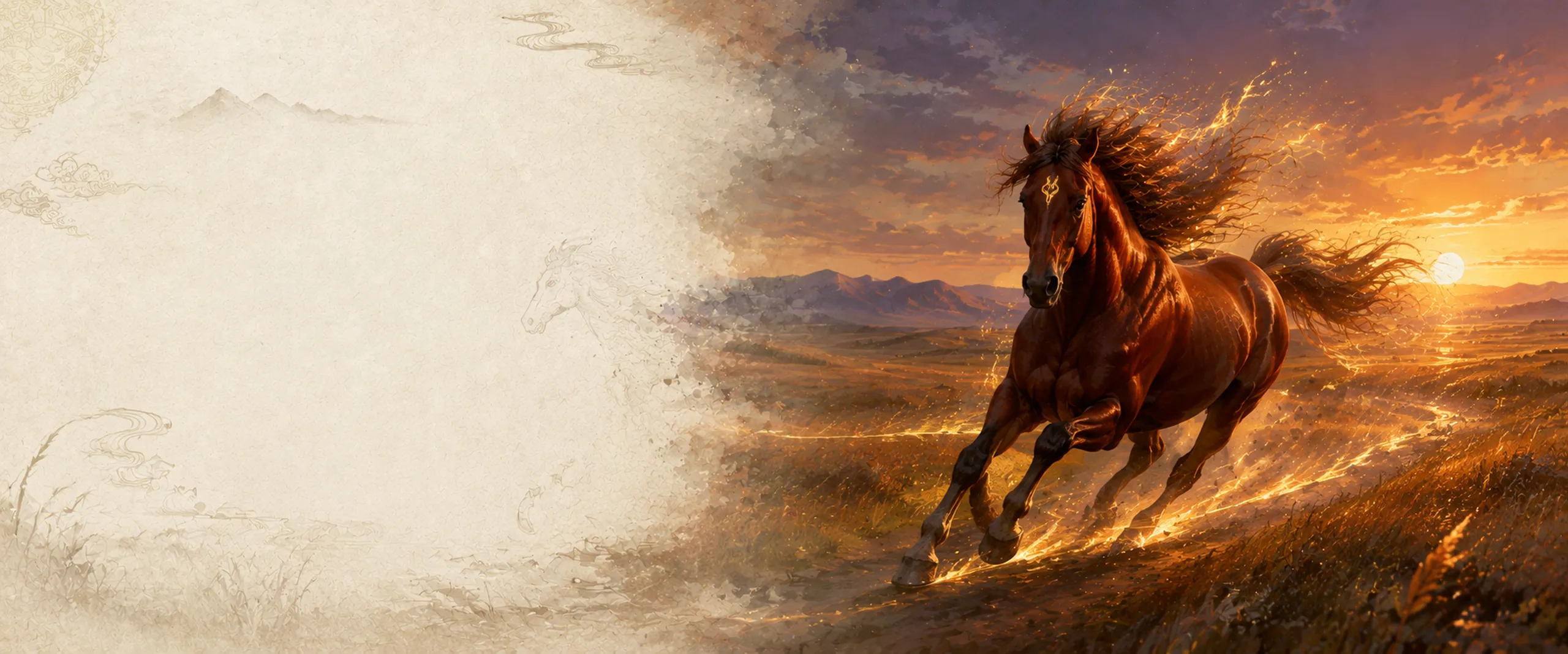
People born in the Year of the Horse are often energetic, open, and enthusiastic, with a strong love of freedom and wide horizons. Quick to act and eager to improve, they dislike stagnation and prefer to experience life in motion.
Horse / Compatibility
Innate Tendencies · Not a Verdict of Fate

Zodiac pairing is part of traditional folk culture and is offered for reference only. A proper marriage reading must consider all four pillars — year, month, day and hour — so judging a match by zodiac signs alone is incomplete. Zodiac pairing shows an innate energetic tendency, not an absolute verdict on destiny. What truly determines the quality of a relationship is always mutual understanding, respect and care between two people.

Introduction

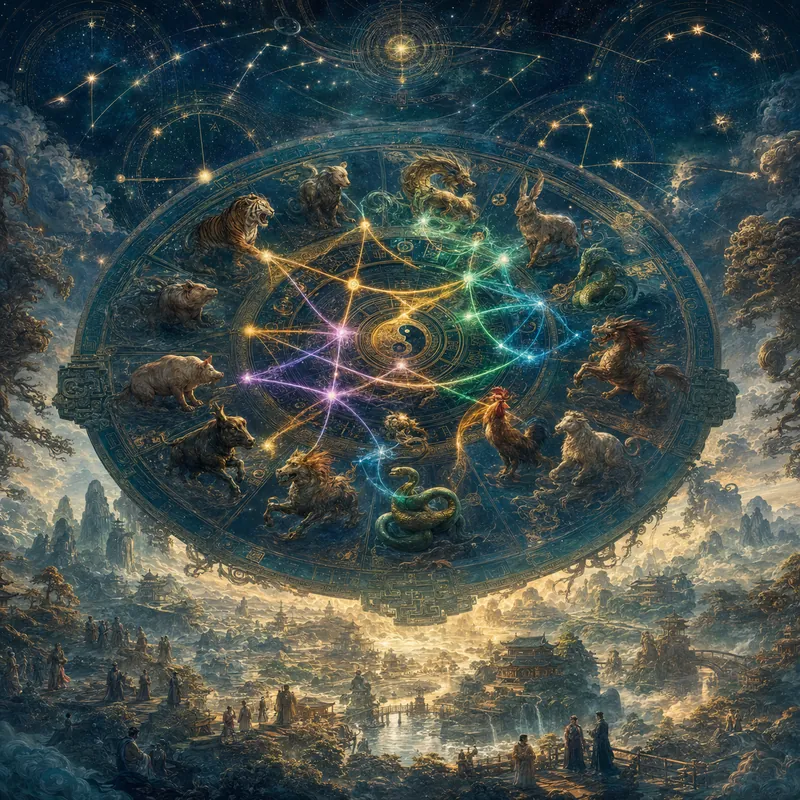
Six Harmonies & Three Harmonies · Quick Reference
Relation Type Paired Zodiac Match Score Note
六合 Liùhé · Six Harmonies 属Goat ★★★★★ Top-tier marriage match; the most ideal pairing
三合 Sānhé · Three Harmonies 属Tiger, Dog ★★★★☆ Highly favorable marriage match; strong rapport
Moderate 属Snake, Monkey, Rooster, Rabbit, Dragon, Pig ★★★☆☆ Moderate compatibility; can be cultivated
相破 Xiāngpò · Break 属Rabbit ★★★☆☆ Moderate compatibility, but with some depletion
相害 Xiānghài · Harm 属Ox ★★☆☆☆ Below-average marriage match; requires substantial adjustment
自刑 Zìxíng · Self-Punishment 属Horse ★★☆☆☆ Below-average marriage match; two Horses competing
相冲 Xiāngchōng · Clash 属Rat ★☆☆☆☆ Traditionally the least favorable match; greatest caution required

Wǔ Horse Compatibility Overview

Chinese Zodiac Pairings · Pair-by-Pair Analysis
Pair 01 / 12
Six Harmonies

Wǔ Horse (午马) × Wèi Goat (未羊)

★★★★★
六合 (Liùhé, Six Harmonies) — 午未合化土 (Wǔ–Wèi Hé Huà Tǔ)
Five Elements Analysis

The Wǔ Horse belongs to Fire, while the Wèi Goat belongs to Earth. Since Fire generates Earth (火生土), this is a natural generative relationship. Their Six Harmonies bond gives the pairing a perfect energy of “Fire and Earth generating one another and bringing out the best in each other”: Wǔ Fire shines upon Wèi Earth like the blazing sun, while Wèi Earth flourishes under its warmth, full of life and continuous growth. It is a deep relationship of mutual nourishment and mutual fulfillment, traditionally regarded as one of the most harmonious combinations among the twelve zodiac signs.

Relationship Portrait

Like the sun and the earth—the sun, representing the Wǔ Horse, shines upon the earth with light and warmth, while the earth, representing the Wèi Goat, brings forth abundant life under the nourishment of sunlight. One is passionate, uninhibited, and full of vitality; the other gentle, tolerant, grounded, and steady. Each nourishes the other in a different dimension, together creating the warmest of homes.

Strengths
  • Perfectly complementary personalities: The Wǔ Horse is passionate, energetic, and quick to act, but can sometimes be impulsive and impatient; the Wèi Goat is gentle, delicate, and understanding, and can effectively “buffer” the Horse’s impatience. One charges forward; the other provides stability.

  • The Goat’s gentleness softens the Horse’s sharpness: Goats are naturally gentle and tolerant and can understand the Horse’s impulsiveness and passion without taking every burst of temper personally. When the Horse is rushing ahead, the Goat can gently say, “Slow down and look at the road.” For the Horse, this gentle companionship is an especially comfortable safety net.

  • The Horse’s vitality encourages the Goat to move forward: The Goat can sometimes become too comfortable and lack initiative. The Horse’s passion and decisiveness can encourage it to leave its comfort zone and explore new possibilities. Together, they combine the Horse’s drive with the Goat’s steadiness.

  • They satisfy each other emotionally: The Horse needs to be “followed and admired,” while the Goat is willing to appreciate and applaud the other person. The Goat needs to be “protected and cared for,” while the Horse often has a strong protective instinct and is willing to shield those it loves from hardship.

  • Highly compatible family values: Both place great importance on family. The Horse is the family’s “pioneer” and “protector,” while the Goat is its “source of warmth” and “emotional center.” One ventures outward; the other tends the home.

  • A combination of romance and warmth: The Horse’s romance and passion can make the Goat feel cherished, while the Goat’s attentiveness gives the Horse a harbor where it can safely rest after “running itself tired.”

Potential Challenges
  • The difference between the Horse’s quick temper and the Goat’s slower pace: The Horse wants to act immediately, while the Goat needs time to think. The Horse may find the Goat too slow; the Goat may find the Horse too hasty.

  • Friction between the Horse’s broad strokes and the Goat’s sensitivity: The Horse is easygoing about details; the Goat is delicate and may dwell on an unintended remark.

  • Different social preferences: The Horse has many friends and a wide social circle, while the Goat prefers quiet and domestic life. Social arrangements require coordination.

  • The Horse’s emotional dependence on the Goat may exceed expectations: The Horse appears highly independent while running free outside the home, but may rely heavily on the Goat’s emotional support once it returns. If the Goat cannot continually provide that support, the Horse may feel empty.

How to Get Along
  • The Wǔ Horse should learn to “slow down.” Before an important decision, pause and ask, “What do you think?” so the Wèi Goat feels its opinion is respected.

  • The Wèi Goat should learn to “speed up.” Not everything requires repeated deliberation; occasionally following the Horse into an impulsive decision can reveal another side of life.

  • The Horse should listen more to the Goat before acting. The Goat’s intuition is often accurate and may help the Horse avoid unnecessary pitfalls.

  • The Goat should learn to soothe the Horse gently when its emotions rise. The Goat’s composure is often the Horse’s best “sedative.”

  • In major decisions, the Horse can handle the “direction”—what to do—while the Goat handles the “feeling”—whether doing it is good for both of them. Only by combining the two can they make decisions with both passion and warmth.

Traditional destiny reading:

In 命理 (mìnglǐ, traditional Chinese destiny analysis), people born under the Horse sign are traditionally considered especially compatible with those born under the Goat sign. 午未合土, the Wǔ–Wèi union associated with Earth, is regarded as having the highest degree of compatibility, promising a harmonious marriage and lasting good fortune.

Pair 02 / 12
Three Harmonies

Wǔ Horse (午马) × Yín Tiger (寅虎)

★★★★☆
三合 (Sānhé, Three Harmonies) — 寅午戌三合火局 (Yín–Wǔ–Xū Sānhé Huǒ Jú)
Five Elements Analysis

The Yín Tiger belongs to Wood, while the Wǔ Horse belongs to Fire. Since Wood generates Fire (木生火), this is a natural generative relationship. Within the Yín–Wǔ–Xū Three Harmonies Fire Formation, Horse and Tiger are members of the same Fire configuration and their energies resonate. It is almost like “adding fuel to the fire”: the Tiger’s Wood feeds the Horse’s Fire, while their passion and vitality amplify one another, creating an intense and exuberant atmosphere. When they are together, the temperature of the entire room can seem to rise.

Relationship Portrait

Like a forest and a blazing flame—the forest, representing the Yín Tiger, provides an endless supply of fuel for the flame, representing the Wǔ Horse, while the flame lights every corner of the forest. One is brave and decisive; the other passionate and uninhibited. Through the collision of their passions, they burn together with their brightest light.

Strengths
  • Shared interests and immediate rapport: Both are passionate, freedom-loving, and dislike restriction. Their ideas and ways of acting often fit naturally together; they can easily think together and play together.

  • They motivate one another and progress together: The Tiger’s courage and decisiveness awaken the Horse’s fighting spirit, while the Horse’s optimism and passion ignite the Tiger’s enthusiasm. Together, they can seem to possess endless energy.

  • A golden professional partnership: The Tiger is skilled at strategy and overall direction, while the Horse excels at rapid execution and opening new ground. Their cooperation combines both height and speed.

  • Life is full of passion and enjoyment: Both enjoy adventure, novelty, and an energetic life. Traveling, exploring, and challenging themselves together keeps life from becoming dull.

  • They understand each other’s untamed nature: Neither likes being controlled or restricted, so both can understand the other’s need for freedom. They are less likely to overthink when the other occasionally “disappears” to pursue personal interests.

Potential Challenges
  • Two hot tempers meeting: The Tiger is impatient, and so is the Horse. When they disagree, both may speak harshly and neither wants to step back first. Once tempers rise, the fire can spread quickly and cause unnecessary hurt.

  • Lack of a “braking” mechanism: Both believe in charging forward and may lack caution and thorough consideration. Together, they may make overly risky decisions because no one is pressing the brakes.

  • Excessive competitiveness: Both are strong and possess leadership instincts. Cooperation can turn into a struggle over “who decides.” Both want to be king; who will play the subordinate?

  • Neither is good at managing details: Tiger and Horse are both broad-strokes personalities and dislike tedious daily matters. The household may become chaotic because neither wants to handle chores or finances.

How to Get Along
  • Create a “cool-down signal”: Agree on a phrase to use before an argument escalates, such as “pause for five minutes,” so both can calm down before continuing.

  • Divide responsibilities clearly to avoid competition: In family or work, define each person’s domain. The Tiger handles strategy and direction; the Horse handles execution and expansion.

  • Introduce a third party as a buffer: For important decisions, a steady and rational friend or family member can help prevent the two from acting impulsively together.

  • Develop habits that encourage slowing down: Try activities requiring patience, such as cooking, gardening, or yoga, and find inner calm through slower pursuits.

  • Learn to praise instead of compete: The Tiger should praise the Horse’s execution; the Horse should praise the Tiger’s judgment. When appreciation replaces rivalry, the relationship becomes more harmonious.

Traditional destiny reading:

People born under the Horse sign are traditionally considered well matched with a Tiger or Dog. 寅午戌三合火局, the Yín–Wǔ–Xū Three Harmonies Fire Formation, indicates high compatibility and a favorable, happy marriage.

Pair 03 / 12
Three Harmonies

Wǔ Horse (午马) × Xū Dog (戌狗)

★★★★☆
三合 (Sānhé, Three Harmonies) — 寅午戌三合火局
Five Elements Analysis

The Xū Dog belongs to Earth, while the Wǔ Horse belongs to Fire. Since Fire generates Earth, this is a natural generative relationship. Within the Yín–Wǔ–Xū Fire Formation, Horse and Dog belong to the same configuration; their energies resonate, and their ways of thinking and acting fit closely together. The Horse’s vitality combines with the Dog’s loyalty to form a powerful protective force—the Horse runs ahead to explore and open new ground, while the Dog stabilizes and protects from behind.

Relationship Portrait

Like a knight and a loyal dog—the knight, representing the Wǔ Horse, rides forward without fear, while the loyal dog, representing the Xū Dog, stays faithfully at its side. One is passionate, uninhibited, and freedom-loving; the other loyal, reliable, and devoted to protecting the home. Through trust and companionship, they form a deep bond.

Strengths
  • Shared values and interests: Both value honesty, integrity, and responsibility. On questions of right and wrong, they often reach the same conclusion without much discussion: one should live with a clear conscience.

  • They motivate each other: The Horse’s vitality and optimism encourage the Dog to move beyond excessive caution and explore more possibilities; the Dog’s stability and loyalty give the Horse a secure foundation from which to venture outward.

  • A golden professional partnership: The Horse handles “expansion”—finding opportunities, meeting clients, opening new ground—while the Dog handles “maintenance”—protecting resources, managing quality, and preserving stability. One attacks, the other defends.

  • Deep emotional trust: The Horse is passionate and sincere; the Dog is loyal and dependable. Both tend to be consistent inside and out, reducing the need for guessing or testing.

  • Shared sense of family responsibility: Both are willing to give for their families. The Horse ventures outward “so the family can live better,” while the Dog protects the home “so the Horse has no worries behind it.”

Potential Challenges
  • Tension between the Horse’s “running” and the Dog’s “guarding”: The Horse naturally loves exploration and adventure and dislikes restriction; the Dog prefers safety, stability, and predictability. Every departure by the Horse may make the Dog uneasy.

  • The Dog’s “management” may make the Horse feel restricted: Out of concern, the Dog may repeatedly remind the Horse to be careful. The Horse may respond, “I’m an adult; you don’t need to manage me,” even though the Dog is simply worried.

  • The Horse’s busyness may make the Dog feel neglected: The Horse has a wide social circle and often runs around outside. The Dog values companionship and stability, so the Horse’s busyness may create loneliness.

  • The Horse’s broad strokes versus the Dog’s principles: The Horse may overlook “small details,” while the Dog pays close attention to principles and rules. The Horse may find the Dog overly serious; the Dog may find the Horse too casual.

  • The struggle between control and resistance: The Dog’s protective instinct may lead it to manage the Horse, while the Horse’s instinct for freedom leads it to break away. Without adjustment, the relationship may become a pattern of “you chase, I run.”

How to Get Along
  • The Wǔ Horse should understand the Xū Dog’s tendency to “manage”: it is not necessarily distrust, but concern. Before leaving, simply saying “I’ll be careful” can reassure the Dog.

  • The Xū Dog should give the Horse “room to make mistakes.” The Horse needs to learn through experience; not everything needs to be perfectly secure before it begins.

  • Build an agreement about “separate space”: the Dog does not have to attend all of the Horse’s lively social events, but the Horse should share its experiences afterward; the Horse should also respect the Dog’s quiet time and occasionally spend a day at home together.

  • For major decisions, the Horse proposes the “possibilities,” while the Dog raises the “risks.”

  • Schedule regular “time for two.” Do not let busy life turn the other person into a roommate. At least one day each week should belong only to the relationship.

Traditional destiny reading:

People born under the Horse sign are traditionally considered well matched with a Dog or Tiger. 寅午戌三合火局 indicates high compatibility and is regarded as a favorable marriage match.

Pair 04 / 12
Moderate

Wǔ Horse (午马) × Sì Snake (巳蛇)

★★★☆☆
General
Five Elements Analysis

The Sì Snake belongs to Fire, and so does the Wǔ Horse. They therefore share the same element and possess a natural sense of similarity—both are passionate, active, and full of vitality. Yet Sì Fire is yin Fire, like fire within a furnace, while Wǔ Fire is yang Fire, like the sun. One is inward and deep; the other passionate and expressive. They are “the same element, but of different quality.”

Relationship Portrait

Like a furnace fire and a burst of flame—the furnace fire, representing the Sì Snake, burns quietly within, lasting and stable; the flame, representing the Wǔ Horse, bursts brilliantly into the open, passionate and dazzling. One is an enduring inner flame; the other an uninhibited outward radiance. Each sees a reflection of itself in the other, yet a difference remains: “you are brighter, while I burn longer.”

Strengths
  • Shared Fire nature and energetic resonance: Both possess passion, vitality, and an active outlook. Together, each can feel the other’s “unextinguished” energy.

  • Mutual understanding and appreciation: Because both belong to Fire, they do not need to explain “why I am this way.” The Horse understands the Snake’s persistence; the Snake understands the Horse’s passion.

  • Life is unlikely to be dull: Both are energetic personalities, always producing new ideas, plans, and adventures.

  • Social complementarity: The Horse is good at socializing and likes being the center of attention; the Snake observes carefully and prefers working behind the scenes. One livens the atmosphere; the other reads the situation.

  • Both have emotional warmth: Neither is cold or indifferent, and both are willing to give sincerely to a relationship. Their methods differ—the Horse expresses love by saying it; the Snake by doing it.

Potential Challenges
  • Potential depletion when Fire competes with Fire: Because both belong to Fire, struggles for leadership can arise. If each tries to overwhelm the other with its own “flame,” energy can be consumed even without open conflict.

  • The Horse’s extroversion versus the Snake’s reserve: The Horse loves socializing and being out; the Snake prefers solitude and staying home. The Horse’s lively gatherings may seem too noisy to the Snake, while the Snake’s quietness may feel too dull to the Horse.

  • The Horse’s “fast” versus the Snake’s “slow”: The Horse acts as soon as it has an idea; the Snake thinks carefully before moving. The Horse may already have rushed ahead while the Snake is still saying, “Let me think.”

  • The Horse’s broad strokes versus the Snake’s delicacy: The Horse is easygoing about details; the Snake is meticulous. The Horse may find the Snake too fussy; the Snake may find the Horse too rough.

  • Neither is good at “admitting defeat”: The Horse has its pride; the Snake has its persistence. When their views oppose, the Horse wants to “win,” while the Snake wants to be “right.”

How to Get Along
  • The Wǔ Horse should learn to “slow down.” Before making a decision, pause and ask, “What do you think?” so the Snake feels respected.

  • The Sì Snake should learn to “speed up.” Some matters genuinely do not require repeated deliberation; occasionally following the Horse into spontaneity may make life feel freer.

  • In social arrangements, the Horse handles “movement”—initiating invitations and planning outings—while the Snake handles “stillness”—screening invitations and arranging details. One manages breadth; the other depth.

  • When opinions differ, agree not to ask “who is right,” but “what is better.” First identify the strengths of each proposal, then decide what best suits the present situation.

  • Give each other enough time alone. The Horse recharges through social activity; the Snake through solitude. Respect these different ways of restoring energy.

Traditional destiny reading:

Horse and Snake are considered moderately compatible. They neither directly clash nor form a direct harmony. If they can understand each other’s different “ways of expression,” they can maintain a good relationship.

Pair 05 / 12
Moderate

Wǔ Horse (午马) × Shēn Monkey (申猴)

★★★☆☆
General
Five Elements Analysis

The Shēn Monkey belongs to Metal, while the Wǔ Horse belongs to Fire. Fire controls Metal (火克金). Wǔ Fire is like a furnace refining Shēn Metal, creating a relationship of “control that also tempers.” Both are lively, active, and drawn to novelty, so they resonate naturally in their desire for movement, yet they differ significantly in their ways of thinking and their values.

Relationship Portrait

Like blazing fire and true gold—the flame, representing the Wǔ Horse, burns at high heat, while the gold, representing the Shēn Monkey, is tempered by the fire and becomes more resilient. One is driven by intuition and impulse; the other navigates through ingenuity and intelligence. Both are drawn to the other’s vitality, yet both may reconsider the proper distance after being “burned” by the other.

Strengths
  • Energetic resonance: Both are among the zodiac’s most restless types. The Horse loves movement and action; the Monkey loves exploration and change. Together, there is rarely a dull moment.

  • A powerful social combination: Both are socially skilled. The Horse is passionate and direct and quickly wins people over; the Monkey is clever and humorous and knows how to animate a gathering.

  • Intellectual stimulation: The Horse makes decisions through intuition and enthusiasm; the Monkey plans through analysis and adaptability. Their different thinking styles can produce interesting new perspectives.

  • Life is full of fun: Two people who both know how to enjoy themselves can always find something interesting to do—travel, exploration, and new experiences.

  • They can learn from one another: The Horse can learn flexibility and adaptability from the Monkey instead of always following one road to the end; the Monkey can learn directness and courage from the Horse instead of always looking for shortcuts.

Potential Challenges
  • Conflict between Fire’s impulsiveness and Metal’s calculation: The Horse follows instinct and acts immediately; the Monkey analyzes first and weighs advantages and disadvantages. The Horse may think the Monkey is “too calculating,” while the Monkey may think the Horse is “too foolishly impulsive.”

  • An order problem between two restless personalities: Neither enjoys strict plans, and both prefer improvisation. Together, they may “run off course” because no one is braking or planning.

  • Tension between the Horse’s directness and the Monkey’s smooth adaptability: The Horse says what it thinks; the Monkey adapts its behavior to different situations. The Horse may see the Monkey as insufficiently sincere; the Monkey may see the Horse as too reckless.

  • Building trust: The Horse values sincerity highly, while the Monkey tends to hold something back. The Horse needs to know the Monkey is consistent inside and out; the Monkey needs to know the Horse is trustworthy.

  • Overlapping but not fully compatible social circles: The Horse likes lively gatherings and outdoor activities; the Monkey prefers varied social experiences. Each may find the other’s circles either too noisy or too complicated.

How to Get Along
  • The Wǔ Horse should learn to “think a little more.” Before acting, stop and listen to the Monkey’s analysis.

  • The Shēn Monkey should learn to “calculate a little less.” Not everything requires the best possible strategy; sometimes following intuition can also bring unexpected rewards.

  • Build a “intuition + analysis” model for decisions: the Horse says, “I want to do this,” the Monkey explains the advantages and disadvantages, then both decide together.

  • Develop the ability to “settle down” together. After enough play, both should be able to return to serious matters.

  • In building trust, the Horse should give the Monkey enough time to prove itself, while the Monkey should use actions to remove the Horse’s doubts.

Traditional destiny reading:

Horse and Monkey are considered moderately compatible. They neither clash nor form a direct harmony. If they can find a balance between “action” and “thought,” they can maintain a good relationship.

Pair 06 / 12
Moderate

Wǔ Horse (午马) × Yǒu Rooster (酉鸡)

★★★☆☆
General
Five Elements Analysis

The Yǒu Rooster belongs to Metal, while the Wǔ Horse belongs to Fire. Fire controls Metal. Wǔ Fire is like a furnace “refining” Yǒu Metal, producing a relationship of “control through refinement.” Both are energetic and both pursue excellence, but the Horse seeks “breadth and speed,” while the Rooster seeks “depth and precision.” Their standards of excellence differ and require considerable adjustment.

Relationship Portrait

Like blazing flame and refined steel—the flame, representing the Wǔ Horse, burns fiercely and melts what it touches; the steel, representing the Yǒu Rooster, is tempered in the fire and becomes sharper. One is driven by intuition and passion; the other guards standards and details. Both possess a fiery core—one is passionate about life, the other obsessed with perfection. In reflecting one another, each sees what it lacks.

Strengths
  • Shared high standards: Neither is satisfied with “good enough.” The Horse wants to “live brilliantly”; the Rooster wants to “do things to the highest standard.” Their directions differ, but both pursue excellence.

  • They can complement one another: The Horse’s broad outlook and rapid action help the Rooster move beyond excessive attention to detail; the Rooster’s rigor and careful planning help the Horse avoid the risk of “running too fast and falling just as fast.”

  • Life is full of activity: When the Horse’s passion and the Rooster’s energy combine, there is always something happening. The Horse pulls the Rooster toward the outdoors and distant places; the Rooster makes sure each outing does not fall apart through poor preparation.

  • They help each other succeed: Professionally, the Horse handles “expansion”—negotiation, networking, and opportunity—while the Rooster handles “quality control”—setting standards and maintaining quality. One makes things “happen”; the other makes them “complete.”

  • Both possess strong self-esteem: Each becomes a mirror for the other. The Horse sees in the Rooster how to make its steps more precise; the Rooster sees in the Horse how to broaden its vision.

Potential Challenges
  • The Rooster’s criticism may frustrate the Horse: The Horse acts quickly and may prioritize speed over refinement. The Rooster pursues perfection and likes to point out what is not good enough. The Horse may think, “I worked this hard and you are still criticizing me,” while the Rooster thinks, “I only want you to do better.”

  • Conflict between the Horse’s “speed” and the Rooster’s “precision”: The Horse wants fast progress; the Rooster wants repeated refinement. Each may see the other as either slowing things down or acting unreliably.

  • Different attitudes toward spending: The Horse spends freely for present enjoyment; the Rooster calculates carefully and plans for the long term.

  • Incompatible social preferences: The Horse likes lively gatherings and outdoor activities; the Rooster prefers refined, smaller-scale social occasions.

  • A struggle over face: Both have strong self-esteem and care about face. When they disagree, neither wants to step back because yielding can feel like admitting, “I was wrong.”

How to Get Along
  • The Wǔ Horse should understand that the Yǒu Rooster’s “criticism” is directed at the matter, not the person.

  • The Yǒu Rooster should learn to “lower its standards” and change how criticism is expressed. Some things only need to be “good enough.” Acknowledge the Horse’s effort before offering suggestions.

  • Set up separate financial accounts: the Horse has some money it can spend freely, while the Rooster has some money it can manage strictly.

  • Take turns deciding social plans: this week, do what the Horse enjoys; next week, stay home and do what the Rooster enjoys.

  • Establish “criticism-free periods”: agree that at certain times, such as weekend evenings, neither will discuss anything that “needs improvement.”

Traditional destiny reading:

Horse and Rooster are considered moderately compatible. They neither directly clash nor form a direct harmony. If they can find a balance between “speed” and “precision,” they can maintain a good relationship.

Pair 07 / 12
Moderate

Wǔ Horse (午马) × Mǎo Rabbit (卯兔)

★★★☆☆
General
Five Elements Analysis

The Mǎo Rabbit belongs to Wood, while the Wǔ Horse belongs to Fire. Wood generates Fire. Mǎo Wood provides fuel for Wǔ Fire, a form of generation in which one side gives of itself. The Rabbit nourishes the Horse: the Rabbit’s stable energy provides support for the Horse, but when the Horse’s Fire burns too strongly, the Rabbit may become exhausted from continually “burning itself.” One is active and the other still; they need to find a balance of “movement within stillness and stillness within movement.”

Relationship Portrait

Like grassland and wildfire—the grassland, representing the Mǎo Rabbit, provides the foundation for growth, while the wildfire, representing the Wǔ Horse, brings leaping vitality. One needs quiet nourishment; the other longs for passionate expression. One must “slow down,” the other “run forward.” If each is willing to listen to the other’s world, they can find a rhythm of mutual nourishment between movement and stillness.

Strengths
  • The Rabbit’s gentleness can buffer the Horse’s impatience: The Rabbit’s composure and tolerance allow the Horse, accustomed to charging forward, to feel that it can finally stop and breathe.

  • The Horse’s passion can awaken the Rabbit’s vitality: The Rabbit can sometimes become too quiet; the Horse’s energy and optimism encourage it to leave its comfort zone.

  • They can form a balance of movement and stillness in daily life: The Horse handles outward movement—socializing, expansion, external affairs—while the Rabbit handles inward stability—family atmosphere, household order, and quality of life.

  • They can form an “expansion + maintenance” partnership in work: The Horse opens new territory; the Rabbit maintains existing relationships.

  • They help each other see another world emotionally: The Horse shows the Rabbit a wider world and greater possibilities; the Rabbit gives the Horse access to more delicate emotions and deeper understanding.

Potential Challenges
  • Five-Phase depletion: Since Mǎo Wood generates Wǔ Fire, the Rabbit is the “giving side” and the Horse the “receiving side.” Over time, the Rabbit may feel emptied out if its energy is continuously absorbed without equal return.

  • Severely mismatched pace: The Horse values speed and efficiency; the Rabbit needs time to adapt and decide.

  • The Horse’s impulsiveness makes the Rabbit feel insecure: The Horse acts first and discusses later; the Rabbit wants to confirm safety before moving.

  • The Rabbit’s “management” may feel restrictive to the Horse: Out of concern, the Rabbit reminds the Horse to be careful; the Horse may feel overly controlled.

  • Different social circles: The Horse likes lively gatherings; the Rabbit prefers quiet and a small circle of friends.

How to Get Along
  • The Horse should learn to “slow down.” Before making a major decision, discuss it with the Rabbit instead of deciding alone.

  • The Rabbit should learn to “move a little faster.” Some matters genuinely require quick decisions.

  • Energetically, the Horse should actively give back to the Rabbit through actions of gratitude and appreciation.

  • Establish an understanding that each can “do their own thing”: the Rabbit need not attend every lively Horse gathering, and the Horse should respect the Rabbit’s quiet time.

  • Develop a shared hobby in a “middle zone,” such as cooking, walking, or watching films, and build rapport through activities that require neither extreme movement nor complete stillness.

Traditional destiny reading:

Horse and Rabbit are considered moderately compatible. One is quiet and the other lively; if each respects the other’s lifestyle, they can maintain a good relationship.

Pair 08 / 12
Moderate

Wǔ Horse (午马) × Chén Dragon (辰龙)

★★★☆☆
General
Five Elements Analysis

The Chén Dragon belongs to Earth, while the Wǔ Horse belongs to Fire. Fire generates Earth, making this a generative Five-Phase relationship. Wǔ Fire nourishes Chén Earth, and the Horse’s passion and vitality can provide energy and momentum to the Dragon. Both are active and unwilling to accept mediocrity, so they possess a certain energetic resonance.

Relationship Portrait

Like Dragon and Horse traveling together—the Dragon moves through clouds in the sky and commands the winds, while the Horse gallops across the earth without hesitation. One points out the direction from above; the other presses forward below. Their goals align, but their ways of reaching them differ greatly.

Strengths
  • Shared great ambitions: Both possess large aspirations and refuse mediocrity. The Dragon wants to accomplish something significant; the Horse wants to live a brilliant life.

  • Passion and confidence ignite one another: Together, Dragon and Horse can produce an energy greater than the sum of its parts. The Dragon gives the Horse direction; the Horse gives the Dragon execution.

  • Life is unlikely to be dull: Both dislike routine and enjoy novelty and challenge.

  • A rich social life: Both are socially capable. The Dragon “anchors the room,” while the Horse “livens the room.”

Potential Challenges
  • The Dragon wants to “lead”; the Horse wants “freedom”: The Dragon is accustomed to controlling the whole and giving directions; the Horse naturally values freedom and dislikes restriction.

  • The Dragon thinks the Horse lacks staying power; the Horse thinks the Dragon is too old-fashioned.

  • Both care about face and refuse to bow first.

  • Both may simply be too busy: Long periods of living separate lives can weaken deeper connection.

  • Both experience strong emotional highs and lows: Two emotionally intense personalities can easily create a “collision of planets.”

How to Get Along
  • The Chén Dragon should give the Wǔ Horse enough “space for freedom.” The tighter the control, the farther the Horse runs.

  • The Wǔ Horse should give the Chén Dragon enough “sense of control” by communicating and consulting proactively.

  • Create a shared “adventure plan”—travel, a project, or learning a new skill together.

  • Both need to learn the art of “bowing first.” Winning the argument but losing the relationship is not worthwhile.

  • Agree not to let arguments go unresolved overnight.

Traditional destiny reading:

Horse and Dragon are considered moderately compatible. Both are active and ambitious; if they respect one another, they can maintain a good relationship.

Pair 09 / 12
Moderate

Wǔ Horse (午马) × Hài Pig (亥猪)

★★★☆☆
General
Five Elements Analysis

The Hài Pig belongs to Water, while the Wǔ Horse belongs to Fire. Water controls Fire (水克火). Hài Water is like river water “pouring over” Wǔ Fire, creating a relationship of “control that also moistens.” The Wǔ Horse is yang Fire, passionate and uninhibited; the Hài Pig is yang Water, broad and deep. There is considerable tension between one that moves and one that rests, and long-term balance requires substantial tolerance from both sides.

Relationship Portrait

Like a great river and fireworks—the river, representing the Hài Pig, flows endlessly and embraces a vast expanse, while the fireworks, representing the Wǔ Horse, burst into brief but brilliant light above the water. One is flowing and deep; the other passionate and fleeting. Both express vitality in their own way, yet it is difficult for them to resonate on the same frequency.

Strengths
  • The Horse’s passion can ignite the Pig’s quiet life: The Pig can sometimes become too comfortable; the Horse’s energy and enthusiasm bring new color and momentum.

  • The Pig’s tolerance can accept the Horse as it is: The Horse may sometimes be impulsive and reckless, but the Pig is broad-minded and accepting. Around the Pig, the Horse does not need to restrain itself constantly.

  • Learning through complementarity: The Horse can learn the wisdom of “slowing down” and “becoming more expansive” from the Pig; the Pig can learn the courage to “move” and “venture outward” from the Horse.

  • Clear family roles can create cooperation: The Horse handles the “outside”—socializing, expansion, external relationships—while the Pig handles the “inside”—family atmosphere, quality of life, and emotional nourishment.

Potential Challenges
  • Incompatibility between Water’s “stillness” and Fire’s “movement”: The Pig prefers a quiet, comfortable, regular pace; the Horse prefers change, adventure, and energetic movement.

  • The Pig’s “going with the flow” versus the Horse’s “planning”: The Pig is content with the present; the Horse has clear goals and pursues achievement. The Pig may think the Horse is exhausting itself; the Horse may think the Pig is too lazy.

  • Mismatch between the Horse’s outward heat and the Pig’s inner warmth: The Horse expresses love through action, companionship, and passionate attention; the Pig through acceptance, tolerance, and giving space. The Horse may find the Pig insufficiently passionate; the Pig may find the Horse too forceful.

  • Different social needs: The Horse needs a broad social circle and outdoor activity; the Pig needs quiet time and domestic life.

  • Fundamentally different life rhythms: The Horse’s life is “charge forward”; the Pig’s is “walk slowly.” Major choices can repeatedly pull them in different directions.

How to Get Along
  • The Wǔ Horse should understand that the Hài Pig’s “walking slowly” does not mean “not moving,” but reflects a different philosophy of life.

  • The Hài Pig should understand that the Wǔ Horse’s “charging forward” does not mean restlessness, but love and pursuit of life.

  • In social arrangements, the Horse should not force the Pig to attend every event, while the Pig should not stop the Horse from exploring.

  • For major decisions, the Horse asks, “How far can we go?” while the Pig asks, “Can we go there steadily?” Each should state what matters most, then find a compromise.

  • Give each other enough “space to live at different frequencies.” The Horse may go out and run while the Pig stays home peacefully; when the Horse returns, the Pig welcomes it warmly. Their worlds need not completely overlap, as long as their hearts remain connected.

Traditional destiny reading:

Horse and Pig are considered moderately compatible. They neither directly clash nor form a direct harmony. If they can understand each other’s different “life rhythms,” they can maintain a good relationship.

Pair 10 / 12
Harm

Wǔ Horse (午马) × Chǒu Ox (丑牛)

★★☆☆☆
相害 (Xiānghài, Harm) — 丑午相害 (Chǒu–Wǔ Xiānghài)
Five Elements Analysis

The Chǒu Ox belongs to Earth, while the Wǔ Horse belongs to Fire. Fire generates Earth, so the Five Phases would ordinarily suggest harmony. Yet in the Earthly Branches, 丑午相害, Chǒu and Wǔ form Harm. Wǔ Fire can generate Chǒu Earth, but generation here is mixed with Harm, like “Fire generating Earth, but not purely.” Passion and stubbornness can easily produce misunderstanding and depletion.

Relationship Portrait

Like a farmer and a wild horse—the farmer, representing the Chǒu Ox, wants to tame the wild horse, representing the Wǔ Horse, and put it to use, while the wild horse only wants to run freely across the grasslands. One seeks “stable possession”; the other “free running.” Their needs naturally oppose one another.

Strengths
  • Strong initial attraction: Early in the relationship, the Ox’s steadiness gives the Horse a sense of security, while the Horse’s passion gives the Ox freshness and excitement. Their contrasting qualities can create strong attraction.

  • They can learn from one another: The Ox can learn the Horse’s openness and freedom; the Horse can learn the Ox’s steadiness and perseverance.

  • Shared family values: Despite large personality differences, both possess a strong sense of family responsibility.

Potential Challenges
  • The core conflict of Chǒu–Wǔ Harm: The Five-Phase generative relationship is disrupted by Harm at the Earthly Branch level. The Horse’s “generation” contains depletion and impurity, while the Ox’s “receiving” contains resistance and discomfort. Good intentions may be experienced as control and burden.

  • Completely mismatched pace: The Ox proceeds methodically and steadily; the Horse moves quickly and values efficiency.

  • Conflict between freedom and stability: The Horse needs freedom and space; the Ox needs security and stability and tends to “hold on.” This fundamental difference is one of their greatest challenges.

  • Incompatible communication styles: The Ox often does not speak directly and expresses itself through silence and action; the Horse says what it thinks and wants problems resolved quickly.

  • Trust is extremely difficult to build: The Ox needs certainty in order to trust; the Horse needs freedom in order to feel at ease. Their definitions of trust differ—the Ox wants commitment, the Horse wants space.

How to Get Along
  • A great deal of patience and tolerance is required: This pairing is difficult. If neither is willing to make significant adjustments, the relationship is unlikely to last.

  • The Horse should give the Ox enough security: Although freedom matters, make it clear that “freedom ≠ not caring.” Proactively sharing whereabouts and feelings can reassure the Ox.

  • The Ox should learn some of the Horse’s openness: Do not cling to every issue; learn when to let go and give space.

  • Establish a calm-communication mechanism: The Horse’s temper and the Ox’s stubbornness can easily explode when they meet. Agree to cool down for half an hour before discussing disagreements.

  • Find shared “breathing space”: Travel, exercise, or common hobbies can help develop rapport in areas unrelated to core principles.

Traditional destiny reading:

Horse and Ox form a Harm relationship and are traditionally considered a below-average marriage match. In marriage or cooperation, personality differences can easily create friction.

Pair 11 / 12
Moderate

Wǔ Horse (午马) × Wǔ Horse (午马)

★★☆☆☆
自刑 (Zìxíng, Self-Punishment) — 午午自刑 (Wǔ–Wǔ Zìxíng)
Five Elements Analysis

Both belong to Wǔ Fire and therefore carry the same energy. Two Horses together may appear to represent “like attracting like,” but in the Earthly Branches, 午午自刑 constitutes Self-Punishment. Two people who are equally passionate, equally freedom-loving, and equally resistant to restriction may create friction and depletion precisely because they are “too alike.” Two Horses may run side by side on parallel tracks, but it can be difficult for those tracks to truly meet.

Relationship Portrait

Like two fine horses galloping side by side—their speed is the same and their direction aligned, yet distance remains between them. They can run across the same grassland and strive toward the same destination, but each has its own reins and its own rhythm. Traveling together without becoming entangled, accompanying without depending: this is the truest image of the relationship.

Strengths
  • Shared interests and goals: Both are passionate, freedom-loving, and seek a vivid life. What one wants to do, the other often wants to do as well.

  • They understand each other’s “Horse nature”: Neither needs to explain why it cannot sit still or why an idea must immediately become action.

  • Life is never dull: Two energetic people together produce constant new plans and adventures.

  • They can form a powerful “dual-engine” combination: When well coordinated, two action-oriented people can create remarkable momentum, pushing and motivating each other toward greater goals.

Potential Challenges
  • The difficulty of Self-Punishment: When two people both seek freedom, who will “brake” for the relationship? Who will provide stability? There is too much “release” and not enough “containment.”

  • Both want a “voice”: Both Horses like to make decisions and dislike obedience. Decisions can become contests over whose reasoning is better.

  • Lack of moments for settling: Both are too active. No one wants to become still. The relationship may lose depth amid constant excitement and overlook feelings amid constant action.

  • They may “free-range” each other too much: Because both understand the need for freedom, they may grant so much of it that they gradually drift apart in separate worlds.

  • Emotions may fail to “land”: Both keep running, while no one stops to ask, “Are we still okay?” By the time they look back, the distance between them may already be great.

How to Get Along
  • Create an agreement to “stop”: No matter how busy or active both are, reserve one day each week to go nowhere and simply stay together.

  • Rotate leadership in decisions: Take turns deciding—this week one leads, next week the other. When one leads, the other cooperates fully.

  • Develop a pattern in which one leads and the other supports: Take turns being the “main role” and “supporting role” in areas each handles best.

  • Regularly review the emotional state of the relationship: Do not simply say, “We’re fine.” Ask, “Is our relationship still okay?” Both need to express feelings, not only plans.

  • Create a model of “two independent people traveling the same road”: Allow separate friend groups and interests, but spend important occasions—festivals, anniversaries, family days—together. Travel together without binding; accompany without controlling.

Traditional destiny reading:

Horse–Horse is traditionally regarded as a below-average pairing. 午午自刑, Wǔ–Wǔ Self-Punishment, suggests that two Horses can become good companions if they find their own tracks while learning to support each other; if neither yields and each runs in a different direction, it may be difficult to find a shared destination.

Pair 12 / 12
Clash

Wǔ Horse (午马) × Zǐ Rat (子鼠)

★☆☆☆☆
相冲 (Xiāngchōng, Clash) — 子午相冲 (Zǐ–Wǔ Xiāngchōng)
Five Elements Analysis

The Zǐ Rat belongs to Water, while the Wǔ Horse belongs to Fire. Water controls Fire, and at the same time 子午相冲, Zǐ and Wǔ form a direct Clash. Among the Twelve Earthly Branches, this is regarded as one of the most intense and direct oppositions. Due north confronts due south, like ice and fire or water and oil—naturally opposed. Folk tradition contains the saying “鼠马相见多纷争”, “When Rat and Horse meet, disputes are many.”

Relationship Portrait

Like ice and fire—one cool, restrained, and calculating; the other passionate, uninhibited, and unconcerned with consequences. Each person’s very presence stimulates the other. There may be attraction in the short term, but long-term coexistence is difficult.

Strengths
  • Strong short-term attraction is possible: The collision of “ice and fire” can be full of passion and novelty at first. The Rat’s calmness and the Horse’s liveliness may create chemistry, though this stimulation is difficult to sustain.

  • If both possess exceptional maturity and tolerance, it may be possible to find a dynamic balance within the Clash—Fire gives Ice warmth; Ice gives Fire form, allowing each to reshape the other.

  • They can learn the qualities they themselves lack: The Horse can learn the Rat’s shrewdness and caution; the Rat can learn the Horse’s openness and courage. Yet this learning often comes with the discomfort of being “shaken” by the other.

Potential Challenges
  • The core conflict of Zǐ–Wǔ Clash: The Rat’s careful calculation and the Horse’s broad, carefree approach collide at opposite extremes. The Rat thinks the Horse wastes too much; the Horse thinks the Rat is too stingy. Such differences are extremely difficult to reconcile.

  • Completely opposing personalities: The Rat is steady, restrained, detail-oriented, and calculating; the Horse is passionate, uninhibited, direct, and unconcerned with small matters. Their lifestyles and thinking patterns differ fundamentally.

  • Opposition between freedom and control: The Horse needs freedom and space; the Rat needs control and security. A sudden decision by the Horse may feel disrespectful to the Rat; a question from the Rat may feel like restraint to the Horse.

  • Constant conflict: In work or partnership, personality differences can easily create friction, and professional cooperation may also be difficult.

  • “When Rat and Horse meet, disputes are many”: Folk tradition treats the two as natural opponents and strongly cautions against romantic partnership or close cooperation.

How to Get Along
  • If possible, avoid choosing this combination for marriage or business partnership.

  • If already in such a relationship, both sides need exceptional maturity and tolerance. The Rat should learn some of the Horse’s openness and optimism; the Horse should learn the Rat’s caution and thoroughness.

  • Create a clear “ceasefire agreement”: When disagreements arise, cool down for twenty-four hours before continuing the discussion to avoid direct emotional confrontation.

  • Do not try to “change” the other: Accept that the other person is genuinely different and find a way to coexist within those differences.

  • Set aside independent space: Give each other enough personal time and space instead of remaining together twenty-four hours a day.

  • If conflict has become impossible to reconcile, ending the relationship in time may be better for both sides.

Traditional destiny reading:

Horse and Rat form 子午相冲, a direct Clash. Traditionally, this is regarded as one of the least favorable marriage combinations. The pairing is associated with frequent incompatibility and conflicts that may be difficult to reconcile.

Zodiac Compatibility

Harmony · Clash · Neutral
Harmony

Harmony

Energies complement each other, quietly reinforcing one another.

Clash

Clash

Magnetic fields pull apart; tolerance is needed.

Neutral

Neutral

Peaceful together, like a slow and steady stream.

Summary

Innate Tendencies · Relationship Building

The culture of Wǔ Horse compatibility offers, within traditional Chinese 命理 (mìnglǐ, destiny analysis), a profound interpretation of the relationship between the Horse’s “fierce yang Fire” and the other zodiac energies. From the heaven-made union of 六合 (Liùhé, Six Harmonies) to the wholehearted loyalty of 三合 (Sānhé, Three Harmonies), from general pairings that can be cultivated to the configurations of 相害 (Xiānghài, Harm), 自刑 (Zìxíng, Self-Punishment), and 相冲 (Xiāngchōng, Clash) that call for caution or avoidance, every pairing contains the ancients’ insight into human nature and relationships.

The Wèi Goat of Six Harmonies is traditionally regarded as the Wǔ Horse’s most ideal energetic partner—its gentleness embraces the Horse’s intensity, while its steadiness receives and supports the Horse’s constant running. Their mutual fulfillment makes this one of the warmest combinations among the twelve zodiac signs. The Yín Tiger and Xū Dog of Three Harmonies bring, through the growth of Wood and the protection of Earth, fuel and foundation to the Horse’s blazing Fire and are regarded as highly favorable marriage matches. The Sì Snake, Shēn Monkey, Yǒu Rooster, Mǎo Rabbit, Chén Dragon, and Hài Pig, though not the most favorable choices, can still find happiness through later understanding and careful cultivation of the relationship. The Harm with the Chǒu Ox, the Self-Punishment between two Wǔ Horses, and the Clash with the Zǐ Rat remind people born under the Horse sign that certain relationships require greater patience and wisdom—or more cautious avoidance.

Zodiac compatibility offers a reference for innate energetic tendencies; it is not an absolute judgment of fate. Traditional 八字合婚 (Bāzì Héhūn, Eight Characters marriage compatibility analysis) must consider the four pillars of year, month, day, and hour together; judging a marriage solely by the zodiac sign is therefore incomplete. What truly determines the quality of a relationship is always mutual understanding, respect, and the way both people cultivate it. Although the Wǔ Horse is passionate and uninhibited, it must still learn to slow down appropriately and listen to its partner within a relationship; only then can it reach true fulfillment in loving and being loved.

Continue exploring Horse culture

Readers’ Comments

Calendar and traditional culture enthusiasts from around the world, sharing the same moon.

Sign in or register to join the conversation. Your comment account is created automatically the first time you use a connected account.