Beginning of Summer Poetry
「四时天气促相催,一夜薰风带暑来。」
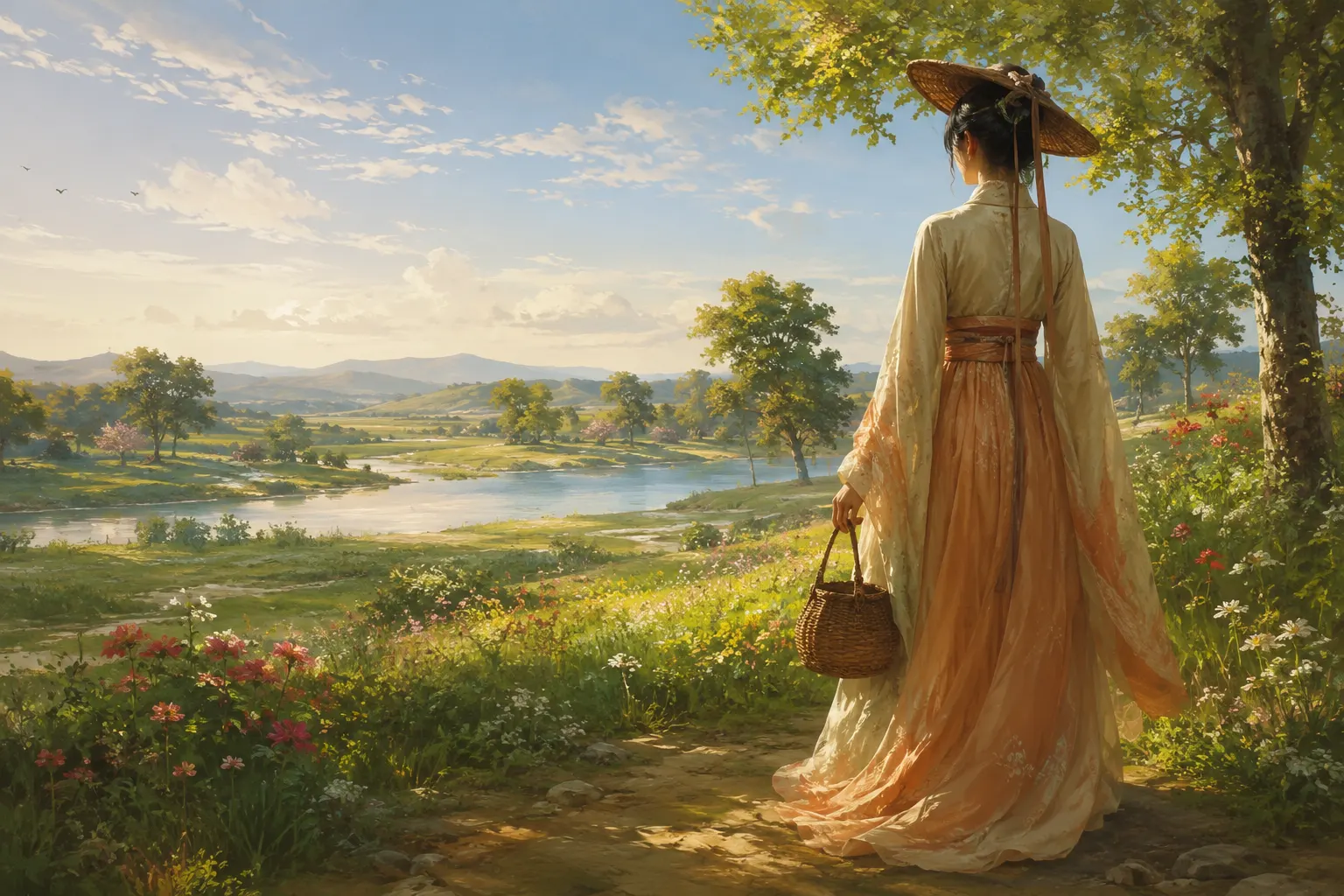
Poetry of Beginning of Summer often describes the seasonal transition in which the warm breeze sends spring away and all things begin to grow. Zhao Youzhi’s “一夜薰风带暑来” captures the quiet arrival of summer; Lu You’s “赤帜插城扉,东君整驾归” records the custom of welcoming summer; Sima Guang’s “四月清和雨乍晴” writes of the clear mildness of early summer. Some poets write “立夏将离春去也”, while others describe “小荷才露尖尖角.” In the passage from spring into summer, poetry captures the subtle instant when the season changes.
Beginning of Summer Poetry
立夏
Original Verse:
四时天气促相催,一夜薰风带暑来。
陇亩日长蒸翠麦,园林雨过熟黄梅。
莺啼春去愁千缕,蝶恋花残恨几回。
睡起南窗情思倦,闲看槐荫满亭台。
Modern Translation:
The weather of the four seasons turns in succession, urging time onward; in a single night, the warm southern breeze brings the first heat. The days lengthen over the fields, where green wheat seems to rise in the warmth; in the gardens, yellow plums ripen after the rain. Orioles cry as though burdened with endless sorrow at spring’s departure, while butterflies linger around fading flowers as though grieving its return no more. Waking from an afternoon nap beside the south window, my thoughts feel languid; I idly watch the deep shade of scholar trees spread across the terraces and pavilions.
Commentary:
This regulated verse gives a full and delicate account of both the seasonal signs and the emotional atmosphere of Beginning of Summer. The opening “四时天气促相催” conveys the urgency of time as the seasons press one another onward, while “一夜薰风带暑来” captures the swiftness of seasonal change—as though spring wind became summer wind overnight. The second couplet, “陇亩日长蒸翠麦,园林雨过熟黄梅”, turns to field and garden. The character “蒸” gives dynamic force to the green wheat growing vigorously beneath the sun, while “熟” describes the yellow plums becoming full and ripe after rain. The third couplet uses “莺啼” and “蝶恋” to express sorrow at spring’s departure, giving human feeling to birds and butterflies. The final couplet, “睡起南窗情思倦,闲看槐荫满亭台”, brings the poet himself into the scene. After Beginning of Summer, the days grow longer and the mind too becomes languid; the character “闲” conveys a peaceful state of mind that follows the season and quietly accepts early summer.
立夏
Original Verse:
赤帜插城扉,东君整驾归。
泥新巢燕闹,花尽蜜蜂稀。
槐柳阴初密,帘栊暑尚微。
日斜汤沐罢,熟练试单衣。
Modern Translation:
Red banners are planted at the city gates, while Dongjun, the Lord of Spring, readies his carriage to depart. Swallows chatter noisily in newly built mud nests, while the bees grow fewer now that the flowers have faded. The shade of scholar trees and willows begins to thicken, though the heat beyond the blinds and window lattices is still slight. After bathing in the slanting evening sun, I familiarly take out a light summer robe and try it on.
Commentary:
Lu You records the transition of the season through plain and precise details of everyday life. The opening “赤帜插城扉” refers to the ancient ritual of welcoming summer at Beginning of Summer, while “东君整驾归” speaks in mythic terms of the Lord of Spring preparing to leave, lending the moment both solemnity and ritual character. The second couplet describes seasonal signs: “泥新巢燕闹” writes the noisy activity of swallows building nests, while “花尽蜜蜂稀” writes the quiet after spring blossoms have fallen and bees have grown scarce. One is bustling, the other sparse, and the contrast reveals the inevitability of seasonal change. The third couplet, “槐柳阴初密”, gives a visual sense of summer through deepening shade, while “帘栊暑尚微” gives a tactile sense of summer through heat that has not yet grown strong. The closing “日斜汤沐罢,熟练试单衣” is the most domestic stroke in the poem: after bathing, the poet takes out a light robe and tries it on in the evening light. The word “熟练” suggests that this happens every year at Beginning of Summer. Within that repetition lies both awareness of time passing and a calm readiness to welcome another season.
闲居初夏午睡起二绝句 · 其一
Original Verse:
梅子留酸软齿牙,芭蕉分绿与窗纱。
日长睡起无情思,闲看儿童捉柳花。
Modern Translation:
After eating plums, their sourness lingers between the teeth, making them feel almost soft. The green shade of banana leaves falls across the window gauze, as though the leaves were sharing their color with it. The days have grown long, and waking from an afternoon nap I feel listless; idly, I watch children chasing the drifting willow fluff.
Commentary:
This poem perfectly captures a typical scene of Beginning of Summer. The first line, “梅子留酸软齿牙”, writes the sour taste of plums, a seasonal fruit of early summer. The phrase “软齿牙” renders the bodily sensation of sourness with striking precision, almost making the reader’s mouth water. In the next line, “芭蕉分绿与窗纱”, the character “分” is especially vivid, personifying the banana plant as though it generously shared its green color with the plain white window gauze, creating an image of early summer shade just beginning to deepen. The final two lines, “日长睡起无情思,闲看儿童捉柳花”, are the most moving part of the poem. After Beginning of Summer, the days grow longer and people are easily drowsy; “无情思” describes a state of languid ease. In “闲看儿童捉柳花”, the poet does not join the children but merely watches idly. The children’s innocent liveliness and the poet’s quiet observation subtly reflect one another, and this pleasure of simply watching the scene is the most natural poetry of an early-summer afternoon.
立夏前一日有赋
Original Verse:
渐老绿阴天,无家更少年。
落花风外立,啼鸟雨中眠。
客久心逾壮,春归思惘然。
东皇如有意,为我驻流年。
Modern Translation:
The green shade grows deeper and the weather warmer; without a household to bind me, I somehow seem all the more youthful. I stand in the wind watching fallen blossoms drift away and fall asleep in the rain to the cries of birds. The longer I remain a traveler, the stronger my spirit becomes; yet as spring departs, my thoughts are filled with a sense of loss. If the Lord of Spring has any feeling for me, let him hold back the passing years.
Commentary:
Yang Ji wrote this poem on the day before Beginning of Summer, placing deep personal reflection within the transition of the seasons. “渐老绿阴天” describes the deepening shade of early summer, and the character “老” personifies the greenery as growing mature. “无家更少年” sets “无家” against a youthful state of mind: free from household ties while living away from home, the poet feels as though he has not yet grown old. The second couplet, “落花风外立,啼鸟雨中眠”, shows him standing in the wind watching fallen flowers and sleeping in the rain to birdsong, a posture both free and faintly lonely. “客久心逾壮” writes how long years away from home have instead strengthened his spirit, while “春归思惘然” gives voice to the sense of emptiness caused by spring’s departure. Strength and bewilderment create a tension between the two lines. The closing “东皇如有意,为我驻流年” asks the Lord of Spring to stop time on his behalf. It is a profound lament for the passing of youth and the impossibility of holding back the years, and also the most natural emotion at Beginning of Summer, the turning point when spring leaves and summer arrives.
山中立夏用坐客韵
Original Verse:
归来泉石国,日月共溪翁。
夏气重渊底,春光万象中。
穷吟到云黑,淡饮胜裙红。
一阵弦声好,人间解愠风。
Modern Translation:
I return to this realm of springs and rocks, sharing sun and moon with the old man beside the stream. The breath of summer still lies deep at the bottom of the pool, while traces of spring remain among all things. I keep composing until the clouds grow dark; a simple drink is better than the splendor of red-skirted singers and dancers. A gentle strain of strings drifts through the air, like a soothing breeze that dissolves the vexations of the human world.
Commentary:
Wen Tianxiang sets this poem in the mountains at Beginning of Summer, writing of the pleasures of withdrawal and a detached state of mind. “归来泉石国” expresses the feeling of returning home to mountains and streams, while “日月共溪翁” describes a pastoral life sharing the passing days with an old man by the brook. The second couplet, “夏气重渊底,春光万象中”, is especially subtle: the breath of summer is still shallow, sunk at the bottom of a deep pool, while the light of spring has not yet vanished and remains among all things. It precisely captures Beginning of Summer as the boundary between the two seasons. “穷吟到云黑” writes of composing for so long that day gives way to darkened clouds, while “淡饮胜裙红” sets simple drinking above the splendor of red-skirted entertainment, revealing the poet’s pure and elevated taste. The final “一阵弦声好,人间解愠风” compares the beautiful sound of strings to a gentle breeze that dissolves human vexation. It describes the beauty of music while also alluding to Emperor Shun’s line “南风之薰兮,可以解吾民之愠兮”, expressing the poet’s deep hope for harmony in the human world.
首夏
Original Verse:
林静蚊未生,池静蛙未鸣。
景长天气好,竟日和且清。
春禽余哢在,夏木新阴成。
兀尔水边坐,翛然桥上行。
Modern Translation:
The woods are quiet, and mosquitoes have not yet appeared; the pond is still, and frogs have not yet begun to call. The days grow long and the weather is fine; from morning to evening it remains mild and clear. The songs of spring birds still linger, while summer trees have already formed new shade. I sit quietly alone by the water, then walk freely and unhurriedly across the bridge.
Commentary:
Bai Juyi writes the peace and comfort of early summer in a plain and restrained style. “林静蚊未生,池静蛙未鸣” opens with two uses of “静”, describing the quiet moment when mosquitoes and frogs have not yet become active, a typical seasonal feature around Beginning of Summer. “景长天气好,竟日和且清” writes of lengthening daylight and clear, pleasant weather, directly expressing the poet’s fondness for early summer. “春禽余哢在” says that the songs of spring birds have not yet entirely disappeared, while “夏木新阴成” says that the new shade of summer trees has already formed. The contrast between “余” and “新” conveys the transitional feeling of one season giving way to the next. The final “兀尔水边坐,翛然桥上行” closes with two simple actions, one of sitting and one of walking, showing the poet living freely and at ease within early summer. The language is light, but full of flavor.
Closing Note
Poetry of Beginning of Summer begins with an exclamation: “夏早日初长.” A Tang poet wrote “夏早日初长,南风草木香”; in only two lines, the poem captures the essential seasonal signs of Beginning of Summer—the days grow longer, the south wind begins to blow, and plants release the distinctive fragrance of early summer. Spring departs almost without a sound, but summer’s arrival can be physically felt: the direction of the wind changes, the length of daylight changes, and even the scent of flowers and grasses becomes different.
Tang poets often write Beginning of Summer with a broad, carefree sense of ease. Li Bai writes “懒摇白羽扇,裸袒青林中”: he is not waiting for spring but openly stepping into summer. In *池上早夏*, Bai Juyi writes “水积春塘晚,阴交夏木繁”: the water of the spring pond remains, but the summer trees are already luxuriant. The Tang poet Wei Yingwu writes on Beginning of Summer, “夏衣始轻体,游步爱僧居”—as the weather warms, heavy clothing is put aside, the body feels lighter, and one is more inclined to go out walking. Song poets, by contrast, are especially fond of observing seasonal signs. In *小池*, Yang Wanli writes “泉眼无声惜细流,树阴照水爱晴柔”; although it is early summer, the scene “小荷才露尖尖角,早有蜻蜓立上头” belongs precisely to the landscape that appears after Beginning of Summer. Lu You writes in *立夏*, “赤帜插城扉,东君整驾归”: Dongjun readies his carriage and departs, and spring formally leaves the stage. Zhao Youzhi writes in *立夏*, “四时天气促相催,一夜薰风带暑来”—the departure of spring and the arrival of summer happen in no more than a single night.
Sima Guang, in *客中初夏*, writes “更无柳絮因风起,惟有葵花向日倾”—the willow fluff has finished flying, and spring is over; the sunflowers turn toward the sun, and summer has begun. From Li Bai’s “裸袒青林中” to Bai Juyi’s “阴交夏木繁”, from Lu You’s “东君整驾归” to Sima Guang’s “葵花向日倾”—poetry of Beginning of Summer records the different ways poets across the ages welcomed summer on the same seasonal threshold. Some notice the south wind, some the luxuriant trees; some bid farewell to spring, while others embrace summer. When poems of Beginning of Summer are opened, their words seem to arrive with a faint southern breeze across the face, telling us: spring has gone; we may as well spend the summer at ease.
———


Readers’ Comments
Calendar and traditional culture enthusiasts from around the world, sharing the same moon.
Sign in or register to join the conversation. Your comment account is created automatically the first time you use a connected account.
No comments yet
Share your thoughts with readers around the world.