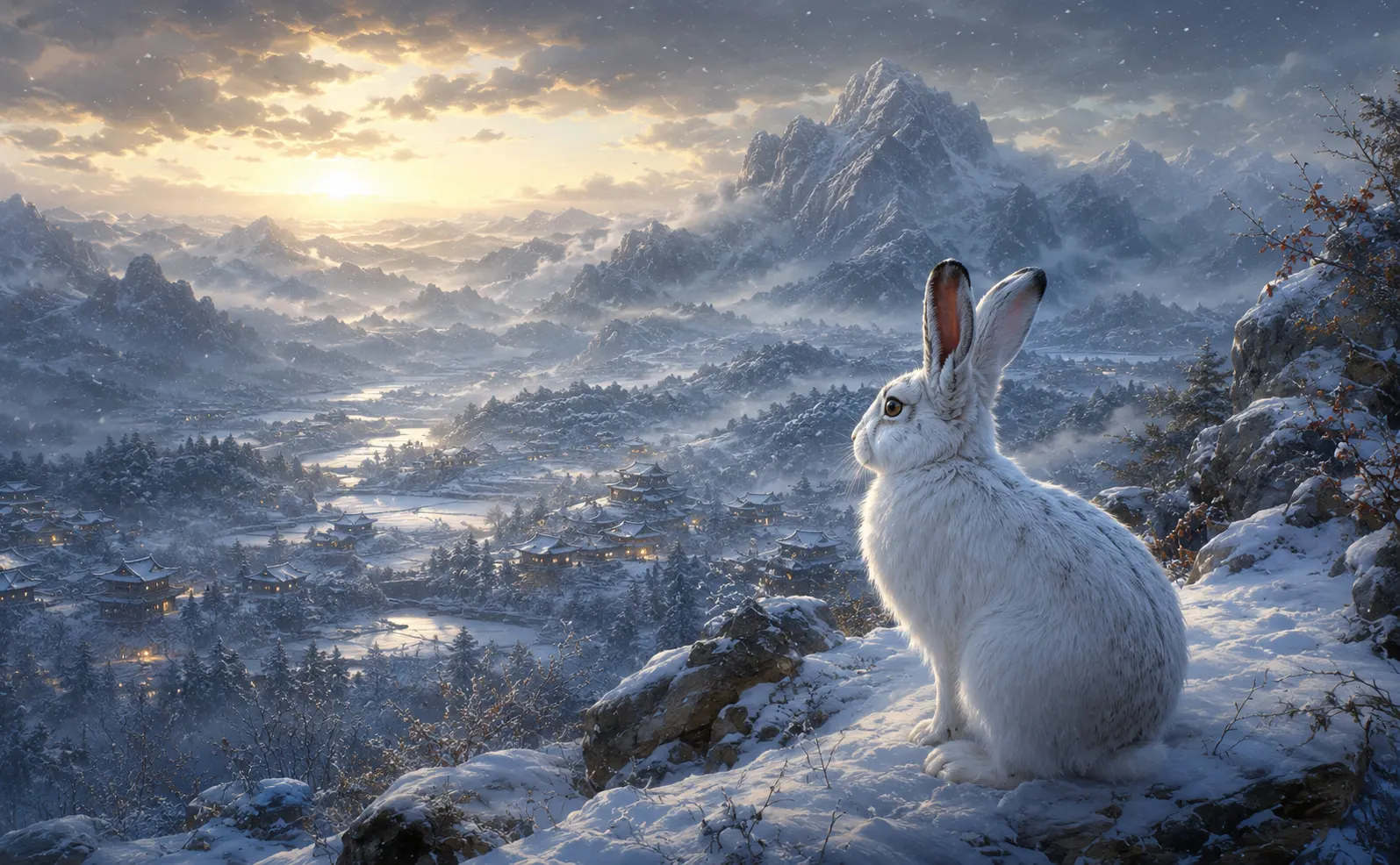
Minor Cold
「忽吹微雨过,便觉小寒生。」
Temperatures across the country fall to their annual low point. Average daily temperatures remain below –10°C across much of the north, while parts of Northeast and Northwest China may fall below –30°C. Southern regions also hover around 0°C, where the combination of moisture and cold can feel especially severe. This is one of the most difficult periods of deep winter to endure.
Northern regions are dominated by dry, cold weather. Snowfall may be limited, but accumulated snow often remains deep. Parts of southern China may experience rain, snow, and freezing conditions, creating an intense damp chill in which perceived temperatures often feel much lower than the actual readings.
During Minor Cold, wild geese are believed to sense that yang qi has already begun to stir within Heaven and Earth and start preparing to migrate northward toward their breeding grounds. They are among the earliest migratory birds to perceive the first signs of spring within the depths of winter.
Magpies sense the first stirring of yang qi and begin carrying twigs to build nests high in the trees, preparing for reproduction in the coming spring. Their activity is a sign that vitality is quietly reawakening in nature even under severe cold.
Pheasants, sensing the first emergence of yang qi even in the bitter winter, begin making mating calls. Their voices signal that the most silent phase of deep winter is nearing its end and that the footsteps of spring can already be faintly heard.
Solar-Term Farming
Farm with the Seasons · Work with Nature
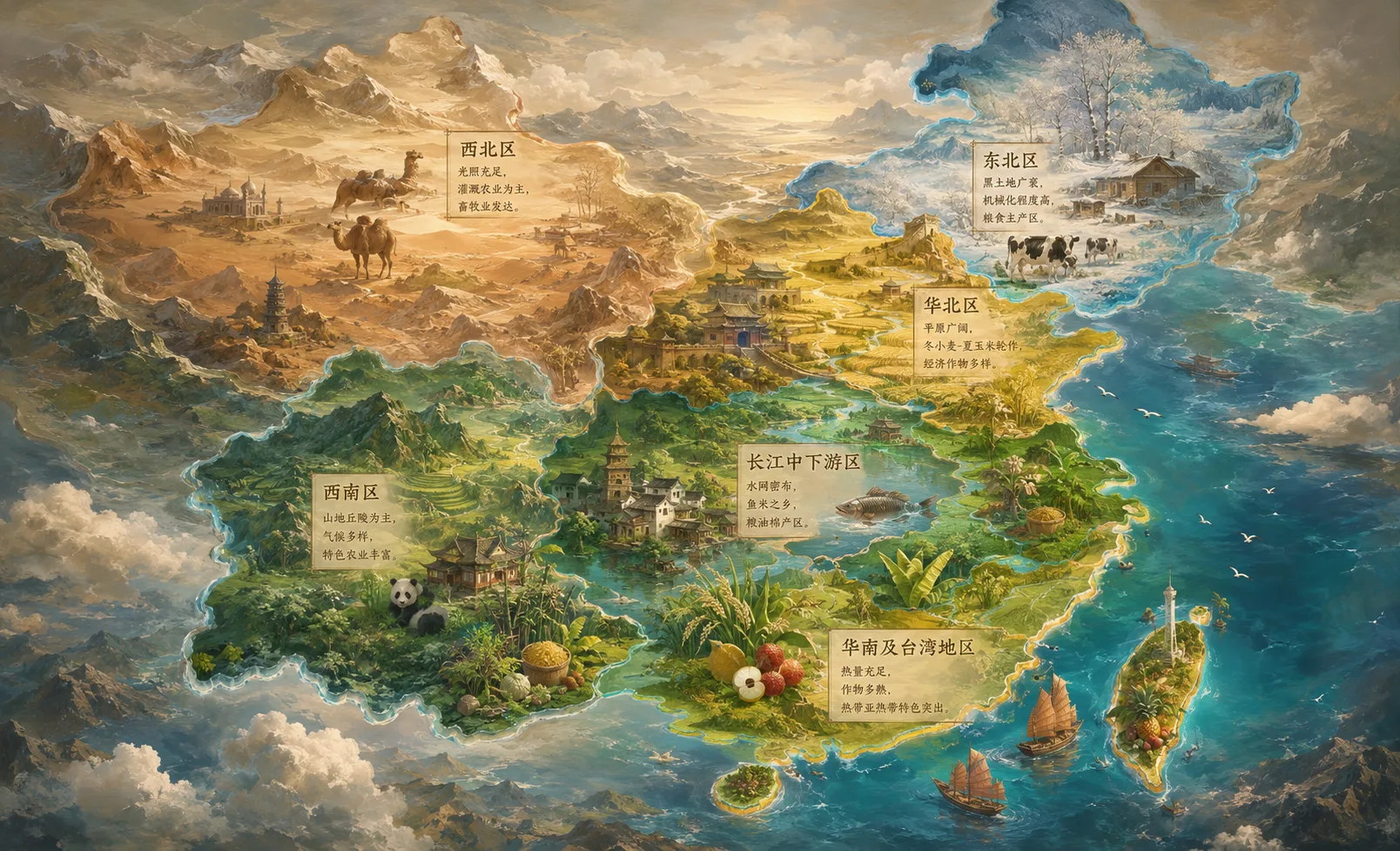
Northeast China
Farming Focus for This Solar Term
Severe cold blankets the land and agricultural production comes to a …
Farming Advice
- Complete autumn tillage pro…
- Service farm machinery and …
Northwest China
Farming Focus for This Solar Term
Winter wheat enters deep overwintering, winter pruning and orchard cl…
Farming Advice
- Roll winter wheat fields to…
- Apply winter irrigation in …
North China
Farming Focus for This Solar Term
Winter wheat fully enters overwintering dormancy, open-field work pau…
Farming Advice
- Control excessive winter-wh…
- Clear drainage ditches in r…
Middle and Lower Yangtze
Farming Focus for This Solar Term
Rapeseed and winter wheat enter overwintering, clearing drainage ditc…
Farming Advice
- Plough promptly after the l…
- Clear drainage ditches in r…
Southwest China
Farming Focus for This Solar Term
Winter wheat enters tillering and overwintering, rapeseed moves into …
Farming Advice
- Check winter-wheat emergenc…
- Top-dress rapeseed seedling…
South China & Taiwan (China)
Farming Focus for This Solar Term
Winter vegetables continue to be harvested, tropical fruits enter win…
Farming Advice
- Harvest late rice during cl…
- Fertilise and earth up suga…
Seasonal Delicacies
Eat with the Seasons · Nothing Out of Season
Seasonal Tastes · A Guide to Eating with the Seasons
Traditional Customs
When Rites Fade, Seek Them Among the People · Old Ways Still Endure
Seasonal Rites · Everyday Traditions
Solar-Term Poetry
Poetry · The Heart of Heaven and Earth
「咏廿四气诗 · 小寒十二月节」
小寒连大吕,欢鹊垒新巢。
拾食寻河曲,衔柴绕树梢。
霜鹰近北首,雊雉隐丛茅。
莫怪严凝切,春冬正月交。
Modern Translation
Minor Cold corresponds to Dalü, one of the twelve ancient pitch standards, and joyful magpies begin building new nests. They gather food and search along bends in the river, carrying twigs in their beaks and circling the treetops. Hawks beneath the frosty sky approach the northern hills, while calling pheasants hide among dense reeds. Do not blame the bitter cold for cutting so deeply—for the meeting of spring and winter is already approaching around the turn into the first lunar month.
In-Depth Commentary
Yuan Zhen’s poem on Minor Cold comes from his 咏廿四气诗 and is distinguished by its precise observation of seasonal phenomena. “小寒连大吕” links the solar term to the ancient musical system: Minor Cold falls in the twelfth lunar month and corresponds to “大吕”, one of the twelve pitch standards, giving the line rich cultural resonance. “欢鹊垒新巢” corresponds to “鹊始巢”, “magpies begin to nest,” one of the three seasonal phases of Minor Cold. The magpies sense the stirring of yang qi and begin constructing new nests, while the character “欢”, “joyful,” captures their liveliness. The second couplet, “拾食寻河曲,衔柴绕树梢”, further describes the concrete actions of nest-building: searching for food by river bends, carrying twigs, and circling treetops, all observed in close detail. The third couplet, “霜鹰近北首”, writes of hawks in the frosty sky approaching the northern hills, while “雊雉隐丛茅” describes calling pheasants hidden among clumps of reeds. One is a hawk, one a pheasant; one visible, one concealed, revealing different states of birdlife during Minor Cold. The final couplet, “莫怪严凝切,春冬正月交”, says not to blame the bitter cold for cutting so deeply, because the meeting of spring and winter is already near the turn of the first lunar month. Within the severe cold, the message of spring is already contained. The entire poem records the subtle changes of Heaven and Earth during Minor Cold through detailed seasonal observation.
Readers’ Comments
Calendar and traditional culture enthusiasts from around the world, sharing the same moon.
Sign in or register to join the conversation. Your comment account is created automatically the first time you use a connected account.
No comments yet
Share your thoughts with readers around the world.