
Minor Heat
「倏忽温风至,因循小暑来。」
Temperatures continue to rise across most of China. Average temperatures in North China and the Huang–Huai region climb to around 28–33°C, while Jiangnan and South China generally reach 30–35°C or higher. Many regions begin to experience hot, humid “sauna-like weather,” making the heat feel especially stifling and difficult to bear.
The Plum Rain season approaches its end in the middle and lower reaches of the Yangtze, though rainfall remains present. North and Northeast China enter their main flood season, with increasingly frequent severe convective weather, while typhoon activity along the coast of South China becomes more active.
During Minor Heat, almost no cool breeze remains over the land; every wind that passes carries warmth, while summer heat seems to rise visibly from the ground. This is regarded as a sign that high summer has truly arrived.
Unable to endure the intense heat of the open fields, crickets leave the countryside and seek shelter in cooler places beneath courtyard eaves, where their calls can be heard. The observation reflects the close attention ancient people paid to the heat-avoiding behavior of insects.
Young eagles are believed to sense the first emergence of the austere qi associated with the coming seasonal turn and begin practicing combat and hunting skills in preparation for independent survival in autumn. It is an important stage in the life cycle of these birds of prey.
Solar-Term Farming
Farm with the Seasons · Work with Nature
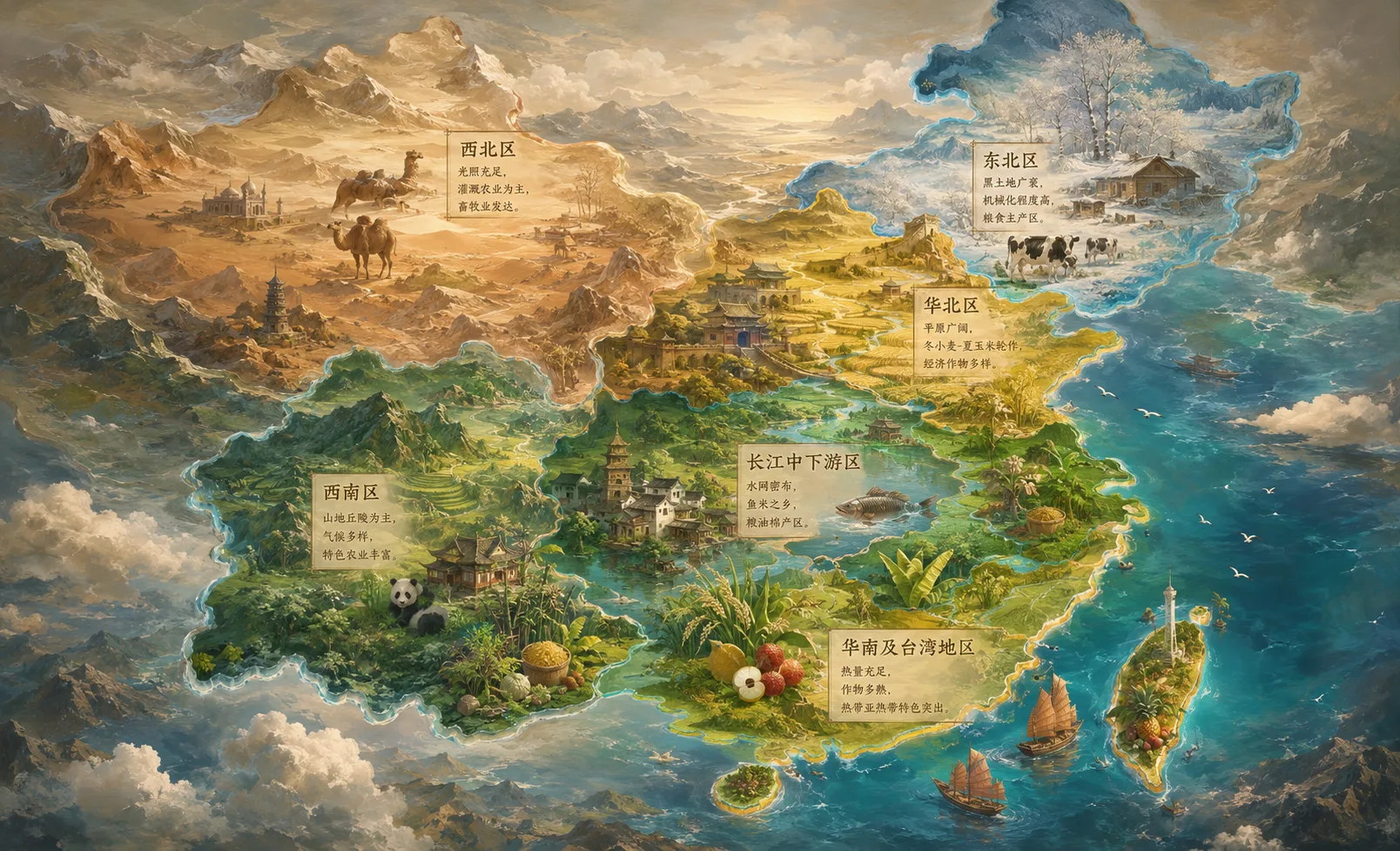
Northeast China
Farming Focus for This Solar Term
Spring maize enters the large-bell stage, rice moves into jointing an…
Farming Advice
- Complete autumn tillage pro…
- Service farm machinery and …
Northwest China
Farming Focus for This Solar Term
The winter wheat harvest is fully completed, spring wheat enters grai…
Farming Advice
- Roll winter wheat fields to…
- Apply winter irrigation in …
North China
Farming Focus for This Solar Term
Summer maize progresses from the seedling to the jointing stage, whil…
Farming Advice
- Control excessive winter-wh…
- Clear drainage ditches in r…
Middle and Lower Yangtze
Farming Focus for This Solar Term
Early rice enters grain filling and maturity, single-season mid-seaso…
Farming Advice
- Plough promptly after the l…
- Clear drainage ditches in r…
Southwest China
Farming Focus for This Solar Term
Mid-season rice enters jointing and booting, flue-cured tobacco reach…
Farming Advice
- Check winter-wheat emergenc…
- Top-dress rapeseed seedling…
South China & Taiwan (China)
Farming Focus for This Solar Term
The early-rice harvest begins on a broad scale while sowing and seedl…
Farming Advice
- Harvest late rice during cl…
- Fertilise and earth up suga…
Seasonal Delicacies
Eat with the Seasons · Nothing Out of Season
Seasonal Tastes · A Guide to Eating with the Seasons
Traditional Customs
When Rites Fade, Seek Them Among the People · Old Ways Still Endure
Seasonal Rites · Everyday Traditions
Solar-Term Poetry
Poetry · The Heart of Heaven and Earth
「小暑」
小暑金将伏,微凉麦正秋。
远山依枕见,暮雨闭门愁。
药裹窗前动,茶烟竹下流。
故人频问讯,犹自道归休。
Modern Translation
At Minor Heat, the metal energy begins to withdraw and hide; a faint coolness appears, while the wheat is just reaching harvest. From beside my pillow I can glimpse the distant mountains, while evening rain brings a quiet melancholy behind closed doors. Medicine packets stir softly before the window, and smoke from boiling tea drifts beneath the bamboo. Old friends frequently send word to ask after me, yet I still say that I ought to withdraw and rest in seclusion.
In-Depth Commentary
Yuan Huai writes of a literatus’s life during Minor Heat in a leisurely and restrained tone. In “小暑金将伏”, “金” refers to the metal energy associated with autumn. Though Minor Heat belongs to summer, yin has begun to arise, and the poet keenly captures the seasonal quality of “伏”, hidden or latent. “微凉麦正秋” describes wheat ripening at this time; although it is summer, the grain has entered its own autumn-like season of harvest. “远山依枕见” shows how the distant mountains can be seen even from the couch, suggesting great leisure; “暮雨闭门愁” uses evening rain and a closed door to convey the humidity and subdued melancholy of the lingering plum-rain season. The final two couplets turn to illness and secluded life. “药裹” and “茶烟” are details of a literatus’s daily routine, while “故人频问讯” brings in the warmth of friendship. The poem balances summer heat with slight coolness, ease with melancholy, and its language is light and sparse while its resonance lingers.
Readers’ Comments
Calendar and traditional culture enthusiasts from around the world, sharing the same moon.
Sign in or register to join the conversation. Your comment account is created automatically the first time you use a connected account.
No comments yet
Share your thoughts with readers around the world.