
End of Heat
「四时俱可喜,最好新秋时。」
Summer heat retreats significantly, with the widening difference between daytime and nighttime temperatures becoming especially noticeable. Average daily temperatures in northern regions fall to around 22–25°C. Although the south may still experience “autumn tiger” conditions, both the intensity and duration of high temperatures are now far below those of high summer, and the overall weather pattern gradually shifts from oppressive heat toward a drier, more comfortable freshness.
Precipitation decreases further across the country. The rainy season ends completely in North and Northeast China, autumn rains begin to become active in western China, summer drought in the middle and lower reaches of the Yangtze gradually eases, and typhoon activity remains relatively active, although the overall trend in precipitation is downward.
As the austere qi of autumn grows stronger, eagles begin hunting birds in greater numbers and are said to arrange their prey before the nest as though laying out offerings to Heaven and Earth. This behavior traditionally marks the raptors’ preparation of food reserves for the coming winter.
The natural world begins to show signs of decline, contraction, and withdrawal: leaves gradually turn yellow, flowers and grasses wither, and nature moves from the exuberant growing season into the more restrained rhythm of autumn and winter, while the austere quality of the season becomes increasingly pronounced.
“登” here means maturity. During End of Heat, autumn crops such as rice, maize, soybeans, and sorghum gradually enter their ripening stage, fields turn golden, and the harvest season formally begins.
Solar-Term Farming
Farm with the Seasons · Work with Nature
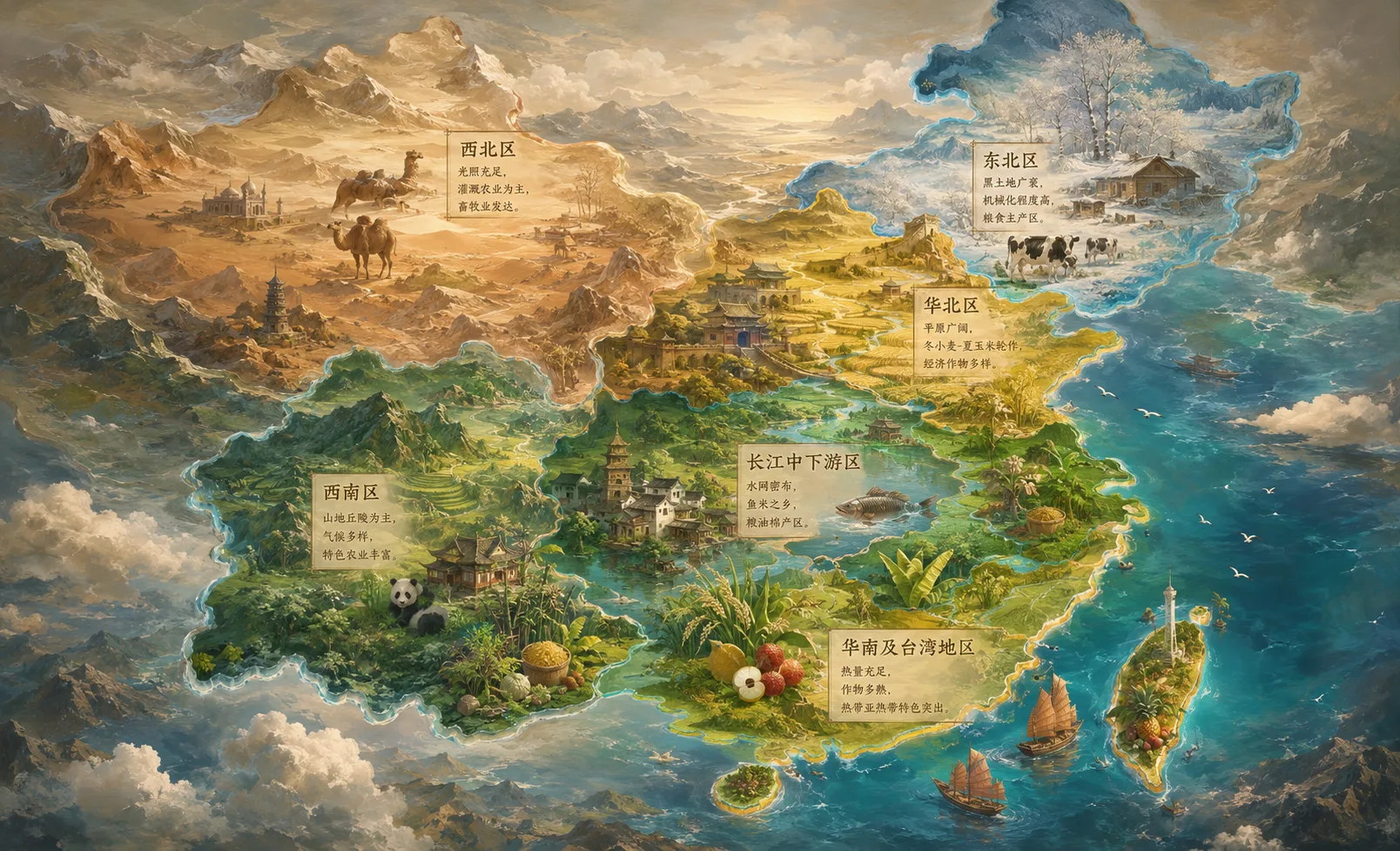
Northeast China
Farming Focus for This Solar Term
Spring maize enters the wax-ripe stage, rice moves into the later pha…
Farming Advice
- Complete autumn tillage pro…
- Service farm machinery and …
Northwest China
Farming Focus for This Solar Term
Spring wheat harvesting is nearly complete, cotton enters peak boll o…
Farming Advice
- Roll winter wheat fields to…
- Apply winter irrigation in …
North China
Farming Focus for This Solar Term
Summer maize enters the middle and later stages of grain filling, sum…
Farming Advice
- Control excessive winter-wh…
- Clear drainage ditches in r…
Middle and Lower Yangtze
Farming Focus for This Solar Term
Single-season mid-season rice enters peak grain filling, late rice re…
Farming Advice
- Plough promptly after the l…
- Clear drainage ditches in r…
Southwest China
Farming Focus for This Solar Term
Mid-season rice enters the later stage of grain filling, flue-cured t…
Farming Advice
- Check winter-wheat emergenc…
- Top-dress rapeseed seedling…
South China & Taiwan (China)
Farming Focus for This Solar Term
Late rice enters panicle differentiation, tropical fruit harvesting r…
Farming Advice
- Harvest late rice during cl…
- Fertilise and earth up suga…
Seasonal Delicacies
Eat with the Seasons · Nothing Out of Season
Seasonal Tastes · A Guide to Eating with the Seasons
Traditional Customs
When Rites Fade, Seek Them Among the People · Old Ways Still Endure
Seasonal Rites · Everyday Traditions
Solar-Term Poetry
Poetry · The Heart of Heaven and Earth
「悯农 · 其一」
春种一粒粟,秋收万颗子。
四海无闲田,农夫犹饿死。
Modern Translation
In spring, a single grain of millet is sown; in autumn, ten thousand grains are harvested. Across the land, not a field lies idle, yet farmers still starve to death.
In-Depth Commentary
Although the title does not explicitly mention End of Heat, the line “秋收万颗子” is a vivid reflection of the approaching autumn harvest during this season. The first two lines, “春种一粒粟,秋收万颗子”, use the striking contrast between “one grain” and “ten thousand seeds” to portray the magnificence of agricultural abundance. It is also a truthful image of crops maturing around End of Heat. The final two lines, “四海无闲田,农夫犹饿死”, turn sharply: the contrast between a land where no field is left unused and farmers who nevertheless starve exposes the cruel reality in which peasants labored endlessly yet could not secure enough food for themselves. The poem’s language is extremely concise, yet its critical force is deeply powerful. The title “悯农”, “Compassion for the Farmers,” makes clear the poet’s profound sympathy for those who work the land, while End of Heat, as a prelude to the autumn harvest, is precisely a moment when such compassion should be most keenly awakened.
Readers’ Comments
Calendar and traditional culture enthusiasts from around the world, sharing the same moon.
Sign in or register to join the conversation. Your comment account is created automatically the first time you use a connected account.
No comments yet
Share your thoughts with readers around the world.