Grain Rain Customs
「谷雨百鱼上岸」
The customs of Grain Rain can be summarized through six actions: 祭、走、喝、赏、禁、食 — to sacrifice, walk, drink, admire, ward off, and eat. Sacrifice refers to both worship of the sea and commemoration of Cangjie: coastal fishing communities offer rites to the sea deity before setting out to fish, while in Baishui, Shaanxi, people honor Cangjie, the legendary ancestor of Chinese writing. Walking refers to the custom of “走谷雨”, when young women visit villages and relatives or stroll through the countryside, allowing themselves to merge with the natural world. Drinking means drinking Grain Rain tea, made in southern tea regions from fresh spring leaves gathered before the seasonal transition and traditionally believed to clear heat, ward off harmful influences, and benefit the eyes. Admiring means viewing peonies, following the saying “谷雨三朝看牡丹”—around Grain Rain, it is time to see the peonies—when large flower fairs come into bloom. Warding off refers to prohibitions against scorpions and the Five Venomous Creatures, often expressed through the posting of Grain Rain talismans intended to repel poisonous insects. Eating means eating Chinese toon shoots, celebrated in northern China by the saying “雨前香椿嫩如丝”, “before Grain Rain, Chinese toon is tender as silk.”
Among these six groups of customs, worship of the sea and commemoration of Cangjie focus on divine protection and reverence for a cultural ancestor; the Grain Rain walk and peony viewing center on closeness to nature and the pleasures of late spring; drinking fresh tea and eating Chinese toon bring the season directly into everyday nourishment and taste. Together they form a complete cultural landscape extending from ocean to land, from gods and cultural forebears to ordinary human life, and from formal ritual to daily experience. Four ideas run through them. The first is gratitude toward nature: sea sacrifice expresses thankfulness for the bounty of the ocean, while Grain Rain tea turns the gifts of the season into something that can literally be tasted. The second is reverence for cultural ancestors, embodied in the rites for Cangjie and the tracing of Chinese written civilization back to its legendary source. The third is following the proper time of nature: seasonal walking and the eating of Chinese toon allow both body and palate to respond directly to spring’s vital energy. The fourth is averting calamity and praying for blessing, seen in the rituals intended to drive away scorpions and other poisonous creatures and to secure peace and a good harvest. Grain Rain can therefore be regarded as one of the solar terms most imbued with gratitude and the flavor of spring: beneath the fine rains of late spring, people offer respect to the sea and to the legendary ancestor of writing while, at the same time, quite literally “eating” the whole season before it disappears.
Regional Customs of This Solar Term
| Region | Signature Customs | Notable Features |
|---|---|---|
| Rongcheng, Weihai, and Rizhao, Shandong | Sea sacrifice, Fishermen’s Festival / Grain Rain Festival | At Grain Rain, “hundreds of fish approach the shore,” and fishing communities hold elaborate ceremonies whose importance is considered second only to the Spring Festival |
| Xiangshan and Daishan, Zhejiang | Sea sacrifice, opening of the fishing season and thanksgiving rites | Coastal fishing communities perform sea rituals around Grain Rain, praying for safety and abundance |
| Shiguan Township, Baishui, Shaanxi | Cangjie Temple Fair | Following the saying “清明祭黄帝,谷雨祭仓颉”, a major ceremony for Cangjie is held every Grain Rain |
| Heze, Shandong | Peony viewing and Peony Festival | Celebrated for the saying “Caozhou peonies are finest under Heaven”; an international peony festival is held around Grain Rain |
| Luoyang, Henan | Peony viewing and Peony Festival | The saying “洛花,以谷雨为开候” associates Grain Rain with the opening of Luoyang’s peonies; the tradition has continued for a thousand years |
| Pengzhou, Sichuan | Peony viewing | Together with Heze and Luoyang, Pengzhou is known for peony culture and holds seasonal flower events |
| Jiangnan | Drinking Grain Rain tea | Fresh pre-Grain-Rain tea is harvested and prepared, traditionally associated with clearing heat, warding off harmful influences, and brightening the eyes |
| Northern China, especially Shandong, Shanxi, and Shaanxi | Scorpion-banishing talismans | Grain Rain prints are posted to ward off poisonous creatures; the custom is especially widespread in these regions |
| Southern Shandong | Walking Grain Rain | Young unmarried and married women go out together, visiting villages and relatives |
| Northern China, especially Beijing | Eating Chinese toon shoots | “雨前香椿嫩如丝”; fresh toon shoots reach the market around Grain Rain |
Grain Rain Customs
Sacrificing to the Sea
Popular Regions:
Activities:
Around Grain Rain, seawater grows warmer and large numbers of fish move into shallow coastal waters, making it an ideal time to begin fishing. Coastal communities traditionally say that at Grain Rain “hundreds of fish come ashore,” and therefore regard the solar term as a ceremonial “Departure Festival” before the fishing season. Elaborate sacrifices are offered to the sea in hopes that the sea deity will protect the fishermen, keep them safe on the water, and bring their boats home laden with catch.
The ceremony is exceptionally grand, and its scale and importance in fishing communities are considered comparable to those of the Spring Festival. Before the event, villagers contribute money to purchase offerings. On Grain Rain itself, they gather on the shore and present fine wine, large steamed buns, and other foods to the sea in a solemn act of worship. Once the rite is complete, participants drink together and share the remaining sacrificial food. In Rongcheng, fishery businesses also conduct ceremonies for boats, the sea, and the Sea Goddess while providing a feast for the fishermen. Pigs are slaughtered and offerings prepared before the festival; on the day itself, the crews gather to eat together. Fishermen in Rongcheng are said to have celebrated Grain Rain in this manner for more than two thousand years, and the custom remains practiced along the coasts of Wendeng, Rongcheng, and Rushan.
Historical Origins:
The Grain Rain sea sacrifice developed alongside maritime production. Fishing at sea existed as early as the Spring and Autumn period, while rites honoring the Sea Goddess around Grain Rain are said to have a history of more than a thousand years. The Sea Goddess is regarded as the protector of those who make their living on the ocean and is one of the most deeply revered deities among coastal communities.
After a year of intense labor followed by winter maintenance and preparation, fishermen were ready to return to sea around Grain Rain. Before setting out, they respectfully worshipped the deity believed to safeguard them on the water. Over time, this practice became deeply embedded in the outlook and daily life of fishing communities, serving as a spiritual support for those engaged in dangerous maritime work and developing into an influential form of popular belief along the Jiaodong coast. Rongcheng’s Fishermen’s Festival has been included in China’s national intangible cultural heritage.
How to Take Part:
During Grain Rain, visitors can travel to Rongcheng, Weihai, and other coastal areas of Shandong to observe sea-sacrifice ceremonies. The Rongcheng Fishermen’s Festival is particularly large, and visitors can watch the offerings and departure of fishing boats from designated safe areas. Similar ceremonies are also held in places such as Xiangshan, Zhejiang. Specific schedules are best checked beforehand through local cultural and tourism authorities.
Recommended Places:

Drinking Grain Rain Tea
Popular Regions:
Activities:
Southern China has a long-standing custom of picking and drinking tea around Grain Rain. Grain Rain tea is a type of spring tea harvested and processed during this period and is also known as “second spring tea.” Tradition maintains that authentic Grain Rain tea should be made from fresh leaves picked on the day of Grain Rain itself, preferably in the morning. The finished leaves are bright green and tender, rich in vitamins and amino acids, with an appealing fragrance.
Popular belief holds that tea picked on this day can clear internal heat, ward off harmful influences, and brighten the eyes. The *Shennong Bencao* says of pre-Grain-Rain tea: “久服安心益气……轻身不老”. Tea farmers traditionally reserve several handfuls of the new harvest to serve to guests, considering this one of the sincerest forms of hospitality. In Jiangnan, freshly harvested Grain Rain tea is traditionally believed to help the sick recover and keep the healthy strong. In Jiangsu and Zhejiang, newly picked sparrow-tongue buds may be pan-fired, dried, and brewed, while northern Hunan preserves the custom of using fresh Grain Rain tea leaves to prepare *leicha*, or pounded tea. Grain Rain tea is also considered relatively affordable, and its flavor is regarded as no less appealing than the more celebrated pre-Qingming tea, which contributes to its popularity.
Historical Origins:
The Grain Rain tea tradition has a long history. Since the Tang dynasty, spring teas have been divided into “pre-Qingming tea” and “pre-Grain-Rain tea”: leaves harvested before Qingming are known as *mingqian* tea, while those gathered before Grain Rain are called *yuqian* tea.
The ancients believed that Grain Rain brought moderate temperatures and abundant rainfall. After resting through the winter and receiving spring rain, tea plants produced plump buds and leaves with a vivid green color and fresh flavor. Grain Rain tea therefore became more than a seasonal drink: it also carried the cultural ideas of nurturing the body through tea and seeking blessing through tea.
How to Take Part:
During Grain Rain, visitors can travel to tea regions such as Longjing in Hangzhou, Biluochun country around Suzhou, or Huangshan Maofeng in Anhui to experience harvesting and tea making. Many gardens open seasonal picking programs around Grain Rain, allowing visitors to gather leaves and learn traditional pan-firing techniques. Fresh *yuqian* tea can also be purchased from tea shops.
Recommended Places:
Viewing Peonies
Popular Regions:
Activities:
“谷雨三朝看牡丹。” The days around Grain Rain are a major flowering period for the peony, which is therefore also known as the “Grain Rain flower” and the “flower of wealth and honor.” The Qing writer Gu Lu records in *Qing Jia Lu*: “牡丹花,俗呼谷雨花,以其在谷雨节开也”. Another saying likewise declares: “谷雨三朝看牡丹。” Whether in wealthy households and distinguished clans, official compounds and magnificent temples, shrines and private gardens, guild halls and charitable institutions, peonies were planted wherever space allowed; even the smallest scholar’s studio might contain one or two plants purely for appreciation.
The people of Heze in Shandong are particularly renowned for cultivating peonies, and village households traditionally planted them in front yards and behind their homes. Local people even came to refer to Grain Rain as a “Flower Festival.” At this time, men and women, young and old, went out together to enjoy the blossoms, and activities such as flower competitions and peony-tasting banquets developed around the spectacle. By the Ming and Qing periods, Heze was already described as a place where “every household planted peonies, every home was filled with floral fragrance, the earth seemed covered in brocade, and colored clouds descended from the sky.” Today, Heze, Luoyang, Pengzhou, and other famous peony regions continue to hold festivals around Grain Rain. Since 1992, Heze has organized an international peony festival every year.
Historical Origins:
The custom of viewing peonies at Grain Rain has a long history. Ouyang Xiu’s Song-dynasty *Record of the Peonies of Luoyang* states: “洛花,以谷雨为开候”, indicating that Luoyang peonies were expected to bloom around this solar term.
The tradition of viewing peonies originated in the Shangsi festivities of lunar March in Tang-dynasty Chang’an and later merged with the Grain Rain season, gradually producing the custom expressed by “谷雨三朝看牡丹.” It has continued for roughly a thousand years. Peony viewing eventually came to combine rites of blessing with cultural performances centered on the flower, preserving older customs while adapting them through modern peony festivals.
How to Take Part:
During Grain Rain, visitors can attend the international peony festival in Heze or travel to Luoyang to see the flowers in bloom. Luoyang is celebrated for its peonies, while Heze is renowned throughout Shandong; both offer large gardens open to visitors. Pengzhou in Sichuan is another important destination for seasonal peony viewing.
Recommended Places:
Honoring Cangjie
Popular Regions:
Activities:
Shiguan Township in Baishui County, Shaanxi, is traditionally regarded as the homeland of Cangjie, the legendary ancestor of Chinese writing. Every Grain Rain, the area holds a Cangjie Temple Fair, with both official public ceremonies and popular sacrificial rites conducted in his honor. A local saying states: “清明祭黄帝,谷雨祭仓颉”—Qingming is for honoring the Yellow Emperor; Grain Rain is for honoring Cangjie.
The ceremony follows a ritual system of nine prescribed forms and includes welcoming the Sage Cangjie, presenting tribute, reciting sacrificial texts, and making ritual announcements through music and dance. The temple fair takes Cangjie worship as its central thread while promoting his cultural legacy and combining cultural activity with trade. Programs include calligraphy exhibitions, competing theatrical performances, poetry and couplet contests, *shehuo* folk processions, and drum-and-gong competitions. The main sacrifice centers on ritual music, ceremonial vessels, offerings, the formal reading of the sacrificial text, homage to the ancestor, and grave sweeping. In Baishui, Grain Rain rites for Cangjie are said to have been divided into official and popular forms since the Han dynasty, although popular worship has remained dominant. In 2010, the United Nations designated Grain Rain as the date of UN Chinese Language Day, in commemoration of Cangjie’s contribution as the legendary “ancestor of Chinese writing.”
Historical Origins:
Cangjie is traditionally described as a historiographer in the age of the Yellow Emperor. Legend says that after he successfully created writing, “天雨粟,鬼夜哭”—grain rained down from Heaven and ghosts wept in the night—and that this heavenly rain of grain gave rise to the name “Grain Rain.”
Out of reverence for the legendary inventor of writing, later generations held grand ceremonies around this solar term. Precisely when the custom began can no longer be determined, but after thousands of years it became firmly established. The practice binds the seasonal calendar to reverence for a cultural ancestor and reflects the Chinese traditions of honoring distant forebears and treating the written word with respect.
How to Take Part:
During Grain Rain, visitors may travel to Shiguan Township in Baishui County, Shaanxi, to observe the Cangjie Temple Fair and its sacrificial ceremonies. Calligraphy exhibitions, *shehuo* performances, and gong-and-drum competitions are also held during the fair. Specific schedules should be checked through local cultural and tourism authorities.
Recommended Places:
Walking Grain Rain
Popular Regions:
Activities:
In earlier times, people observed a custom known as “走谷雨”, literally “walking Grain Rain.” On the day itself, young women visited neighboring villages and relatives or simply walked out into the countryside before returning home. In southern Shandong, unmarried young women and young wives would gather in small groups, stroll through the fields, wander from one village to another, and spend the day outdoors. The custom was also called “踩青”, “treading the green.”
Similar practices were common in Jiangnan, where they could also be called “walking spring.” The meaning was to bring oneself into closer contact with nature while strengthening the body. Folk-culture specialists have interpreted one of its purposes as encouraging people to spend more time in the natural world and maintain good health.
Historical Origins:
Walking Grain Rain is an old custom handed down from earlier generations. By this time, spring is at its height and the natural world is full of life. Walking outdoors allows people to experience the final stretch of spring while stretching and reawakening bodies that had remained relatively enclosed through winter.
The custom belongs to the same broad tradition as Qingming spring outings and Spring Equinox excursions: all express a Chinese impulse to follow the vitality of spring and draw closer to nature.
How to Take Part:
On Grain Rain, a few friends can simply go for a walk through fields, countryside, or parks and enjoy the lush vegetation of late spring. It is one of the easiest Grain Rain customs to experience.
Recommended Places:
Banning Scorpions and Posting Grain Rain Talismans
Popular Regions:
Activities:
After Grain Rain, temperatures rise and centipedes, spiders, toads, scorpions, venomous snakes, and other dangerous creatures become increasingly active. To reduce the damage they might cause to crops and people, farming households combined practical pest control in the fields with the posting of “Grain Rain talismans,” praying to drive away harmful forces and invite good fortune. The practice was especially widespread in Shandong, Shanxi, and Shaanxi.
The Grain Rain talisman, also known as a “scorpion-banishing charm,” belongs to the tradition of Chinese New Year prints. Designs may show a divine rooster catching a scorpion, the Celestial Master subduing the Five Venomous Creatures, or Daoist sacred symbols. Some also bear inscriptions such as “谷雨三月中,老君下天空。朱砂书符禁蝎”. In Shandong, these prints were generally made on yellow ritual paper. The *Gazetteer of Xiajin County* from the sixth year of the Qianlong reign records: “谷雨,朱砂书符禁蝎”. Around Linfen in Shanxi, people painted talismans of the Celestial Master Zhang and posted them on doors on Grain Rain. Folk belief held that these images could intimidate poisonous creatures and protect the entire household.
Historical Origins:
The solar term following Grain Rain is Beginning of Summer, a season when the Five Venomous Creatures were believed to become especially active and threaten human health. For this reason, the period around Grain Rain became a time for a symbolic campaign against harmful creatures, known as “banning scorpions” or “banning the Five Venoms.”
The custom reflects the deep anxiety that insect and animal pests created within agrarian society, as well as the psychological need to avert disaster and seek blessing through symbolic ritual. The fact that Grain Rain prints were mass-produced from woodblocks demonstrates how widely the practice was once observed.
How to Take Part:
During Grain Rain, traditional prints can be purchased from New Year print markets or folk-culture shops in Shandong, Shanxi, Shaanxi, and neighboring regions and displayed on doors or walls. Some folk villages also organize workshops where visitors can make Grain Rain talismans themselves.
Recommended Places:
Eating Chinese Toon Shoots: “Eating Spring”
Popular Regions:
Activities:
Northern China has a tradition of eating fresh Chinese toon shoots around Grain Rain. This is precisely when the new shoots reach the market, tender, fragrant, and flavorful, giving rise to the saying “雨前香椿嫩如丝”—before Grain Rain, Chinese toon is tender as silk. Picking and eating the young shoots in spring is popularly known as “吃春”, “eating spring.”
Chinese toon includes varieties with purplish and green young leaves, with the purple shoots traditionally regarded as superior. Common preparations include Chinese toon scrambled with eggs, fresh shoots mixed with tofu, and battered fried shoots known as “Chinese toon fish.” Eating the vegetable at Grain Rain is not merely a pleasure of taste; it also carries the wish to hold on to spring before the season comes to an end.
Historical Origins:
Chinese toon has been eaten in China for a very long time and was already presented to the imperial court as tribute during the Han dynasty. Its young leaves are at their most tender around Grain Rain; once the season passes, they quickly become old and coarse, hence the saying “雨前香椿嫩如丝.”
The custom embodies the dietary philosophy of “不时不食”—do not eat what is out of season. Just as spring approaches its end, the last trace of the season is preserved on the tongue.
How to Take Part:
Around Grain Rain, fresh Chinese toon shoots can be purchased in northern food markets and prepared at home, for example by scrambling them with eggs. This is one of the easiest Grain Rain customs to experience.
Recommended Places:
Washing in “Peach Blossom Water”
Popular Regions:
Activities:
In some parts of northwestern China, Grain Rain is associated with washing in “Peach Blossom Water.” Folk belief holds that bathing in this water can dispel calamity and protect against misfortune. On Grain Rain, each household traditionally sends someone to fetch Peach Blossom Water for bathing, while hunting, dancing, and other celebratory activities may also take place.
In places such as Hengzhou, Guangxi, another local practice uses willow leaves and field snails soaked in water to wash the eyes, which is traditionally believed to make them bright and clear.
Historical Origins:
“Peach Blossom Water” refers to river or well water during the period when peach blossoms are in bloom around Grain Rain. The ancients believed that water at this moment contained the vitality and spiritual energy of spring and that bathing in it could remove illness and misfortune.
The custom combines two layers of folk belief: the purifying power of water and the auspicious symbolism of peach blossom.
How to Take Part:
During Grain Rain, the custom of fetching Peach Blossom Water for bathing can be experienced in some rural communities, provided the water is used at a suitable temperature. Some folk-tourism destinations in northwestern China also organize seasonal activities based on the tradition.
Recommended Places:
Grain Rain Prints: Cinnabar Talismans Against Scorpions
Popular Regions:
Activities:
Grain Rain prints, also known as scorpion-banishing talismans, are a traditional means of driving away harmful forces and inviting auspiciousness in Shandong, Shanxi, Shaanxi, and other northern areas. Once temperatures rise after Grain Rain, poisonous creatures become more active. Farming households therefore combined practical pest control in the fields with the posting of these ritual images.
Scorpion-banishing charms were painted in cinnabar and placed on walls or near scorpion holes, expressing the desire to eliminate pests while protecting the household and securing the harvest. Some were mass-produced with carved woodblocks and bore verses such as “谷雨三月中,蝎子逞威风。神鸡叼一嘴……”. Around Linfen in Shanxi, images and talismans of the Celestial Master Zhang were attached to doors on Grain Rain, while the scorpion-banishing prints of Fengxiang in Shaanxi developed their own distinctive style.
Historical Origins:
The custom emerged from both a practical fear of poisonous creatures and an older magical tradition of using talismans to repel harmful influences. As the weather grows warmer at Grain Rain, the Five Venomous Creatures begin to appear more frequently, and posting charms became at once an expression of vigilance toward real pests and a symbolic prayer for peace and agricultural abundance.
The practice represents a fusion between the artistic tradition of Chinese folk woodblock prints and seasonal belief associated with the solar terms.
How to Take Part:
During Grain Rain, traditional woodblock Grain Rain prints may be purchased in major folk-printing centers such as Yangjiabu in Shandong and Fengxiang in Shaanxi. Some folk museums also organize seasonal printmaking workshops.
Recommended Places:
Grain Rain Temple Fairs
Popular Regions:
Activities:
Various temple fairs are held throughout China during Grain Rain. In Baishui, Shaanxi, the Cangjie Temple Fair centers on worship of Cangjie while combining cultural activity with commerce. Its programs include calligraphy exhibitions, competing theatrical performances, poetry and couplet contests, *shehuo* processions, and gong-and-drum competitions.
In Heze, Shandong, Grain Rain celebrations center on the peony festival and have developed activities such as flower competitions and flower-themed banquets. Temple fairs thus function not only as places for worshipping deities and cultural ancestors, but also as important spaces for trade, social exchange, entertainment, and leisure.
Historical Origins:
Grain Rain temple fairs developed from the sacrificial traditions and public gatherings of ancient agrarian society. By Grain Rain, much of the spring farming work had already been completed while the summer harvest had not yet arrived, leaving a temporary interval in the agricultural calendar. Communities used this time to worship deities, exchange goods, and enjoy entertainment.
The custom therefore binds the seasonal order closely to local economic life and popular religion.
How to Take Part:
During Grain Rain, visitors can travel to Baishui in Shaanxi for the Cangjie Temple Fair or to Heze in Shandong for the peony celebrations. Local fairs offer a wide range of activities, including sacrificial rites, traditional opera, and regional foods, allowing visitors to experience the festivities throughout.
Recommended Places:
Closing Note
The customs of Grain Rain grew from the meeting of agrarian wisdom and humanistic spirit contained within the phrase “雨生百谷”—rain gives life to the hundred grains. When early communities joined the words “grain” and “rain,” they were doing more than condensing an observation about seasonal precipitation; they were expressing an earnest hope for “时雨乃降、五谷百果乃登”—that timely rain would descend and grains and fruits would flourish. Grain Rain therefore developed a dual character: on one side, a practical guide to agricultural life; on the other, a deeply poetic culture of remembrance and reverence.
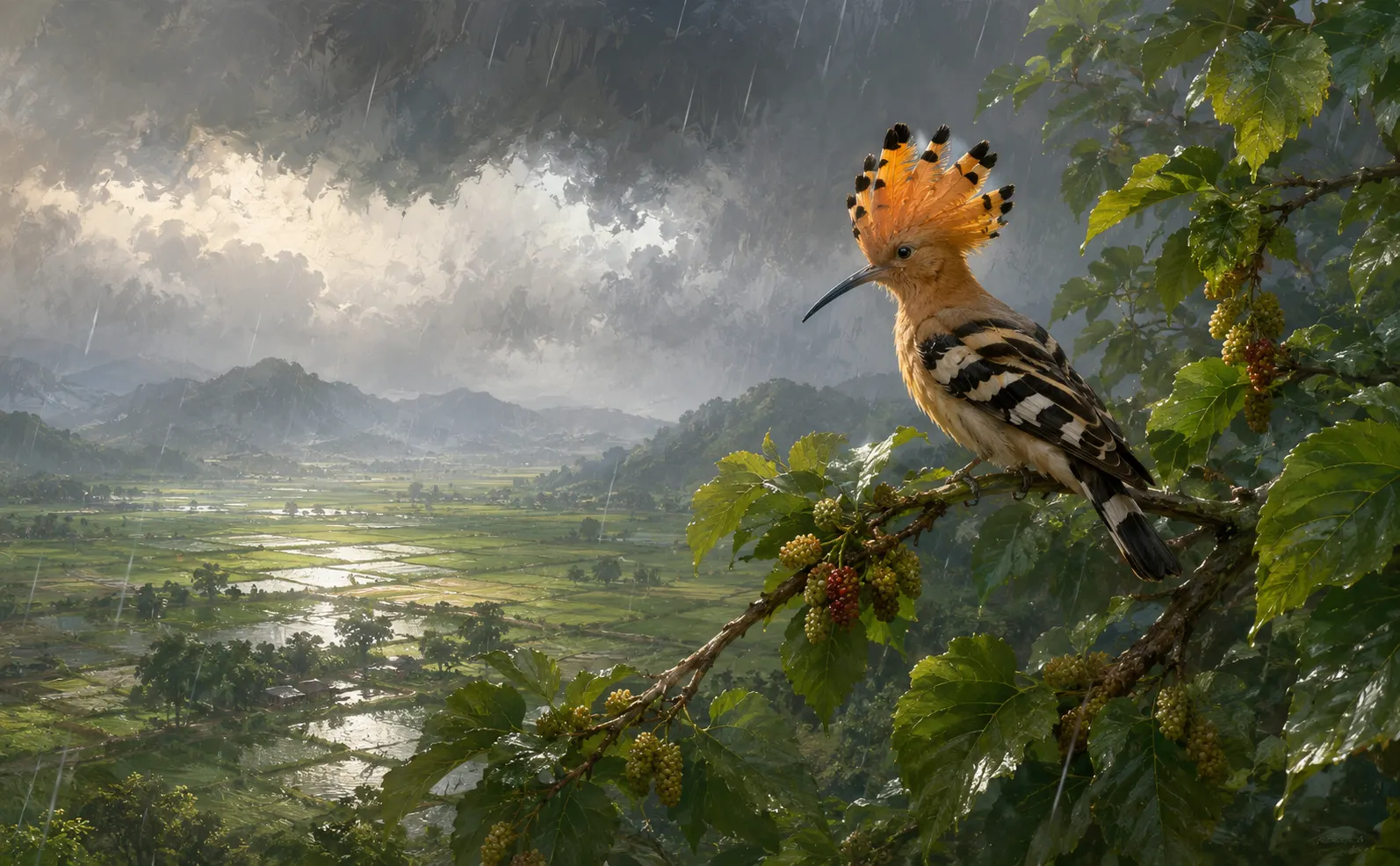
Across the centuries, Grain Rain has grown simultaneously in the worlds of farming and human culture. The agricultural saying “清明宜晴,谷雨宜雨”—clear weather suits Qingming, rain suits Grain Rain—is among the simplest and most precise judgments farmers have made about the season over thousands of years. In Baishui, Shaanxi, rites honoring Cangjie have been associated with Grain Rain since the Han dynasty: legend says that when Cangjie succeeded in creating writing, “天雨粟,鬼夜哭”, grain fell from Heaven and ghosts wept in the night, and later generations commemorated the legendary ancestor of writing with incense and sacrifice. In the sericulture households of Jiangnan, this is also the busy season of silk reeling, expressed in the phrase “蚕事既登田事起”—as silkworm work advances, work in the fields begins—making Grain Rain a link between farmland and loom. Along coastal fishing villages, people sacrifice to the sea before setting out, praying for safety and abundance. Even the traditional phenological sequence records this unfolding vitality with remarkable precision: 一候萍始生、二候鸣鸠拂其羽、三候戴胜降于桑—first, duckweed begins to grow; second, the calling dove brushes its feathers; third, the hoopoe descends upon the mulberry. One sign follows another, tracing the movement of life through Heaven and Earth.
When the first soaking rain of Grain Rain falls across ridges waiting to be sown, and when the hoopoe arrives as expected upon the branches of the mulberry, Grain Rain becomes more than the final punctuation mark of spring. It is a seed placed by Heaven and Earth into the farmer’s hand, and at the same time a song of praise in the writings of poets and scholars—a song to the written word, to cultivation, and to abundance.
—-
Readers’ Comments
Calendar and traditional culture enthusiasts from around the world, sharing the same moon.
Sign in or register to join the conversation. Your comment account is created automatically the first time you use a connected account.
No comments yet
Share your thoughts with readers around the world.