Spring Equinox Poetry
「仲春初四日,春色正中分。」
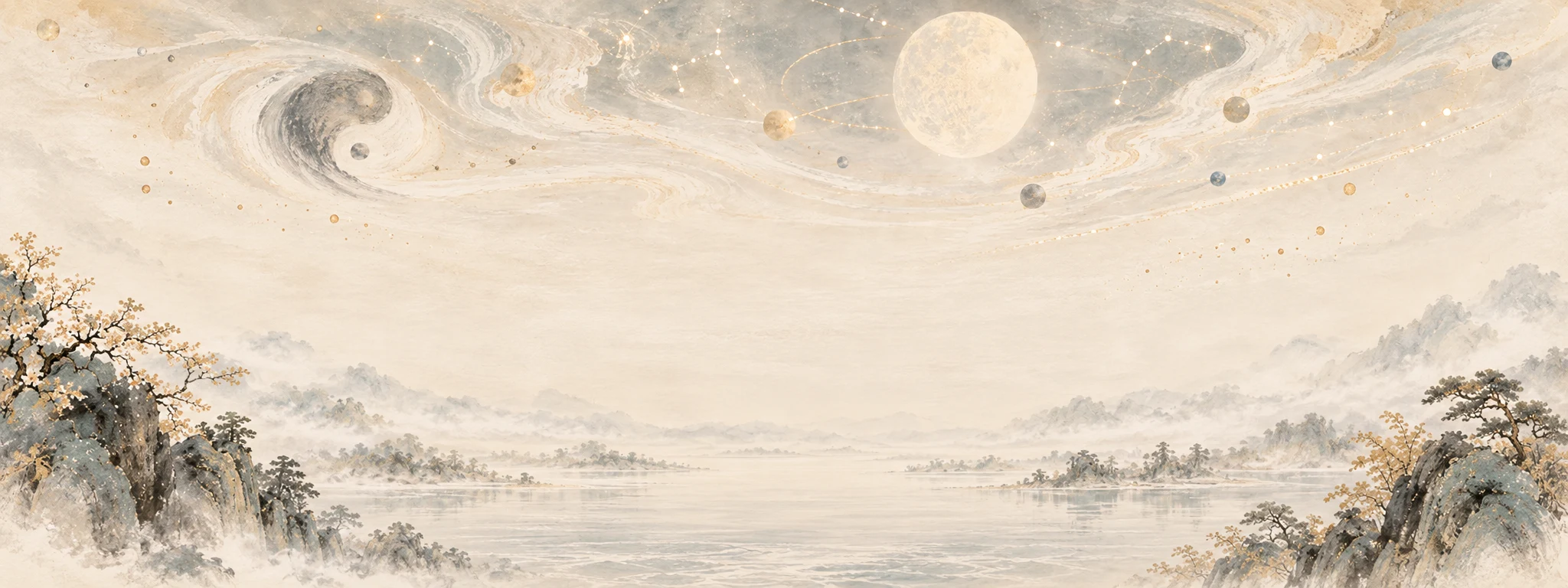
Poetry of the Spring Equinox often records the celestial rhythm of equal day and night, with yin and yang divided evenly. Xu Xuan’s “仲春初四日,春色正中分” writes of the beauty of spring poised at its midpoint; Ouyang Xiu’s “千花百卉争明媚” portrays the brilliant spectacle of countless flowers competing in bloom. The Spring Equinox falls at the midpoint of spring’s ninety days: blossoms fall, swallows fly, and green plums are as small as beans—it is spring at its most beautiful. On this day, people stood eggs upright, went on spring outings, and flew paper kites, leaving behind a scroll of Spring Equinox poetry—recording the turning of seasonal signs while also tracing the fluttering movements of the heart.
Spring Equinox Poetry
踏莎行 · 雨霁风光
Original Verse:
雨霁风光,春分天气。千花百卉争明媚。
画梁新燕一双双,玉笼鹦鹉愁孤睡。
薜荔依墙,莓苔满地。青楼几处歌声丽。
蓦然旧事上心来,无言敛皱眉山翠。
Modern Translation:
The rain has cleared, and it is the season of the Spring Equinox. A thousand flowers and a hundred kinds of blossoms compete in brightness. Beneath painted rafters, newly arrived swallows fly in pairs, while a parrot in a jade cage sleeps alone in sorrow. Creeping fig vines cling to the wall, and moss covers the ground. From several pleasure houses come clear and beautiful songs. Suddenly, old memories rise in her heart; she says nothing, only draws her brows together, dark and green like distant mountains.
Commentary:
Set against the Spring Equinox, this lyric writes scenery in the first stanza and emotion in the second, using joyful scenery to heighten sorrow. The opening “雨霁风光,春分天气” establishes both the season and the weather, while the single character “争” in “千花百卉争明媚” conveys the splendor of countless flowers competing in bloom. This is immediately followed by a contrast between new swallows flying in pairs and the parrot sleeping alone. The swallows’ freedom and companionship throw the parrot’s confinement and solitude into relief, while also implying the loneliness of the lyric’s central figure. In the second stanza, “薜荔依墙,莓苔满地” writes the stillness and coolness of the courtyard, while “青楼几处歌声丽” uses the joy of others to heighten her isolation. The closing “蓦然旧事上心来,无言敛皱眉山翠” compares her tightly drawn brows to dark green mountain ridges; countless emotions gather into silence, restrained and suggestive, with a lingering resonance.
春分日
Original Verse:
仲春初四日,春色正中分。
绿野徘徊月,晴空断续云。
燕飞犹个个,花落已纷纷。
思妇高楼晚,歌声不可闻。
Modern Translation:
On the fourth day of the second lunar month, spring has reached its exact midpoint. Over green fields, the moon seems to linger; across the clear sky, white clouds gather and part. Swallows still fly here and there in small numbers, while fallen blossoms are already drifting down in profusion. At dusk, a woman longing for one far away gazes from a high tower; the sorrow in her song is almost too painful to hear.
Commentary:
This poem portrays the Spring Equinox on three levels: astronomy, seasonal signs, and human feeling. The opening “仲春初四日,春色正中分” points to the astronomical character of the Spring Equinox, when day and night are equal and spring itself is divided in half. The second couplet, “绿野徘徊月,晴空断续云”, is gentle in diction: “徘徊” writes the moonlight lingering over green fields, while “断续” captures clouds gathering and dispersing, conveying the mild climate and unhurried movement of moon and cloud at this season. The third couplet, “燕飞犹个个”, shows swallows returning but not yet gathering in flocks, while “花落已纷纷” describes flowers beginning to decline and fall. One is sparse, the other abundant; one returns, the other falls. Together they imply the Spring Equinox’s special position as a watershed within spring. The final couplet moves from nature to human feeling through the image of the waiting woman. “歌声不可闻” does not mean that her song is unpleasant, but that the sorrow of separation within it is too painful to bear. The entire poem turns on the character “分”: spring is divided, swallows scatter one by one, blossoms fall in profusion, and finally the waiting woman is separated from the one she loves. Each layer echoes the next, giving the poem an intricate structure.
癸丑春分后雪
Original Verse:
雪入春分省见稀,半开桃李不胜威。
应惭落地梅花识,却作漫天柳絮飞。
不分东君专节物,故将新巧发阴机。
从今造物尤难料,更暖须留御腊衣。
Modern Translation:
Snow after the Spring Equinox is extremely rare; the half-open peach and plum blossoms cannot withstand the severity of the cold. The plum blossoms, already fallen to the ground, should perhaps feel ashamed before this spring snow; meanwhile, the snowflakes themselves drift across the sky like willow catkins. The Lord of Spring is not content merely to govern the season’s scenery, but devises a new trick and sends down this spring snow. From now on, the intentions of Creation will be even harder to fathom. Though the weather has already grown warmer, one must still keep winter clothes at hand against a sudden return of cold.
Commentary:
Su Shi takes as his subject a rare snowfall after the Spring Equinox, blending rich philosophical reflection and playful wit into his description of the scene. The opening “雪入春分省见稀,半开桃李不胜威” writes both the rarity of spring snow and the fragility of peach and plum blossoms; the three characters “不胜威” vividly show the half-open flowers trembling helplessly beneath wind and snow. The next couplet, “应惭落地梅花识,却作漫天柳絮飞”, is especially ingenious: the plum blossoms have already fallen, and, seeing this snow, might almost be ashamed that they bloomed too early and missed meeting it; meanwhile, the snow itself seems to take the place of willow catkins, flying across the Spring Equinox sky. With one “惭” and one “作”, plum blossoms, snowflakes, and willow catkins are linked together with delightful wit. The third couplet, “不分东君专节物,故将新巧发阴机”, personifies the Lord of Spring as unwilling to remain idle and deliberately causing mischief by producing a spring snowfall. The final couplet, “从今造物尤难料,更暖须留御腊衣”, develops from this snowfall into a reflection on life: if even the climate of Heaven and Earth is difficult to predict, how much more so are human affairs? If snow can fall in spring, then even on warm days one should keep winter clothing ready. The wisdom of preparing before trouble arrives is contained within the verse.
春分
Original Verse:
春分时节雨初晴,杨柳轻寒燕子声。
两岸青山相对出,一江春水绕城流。
Modern Translation:
At the Spring Equinox, the rain has just cleared. Willows sway in the lingering chill, and the voices of swallows can be heard. Green mountains rise facing one another on both banks, while a river of spring water flows around the city.
Commentary:
With concise brushwork, this quatrain sketches a fresh and luminous landscape of the Spring Equinox. The opening “春分时节雨初晴” establishes both season and weather; after the rain clears, the Spring Equinox air is exceptionally fresh. The second line, “杨柳轻寒燕子声”, places sight—the willows—beside sound—the swallows’ calls. The two characters “轻寒” capture the seasonal feature of the Spring Equinox: although the weather has warmed, traces of cold remain. It is precisely a time of sudden warmth followed by lingering chill, when one can still feel threads of coolness within the spring air. The final two lines, “两岸青山相对出,一江春水绕城流”, adapt the structure of Li Bai’s “两岸青山相对出,孤帆一片日边来”, replacing “孤帆” with “春水” and “日边” with “绕城”, thus describing the swollen spring river and the close relationship between city, mountains, and water. Both “相对出” and “绕城流” use movement to write stillness, giving green mountains and spring water a strong sense of flow.
春分
Original Verse:
春分雨脚落声微,柳岸斜风带客归。
时令北方偏向晚,可知早有绿腰肥。
Modern Translation:
The fine rain of the Spring Equinox falls softly, barely making a sound; along the willow-lined bank, a slanting wind blows and accompanies the traveler home. The seasons tend to arrive somewhat later in the north, so one can imagine that in the south the greenery is already deep and luxuriant.
Commentary:
Liu Ji’s poem writes of the regional difference between north and south during the Spring Equinox. In “春分雨脚落声微”, the two characters “声微” capture the fine, gentle quality of spring rain with great visual delicacy. “柳岸斜风带客归” describes spring wind brushing the willows and seeing the traveler home. The character “带” personifies the wind, as though it possessed feeling and were actively guiding the traveler on his way. The final two lines, “时令北方偏向晚,可知早有绿腰肥”, describe the seasonal difference spatially: spring comes somewhat later in the north, while the south is already rich with deep greenery and flourishing vegetation. The three characters “绿腰肥” are especially vivid, comparing the fullness of vegetation to the waist of a woman. They write both the luxuriance of southern spring and an implied longing for its scenery. Through this regional contrast, the poem records the real climatic difference between northern and southern China at the Spring Equinox.
村居
Original Verse:
草长莺飞二月天,拂堤杨柳醉春烟。
儿童散学归来早,忙趁东风放纸鸢。
Modern Translation:
In the second lunar month, grass grows and orioles fly; willow branches brush lightly against the embankment, as though intoxicated by the mist of spring. The children return early from school and hurry to take advantage of the east wind to fly their kites.
Commentary:
Although this quatrain does not mention the Spring Equinox in its title, “草长莺飞二月天” describes precisely one of the season’s typical scenes. The opening “草长莺飞” writes the vitality of sprouting vegetation and active birds, while “二月天” identifies the lunar month, since the Spring Equinox often falls in the second lunar month. In “拂堤杨柳醉春烟”, the character “醉” is especially effective, personifying the willows as they sway in the spring breeze, as though drunk on the season’s mist. The final two lines, “儿童散学归来早,忙趁东风放纸鸢”, are the liveliest strokes in the poem, portraying village children flying kites. The words “忙趁” convey their impatience and excitement. The poem contains no abstruse philosophy and no elaborate imagery, yet with the plainest language it writes the most genuine joy of the Spring Equinox: nature is reviving, children are at play, and everything is filled with life in its earliest, unadorned happiness.
Closing Note
Poetry of the Spring Equinox begins with a scale on which day and night stand in perfect balance. The ancients possessed no modern instruments for measuring time, yet on the day of the Spring Equinox they discovered a subtle equilibrium in Heaven and Earth: “春分者,阴阳相半也,故昼夜均而寒暑平.” Poetry written on this day therefore pays particular attention to measure. It does not write extreme heat or piercing cold, but the precise balance of “花露重,草烟低”, and the natural harmony of “日光射雪,云气浮空.”
The Spring Equinox is a day of division: it divides spring in half, divides day and night equally, and also divides the emotions of poets. Some lament spring on this day; some think of home; some climb high and gaze into the distance; others simply sit in silence and watch how many flowers have opened in the courtyard. Xu Xuan of the Southern Tang writes in *春分日*: “仲春初四日,春色正中分。绿野徘徊月,晴在断续云”—on the day when spring itself is divided in half, even the moonlight seems to linger over the fields, reluctant to move on too quickly. Li Qingzhao of the Song writes at this season of “春分过后,花事渐阑珊”; the single word “阑珊” contains all the melancholy of spring beginning to grow old.
Tang poets often wrote the Spring Equinox together with a sense of ease. Quan Deyu expresses the delight of “春分春事早,已见百花新”, while Bai Juyi writes “春分雨脚落声微,柳岸斜风带客归”—the Spring Equinox rain is fine, the wind is soft, and even its sound is faint. Song poets, by contrast, often conceal deeper thoughts within the season. In *癸丑春分后雪*, Su Shi writes: “雪入春分省见稀,半开桃李不胜威”—after the Spring Equinox, snow unexpectedly falls, and how could half-open peach and plum blossoms withstand such harshness? An unexpected spring snowfall allows Dongpo to see the uncertainty of the climate and, within it, to read a reflection on human life.
From Xu Xuan’s “春色正中分” to Li Qingzhao’s “花事渐阑珊”, from Bai Juyi’s “雨脚落声微” to Su Shi’s “半开桃李不胜威”—Spring Equinox poetry records different inclinations written by poets at the same point of balance. Spring itself stands exactly at the midpoint, yet every human heart leans in a different direction. When poems of the Spring Equinox are gently opened beneath the shadows of flowers, those questions about “division” emerge once again: day and night may be divided equally, but joy and sorrow cannot be separated; spring may be divided in half, but longing can never be exhausted. The Spring Equinox returns faithfully each year, and the poems are reread year after year, reminding every reader of them: balance belongs to Heaven and Earth; partiality belongs to the human heart.
—-
# [Language: es]
Readers’ Comments
Calendar and traditional culture enthusiasts from around the world, sharing the same moon.
Sign in or register to join the conversation. Your comment account is created automatically the first time you use a connected account.
No comments yet
Share your thoughts with readers around the world.