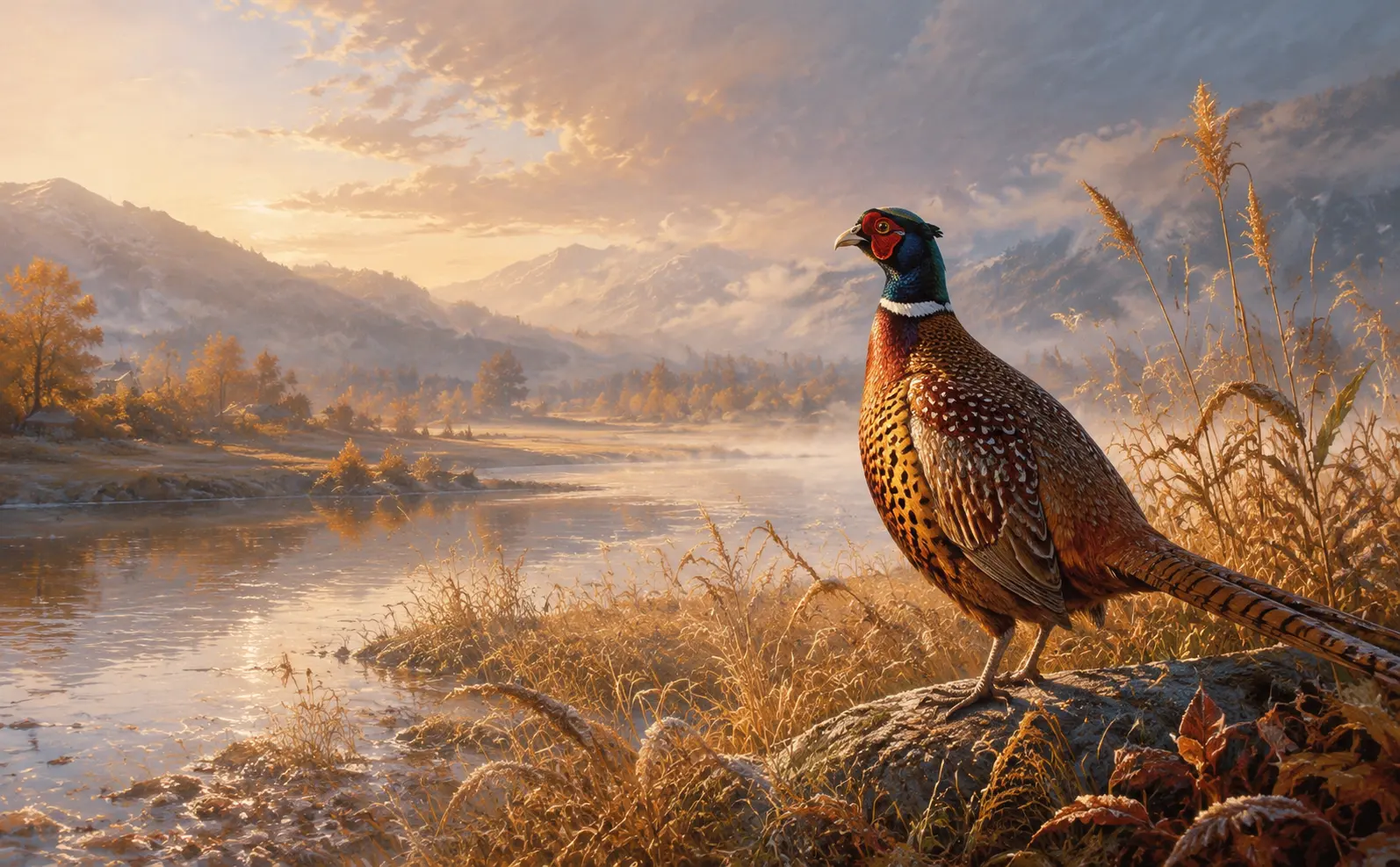
Cold Dew
「寒露惊秋晚,朝看菊渐黄。」
Temperatures continue to decline noticeably. Across most of China, average daily temperatures fall below 15°C, while many northern areas drop to around 5–10°C and Northeast China approaches freezing. Morning and evening frosts begin to appear, bringing an increasingly penetrating chill.
Precipitation remains low across the country. Autumn rains in western China gradually approach their end, the north experiences clear skies, dry air, and frequent winds, autumn dryness becomes pronounced in the south, and rainfall remains close to its annual minimum.
The last flocks of southbound wild geese reach their wintering grounds, bringing the spectacle of migrating formations toward its close. The ancients described this as all the “guests” having arrived, and regarded it as one of the characteristic phenological signs of deep autumn.
The ancients observed that sparrows became less visible in late autumn while shellfish seemed more abundant along the seashore, giving rise to the romantic imagination that the birds entered the water and transformed into clams. In reality, this was another interpretation of the natural decrease in northern bird activity after seasonal migration.
Chrysanthemums bloom proudly during the cold days of deep autumn, their golden flowers becoming more brilliant as the weather grows colder. They form one of the grandest floral scenes of autumn and have long symbolized purity, integrity, and steadfastness.
Solar-Term Farming
Farm with the Seasons · Work with Nature
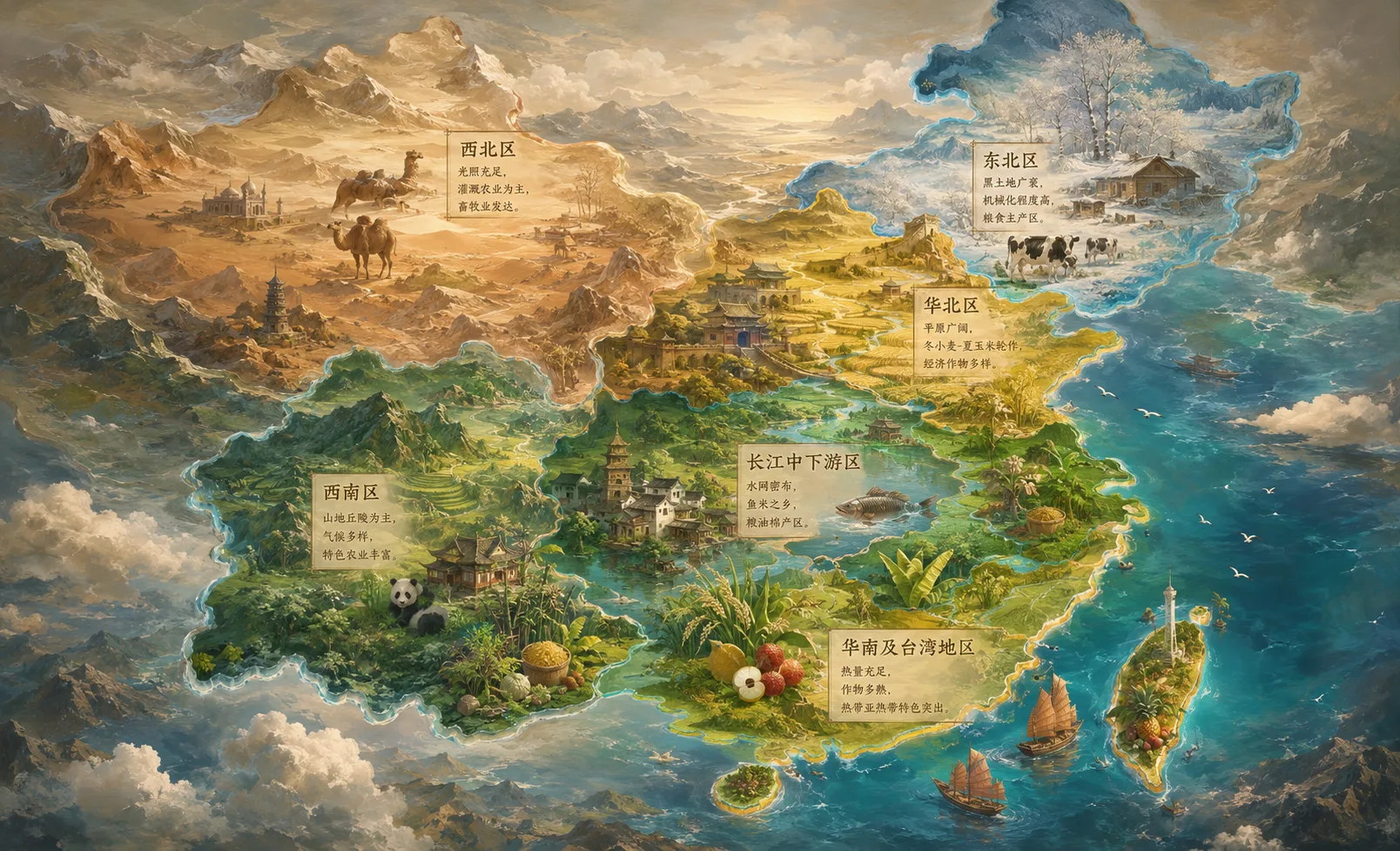
Northeast China
Farming Focus for This Solar Term
The autumn grain harvest reaches full intensity, with large-scale har…
Farming Advice
- Complete autumn tillage pro…
- Service farm machinery and …
Northwest China
Farming Focus for This Solar Term
Autumn grain harvesting continues, cotton enters peak picking season,…
Farming Advice
- Roll winter wheat fields to…
- Apply winter irrigation in …
North China
Farming Focus for This Solar Term
Maize, soybeans, and other autumn crops enter peak harvest, winter wh…
Farming Advice
- Control excessive winter-wh…
- Clear drainage ditches in r…
Middle and Lower Yangtze
Farming Focus for This Solar Term
Single-season mid-season rice reaches peak harvest, late rice enters …
Farming Advice
- Plough promptly after the l…
- Clear drainage ditches in r…
Southwest China
Farming Focus for This Solar Term
Autumn crops enter full harvest, winter wheat and rapeseed sowing adv…
Farming Advice
- Check winter-wheat emergenc…
- Top-dress rapeseed seedling…
South China & Taiwan (China)
Farming Focus for This Solar Term
Late rice moves from grain filling toward maturity, tropical fruit ha…
Farming Advice
- Harvest late rice during cl…
- Fertilise and earth up suga…
Seasonal Delicacies
Eat with the Seasons · Nothing Out of Season
Seasonal Tastes · A Guide to Eating with the Seasons
Traditional Customs
When Rites Fade, Seek Them Among the People · Old Ways Still Endure
Seasonal Rites · Everyday Traditions
Solar-Term Poetry
Poetry · The Heart of Heaven and Earth
「池上」
袅袅凉风动,凄凄寒露零。
兰衰花始白,荷破叶犹青。
独立栖沙鹤,双飞照水萤。
若为寥落境,仍值酒初醒。
Modern Translation
A gentle cool wind begins to stir, while cold dew falls in a bleak and chill stillness. The orchids have faded, their flowers beginning to turn white; the lotus leaves are torn and withered, yet still retain their green. A crane stands alone upon the sand, while two fireflies fly together, their light reflected upon the water. In such a desolate scene, I happen to find myself just waking from wine.
In-Depth Commentary
Bai Juyi sets this poem against the season of Cold Dew and writes of the desolation of an autumn pond. “袅袅凉风动” captures the gentle movement of the cool wind, while “凄凄寒露零” conveys both the tactile chill and the sight of cold dew falling. The second couplet, “兰衰花始白”, describes orchids declining as their flowers begin to pale, while “荷破叶犹青” writes lotus leaves already damaged and torn yet still retaining their green. White and green together reveal a landscape in which decline and vitality coexist. “独立栖沙鹤” presents the solitary posture of a crane standing on the sand, while “双飞照水萤” depicts two fireflies flying together, casting light upon the water. One stands alone while two fly together; one is still and the other in motion, creating tension within the scene. The final couplet, “若为寥落境,仍值酒初醒”, brings the poem inward: such a desolate landscape is encountered at precisely the moment when intoxication has begun to fade, leaving the poet fully awake to its bleakness. Through dense images of cool wind, cold dew, fading orchids, broken lotus leaves, a solitary crane, and paired fireflies, the poem builds an atmosphere of autumnal cold and silence, then closes with “酒初醒”, merging physical coldness with emotional chill.
Readers’ Comments
Calendar and traditional culture enthusiasts from around the world, sharing the same moon.
Sign in or register to join the conversation. Your comment account is created automatically the first time you use a connected account.
No comments yet
Share your thoughts with readers around the world.