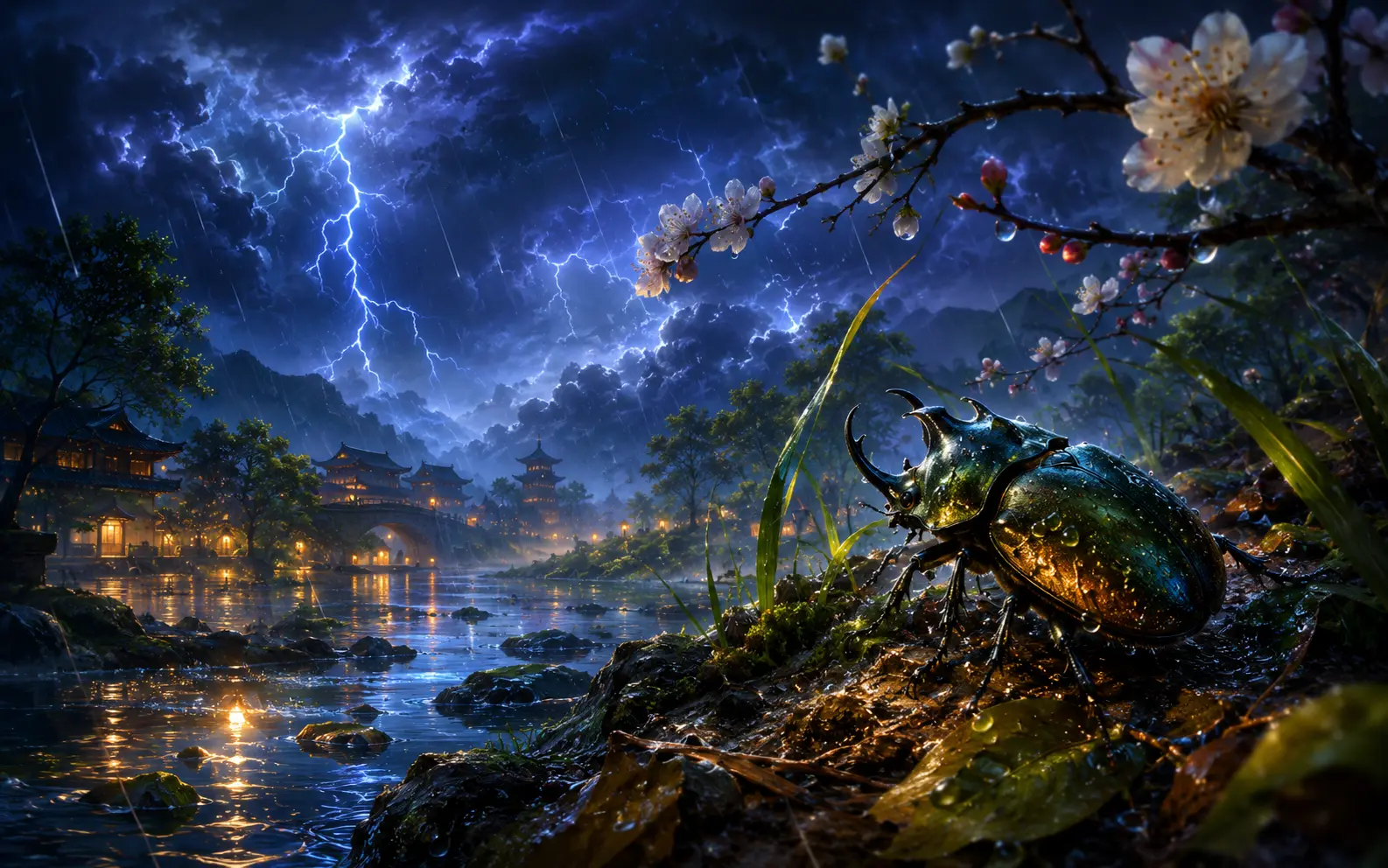
Awakening of Insects
「一阵催花雨,数声惊蛰雷。」
The pace of warming accelerates noticeably. Apart from the colder high-latitude and high-altitude regions of Northeast and Northwest China, average temperatures across most of the country have risen above 0°C. North China reaches around 5–10°C, while Jiangnan and South China remain steadily between 10 and 15°C. Warm and cold air masses, however, continue to clash intensely, causing considerable temperature fluctuations, and episodes of “late spring cold” still occur from time to time.
Warm, humid airflows continue to strengthen. Average precipitation across China increases significantly compared with Rain Water. The middle and lower reaches of the Yangtze River and the Jiangnan region frequently experience prolonged overcast and rainy weather, spring thunder becomes increasingly common, and South China begins preparations for the early flood season.
As temperatures rise, peach blossoms begin to open, gradually tinting the hills and countryside with the pink hues of spring and becoming one of the defining phenological signs of mid-spring.
仓庚 refers to the golden oriole. Sensing the warmth and yang qi of spring, it begins to sing melodiously among the branches, announcing the flourishing season to Heaven and Earth.
Ancient observers noticed that hawks became less visible at this time while cuckoos grew more numerous, and poetically imagined that hawks transformed into cuckoos. In reality, the image reflects reduced activity among birds of prey as they enter the breeding season, while migratory birds gradually return north.
Solar-Term Farming
Farm with the Seasons · Work with Nature
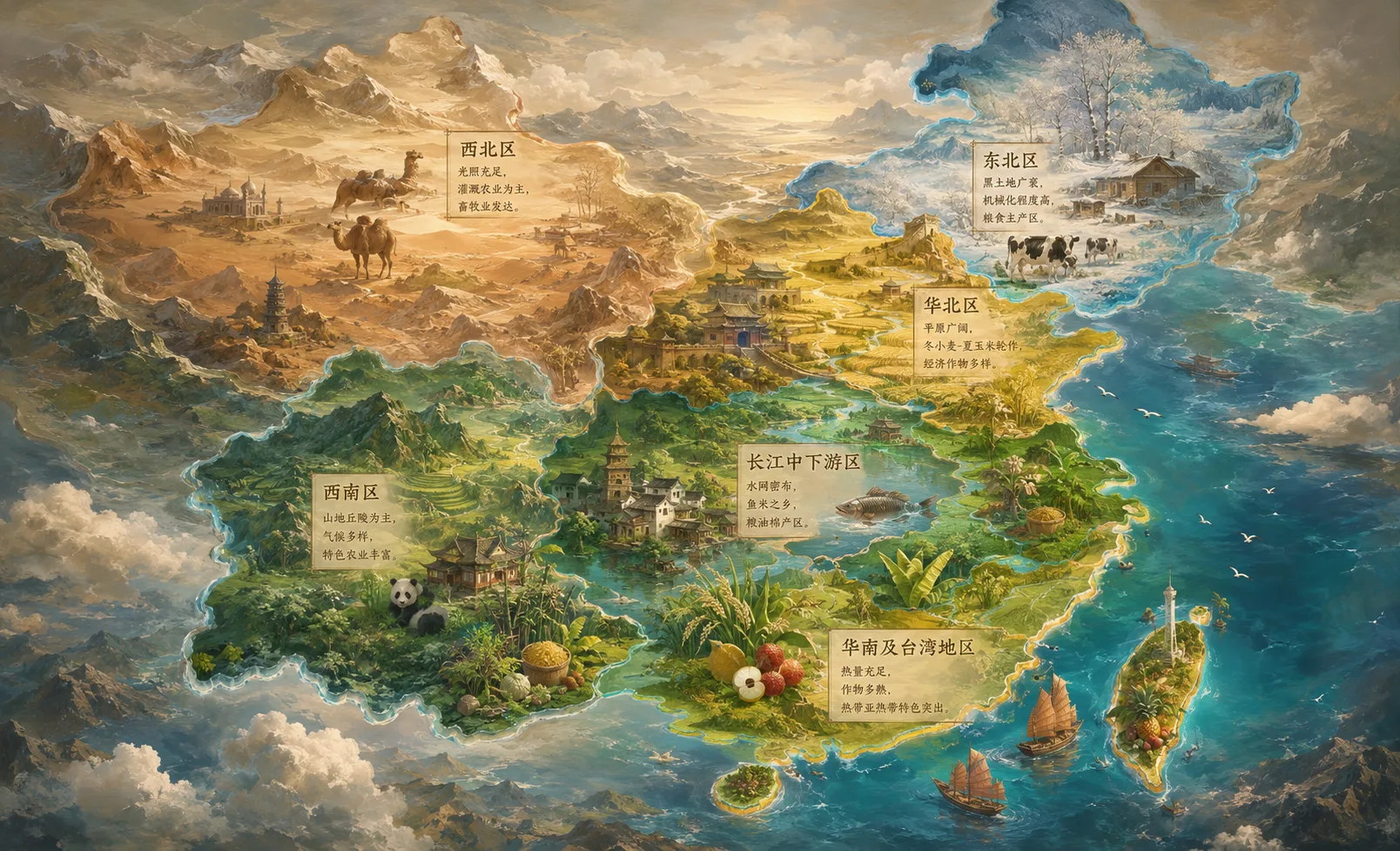
Northeast China
Farming Focus for This Solar Term
Although most areas remain under frozen-soil conditions, vegetable cu…
Farming Advice
- Complete autumn tillage pro…
- Service farm machinery and …
Northwest China
Farming Focus for This Solar Term
Winter wheat fully revives and enters the stem-elongation stage, whil…
Farming Advice
- Roll winter wheat fields to…
- Apply winter irrigation in …
North China
Farming Focus for This Solar Term
Winter wheat on the Huang–Huai–Hai Plain enters the jointing stage, w…
Farming Advice
- Control excessive winter-wh…
- Clear drainage ditches in r…
Middle and Lower Yangtze
Farming Focus for This Solar Term
Rapeseed enters full bloom and early-rice sowing and seedling cultiva…
Farming Advice
- Plough promptly after the l…
- Clear drainage ditches in r…
Southwest China
Farming Focus for This Solar Term
Wheat in the Sichuan Basin enters the booting stage, while drought ri…
Farming Advice
- Check winter-wheat emergenc…
- Top-dress rapeseed seedling…
South China & Taiwan (China)
Farming Focus for This Solar Term
Early rice reaches a critical stage of seedling management, while tro…
Farming Advice
- Harvest late rice during cl…
- Fertilise and earth up suga…
Seasonal Delicacies
Eat with the Seasons · Nothing Out of Season
Seasonal Tastes · A Guide to Eating with the Seasons
Traditional Customs
When Rites Fade, Seek Them Among the People · Old Ways Still Endure
Seasonal Rites · Everyday Traditions
Solar-Term Poetry
Poetry · The Heart of Heaven and Earth
「观田家(节选)」
微雨众卉新,一雷惊蛰始。
田家几日闲,耕种从此起。
丁壮俱在野,场圃亦就理。
归来景常晏,饮犊西涧水。
Modern Translation
After the light rain, the flowers and plants are renewed, and a single clap of spring thunder marks the arrival of Awakening of Insects. From this point onward, farming households have few idle days, for plowing and sowing now begin. The young and able-bodied are all at work in the fields, while threshing grounds and vegetable plots are also put in order. By the time they return from work, it is often already late, and they must still lead the calves to drink from the western stream.
In-Depth Commentary
With concise strokes, this poem sketches a picture of farm life during Awakening of Insects. “微雨众卉新” describes visually the revival of all things after spring rain, and the character “新” fully conveys the brightness and vitality of vegetation after being nourished by the rain. “一雷惊蛰始” turns to hearing and writes the defining phenological feature of the season: the sudden sound of spring thunder not only awakens insects hidden in hibernation, but also rouses the sleeping earth. “田家几日闲,耕种从此起” makes clear the agricultural meaning of Awakening of Insects as the starting point of spring cultivation. The latter half unfolds through concrete details of farm work. “丁壮俱在野” describes all the young and able-bodied laboring in the fields, while “归来景常晏,饮犊西涧水” forms a warm scene at the close of the day, showing the plain condition of rural life: arduous, yet closely dependent upon nature. It reveals both the poet’s familiarity with agricultural work and his sympathy for farmers.
Readers’ Comments
Calendar and traditional culture enthusiasts from around the world, sharing the same moon.
Sign in or register to join the conversation. Your comment account is created automatically the first time you use a connected account.
No comments yet
Share your thoughts with readers around the world.