Grain Rain Poetry
「正好清明连谷雨,一杯香茗坐其间。」
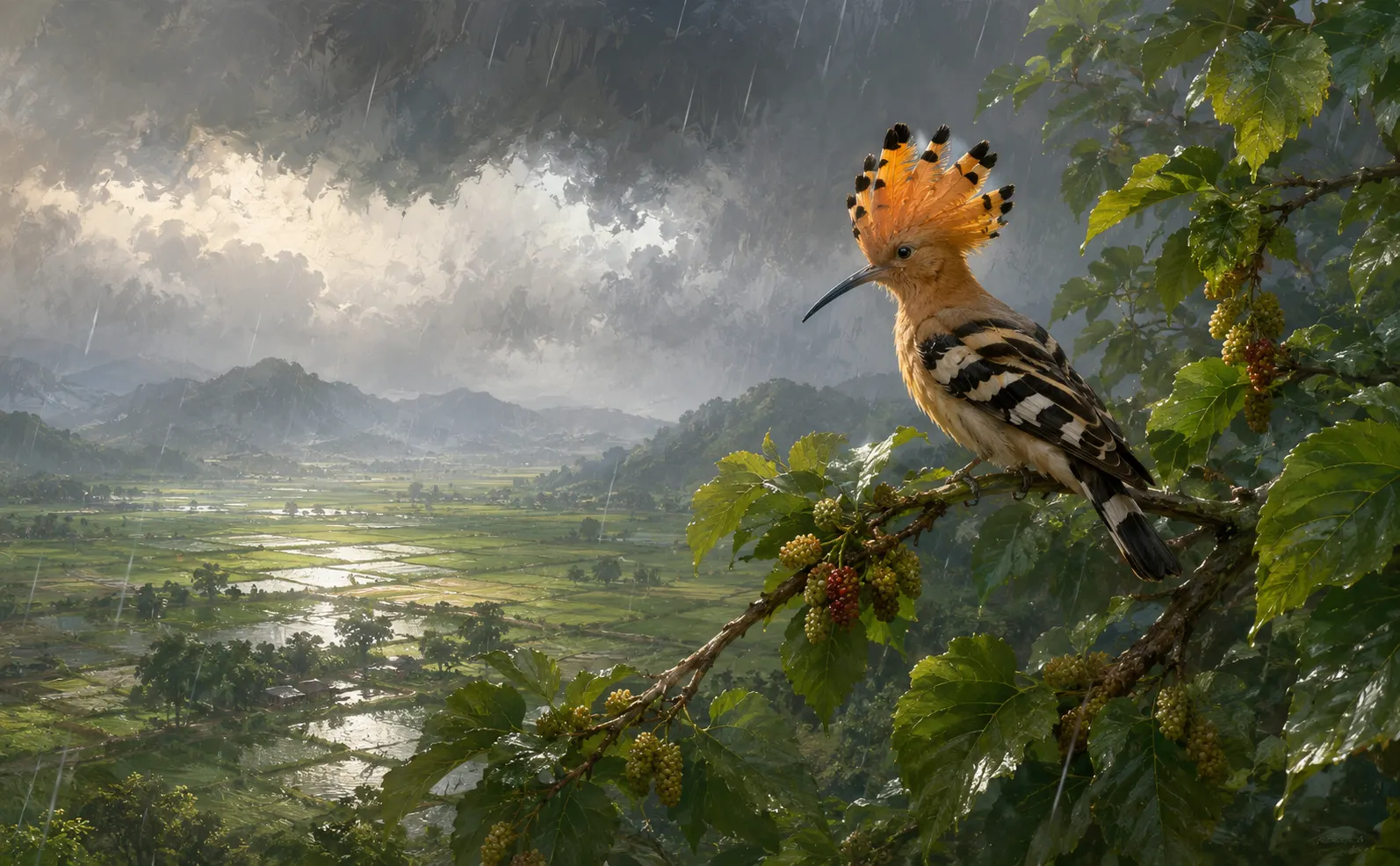
Poetry of Grain Rain often describes the scenery of late spring and the busyness of agricultural work. Zheng Banqiao’s “正好清明连谷雨,一杯香茗坐其间” entrusts a leisurely mood to tea; Fan Chengda’s “谷雨如丝复似尘” writes the fine density of spring rain; Yuan Zhen’s “谷雨春光晓,山川黛色青” records the late-spring colors of mountains and rivers refreshed by rain. Grain Rain is the final chapter of spring: peonies break from their calyxes, cherries ripen red, and hoopoes descend among the mulberries. While tasting freshly picked pre-rain tea, poets also see spring on its way, writing fully of their reluctance to let spring go and their expectations for summer.
Grain Rain Poetry
七言诗
Original Verse:
不风不雨正晴和,翠竹亭亭好节柯。
最爱晚凉佳客至,一壶新茗泡松萝。
几枝新叶萧萧竹,数笔横皴淡淡山。
正好清明连谷雨,一杯香茗坐其间。
Modern Translation:
There is neither wind nor rain; the weather is clear and mild. Green bamboo stands tall and graceful, its joints and branches upright. What I love most is when, in the cool of evening, a good friend comes to visit, and I brew a pot of newly picked Songluo tea. A few fresh bamboo leaves rustle softly, while a few light brushstrokes sketch the distant mountains. Qingming has just passed and Grain Rain follows close behind; I sit among the bamboo, savoring a cup of fragrant tea.
Commentary:
Tea runs through the entire poem as its central thread. The opening “不风不雨正晴和” describes the mild weather typical of Grain Rain, precisely the best season for harvesting and processing spring tea. “翠竹亭亭” and “新叶萧萧” form stillness and movement within the same space, while “横皴淡淡山” gives the distant landscape the quality of an ink painting. Together they create a secluded and tranquil setting. In “一壶新茗泡松萝”, “松萝” refers to a famous tea, while “一杯香茗坐其间” directly states the theme of drinking tea at Grain Rain. Expressions such as “好节柯”, “淡淡山”, and “坐其间”, together with the poem’s unhurried phrasing, create a slow and relaxed rhythm. Reading it, one seems almost to taste the tea and feel the breeze beside oneself, fully expressing the calm state of mind of a refined scholar during Grain Rain.
牡丹图
Original Verse:
谷雨花枝号鼠姑,戏拈彤管画成图。
平康脂粉知多少,可有相同颜色无。
Modern Translation:
The peony blooming at Grain Rain is also called “鼠姑.” Playfully taking up a vermilion brush, I paint it into a picture. Who knows how much rouge and powder may be found in Pingkang Ward, where singing girls gather—but is there any color among them that can truly equal this peony?
Commentary:
Tang Yin takes the peony of Grain Rain as the subject of this poem. “谷雨花枝号鼠姑” points to the connection between Grain Rain and the peony: there was a custom of viewing peonies in the days around Grain Rain, and the flower was therefore also associated with the season; “鼠姑” is another name for the peony. In the second line, “戏拈彤管画成图”, the character “戏” captures the carefree and unrestrained manner of the gifted scholar taking up his brush. The final two lines compare the color of the peony with the rouge and powder of Pingkang, using the most brilliant cosmetics of the secular world to set off the peony’s natural beauty. The implication is that no amount of makeup can equal the flower’s original color. This contrast is both an extreme praise of floral beauty and an affirmation of unadorned natural beauty, while also revealing Tang Yin’s characteristic wit and proud, romantic spirit.
四时田园杂兴六十首 · 其二十一
Original Verse:
谷雨如丝复似尘,煮瓶浮蜡正尝新。
牡丹破萼樱桃熟,未许飞花减却春。
Modern Translation:
The rain of Grain Rain is as fine as silk threads and as light as dust. The wax seal on the bottle of newly prepared wine has just been opened, making it the perfect moment to taste what is fresh. Peonies are only now breaking from their calyxes, while cherries have already ripened. I will not allow the falling flowers to diminish this beautiful spring.
Commentary:
This poem draws on the distinctive seasonal signs of Grain Rain and is written with freshness and brightness. The opening “谷雨如丝复似尘” compares the rain first to silk, emphasizing its fine and continuous threads, and then to dust, emphasizing its light and mist-like quality. The two images together vividly capture the dense, delicate rain of Grain Rain, like smoke and haze. The next line, “煮瓶浮蜡正尝新”, writes of tasting newly prepared wine during the season. “浮蜡” refers to fragments of wax from the seal floating at the mouth of the vessel; the poet opens it to taste what is new, echoing the seasonal sense of “尝新”, tasting the first fresh produce of the year. The final lines, “牡丹破萼樱桃熟”, name two emblematic products of the season: peonies beginning to open and cherries ripening. “未许飞花减却春” turns lively and personified, expressing the poet’s attachment to spring as though bargaining with the departing season: the falling flowers are not allowed to carry spring away.
谷雨
Original Verse:
春事阑珊酒病瘳,山家谷雨早茶收。
花前细细风双蝶,林外时时雨一鸠。
碧水丹山宜独往,黄鹂紫燕莫相留。
年来颇得幽栖趣,不羡人间万户侯。
Modern Translation:
Spring is drawing to an end, and my sickness from wine has only just passed. In mountain homes, the early tea is already being gathered at Grain Rain. Before the flowers, a gentle breeze stirs as two butterflies dance; beyond the woods, from time to time, a turtledove calls as rain approaches. Between clear waters and crimson mountains, it is best to go alone. Orioles and purple swallows need not try to make me stay. In recent years I have come to know deeply the pleasure of secluded mountain life, and I no longer envy even the greatest lords of the human world.
Commentary:
Fang Taigu takes Grain Rain as the background for a poem about the pleasures of reclusion in the mountains. The opening “春事阑珊酒病瘳” writes both the waning of spring and the poet’s recovery from illness caused by drinking, while “山家谷雨早茶收” introduces the mountain life of gathering tea at Grain Rain. The second couplet, “花前细细风双蝶,林外时时雨一鸠”, delicately records the season’s natural signs: a light breeze before the flowers, two butterflies in flight, and beyond the woods the periodic call of a dove as rain approaches. “时时” and “细细” form a balanced pairing and give the lines an unhurried rhythm. The third couplet, “碧水丹山宜独往”, writes both the beauty of the landscape and the pleasure of traveling alone, while “黄鹂紫燕莫相留” personifies the birds as though they wished to keep the poet from leaving, while in fact revealing his detached resolve. The final couplet, “年来颇得幽栖趣,不羡人间万户侯”, speaks directly from the heart: the pleasures of mountain seclusion outweigh worldly rank and wealth, expressing the characteristic spirit of the recluse-scholar.
谷雨
Original Verse:
天点纷林际,虚檐写梦中。
明朝知谷雨,无策禁花风。
石渚收机巧,烟蓑建事功。
越禽牢闭口,吾道寄天公。
Modern Translation:
Raindrops scatter among the trees, while the empty eaves seem to have entered a dream. Tomorrow will be Grain Rain, yet there is no way to stop the spring wind from knocking down the flowers. At the stony waterside, I set aside thoughts of clever calculation and, wearing a straw rain cape in the mist, turn myself to the work of farming. The birds of Yue keep their beaks tightly closed; as for my own path, I entrust it to Heaven.
Commentary:
Zhu Gao’s poem takes Grain Rain as its setting and blends landscape description with reflections on agricultural work and the Way of Heaven. “天点纷林际” describes raindrops falling among the trees, while “虚檐写梦中” writes the empty eaves as though seen within a dream. One is solid and one insubstantial, together creating the moist and hazy atmosphere of Grain Rain. “明朝知谷雨,无策禁花风”—tomorrow is Grain Rain, yet there is no way to stop the spring wind from scattering the flowers. Here there is both helplessness before the departure of spring and a calm acceptance of the laws of nature. “石渚收机巧,烟蓑建事功” writes the shift from setting aside calculating thoughts to engaging in agricultural work, for Grain Rain is a crucial period of spring plowing and sowing. The closing “越禽牢闭口,吾道寄天公” ends with the image of silent birds and a person submitting to Heaven, embodying a philosophical attitude of following nature and entrusting one’s Way to the order of Heaven.
蝶恋花·谷雨
Original Verse:
春到江南谷雨时,黄莺啼遍绿杨枝。
乍暖还寒晴又雨,花事阑珊春已暮。
晓雾轻笼芳草路,斜阳半照垂杨渡。
欲问春归何处去,一江流水无声诉。
Modern Translation:
Spring has reached the Grain Rain season in Jiangnan, and orioles sing throughout the green willow branches. The weather turns warm and then cold again, now clear and now rainy; the season of flowers is gradually fading, and spring is already nearing its end. Morning mist lightly covers the path through fragrant grass, while the slanting sun half-illuminates the ferry lined with hanging willows. I want to ask where spring has gone; the river flows on, silently giving its answer.
Commentary:
This lyric takes Grain Rain as its background and writes the gentle melancholy of late spring. “春到江南谷雨时” establishes both place and season, while “黄莺啼遍绿杨枝” gives the typical soundscape of Grain Rain in Jiangnan. “乍暖还寒晴又雨” captures the alternation of warmth and lingering cold, as well as the uncertainty between clear skies and rain. In only seven characters, it conveys the repeated changes of late-spring weather. “花事阑珊春已暮” directly states the central theme: the flowers are fading and spring is nearing its end. In the second stanza, “晓雾轻笼芳草路,斜阳半照垂杨渡” uses two moments in time—morning mist and slanting evening light—to portray the hazy gentleness of late spring. The final “欲问春归何处去,一江流水无声诉” closes in the form of question and answer. One asks where spring has gone, while the river remains silent. This use of silence that speaks more than sound dissolves the melancholy of spring’s departure into the endless flow of the river, leaving an aftertaste that does not end.
Closing Note
Poetry of Grain Rain begins with a cup of tea. Zheng Banqiao writes “正好清明连谷雨,一杯香茗坐其间”, and in those lines lies the leisure of an entire spring. In *春日茶山病不饮酒因呈宾客*, Bai Juyi writes “清明已过谷雨来,醉里看花莫辞杯”—tea and wine alternate throughout the poetry of Grain Rain, one keeping the mind clear, the other drawing it into intoxication.
Song poets often connect Grain Rain with agriculture and seasonal signs. Lin Hejing writes “白云峰下两枪新,腻绿长鲜谷雨春”, referring precisely to spring tea gathered during Grain Rain. “两枪” refers to two fresh shoots newly emerging on the tea plant, and Lin Bu gathers the freshness and green color of Grain Rain tea into the phrase “腻绿长鲜.” Fan Chengda writes in *春日田园杂兴*, “谷雨如丝复似尘,煮瓶浮蜡正尝新”, seeing a pastoral world of rain fine as silk and the first fresh flavors being tasted. In Tang Yin’s *牡丹图*, the line “谷雨花枝号鼠姑” brings before us the peonies blooming during Grain Rain. Xu Hun writes, “春谷终期吹羽翼,雨花何处著根株”—the rain of Grain Rain nourishes all things, while its wind carries spring away.
Grain Rain is the final solar term of spring, and seeing spring off is a theme it cannot avoid. The poet Wang Yan writes “漠漠轻寒桑叶细,潇潇谷雨楝花飞”: when the chinaberry flowers bloom, spring has truly reached its end. Within this line lies the poet’s desire to hold spring back. Chinaberry blossoms mark the final stage of the twenty-four seasonal flower winds; once they fall, spring is over. Grain Rain poetry is the farewell poets write as spring draws to its close—some write of tea, some of flowers, some of rain, each with a different depth of feeling.
From Bai Juyi’s “醉里看花” to Lin Bu’s “腻绿长鲜”, from Fan Chengda’s “谷雨如丝” to Wang Yan’s “楝花飞”—the poets of Grain Rain know that spring’s departure cannot be reversed, yet they still write it down and preserve it in their own ways. When poems of Grain Rain are opened, those words about tea, flowers, and spring come alive once more, reminding every reader: spring may already have gone, but the spring colors within poetry never fade.
——-
Readers’ Comments
Calendar and traditional culture enthusiasts from around the world, sharing the same moon.
Sign in or register to join the conversation. Your comment account is created automatically the first time you use a connected account.
No comments yet
Share your thoughts with readers around the world.