Major Heat Poetry
「何以销烦暑,端居一院中。」
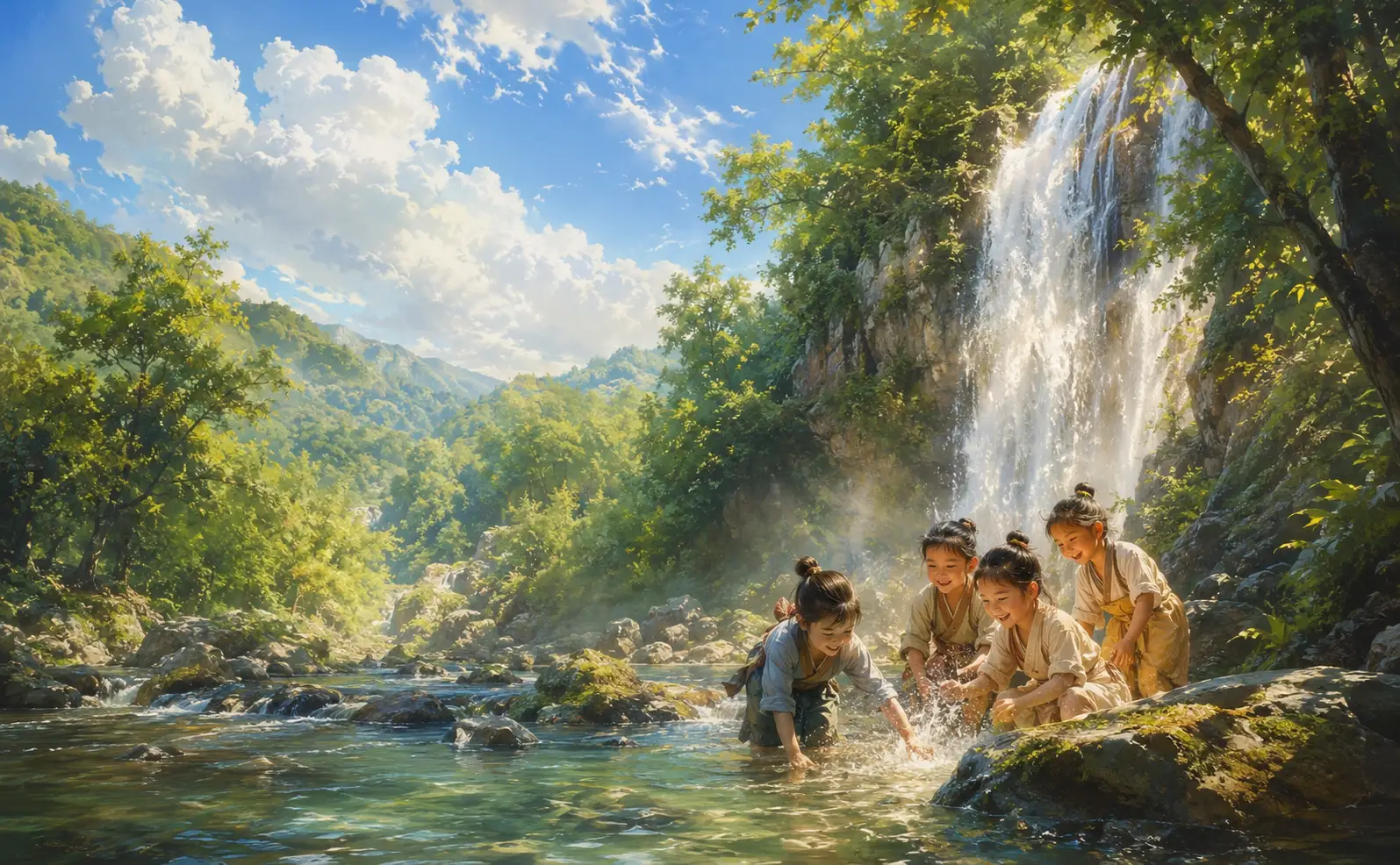
Poetry of Major Heat centers largely on extreme heat and the search for relief. Bai Juyi’s “何以销烦暑,端居一院中” expresses the philosophy that a still heart naturally brings coolness; Yuan Zhen’s “大暑三秋近,萤火照空时” writes of heat reaching its height even as autumn draws near. Poets describe decaying grass turning into fireflies, the earth growing damp beneath oppressive heat, and heavy rains arriving in season, using verse to capture the changes of the three seasonal phases of Major Heat. Though Major Heat is fierce, the poetic heart does not grow restless—in the hottest season, looking ahead toward autumn’s coolness reveals the composure and openness with which Chinese poets faced the summer heat.
Major Heat Poetry
大暑
Original Verse:
泽国已炎暑,夏天仍永日。
屋头垂钓处,池面风来急。
竹深虫乱鸣,荷静鹭双立。
把扇不能休,挥之汗如溢。
Modern Translation:
The watery country is already deep in oppressive summer heat, and the summer days remain long. Beside the house, where one fishes, gusts sweep quickly across the pond. Deep within the bamboo, insects cry in a confusion of sound, while beside the still lotus pond a pair of egrets stands motionless. The fan in my hand cannot stop, yet even as I wave it, sweat pours out as though overflowing.
Commentary:
Kong Pingzhong uses realistic brushwork to depict both the severe heat and the vitality of Major Heat. “泽国已炎暑,夏天仍永日” establishes the intensity of the heat and the length of the summer day; the character “仍” conveys a sense of helplessness before daylight that still seems endlessly long. “屋头垂钓处,池面风来急” shows the poet attempting to escape the heat through fishing and the breeze over the pond, yet the word “急” suggests that even a strong wind cannot truly dispel the heat. “竹深虫乱鸣” writes the noisy chorus of insects from deep within the bamboo, while “荷静鹭双立” depicts the quiet serenity of two egrets standing by the lotus pond. Noise and stillness together create a complex soundscape of Major Heat. The final couplet, “把扇不能休,挥之汗如溢”, is the focal point of the poem: the fan never stops moving, yet sweat still pours forth like a spring. This exaggerated image of sweating as though in rain renders the oppressive heat of Major Heat with complete vividness. Even within the extreme heat, however, the poem retains an attentive appreciation of natural life—the cries of insects and the standing egrets.
大暑水阁听晋卿家昭华吹笛
Original Verse:
蕲竹能吟水底龙,玉人应在月明中。
何时为洗秋空热,散作霜天落叶风。
Modern Translation:
A flute made from Qizhou bamboo can produce music so wondrous that even dragons beneath the water might sing in response; the graceful flutist seems as though she should be standing within the moonlight. When will this flute music wash away the lingering heat beneath the autumn sky and scatter into a wind beneath frosted heavens, blowing down the leaves?
Commentary:
This seven-character quatrain takes as its setting the sound of a flute heard from a waterside pavilion during Major Heat, and its imagination is strikingly unusual. “蕲竹能吟水底龙” uses exaggeration to describe the beauty of the flute music. Qizhou bamboo was prized as a material for flutes, and here its sound is so moving that it can make even the dragons beneath the water sing. “玉人应在月明中” imagines the flute player within luminous moonlight, adding a sense of coolness, purity, and distance to the scene. The final two lines are the poem’s finest stroke. “何时为洗秋空热” compares the flute music to a clear current capable of washing away summer heat; the verb “洗”, to wash, is especially fresh, as though the music were not sound but flowing cool water. “散作霜天落叶风” goes still further, wishing that the flute music might turn into an autumn wind beneath frosted skies, blowing down yellow leaves and bringing complete coolness. From the act of listening to a flute, the poem unfolds into a longing for autumn, transforming an auditory sense of coolness into coolness that can be seen and felt. Its use of synesthesia is extraordinarily accomplished.
大暑
Original Verse:
大暑不可避,微凉安所寻。
云山有幽处,松竹自清阴。
坐久觉风至,夜深闻鸟吟。
何人共此乐,此乐亦无心。
Modern Translation:
The fierce heat of Major Heat cannot be escaped; where, then, can even the slightest coolness be found? Yet among cloud-wrapped mountains there are secluded places, and pines and bamboo naturally cast pure, cool shade. Sit long enough and one begins to feel the breeze arrive; deep in the night, one hears the low song of birds. Who is there to share this pleasure with me? And this pleasure itself comes without being deliberately sought.
Commentary:
Fang Hui writes in a quiet and detached tone of the state of mind involved in seeking coolness during Major Heat. “大暑不可避,微凉安所寻” opens with a question, describing both the inescapability of the heat and the difficulty of finding even the slightest coolness. Yet within secluded places among clouded mountains and the cool shade of pine and bamboo, the poet discovers a place of spiritual repose. “坐久觉风至” describes the experience of sitting quietly for so long that, once the heart grows still, the breeze seems to arise; “夜深闻鸟吟” describes how, in the deep silence of night, birdsong becomes clearer still. The final couplet, “何人共此乐,此乐亦无心”, raises the poem into philosophy: the pleasure of finding coolness is not something deliberately pursued, but something naturally obtained through “无心”, freedom from deliberate intention. It carries a distinctly Daoist sense of attaining the Way without striving for it. The poem discovers a transcendent coolness within extreme heat and is a fine example of finding relief through the spirit.
咏廿四气诗·大暑六月中
Original Verse:
大暑三秋近,林钟九夏移。
桂轮开子夜,萤火照空时。
菰果邀儒客,菰蒲长墨池。
绛纱浑卷上,经史待风吹。
Modern Translation:
At Major Heat, the three months of autumn are already drawing near; *Linzhong*, one of the twelve traditional pitches and the one corresponding to the sixth lunar month, marks the turning of high summer. The round moon—the cassia wheel—rises at midnight, while fireflies move through the night and shine in the open sky. Wild rice and fruits are prepared to invite learned guests, while aquatic plants grow beside the Ink Pond. The crimson gauze curtains are rolled completely upward, and the classics and histories lie waiting for a breeze to turn their pages.
Commentary:
This poem from the *Verses on the Twenty-Four Solar Terms* combines the seasonal phenomena of Major Heat with cultivated literary life in elegant language. “大暑三秋近” points out that Major Heat is the final solar term of summer and that autumn is already drawing near; “林钟九夏移” writes the progression of the season through musical pitch, giving the poem a rich cultural depth. “桂轮开子夜,萤火照空时” is the poem’s most luminous couplet. On a sweltering night of Major Heat, what the poet sees is not the misery of sweat and exhaustion, but moonlight and fireflies: a bright moon at midnight and fireflies scattered across the sky. Even within oppressive heat, the summer night retains its romance. “菰果邀儒客” writes of the refined pleasure of entertaining learned guests with wild rice and fruit, while “菰蒲长墨池” brings together the luxuriant plants beside the pond and the literati’s Ink Pond. The final “经史待风吹” is especially delightful: the classics and histories lie quietly in the heat, waiting for a breeze to turn their pages, uniting reading and relief from summer in a single image. Even in the hottest weather, the whole poem preserves the composure and poetic sensibility of the scholar.
大暑
Original Verse:
大暑流金石,寒泉浸雪冰。
山深云出岫,水静月生棱。
火宅清凉界,炎天白玉壶。
何须论冷暖,一笑了炎歊。
Modern Translation:
The heat of Major Heat is fierce enough to melt metal and stone, yet the cold spring is as cool as snow and ice. Deep in the mountains, clouds emerge from the peaks; upon still water, moonlight forms shimmering edges. Within this scorching world, like a house on fire, there is still a realm of coolness; beneath the blazing sky, the heart may remain clear as a vessel of white jade. Why concern oneself with heat and cold? A single smile is enough to dissolve the vexation of the summer heat.
Commentary:
Chao Buzhi uses contrast to write the pleasure of finding coolness within the heart during Major Heat. “大暑流金石” intensifies the severity of the season—the heat is so extreme that even metal and stone seem ready to melt; “寒泉浸雪冰”, by contrast, writes the cold spring as cool as ice and snow. Heat and cold form a powerful opposition. The second couplet, “山深云出岫,水静月生棱”, presents naturally cooling images of mountains and water: clouds emerging from deep peaks, moonlight forming upon still water. “火宅清凉界” draws upon Buddhist scripture, comparing the human world under extreme heat to a burning house, yet even within it there exists a realm of coolness. “炎天白玉壶” uses the image of a white jade vessel to represent a clear and pure state of mind: even under a blazing sky, the heart may remain cool as jade. The final “何须论冷暖,一笑了炎歊” closes with philosophical openness—there is no need to distinguish so anxiously between heat and cold; a single smile can dissolve the vexation of summer. In the midst of extreme heat, the poem finds spiritual liberation and is filled with a distinctly Chan-like spirit.
大暑
Original Verse:
大暑方蒸湿,云兴雨脚垂。
荷香清入户,竹影暗侵帷。
扇薄风难致,衣单汗尚滋。
炎凉随分定,心静自怡怡。
Modern Translation:
Major Heat is precisely the season when heat and humidity steam together; clouds rise, and curtains of rain begin to fall. The pure fragrance of lotus drifts quietly indoors, while dark bamboo shadows slowly enter across the curtains. The fan is too slight to bring much breeze; even in thin clothing, sweat continues to gather. Heat and coolness each follow their allotted course; so long as the heart remains still, one can naturally dwell in ease.
Commentary:
Wang Ao writes with delicate brushwork of the humid heat of Major Heat and the quietness of the mind. “大暑方蒸湿” identifies the season’s characteristic mixture of heat and moisture, while “云兴雨脚垂” describes clouds rising and sudden rain beginning to descend through the summer heat. The second couplet, “荷香清入户,竹影暗侵帷”, uses smell—the fragrance of lotus—and sight—the shadows of bamboo—to create cool summer images. Lotus fragrance enters the room, bamboo shadows move across the curtains, and together they form a secluded and tranquil atmosphere. The third couplet, “扇薄风难致,衣单汗尚滋”, describes the difficulty of finding relief: the fan is too slight to stir enough air, and even in thin clothing sweat continues to form, showing the stubbornness of the heat. The final “炎凉随分定,心静自怡怡” closes with philosophy: heat and coolness each follow their natural portion, and when the heart is calm, one naturally finds ease. The poem achieves a balance between realistic description and philosophical reflection, with plain language and deep resonance.
—-


Readers’ Comments
Calendar and traditional culture enthusiasts from around the world, sharing the same moon.
Sign in or register to join the conversation. Your comment account is created automatically the first time you use a connected account.
No comments yet
Share your thoughts with readers around the world.