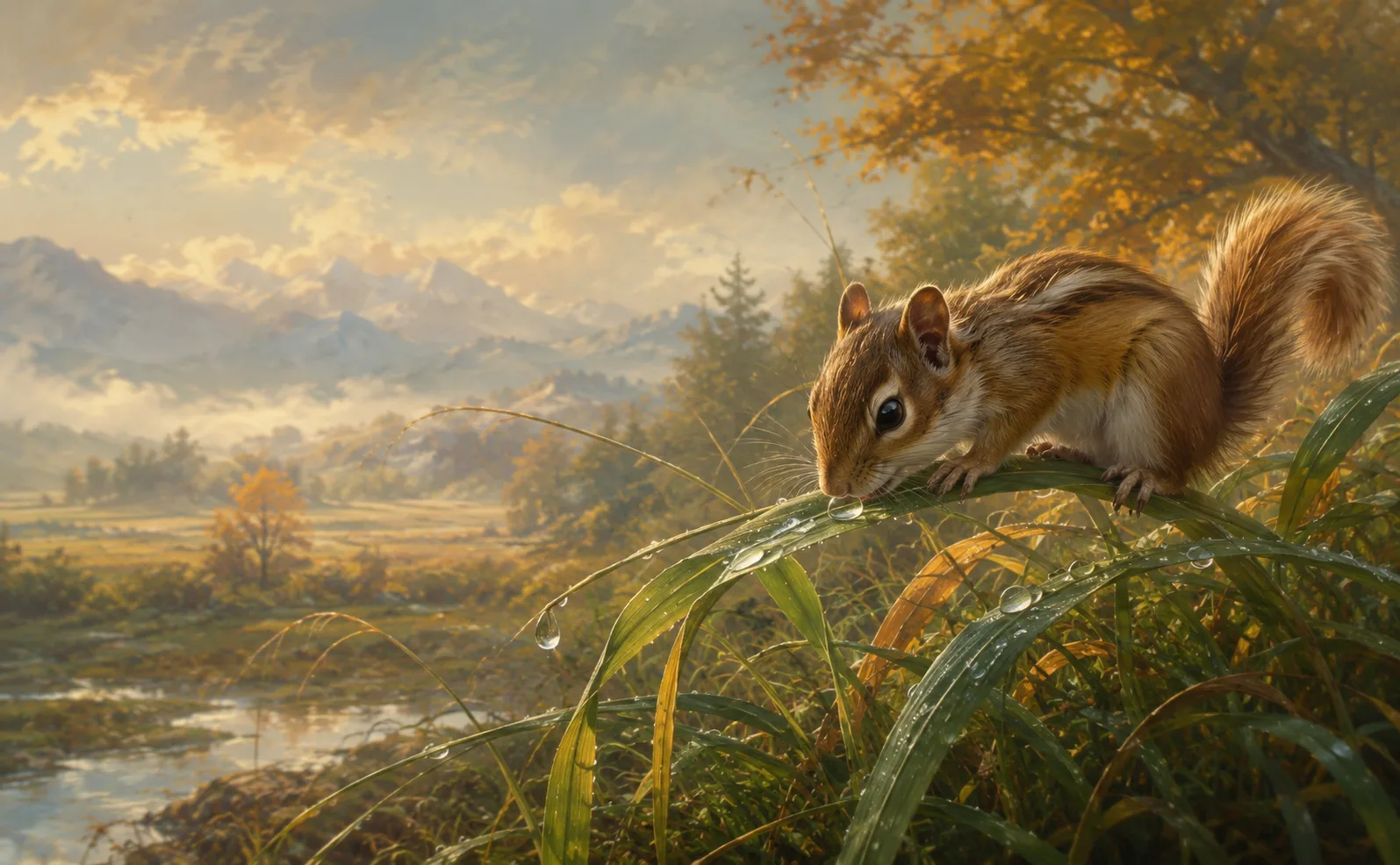
White Dew
「露从今夜白,月是故乡明。」
Temperatures fall noticeably, with average daily temperatures dropping below 20°C across much of China and to around 15°C in many northern areas. The contrast between day and night temperatures reaches its annual maximum, and the climatic character expressed in the saying “白露秋分夜,一夜凉一夜” becomes especially apparent, as mornings and evenings take on a distinctly cold edge.
Precipitation continues to decrease. Northern China experiences the clear skies and crisp air of autumn, autumn rains in western China enter their peak phase, rainfall becomes relatively sparse in the middle and lower reaches of the Yangtze, typhoon activity weakens significantly, and dry, bright autumn weather becomes the prevailing pattern.
Wild geese sense that autumn coolness has deepened across the north and begin migrating in large flocks from Siberia and northern China toward warmer southern regions for the winter. Rows of geese crossing the sky, accompanied by repeated calls, form one of the most characteristic phenological scenes of White Dew.
玄鸟 refers to swallows. During White Dew, swallows begin gathering into flocks and migrating southward to their wintering grounds. Their departure leaves nests empty beneath the eaves, bringing the lively summer scene of their constant chirping temporarily to an end and clearly signaling the deepening of autumn.
“羞” here is equivalent to “馐,” meaning fine food. Sensing that winter is approaching, birds begin foraging diligently, building up energy and storing food for the cold months ahead; the image reflects the survival wisdom with which living creatures respond to the changing seasons.
Solar-Term Farming
Farm with the Seasons · Work with Nature
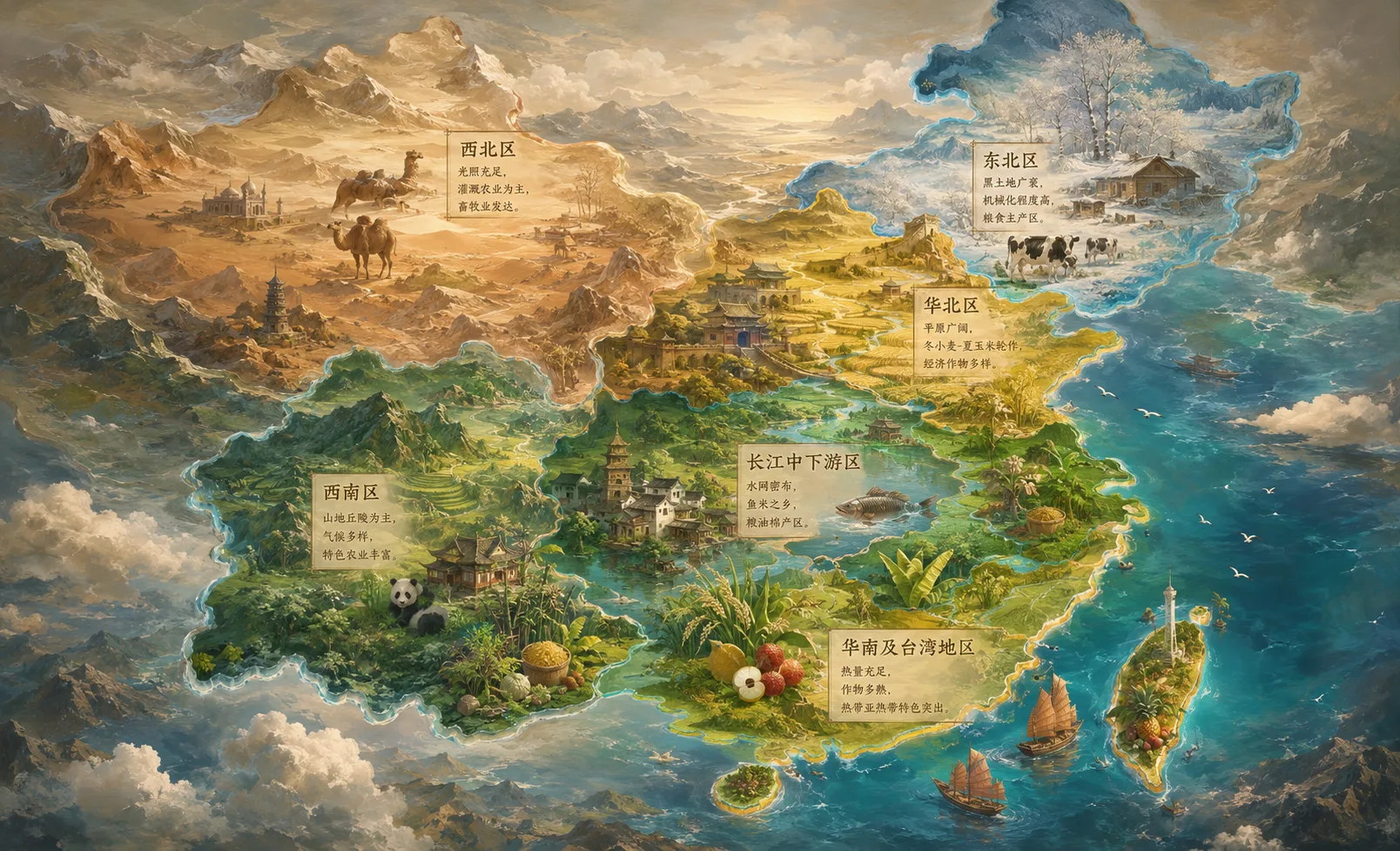
Northeast China
Farming Focus for This Solar Term
Spring maize enters maturity, rice reaches the wax-ripe stage, soybea…
Farming Advice
- Complete autumn tillage pro…
- Service farm machinery and …
Northwest China
Farming Focus for This Solar Term
Maize enters maturity, cotton reaches peak boll opening, autumn crops…
Farming Advice
- Roll winter wheat fields to…
- Apply winter irrigation in …
North China
Farming Focus for This Solar Term
Summer maize reaches the wax-ripe stage, summer soybeans enter the la…
Farming Advice
- Control excessive winter-wh…
- Clear drainage ditches in r…
Middle and Lower Yangtze
Farming Focus for This Solar Term
Single-season mid-season rice moves from the wax-ripe stage into matu…
Farming Advice
- Plough promptly after the l…
- Clear drainage ditches in r…
Southwest China
Farming Focus for This Solar Term
Mid-season rice enters maturity and harvest, maize moves into harvest…
Farming Advice
- Check winter-wheat emergenc…
- Top-dress rapeseed seedling…
South China & Taiwan (China)
Farming Focus for This Solar Term
Late rice enters heading and flowering, tropical fruit harvesting mov…
Farming Advice
- Harvest late rice during cl…
- Fertilise and earth up suga…
Seasonal Delicacies
Eat with the Seasons · Nothing Out of Season
Seasonal Tastes · A Guide to Eating with the Seasons
Traditional Customs
When Rites Fade, Seek Them Among the People · Old Ways Still Endure
Seasonal Rites · Everyday Traditions
Solar-Term Poetry
Poetry · The Heart of Heaven and Earth
「月夜忆舍弟」
戍鼓断人行,边秋一雁声。
露从今夜白,月是故乡明。
有弟皆分散,无家问死生。
寄书长不达,况乃未休兵。
Modern Translation
The watch drums from the garrison tower cut off all movement on the roads, and in the autumn of the frontier comes the lonely cry of a wild goose. From tonight onward, the season enters White Dew; yet the moon still seems brightest in my homeland. My brothers have all been scattered, and there is no home from which to ask whether they are alive or dead. The letters I send often fail to arrive—how much more so when the fighting has still not ceased.
In-Depth Commentary
This poem stands at the summit of poetry on the White Dew season. “戍鼓断人行” writes the desolation of wartime, while “边秋一雁声” gives the mournful cry of a lone goose on the autumn frontier. The contrast of “断”, “cut off,” and the solitary goose creates the bleakness of a world shaped by war. The second couplet, “露从今夜白,月是故乡明”, has become immortal. “露从今夜白” marks the arrival of White Dew through a natural seasonal phenomenon; “月是故乡明” allows subjective feeling to reshape objective reality. The moon is, of course, no brighter in one place than another, yet through the emotional projection of home, it appears incomparably luminous. The third couplet, “有弟皆分散,无家问死生”, directly writes the pain of brothers scattered by war and cut off from all news of one another. The final “寄书长不达,况乃未休兵” expresses the helplessness of letters unable to pass through a land still divided by warfare. The poem begins with the chill of White Dew and closes with the sorrow of wartime separation; the coolness of nature and the grief of human affairs become intertwined, making this one of the most emotionally profound poems associated with White Dew.
Readers’ Comments
Calendar and traditional culture enthusiasts from around the world, sharing the same moon.
Sign in or register to join the conversation. Your comment account is created automatically the first time you use a connected account.
No comments yet
Share your thoughts with readers around the world.