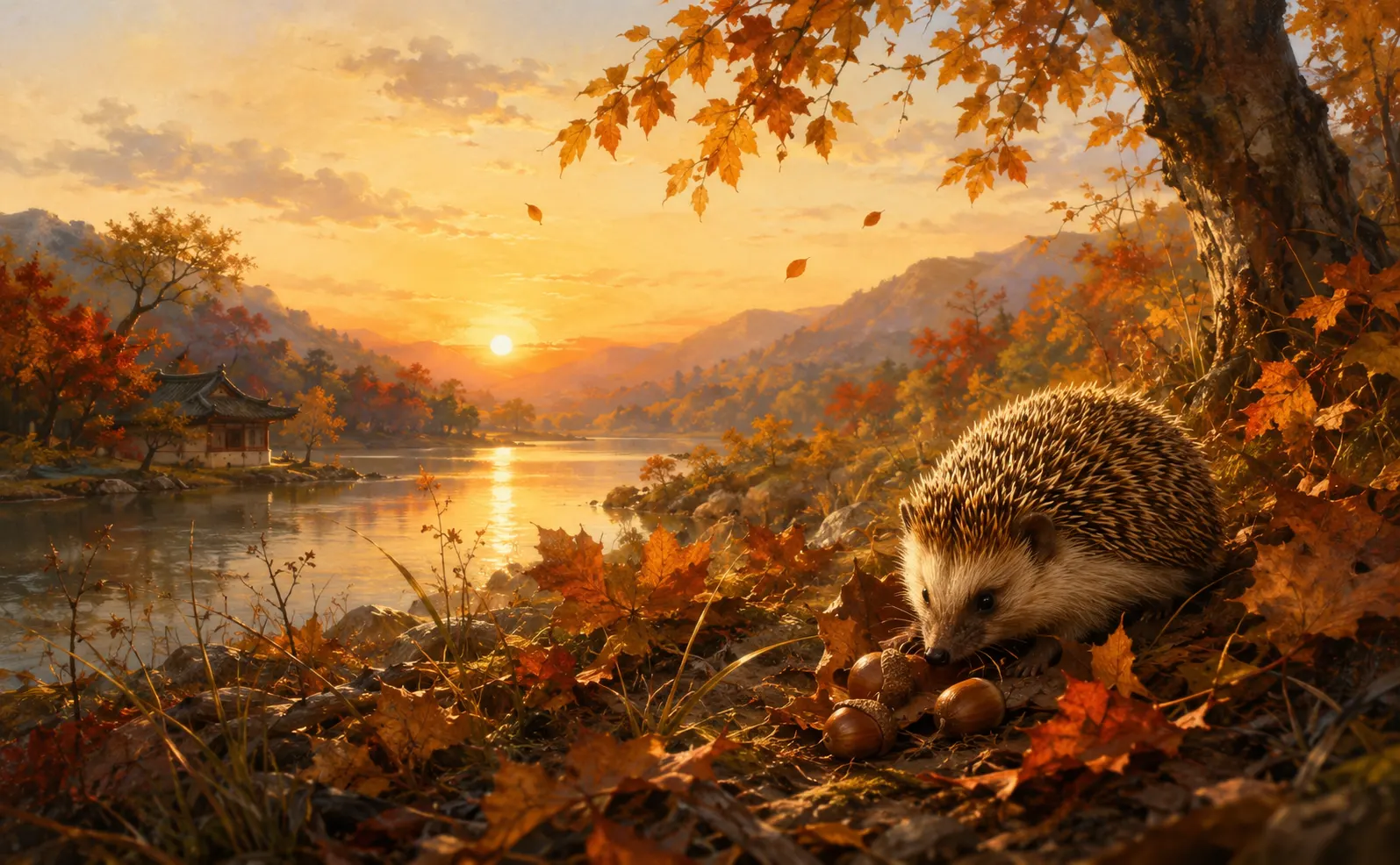
Autumn Equinox
「金气秋分,风清露冷秋期半。」
Temperatures fall markedly. Across most of China, average daily temperatures drop below 20°C, while many northern regions fall to around 10–15°C. Morning and evening chill becomes pronounced, the contrast between day and night remains large, and the weather is cool and pleasant, bringing the celebrated condition of “秋高气爽” to its fullest expression.
Autumn rains in western China continue, but overall precipitation remains relatively low. Most of the country is dominated by clear and dry weather: winds are stronger and conditions drier in the north, autumn dryness gradually becomes more apparent in the south, and rainfall approaches one of its lowest levels of the year.
After the Autumn Equinox, yang qi gradually declines while yin qi grows stronger, and thunder ceases to rumble. This marks the complete retreat of summer heat and the natural world’s transition from the active vitality of the warm season into the more restrained rhythm of autumn and winter.
Insects sense the colder weather and begin sealing the entrances to their nests and burrows with earth, preparing themselves against the severe winter ahead. The natural world enters a clear mode of overwintering and withdrawal.
As rainfall decreases and evaporation remains strong, water levels in rivers and lakes fall noticeably, and some shallow streams may even dry up entirely. It is a direct phenological expression of the increasingly dry climate of autumn.
Solar-Term Farming
Farm with the Seasons · Work with Nature
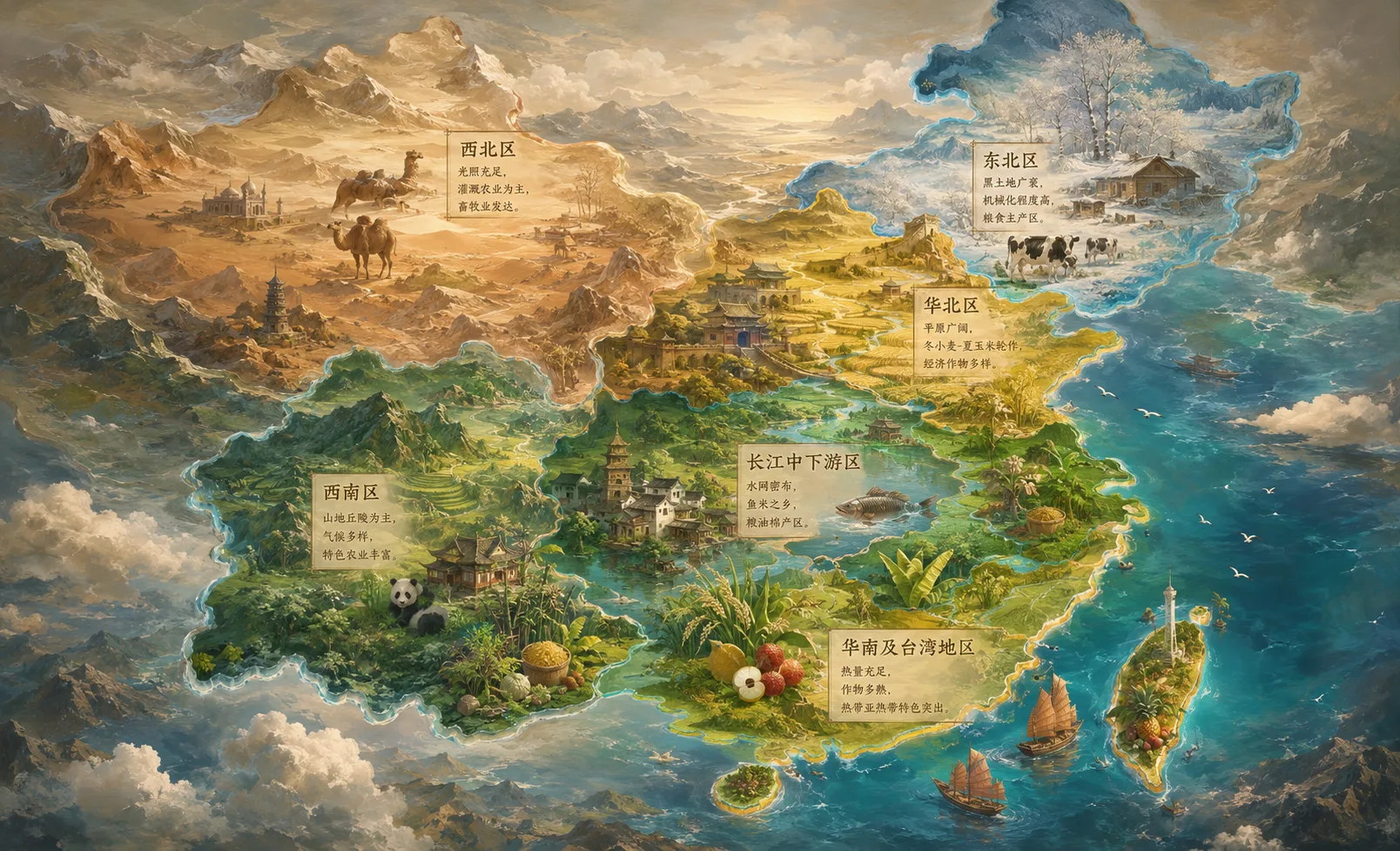
Northeast China
Farming Focus for This Solar Term
Autumn grain crops enter full maturity and harvest, with maize, rice,…
Farming Advice
- Complete autumn tillage pro…
- Service farm machinery and …
Northwest China
Farming Focus for This Solar Term
Maize enters peak harvest, cotton reaches full boll opening, autumn c…
Farming Advice
- Roll winter wheat fields to…
- Apply winter irrigation in …
North China
Farming Focus for This Solar Term
Summer maize enters maturity and harvest, summer soybeans reach matur…
Farming Advice
- Control excessive winter-wh…
- Clear drainage ditches in r…
Middle and Lower Yangtze
Farming Focus for This Solar Term
Single-season mid-season rice enters peak harvest, late rice reaches …
Farming Advice
- Plough promptly after the l…
- Clear drainage ditches in r…
Southwest China
Farming Focus for This Solar Term
Mid-season rice harvesting approaches its end, maize enters full matu…
Farming Advice
- Check winter-wheat emergenc…
- Top-dress rapeseed seedling…
South China & Taiwan (China)
Farming Focus for This Solar Term
Late rice enters peak grain filling, tropical fruit harvesting moves …
Farming Advice
- Harvest late rice during cl…
- Fertilise and earth up suga…
Seasonal Delicacies
Eat with the Seasons · Nothing Out of Season
Seasonal Tastes · A Guide to Eating with the Seasons
Traditional Customs
When Rites Fade, Seek Them Among the People · Old Ways Still Endure
Seasonal Rites · Everyday Traditions
Solar-Term Poetry
Poetry · The Heart of Heaven and Earth
「晚晴」
返照斜初彻,浮云薄未归。
江虹明远饮,峡雨落馀飞。
凫雁终高去,熊罴觉自肥。
秋分客尚在,竹露夕微微。
Modern Translation
The slanting light of the setting sun has just broken through the clouds, while thin floating clouds still linger without fully dispersing. A bright rainbow arches over the river like a long dragon drinking from afar; in the gorge, the last remnants of rain are still falling and scattering through the air. Wild ducks and geese eventually rise high and fly away, while bears seem to sense themselves growing steadily fatter. The Autumn Equinox has already arrived, yet I, a traveler, still remain far from home; at dusk, the dew upon the bamboo leaves glimmers faintly.
In-Depth Commentary
Du Fu sets this poem against the scenery of an evening at the Autumn Equinox and writes of the feeling of living away from home. “返照斜初彻” describes the setting sun newly breaking through the clouds after rain, while “浮云薄未归” writes the thin clouds still drifting and not yet dispersed. “江虹明远饮” compares the rainbow spanning the river to a long dragon drinking from the water, creating a magnificent image, while “峡雨落馀飞” captures the lingering traces of rain in the gorge as the shower begins to end. Rainbow and rain, distance and nearness, together create a broad sense of space. “凫雁终高去” writes wild geese flying south, one of the seasonal signs of the Autumn Equinox; “熊罴觉自肥” writes animals sensing the autumn chill and accumulating fat in preparation for winter. The final couplet, “秋分客尚在”, reveals that the poet remains a traveler in a foreign place even though the Autumn Equinox has arrived; “竹露夕微微” closes the poem with dew glimmering faintly on bamboo leaves at dusk, the chill of the dew quietly echoing the traveler’s loneliness. The poem weaves personal feeling into the natural seasonal phenomena of the Autumn Equinox, restrained yet substantial.
Readers’ Comments
Calendar and traditional culture enthusiasts from around the world, sharing the same moon.
Sign in or register to join the conversation. Your comment account is created automatically the first time you use a connected account.
No comments yet
Share your thoughts with readers around the world.