Winter Solstice
「天时人事日相催,冬至阳生春又来。」
Temperatures continue to fall. Across much of northern China, average daily temperatures drop below –10°C, while Northeast and Northwest China generally range between –15°C and –25°C. In many southern regions, temperatures also fall to around 0–5°C, bringing the country into the coldest period of the year.
Snowfall dominates in northern regions, with amounts varying by location. The south receives relatively little precipitation and is characterized mainly by cold, overcast weather. In the middle and lower reaches of the Yangtze, precipitation may shift between rain and snow, producing a pronounced damp chill.
During the Winter Solstice, yang qi has only just begun to stir while yin qi remains dominant. Earthworms curl tightly together in the frozen soil, drawing themselves inward and remaining bent rather than extended, conserving as much energy as possible through the coldest period of the year.
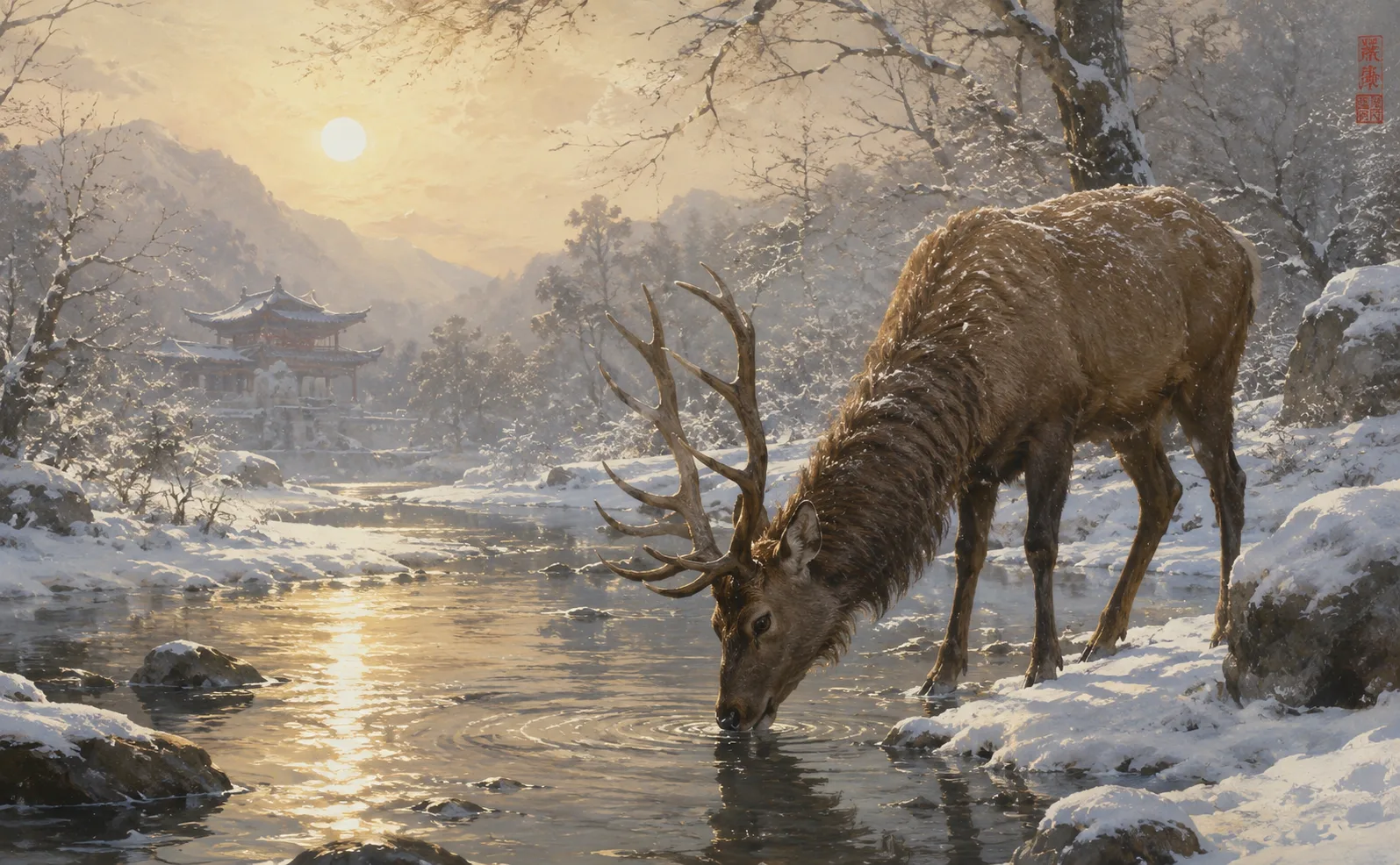
The 麋 was traditionally regarded as an animal associated with yin. At the Winter Solstice, when the first yang begins to arise, its antlers are believed to sense this subtle change and naturally fall away, forming a yin–yang phenological counterpart to the shedding of deer antlers around the Summer Solstice.
Although the surface world remains covered in ice and snow during the Winter Solstice, yang qi has already begun to stir deep underground. Springs start to move faintly beneath the earth, as spring quietly takes shape in the coldest depths of winter.
Solar-Term Farming
Farm with the Seasons · Work with Nature
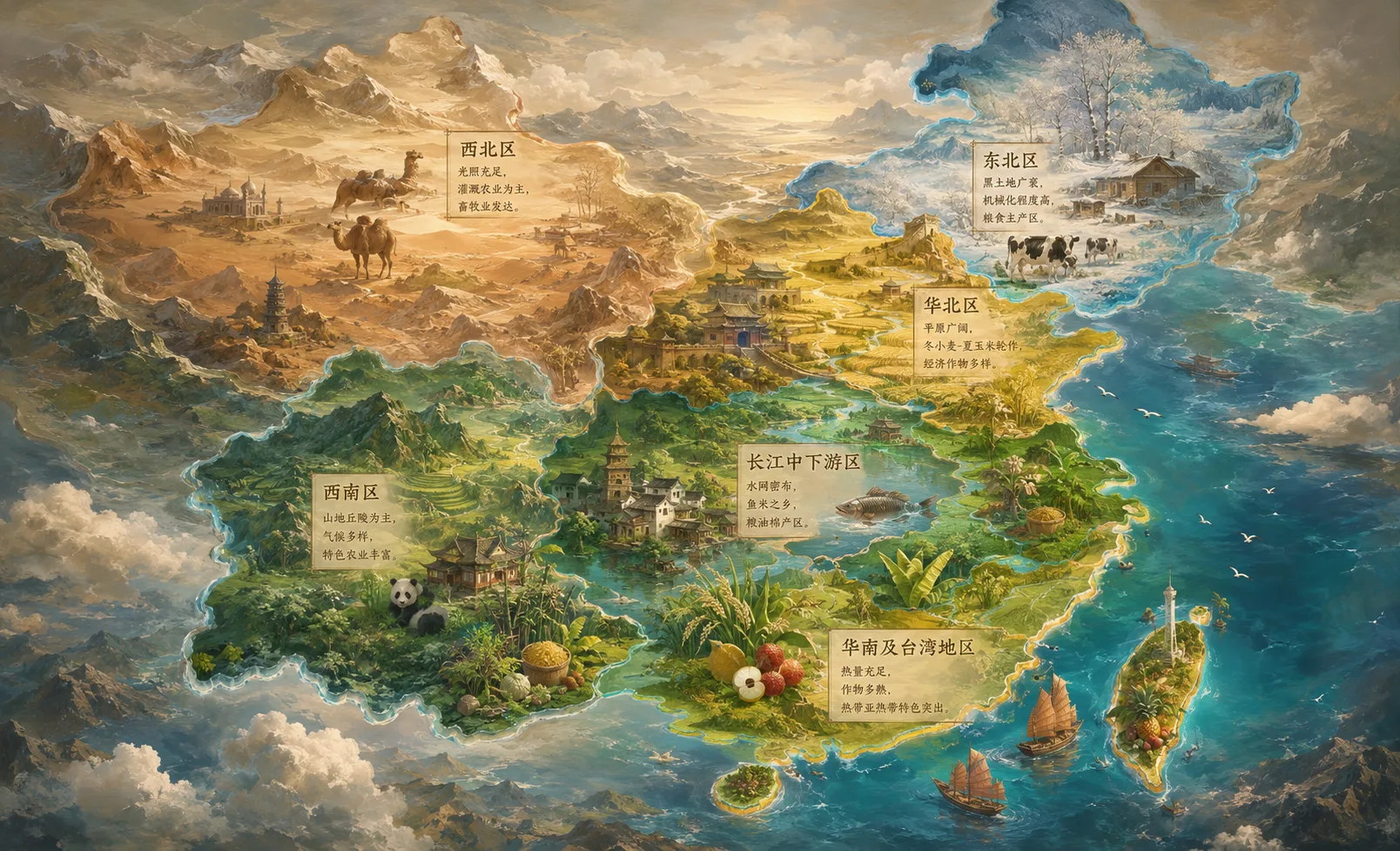
Northeast China
Farming Focus for This Solar Term
The land is sealed under ice and snow and agricultural production pau…
Farming Advice
- Complete autumn tillage pro…
- Service farm machinery and …
Northwest China
Farming Focus for This Solar Term
Winter wheat enters deep overwintering dormancy, fruit-tree pruning a…
Farming Advice
- Roll winter wheat fields to…
- Apply winter irrigation in …
North China
Farming Focus for This Solar Term
Winter wheat enters the overwintering period and fieldwork pauses, wh…
Farming Advice
- Control excessive winter-wh…
- Clear drainage ditches in r…
Middle and Lower Yangtze
Farming Focus for This Solar Term
Rapeseed enters the overwintering period, winter wheat moves into til…
Farming Advice
- Plough promptly after the l…
- Clear drainage ditches in r…
Southwest China
Farming Focus for This Solar Term
Winter wheat enters the tillering stage, rapeseed enters overwinterin…
Farming Advice
- Check winter-wheat emergenc…
- Top-dress rapeseed seedling…
South China & Taiwan (China)
Farming Focus for This Solar Term
Winter vegetables enter a sustained harvest period, sugarcane nears t…
Farming Advice
- Harvest late rice during cl…
- Fertilise and earth up suga…
Seasonal Delicacies
Eat with the Seasons · Nothing Out of Season
Seasonal Tastes · A Guide to Eating with the Seasons
Traditional Customs
When Rites Fade, Seek Them Among the People · Old Ways Still Endure
Seasonal Rites · Everyday Traditions
Solar-Term Poetry
Poetry · The Heart of Heaven and Earth
「小至」
天时人事日相催,冬至阳生春又来。
刺绣五纹添弱线,吹葭六琯动浮灰。
岸容待腊将舒柳,山意冲寒欲放梅。
云物不殊乡国异,教儿且覆掌中杯。
Modern Translation
The course of Heaven and the affairs of human life press onward day by day. At the Winter Solstice, yang begins to rise, and spring will come again. Women at their embroidery notice the daylight lengthening and can add another fine thread to their work; within the pitch pipes, reed ash stirs as the qi of the earth begins to move. Along the riverbanks, the willows await the twelfth lunar month before unfurling; in the mountains, plum blossoms are ready to break through the cold and open. The clouds and scenery here are no different from those of my homeland, though the country itself is far away. Let me tell my son to drain the cup in my hand.
In-Depth Commentary
This poem by Du Fu is a classic work on the Winter Solstice. The opening line, “天时人事日相催”, takes a broad view of the dual pressures of seasonal time and human affairs, while “冬至阳生春又来” points directly to the philosophical meaning of the Winter Solstice as the moment when “the first yang is born”: within the longest night, yang qi begins to stir, and spring is already being conceived. The second couplet, “刺绣五纹添弱线”, writes of the days gradually lengthening after the Winter Solstice, allowing embroidery workers to add a little more thread to their work; “吹葭六琯动浮灰” writes of the ancient practice of observing qi through pitch pipes, in which the stirring of the earth’s qi at the Winter Solstice causes the reed ash within the tubes to move. One detail comes from women’s daily work and the other from celestial observation, together confirming the arrival of “yang rising.” The third couplet, “岸容待腊将舒柳”, writes the riverbanks waiting until the twelfth lunar month for willow branches to unfold, while “山意冲寒欲放梅” writes the mountains pushing through the severe cold as plum blossoms prepare to open. One “unfurls,” the other “blooms,” revealing the life force hidden within deep winter. The final couplet, “云物不殊乡国异”, says that the clouds and scenery before him are no different from those of home, while “教儿且覆掌中杯” closes on a cup of wine. There is both the joy of seasonal drinking and the deeper feeling of a traveler using wine to ease the sorrow of being far from home.
Readers’ Comments
Calendar and traditional culture enthusiasts from around the world, sharing the same moon.
Sign in or register to join the conversation. Your comment account is created automatically the first time you use a connected account.
No comments yet
Share your thoughts with readers around the world.