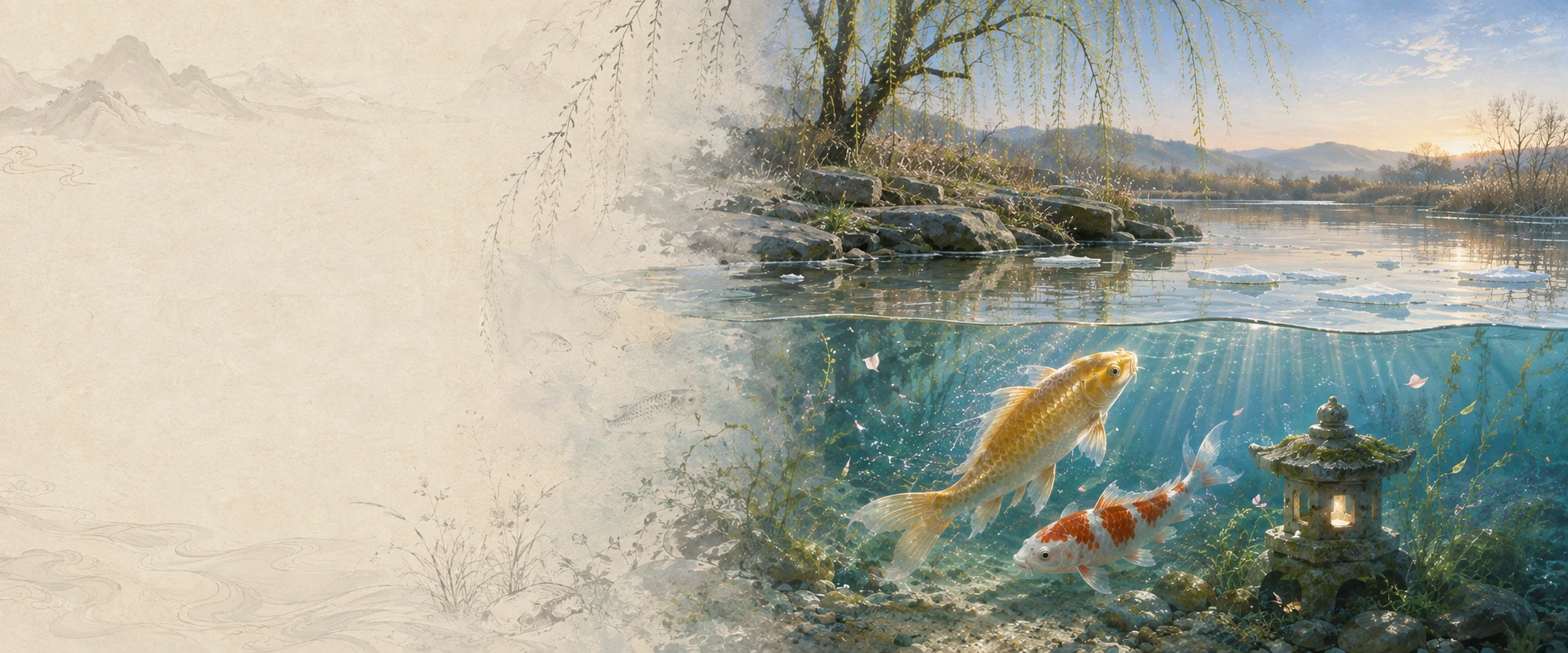
Rain Water Food
「天一生水,春始属木,然生木者必水也。(《月令七十二候集解》)」
《月令七十二候集解》 states: “雨水,正月中;天一生水,春始属木,然生木者必水也,故立春后继之雨水;且东风既解冻,则散而为雨矣。” The solar term Rain Water marks not only rising temperatures and increasing precipitation, but also the revival of the earth and the sprouting of all living things. In food culture, this period encourages the growth of many wild and seasonal greens, with spring bamboo shoots and shepherd’s purse becoming traditional foods of the season. Dietary customs differ between north and south: southerners favor spring bamboo shoots, while northerners are especially fond of shepherd’s purse. Other regional traditions include eating popped rice, Jar Meat, Dragon’s Whisker Cake, and other foods during Rain Water. The season’s food culture reflects both a deep appreciation for seasonal ingredients and heartfelt wishes for family health and abundant harvests.
Regional Foods of This Solar Term
| Region | Signature Foods | Notable Features |
|---|---|---|
| Southern China | Spring bamboo shoots: oil-braised spring shoots, chicken stewed with spring bamboo shoots, fresh bamboo shoot and salted pork rib soup | |
| Northern China | Shepherd’s purse: shepherd’s-purse dumplings and shepherd’s-purse tofu soup; red bean soup | |
| Hakka Regions | Popped rice, originating in the “占稻色” harvest-divination custom | |
| Sichuan / Western Sichuan | Jar Meat, associated with Rain Water visits to the natal family and the custom of “接寿” | |
| Parts of Northern China | Dragon’s Whisker Cake, commemorating the Dragon King bringing rain | |
| Jiangnan | Rain Water Tea, tea made from leaves picked during the Rain Water period | |
| Many Regions Nationwide | Rain Water Porridge made with red beans, black rice, lotus seeds, lily bulbs, and other ingredients | |
| Northeast China | Dumplings, whose ingot-like shape symbolizes wealth |
Rain WaterFood
Spring Bamboo Shoots
Historical Origins:
Eating spring bamboo shoots during Rain Water is a traditional custom in southern China. At this time of year, the shoots are in their active growing season, tender and juicy with a crisp, refreshing texture, making them one of the distinctive seasonal delicacies of early spring. The Chinese idiom “雨后春笋”—“spring bamboo shoots after the rain”—describes the way shoots seem to emerge everywhere after rainfall. Bamboo shoots are available throughout the year, but spring shoots and winter shoots are traditionally considered the finest in flavor.
Li Yu, the late-Ming and early-Qing writer and gastronome, praised bamboo shoots as “至鲜至美物”, “a thing of supreme freshness and beauty,” and “蔬食中第一品”, “the finest of all vegetable foods,” claiming that even tender mutton and fine pork could scarcely compare. The custom of eating oil-braised spring bamboo shoots during Rain Water arose from the delight and gratitude inspired by spring rain nourishing all things. As the rain falls softly and the earth returns to life, young bamboo shoots break through the soil, making this the ideal moment to taste their tender freshness.
Regional Evolution:
Spring bamboo shoots are prepared differently throughout southern China. In Jiangsu and Zhejiang, oil-braised spring bamboo shoots are especially celebrated: the shoots are blanched to remove bitterness, then simmered with soy sauce and sugar until richly flavored while retaining their crisp texture. In southern Fujian, people prefer to simmer them in chicken soup, combining gentle nourishment with a delicate natural sweetness and helping dispel the damp chill of early spring. Fresh bamboo shoots stewed with chicken and soups of fresh shoots with salted pork ribs are also common preparations. Bai Juyi is said to have steamed fresh bamboo shoots together with rice in the cooking pot in order to preserve their original flavor.
Preparation:
Using oil-braised spring bamboo shoots as an example:
1. Cut the spring bamboo shoots into pieces and blanch them to remove bitterness.
2. Stir-fry them in oil until lightly golden.
3. Add soy sauce, sugar, and other seasonings and simmer until the flavors are absorbed.
4. Reduce the sauce and serve.
The finished dish is glossy red-brown, with bamboo shoots that remain tender and crisp and carry a rich savory aroma. The texture is delicate, balancing the clean fragrance of the shoots with the mellow depth of the seasoning.
Cultural Meaning:
Folk tradition associates eating spring bamboo shoots during Rain Water with the auspicious idea of “节节高升”—rising higher joint by joint. People eat the shoots partly for their seasonal tenderness and partly for this fortunate symbolism. Their vigorous emergence from the soil and rapid upward growth embody hopes for steady progress in career and life. Eating oil-braised bamboo shoots during Rain Water is therefore more than a culinary pleasure; it is also an expression of gratitude for and appreciation of nature’s gifts.
Popped Rice
Historical Origins:
The custom of eating popped grain during Rain Water originates in the Hakka practice known as “占稻色”, divining the condition of the rice harvest. Glutinous rice grain was heated until it burst into white blossoms, and the result was used to predict the year’s yield. The more plentiful and whiter the popped grains, the better the coming rice crop was expected to be; fewer or duller blossoms suggested a poor harvest.
This practice has deep roots in the rice-growing regions of South China and can be traced back to the Song dynasty. The Song work 《田家五行》 records: “雨水节烧锅,以糯米爆之,谓之孛娄花,占稻色。” Fan Chengda of the Southern Song also mentions the custom in 《吴郡志·风俗》: “爆糯谷于釜中,名孛娄,亦曰米花。每人自爆……”
Qu Dajun’s Qing-dynasty 《广东新语》 records: “广州之俗,岁终以烈火爆开糯谷,名曰炮谷。以为煎堆心馅。” Popped rice was thus also known as “炮谷”, while Hakka communities in southern Jiangxi often called it “米炮.” Over time, the divination practice gradually evolved into the custom of eating popped grain during Rain Water, and the ingredients were no longer limited to glutinous rice.
Regional Evolution:
Popped grain in southern China differs from what is commonly called popcorn in the north. In the south, rice is traditionally used, while in the north corn is more common. In Hakka regions during Rain Water, a large wok is heated dry before glutinous rice or ordinary rice grain is added; under intense heat, the kernels burst into white blossoms. In the past, rice from every harvest season might be tested in this way, but the practice gradually became associated specifically with Rain Water, expressing hopes for a favorable crop in the year ahead. Today, the custom has developed into the simple enjoyment of many varieties of popcorn and popped grain.
Preparation:
1. Heat a large wok until dry.
2. Add glutinous rice or rice grain.
3. Allow the grains to burst under high heat.
Cultural Meaning:
Popped rice symbolizes abundance and prosperity. The custom embodies farmers’ prayers and hopes for a successful harvest. A promising omen meant that more grain could be sold, making it possible to purchase more land. The whiter and more abundant the popped blossoms, the better the coming year’s harvest was believed to be. Today, although “占稻色” has no scientific basis, the custom of eating popped grain remains, preserving a sweet sense of seasonal ritual. One crisp mouthful may seem like no more than a snack, yet behind it lies the reverent hope for abundance carried by generations of farming communities.
Jar Meat
Historical Origins:
Jar Meat is an emblematic Rain Water food custom of the Sichuan region. It is closely connected with the local tradition of married daughters returning to their natal homes during Rain Water. According to 《什邡县志》: “什邡民俗,家中子女要以桃枝插瓦罐炖肉为父母‘接寿’。” 《灌县志》 likewise records: “已婚子女为娘家父母送‘罐罐肉’,有的插上茶花或兰花,并送红棉带,表示为父母接寿。”
The cultural background of “接限”: In the Bashu region, Rain Water is also traditionally associated with a custom known as “接限.” Sichuan has long been deeply influenced by Daoist culture, and Daoist thought held that each person’s lifespan had a predetermined limit known as the “大限.” Rain Water is a season in which new life begins to develop, and ordinary people drew upon this auspicious symbolism to wish additional blessings and longevity for the elderly in the family, symbolically delaying their “great limit.” This practice came to be called “接限.”
Regional Evolution:
At Rain Water, a son-in-law traditionally accompanies his wife to visit her parents and present seasonal gifts, among which Jar Meat is especially important. Pig’s trotters are slowly stewed in an earthenware pot with snow-mountain soybeans and kelp for several hours, after which the mouth of the jar is sealed with red paper and red cord before being carried to the wife’s parents. The gift expresses gratitude and respect toward the parents who worked so hard to raise their daughter.
Some jars are decorated with camellias or orchids and accompanied by a red cotton ribbon. In return, the parents may give the couple an umbrella, symbolizing “shelter from wind and rain, and a smooth journey through life.” The custom not only strengthens family affection but also passes the culture of filial devotion from one generation to the next.
Preparation:
1. Choose good-quality cured or fresh pig’s trotters, wash them, and cut them into pieces.
2. Place them in an earthenware pot with kelp, kidney beans or snow-mountain soybeans, longan, red dates, and other ingredients.
3. Simmer slowly over low heat for several hours, a process that requires considerable patience.
4. Once cooked, seal the mouth of the jar with red paper and red cord.
5. Carry it to the parents’ home; by the time it arrives, the temperature is just right, and when the seal is opened the aroma fills the room.
Cultural Meaning:
Jar Meat carries children’s filial devotion and respect for their elders. It expresses gratitude for parental care and also serves as a way to “接寿”—symbolically extending the parents’ lives and wishing them great longevity. The jar is sealed with red paper and red cord; in traditional Chinese culture, red symbolizes auspiciousness and celebration and therefore carries wishes for added blessings and longer life. The aroma of the meat simmering inside the jar can easily drift down an entire lane and into the hearts of the parents waiting at home. One jar of meat contains a whole story of affection between parents and children.
Dragon’s Whisker Cake
Historical Origins:
In some northern regions, Rain Water is marked by eating a sweet, crisp specialty whose fine strands resemble a dragon’s whiskers: Dragon’s Whisker Cake. A long-standing folk legend is also associated with the custom.
Legend: It is said that after Wu Zetian became emperor during the Tang dynasty, the Jade Emperor was enraged and ordered the Dragon Kings of the Four Seas not to send rain to the human world for three years. Taking pity on ordinary people, however, one Dragon King defied the order and sent down a great rain. When the Jade Emperor learned of this, he cast the Dragon King down into the mortal realm. In remembrance of the Dragon King, the people began eating Dragon’s Whisker Cake during Rain Water.
Cultural Meaning:
Dragon’s Whisker Cake expresses gratitude toward and remembrance of the Dragon King who brought rain to save the people. The final days of the Rain Water period approach the folk festival known as “二月二,龙抬头”, “On the second day of the second lunar month, the dragon raises its head.” People eat Dragon’s Whisker Cake in memory of the celestial dragon who, moved by the suffering of farmers during drought, brought rain and was punished beneath a mountain. To bite into the crisp pastry as it scatters crumbs is, in a sense, to “eat” the old legend of the Dragon King’s rain-bringing compassion along with it. According to older northern customs, ordinary households also ate noodles, spring pancakes, popped corn, pig’s head meat, and other foods on this day.
Red Bean Soup
Historical Origins:
In northern China, people enjoy eating red bean soup during Rain Water. The weather at this time is damp and alternates unpredictably between overcast and clear conditions. Traditional belief holds that red bean soup can replenish qi and blood, invigorate blood circulation and resolve stasis, help expel dampness from the body, and strengthen immunity. During this period, folk custom emphasizes “春捂”, keeping warmly dressed in spring to guard against sudden returns of cold weather, while the diet should include fewer raw and chilled foods. A warm, nourishing bowl of red bean soup therefore fits the traditional health needs of the season.
Chinese Chives
Historical Origins:
The ancients had a saying: “春食则香,夏食则臭”—chives eaten in spring are fragrant, while those eaten in summer smell strong. Chives during Rain Water were known as “起阳草”, “yang-raising herb,” and were considered especially suitable for the season. 《本草纲目》 states that they “归心、安五脏,除胃热.” As Rain Water alternates between early warmth and lingering chill, the pungent and warming nature traditionally attributed to chives was believed to support the rising of yang qi. Folk tradition even says “早春韭菜一束金”—a bundle of early-spring chives is worth its weight in gold—showing how highly they were valued.
Accompaniments & Serving:
* Stir-fried Chinese chives with egg
* Chinese chive pockets
* Chinese chives quickly stir-fried with pork, producing an intense aroma and traditionally associated with warming the stomach and replenishing qi and blood
Sugar-Coated Glutinous Rice Cake
Historical Origins:
Tangci (糖糍) is a southern Chinese snack made from glutinous rice flour. Soft, chewy, and elastic, it is coated with white sesame and powdered sugar, giving it a sweet and fragrant flavor. Traditional belief holds that eating Tangci during Rain Water can replenish qi and blood, benefit the kidneys and brain, and strengthen the body. As yang qi begins to grow in spring, glutinous rice is traditionally considered warming and nourishing and therefore suited to the health-preservation needs of the season.
Closing Note
On the Rain Water table, the most moving dish is perhaps a single jar of Jar Meat. In the plains of western Sichuan, a married daughter returns to her natal home on Rain Water carrying a jar of meat she has already simmered to tenderness. The mouth of the jar is sealed with red paper and red cord, and inside are the foods her parents love most: pig’s trotters stewed with snow-mountain soybeans and kelp. According to 《什邡县志》, the custom is locally known as “接寿”: “家中子女要以桃枝插瓦罐炖肉为父母‘接寿’。” During Rain Water, the son-in-law accompanies his wife to present seasonal gifts to her parents, and among those gifts, this jar of meat is the one prepared with the greatest care. Jar Meat must be slowly simmered over low heat until the meat becomes tender enough to fall apart. Sugarcane, red dates, longan, goji berries, and other ingredients are often added, producing a broth that is sweet, fragrant, and nourishing. This jar of meat travels through the last cold of winter and arrives on the parents’ stove during Rain Water. It is neither the display of a major festival nor the extravagance of a formal celebration—it is simply a jar of meat, a jar slowly cooked through the passage of time. Yet precisely because of this, it carries more weight than any rare delicacy. What weighs heavily is human affection; what weighs heavily is the simple sentence, “I have come home.” It is a married daughter telling her parents in the most ordinary way possible: I am doing well, and I want you to be well too.
Another Rain Water food is something that, in a sense, cannot be seen on the table at all: “占稻色.” Hakka communities throw glutinous rice grain into a hot wok and roast it until the grains leap and burst into white blossoms. The more plentiful and whiter the blossoms, the better the year’s rice harvest is expected to be. Qu Dajun’s Qing-dynasty 《广东新语》 records: “广州之俗,岁终以烈火爆开糯谷,名曰炮谷”。 This custom has been passed down in Hakka areas for nearly a thousand years. In old southern Jiangxi and Hakka regions, people would throw glutinous rice grain into burning firewood around the Rain Water period, listening for the sharp burst and watching the sudden bloom of whiteness. This was not food served at the table, but a kind of “rehearsal for food”—a handful of popped grain used to divine the livelihood of an entire year. Popped grain originated in the Song dynasty, and the custom of eating it around Rain Water had existed by at least the Yuan period. Farmers used the simplest possible method to ask Heaven and Earth a question: Will this year’s harvest be good? The handful of white blossoms in the wok became the answer sent back by Heaven. A jar of meat and a wok of popped grain—Rain Water food ties one end to the warmth of human relationships and the other to the hope lying between the ridges of the fields.
Rain falls upon the earth; people return to the family door. A single jar of meat contains the most grounded affection of an entire spring, while a wok of popped grain carries the farmer’s most reverent question to the soil. The foods of Rain Water have never sought complexity or magnificence. They are simple, gentle, and touched by the smell of the earth. Like Rain Water itself, “天一生水”—water is born from Heaven and nourishes all things without a sound. When a mother-in-law unties the red paper sealing the jar of meat, and when the first white blossom bursts from the glutinous grain in a hot wok, Rain Water food becomes more than a pleasure of taste. Through the most ordinary smoke and warmth of daily life, Chinese people catch the first spring rain as it descends from Heaven. The rain returns faithfully year after year; may peace endure in the human world, season after season.
—-

Readers’ Comments
Calendar and traditional culture enthusiasts from around the world, sharing the same moon.
Sign in or register to join the conversation. Your comment account is created automatically the first time you use a connected account.
No comments yet
Share your thoughts with readers around the world.