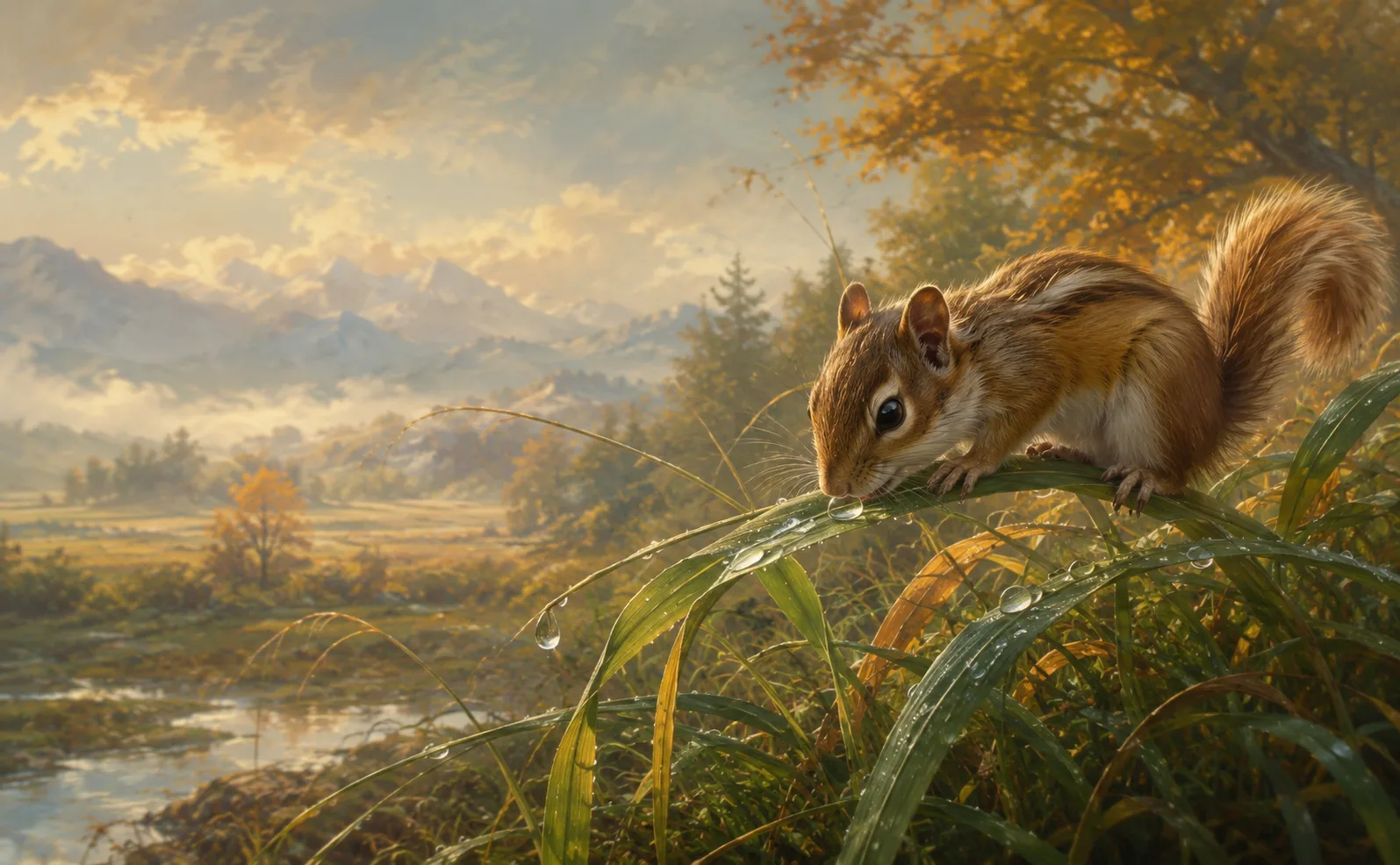
White Dew Poetry
「露从今夜白,月是故乡明。」
Poetry of White Dew centers on the imagery of dew condensing beneath a bright moon and hearts filled with autumn longing. The line from the *Book of Songs*, “蒹葭苍苍,白露为霜”, stands at the source of White Dew poetry and established the emotional tone of autumn longing for later generations. Du Fu’s “露从今夜白,月是故乡明” fuses White Dew with homesickness, while Bai Juyi’s “白露凋花花不残” writes of autumn gradually deepening. Carrying the lingering resonance of the *Book of Songs*, poets write of dew condensing and turning white, wild geese flying south, and moonlight clear as water. White Dew poetry is a scroll of autumn longing, every word falling upon the softest place in the human heart.
White Dew Poetry
月夜忆舍弟
Original Verse:
戍鼓断人行,边秋一雁声。
露从今夜白,月是故乡明。
有弟皆分散,无家问死生。
寄书长不达,况乃未休兵。
Modern Translation:
The watch drums from the garrison tower cut off all movement on the roads, and in the autumn of the frontier comes the lonely cry of a wild goose. From tonight onward, the season enters White Dew; yet the moon still seems brightest in my homeland. My brothers have all been scattered, and there is no home from which to ask whether they are alive or dead. The letters I send often fail to arrive—how much more so when the fighting has still not ceased.
Commentary:
This poem stands at the summit of poetry on the White Dew season. “戍鼓断人行” writes the desolation of wartime, while “边秋一雁声” gives the mournful cry of a lone goose on the autumn frontier. The contrast of “断”, “cut off,” and the solitary goose creates the bleakness of a world shaped by war. The second couplet, “露从今夜白,月是故乡明”, has become immortal. “露从今夜白” marks the arrival of White Dew through a natural seasonal phenomenon; “月是故乡明” allows subjective feeling to reshape objective reality. The moon is, of course, no brighter in one place than another, yet through the emotional projection of home, it appears incomparably luminous. The third couplet, “有弟皆分散,无家问死生”, directly writes the pain of brothers scattered by war and cut off from all news of one another. The final “寄书长不达,况乃未休兵” expresses the helplessness of letters unable to pass through a land still divided by warfare. The poem begins with the chill of White Dew and closes with the sorrow of wartime separation; the coolness of nature and the grief of human affairs become intertwined, making this one of the most emotionally profound poems associated with White Dew.
南湖晚秋
Original Verse:
八月白露降,湖中水方老。
旦夕秋风多,衰荷半倾倒。
手攀青枫树,足蹋黄芦草。
惨澹老容颜,冷落秋怀抱。
有兄在淮楚,有弟在蜀道。
万里何时来,烟波白浩浩。
Modern Translation:
In the eighth month, White Dew descends, and even the waters of the lake seem to have grown old. Autumn winds rise more often morning and evening, and more than half the fading lotus plants have bent and fallen. My hand grips the green maple trees, while my feet tread upon yellow reeds. My aging face looks wan and desolate, and my heart is filled with the chill and loneliness of autumn. I have an elder brother in the Huai-Chu region and a younger brother along the roads of Shu. Separated by ten thousand li, when will they come? Before me, only pale mist and boundless white waves stretch into the distance.
Commentary:
Bai Juyi sets this poem against an autumn lake during White Dew and writes of his longing for brothers far away. “八月白露降” clearly establishes the season, while “湖中水方老” uses the character “老”, “old,” to describe the lake. Autumn water, clear and deep, appears grave and aged, as though it too had grown old. “旦夕秋风多,衰荷半倾倒” writes the early-autumn scene of frequent winds and withering lotus plants bending toward the water. “手攀青枫树,足蹋黄芦草” places the poet physically within the autumn landscape through the actions of grasping maple branches and treading yellow reeds, with the colors of green maple and yellow grass forming a vivid contrast. “惨澹老容颜,冷落秋怀抱” directly expresses the sense of aging and desolation awakened by autumn. The final lines, “有兄在淮楚,有弟在蜀道”, write the separation of siblings; “万里何时来” turns longing into a question, while “烟波白浩浩” closes with an immense expanse of pale mist and water, dissolving personal longing into the boundless landscape and leaving an unending resonance.
白露
Original Verse:
白露团甘子,清晨散马蹄。
圃开连石树,船渡入江溪。
凭几看鱼乐,回鞭急鸟栖。
渐知秋实美,幽径恐多蹊。
Modern Translation:
White dew gathers in shining beads upon the citrus fruit, and at dawn I ride out, the horse’s hooves scattering the dew. The garden opens wide toward trees beside the rocks, while boats cross over and enter the streams flowing toward the river. Leaning against a table, I watch the delight of fish in the water; turning my whip to ride back, I startle the birds into hurriedly returning to their roosts. Gradually I come to know the beauty of autumn fruit, though I fear the secluded paths may contain too many branching ways.
Commentary:
Du Fu’s poem writes of a morning outing during White Dew in a fresh and lively style. “白露团甘子” captures the crystalline beauty of dew gathered upon citrus fruit, while “清晨散马蹄” writes the lightness of riding through the dew at daybreak. The second couplet, “圃开连石树,船渡入江溪”, opens the view outward from the garden to trees beside the rocks and boats passing into the waterways, expanding the scene from near to far. “凭几看鱼乐” draws upon the allusion of Zhuangzi watching fish from the bridge over the Hao River and expresses the quiet pleasure of observing fish, while “回鞭急鸟栖” gives movement to the scene as the returning rider startles birds into hurried flight toward their roosts. The final “渐知秋实美,幽径恐多蹊” writes that, as autumn deepens, the beauty of autumn fruit becomes increasingly apparent, yet secluded paths contain many forks and require careful passage. There is both joy in autumn’s ripening and reflection upon the choices of the road ahead. Unlike the grave melancholy of *月夜忆舍弟*, this poem reveals another side of White Dew in Du Fu’s writing: fresh, bright, and rich with the breath of everyday life.
白露
Original Verse:
白露既下百草,秋兰亦复生芽。
天寒翠袖薄,日暮倚修竹。
早晚凉风至,萧萧闻马嘶。
露从今夜白,秋风渐寒时。
Modern Translation:
White dew has fallen across the hundred grasses, while autumn orchids have once again put forth new shoots. The weather is cold, and the green sleeves seem thin; at dusk, she leans against tall bamboo. Cool winds arrive morning and evening, and amid their rustling comes the sound of horses neighing. From tonight the dew turns white, while the autumn wind grows steadily colder.
Commentary:
Zhang Fu’s poem takes White Dew as its setting, creating an atmosphere at once cool, lonely, and deep. “白露既下百草” writes the scene of dew covering the grasses, while “秋兰亦复生芽” describes autumn orchids producing new shoots. White Dew is therefore not only a season of decline, but also one in which new life may begin to stir. “天寒翠袖薄” draws upon Du Fu’s line “天寒翠袖薄,日暮倚修竹”, shaping the solitary image of a woman leaning against bamboo in the autumn dusk. “早晚凉风至,萧萧闻马嘶” brings together the cool wind and the neighing of horses into an autumn soundscape. The final “露从今夜白,秋风渐寒时” points directly to the essential characteristics of White Dew: whitening dew and a gradually colder autumn wind. Its language is plain and restrained, while its atmosphere remains distant and lingering. The poem blends the natural phenomena of White Dew with the characteristic solitude and reflection of the literati.
白露日
Original Verse:
白露初零玉宇清,天风袅袅动秋声。
千家砧杵催寒色,一雁关河带月明。
江上青山愁欲暮,镜中白发暗相惊。
年来渐觉欢情减,岂独逢秋感慨生。
Modern Translation:
White Dew has just begun to fall, and the heavens are clear and crystalline; a gentle celestial wind stirs, carrying the sounds of autumn. From a thousand households comes the pounding of cloth, urging on the sense of approaching cold, while a lone goose crosses the passes and rivers beneath the bright moon. The green mountains above the river seem sorrowful as evening draws near, while the white hair in the mirror startles me in silence. In recent years I have gradually felt my capacity for joy diminish—how could my melancholy arise only because autumn has come?
Commentary:
Peng Sunyi sets this poem on the day of White Dew and writes the many layers of feeling awakened by autumn. “白露初零玉宇清” describes the crystalline clarity of heaven after the first fall of dew, while “天风袅袅动秋声” writes the soft autumn wind stirring the sounds of the season. “千家砧杵催寒色” evokes the pounding of cloth as a signal of approaching cold. In ancient times, women pounded cloth to prepare winter garments for people far away, making the sound of the fulling block and mallet one of autumn’s most representative auditory images. “一雁关河带月明” depicts a lone goose crossing distant passes and rivers beneath the moon, combining great spatial distance with the stillness of the night. In the third couplet, “江上青山愁欲暮” transfers emotion into the landscape, turning the evening mountains themselves into an image of sorrow, while “镜中白发暗相惊” directly expresses the poet’s shock at the passing of years. The final “年来渐觉欢情减,岂独逢秋感慨生” makes clear that the poet’s emotion is not simply conventional autumn sorrow, but the inevitable feeling of growing older as joy gradually diminishes with the years. The poem thus folds a deeper meditation on life into its seasonal reflection.
—


Readers’ Comments
Calendar and traditional culture enthusiasts from around the world, sharing the same moon.
Sign in or register to join the conversation. Your comment account is created automatically the first time you use a connected account.
No comments yet
Share your thoughts with readers around the world.