Major Snow Poetry
「夜深知雪重,时闻折竹声。」
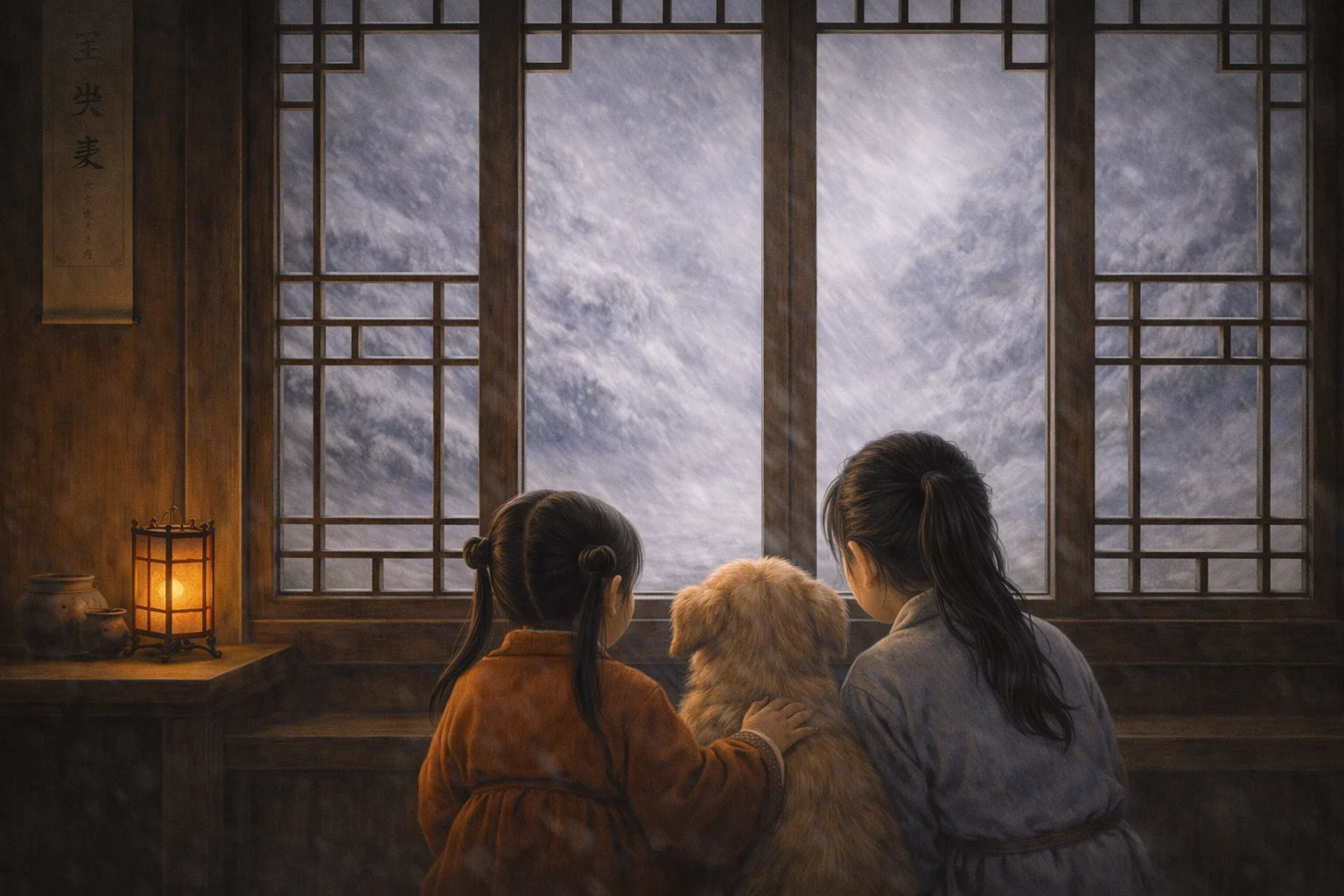
Poetry of Major Snow centers on the silent fall of snow and the profound solitude of Heaven and Earth. Bai Juyi’s “夜深知雪重,时闻折竹声” writes the stillness of a snowy night and the weight of the snowfall; Liu Zongyuan’s “孤舟蓑笠翁,独钓寒江雪” creates a vast realm of utter solitude between Heaven and Earth; Yuan Zhen’s “积阴成大雪,看处乱霏霏” records the sight of heavy snow whirling through the air. In deep winter, poets embrace the snow—snow falls without sound, yet poetry has a voice. The poetry of Major Snow is the most beautiful echo left behind for the depths of winter.
Major Snow Poetry
江雪
Original Verse:
千山鸟飞绝,万径人踪灭。
孤舟蓑笠翁,独钓寒江雪。
Modern Translation:
Across all the mountains, not a single trace of a flying bird can be seen; along all the paths, no human footprints remain. On the river floats a lone boat, where an old man in a straw rain cape and bamboo hat fishes alone upon the cold river beneath the boundless snow.
Commentary:
This poem is one of the supreme works associated with the solar term Major Snow and one of the most famous snow poems in classical Chinese literature. The opening two lines, “千山鸟飞绝,万径人踪灭”, use extreme exaggeration to portray the absolute silence and desolation of a world buried beneath heavy snow. “千山”, “a thousand mountains,” and “万径”, “ten thousand paths,” enlarge the space to its furthest extent, while “绝”, “cut off,” and “灭”, “vanished,” create a sense of complete emptiness and stillness. This extreme barrenness is also a true portrayal of mountains sealed by heavy snow. The final two lines, “孤舟蓑笠翁,独钓寒江雪”, draw the view from a vast panorama into a close-up: between Heaven and Earth there remains only a lone boat, one fisherman, and one fishing line. This fisherman who “fishes alone” is the outward embodiment of the poet’s own unyielding and solitary spirit—in a snowy world where all things have fallen silent, he alone faces the cold of the entire world. In only twenty characters, the poem creates both the immense space of a thousand mountains and ten thousand paths and the minute focal point of a solitary boat and lone fisherman, fusing the grandeur of heavy snow with the proud solitude of individual character.
和张仆射塞下曲 · 其三
Original Verse:
月黑雁飞高,单于夜遁逃。
欲将轻骑逐,大雪满弓刀。
Modern Translation:
On a moonless, wind-swept night, wild geese startle and fly high; the Chanyu, leader of the enemy forces, flees under cover of darkness. Just as the troops prepare to pursue with light cavalry, the sweeping snow has already covered bows and blades.
Commentary:
Although Lu Lun’s poem writes of warfare on the frontier, its final line, “大雪满弓刀”, has become one of the most vivid classical images of heavy snow. The opening lines, “月黑雁飞高,单于夜遁逃”, describe the enemy fleeing by night and wild geese rising in alarm, creating a tense and severe atmosphere before pursuit. The final line, “大雪满弓刀”, is the inspired stroke of the poem: at the very moment of pursuit, heavy snow fills the sky and settles across the soldiers’ bows and blades. The image fuses the tension of battle, the cold of the weather, and the martial bearing of the soldiers into a single scene. The word “满”, “to cover completely,” is especially effective, conveying the density, speed, and weight of the snow. The bows and blades covered in white snow are both a literal scene and a suggestion of the hardships endured by soldiers fighting through wind and snow. Against a background of swirling heavy snow, the poem writes of frontier military action, bringing together the grandeur of the snow scene and the heroic force of war.
大雪
Original Verse:
万象晓一色,皓然天地中。
楚山云母障,汉殿水精宫。
远近梅花信,高低柳絮风。
吟魂清不彻,和月上晴空。
Modern Translation:
At dawn, all things have become a single color, and Heaven and Earth are filled with radiant whiteness. The mountains of Chu gleam like screens of mica, while the palaces of Han shine like crystal halls. From near and far comes news of plum blossoms, while windblown snow drifts high and low like willow catkins. The spirit of poetry is clear yet inexhaustible, rising with the moon into the cloudless sky.
Commentary:
Lu Jiao sets this poem on the morning after a heavy snowfall and writes the magnificent sight of Heaven and Earth turned to a single color. “万象晓一色” describes all things becoming white at dawn, merged into one continuous hue, while “皓然天地中” writes the brightness of a world filled with pure whiteness. The second couplet, “楚山云母障,汉殿水精宫”, uses two splendid metaphors to portray the snow: the mountains of Chu shine like screens made of mica, while the palaces of Han appear translucent like crystal halls, blending the natural brilliance of snow with the splendor of history. “远近梅花信” writes of signs of plum blossoms arriving from near and far, suggesting that the flowers are about to open or have just begun to bloom, while “高低柳絮风” describes snowflakes blown by the wind like willow catkins drifting at different heights. The final couplet, “吟魂清不彻,和月上晴空”, writes the poet’s clear yet inexhaustible poetic spirit rising with the moon into the bright sky. With a broad vision, the poem portrays the world after heavy snow: it contains both the grandeur of Heaven and Earth turned white and the delicacy of plum signs and willow-like flakes, before finally rising into a transcendent image of clarity shared with the moon.
大雪
Original Verse:
大雪江南见未曾,今年方始是严凝。
巧穿帘罅如相觅,重压林梢欲不胜。
毡幄掷卢忘夜睡,金羁立马怯晨兴。
此生自笑功名晚,空想黄河彻底冰。
Modern Translation:
Such heavy snow has rarely been seen in Jiangnan; only this year have I truly known such severe cold. Snowflakes slip cleverly through the gaps in the curtains as though searching for something, while the snow presses heavily upon the treetops until the branches can scarcely bear it. In the felt tent, men cast dice and forget to sleep through the night; horses with golden bridles stand tethered, reluctant to set out in the cold morning. I laugh at myself that fame and achievement came too late in this life, and can only imagine the magnificent sight of the Yellow River frozen all the way through.
Commentary:
Lu You writes here of an unusually heavy snowfall in Jiangnan, weaving into the snow scene his lifelong regret over achievement and ambition. “大雪江南见未曾” immediately emphasizes how rare such heavy snow is in Jiangnan, while “今年方始是严凝” says that only this year has he truly experienced such intense cold. In the second couplet, “巧穿帘罅如相觅” personifies the snowflakes slipping through gaps in the curtain, as though they were searching for something; “重压林梢欲不胜” writes the heavy snow weighing upon the treetops until the branches can barely support it. One image is light—the flakes slipping through the curtain—while the other is heavy—the snow pressing down the branches—thus presenting two different states of snow. “毡幄掷卢忘夜睡” writes of gambling in a military tent: on a snowy night with nothing else to do, men play dice and forget about sleep. “金羁立马怯晨兴” writes of horses standing tethered in the severe cold, reluctant to set out at dawn. The final couplet, “此生自笑功名晚,空想黄河彻底冰”, turns inward: the poet laughs at himself that success has come too late, and can only imagine the majestic sight of the Yellow River frozen completely. The frozen Yellow River is an image of extreme cold. Through it, the poet expresses that although he has grown old, his aspirations remain vigorous, while the image also contains a distant longing for the northern homeland, the Central Plains that had been lost.
大雪
Original Verse:
飞雪过江来,船在赤栏桥。
急管催银字,繁弦送玉杯。
酒酣驱马去,乡思满尘埃。
Modern Translation:
Flying snow sweeps across the river, while the boat lies moored beside Chilan Bridge. Urgent pipes sound around the silver-marked instruments, and dense strings accompany the passing of jade cups filled with wine. After drinking deeply, I mount my horse and leave, while homesickness fills the drifting dust of the world.
Commentary:
Xu Hun sets this poem against snow sweeping across the river and writes of homesickness after a drinking gathering. “飞雪过江来” describes the powerful sight of heavy snow crossing the river, while “船在赤栏桥” gives the precise location of the moored boat. One is expansive and the other specific, creating a spatial tension. The second couplet, “急管催银字,繁弦送玉杯”, writes the scene of feasting: pipes sound urgently, strings play densely, and jade wine cups pass from hand to hand. The characters “急”, “urgent,” and “繁”, “dense,” convey the liveliness and pleasure of the gathering. The final two lines, “酒酣驱马去,乡思满尘埃”, abruptly shift the mood: after drinking deeply, the poet rides away, and thoughts of home fill the drifting dust around him, whether snow-dust or earth-dust. The liveliness of the first four lines and the solitude of the last two create a powerful contrast. In “乡思满尘埃”, the word “满”, “to fill,” gives tangible form to intangible homesickness, turning it into dust that seems to pervade Heaven and Earth and expressing both its weight and its omnipresence.
大雪
Original Verse:
大雪来天地,寒光入户明。
千山樵径绝,万里客舟轻。
冻雀饥犹语,枯梅瘦欲横。
野人闲自适,静坐听无声。
Modern Translation:
Heavy snow descends and fills Heaven and Earth, while its cold light enters the room and makes it bright. Across a thousand mountains, woodcutters’ paths have disappeared; against the vast snowy world, a traveler’s boat seems light and small. Frozen sparrows still cry out in hunger, while the withered plum, thin and gaunt, leans sideways as though about to break. The recluse remains at ease in his idleness, sitting quietly and listening to the sound of silence.
Commentary:
Fang Hui takes heavy snow as his background and writes of the state of all things within the snow and the quiet contemplation of a recluse. “大雪来天地” conveys the vast force of heavy snow filling Heaven and Earth, while “寒光入户明” writes the cold reflected light of snow entering the room and making it bright. The brightness of a snowy night comes from the reflection of snow, and the character “明”, “bright,” captures this distinctive light. The second couplet, “千山樵径绝”, describes woodcutters’ paths across a thousand mountains cut off by the snow, while “万里客舟轻” makes the traveler’s boat seem tiny and light against the immense snowy landscape. The third couplet, “冻雀饥犹语”, writes frozen sparrows still chirping despite hunger, while “枯梅瘦欲横” describes a withered, thin plum tree leaning sideways as though about to break. The words “饥”, “hungry,” and “瘦”, “thin,” express both the hardship and the stubborn endurance of life. The final couplet, “野人闲自适,静坐听无声”, shows the recluse content in his ease, sitting quietly and listening to absolute “silence.” “听无声”, “listening to silence,” reflects Daoist thought: the greatest sound is soundless. In the profound stillness of a snowy day, listening to silence itself becomes a deep aesthetic experience.
—-
Readers’ Comments
Calendar and traditional culture enthusiasts from around the world, sharing the same moon.
Sign in or register to join the conversation. Your comment account is created automatically the first time you use a connected account.
No comments yet
Share your thoughts with readers around the world.