Rain Water
「小楼一夜听春雨,深巷明朝卖杏花。」
Temperatures rise across most of China, with the 0°C isotherm shifting northward to northern North China. Average temperatures in the Jianghuai and Jiangnan regions climb to around 5–8°C. Cold-air activity, however, remains frequent, making this one of the periods of the year when cold waves occur most often. The weather is characteristically warm one moment and chilly the next, with spring still unstable and changeable.
Warm, humid airflows become increasingly active, and precipitation gradually changes from snow to rain. Average precipitation across China rises noticeably compared with Beginning of Spring, while many southern regions enter the stage of persistent fine spring rain—“润物细无声”—which is highly beneficial to crop growth.
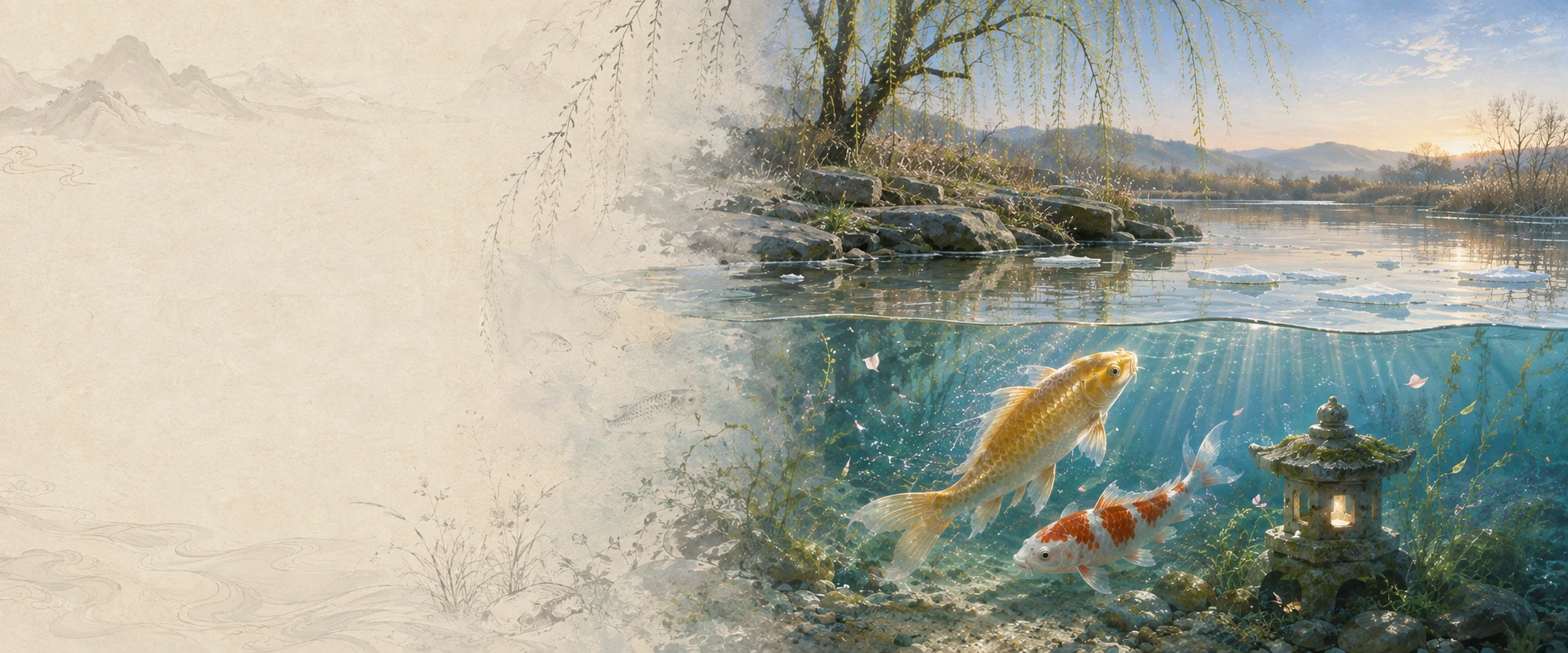
River ice has completely melted, and otters begin catching fish, arranging them along the banks as though laying out sacrificial offerings.
As the earth warms, wild geese that migrated south for the winter begin flying north again, carrying news of spring.
In the spring rain that “润物细无声,” grasses and trees begin to send out tender shoots as yang qi rises from within the earth, and the landscape gradually takes on a flourishing appearance.
Solar-Term Farming
Farm with the Seasons · Work with Nature
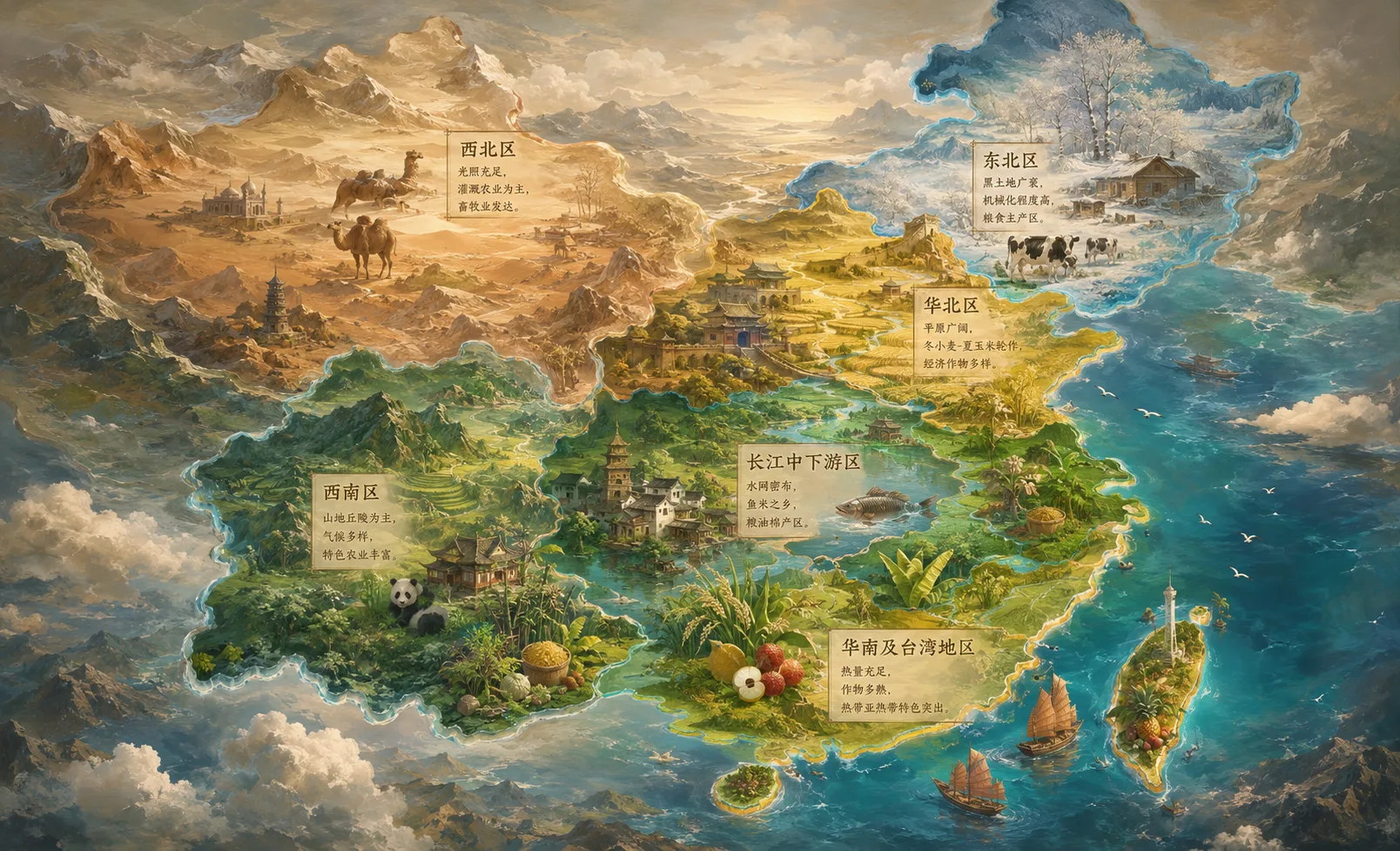
Northeast China
Farming Focus for This Solar Term
Although the land remains covered in snow and ice, vegetable seedling…
Farming Advice
- Complete autumn tillage pro…
- Service farm machinery and …
Northwest China
Farming Focus for This Solar Term
Winter wheat begins to revive and turn green again, making close atte…
Farming Advice
- Roll winter wheat fields to…
- Apply winter irrigation in …
North China
Farming Focus for This Solar Term
“春雨贵如油”—spring rain is as precious as oil. Winter wheat across the Hu…
Farming Advice
- Control excessive winter-wh…
- Clear drainage ditches in r…
Middle and Lower Yangtze
Farming Focus for This Solar Term
“麦田返浆,抓紧松墒”。 As rainfall increases, drainage ditches must be cleared …
Farming Advice
- Plough promptly after the l…
- Clear drainage ditches in r…
Southwest China
Farming Focus for This Solar Term
Wheat and rapeseed in areas such as the Sichuan Basin enter critical …
Farming Advice
- Check winter-wheat emergenc…
- Top-dress rapeseed seedling…
South China & Taiwan (China)
Farming Focus for This Solar Term
As temperatures rise and rainfall becomes abundant, this is the optim…
Farming Advice
- Harvest late rice during cl…
- Fertilise and earth up suga…
Seasonal Delicacies
Eat with the Seasons · Nothing Out of Season
Seasonal Tastes · A Guide to Eating with the Seasons
Traditional Customs
When Rites Fade, Seek Them Among the People · Old Ways Still Endure
Seasonal Rites · Everyday Traditions
Solar-Term Poetry
Poetry · The Heart of Heaven and Earth
「春夜喜雨」
好雨知时节,当春乃发生。
随风潜入夜,润物细无声。
野径云俱黑,江船火独明。
晓看红湿处,花重锦官城。
Modern Translation
The good rain seems to understand the rhythm of the seasons, arriving quietly just as spring begins to awaken all things. It follows the gentle wind into the night, silently nourishing the earth and everything upon it. Country paths and dark clouds merge into blackness, while only the lights of boats on the river shine alone. Tomorrow morning, when one looks at the red flowers drenched with rain, the blossoms throughout the Brocade City will surely hang heavy in brilliant color.
In-Depth Commentary
This is one of the supreme poems on the spring rain of the Rain Water season. Not once does the poem use the word “joy”, yet joy fills every line. The opening couplet personifies spring rain through “知时节”, giving it a humane virtue of knowing the right time. “随风潜入夜,润物细无声” is a celebrated line through the ages. The character “潜” conveys the quiet, selfless arrival of spring rain, while “细” captures its fine, continuous, gentle, and almost soundless quality. This is not only an accurate physical description, but also a projection of the poet’s ideal moral character—one that does not seek attention, yet benefits all things. The neck couplet uses the heaviness of “云俱黑” to set off the warmth and hope of “火独明.” In the final couplet, “红湿” and “花重” are inspired touches. The word “重” not only describes blossoms made full and vivid by rainwater, but also quietly contains the joy of an abundant harvest.
Readers’ Comments
Calendar and traditional culture enthusiasts from around the world, sharing the same moon.
Sign in or register to join the conversation. Your comment account is created automatically the first time you use a connected account.
No comments yet
Share your thoughts with readers around the world.