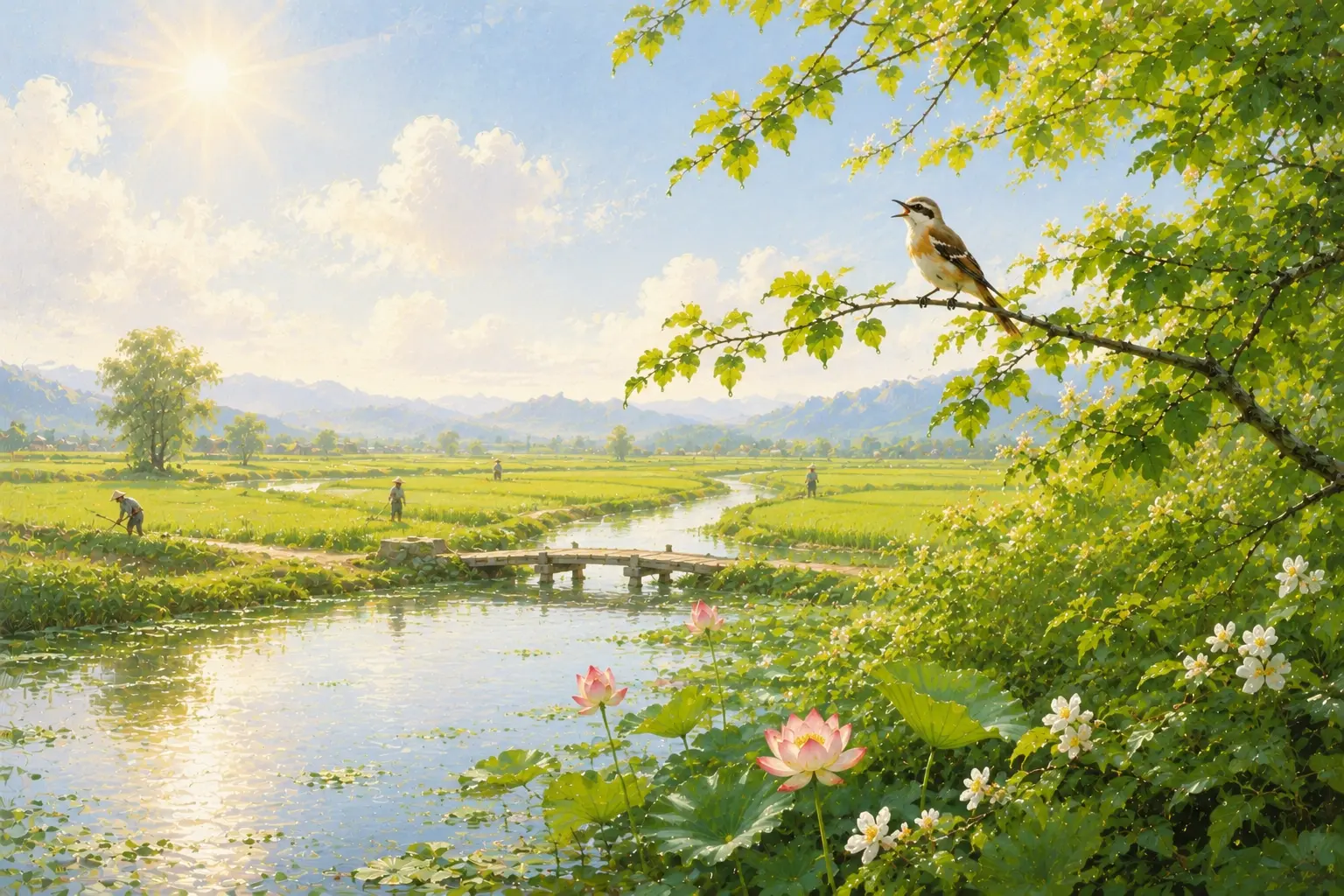
Grain in Beard
「时雨及芒种,四野皆插秧。」
Temperatures continue to climb across most of China. Average temperatures in North China and the Huang–Huai region rise to around 25–30°C, while Jiangnan and South China generally reach 27–30°C or above. The area affected by high temperatures expands, and the first signs of oppressive summer heat begin to appear.
The middle and lower reaches of the Yangtze enter the Plum Rain season, with prolonged overcast skies, frequent rain, and extremely high humidity. South China remains rainy, with repeated episodes of heavy precipitation. Rainfall also increases in North and Northeast China, though it still tends to occur in intermittent weather systems.
Praying mantis eggs, laid in late autumn and carried through the long winter, sense the strengthening yang qi of Grain in Beard and begin to hatch. Young mantises break free from their egg cases and become active.
鵙 refers to the shrike, a small predatory bird. Around Grain in Beard, shrikes begin calling from the branches, their sharp, resonant voices becoming one of the characteristic phenological sounds of high summer.
The 反舌 bird, identified with the blackbird and known for imitating many different calls, falls silent during Grain in Beard as it responds to the first subtle stirring of yin. Its silence marks the quiet reemergence of yin qi between Heaven and Earth.
Solar-Term Farming
Farm with the Seasons · Work with Nature
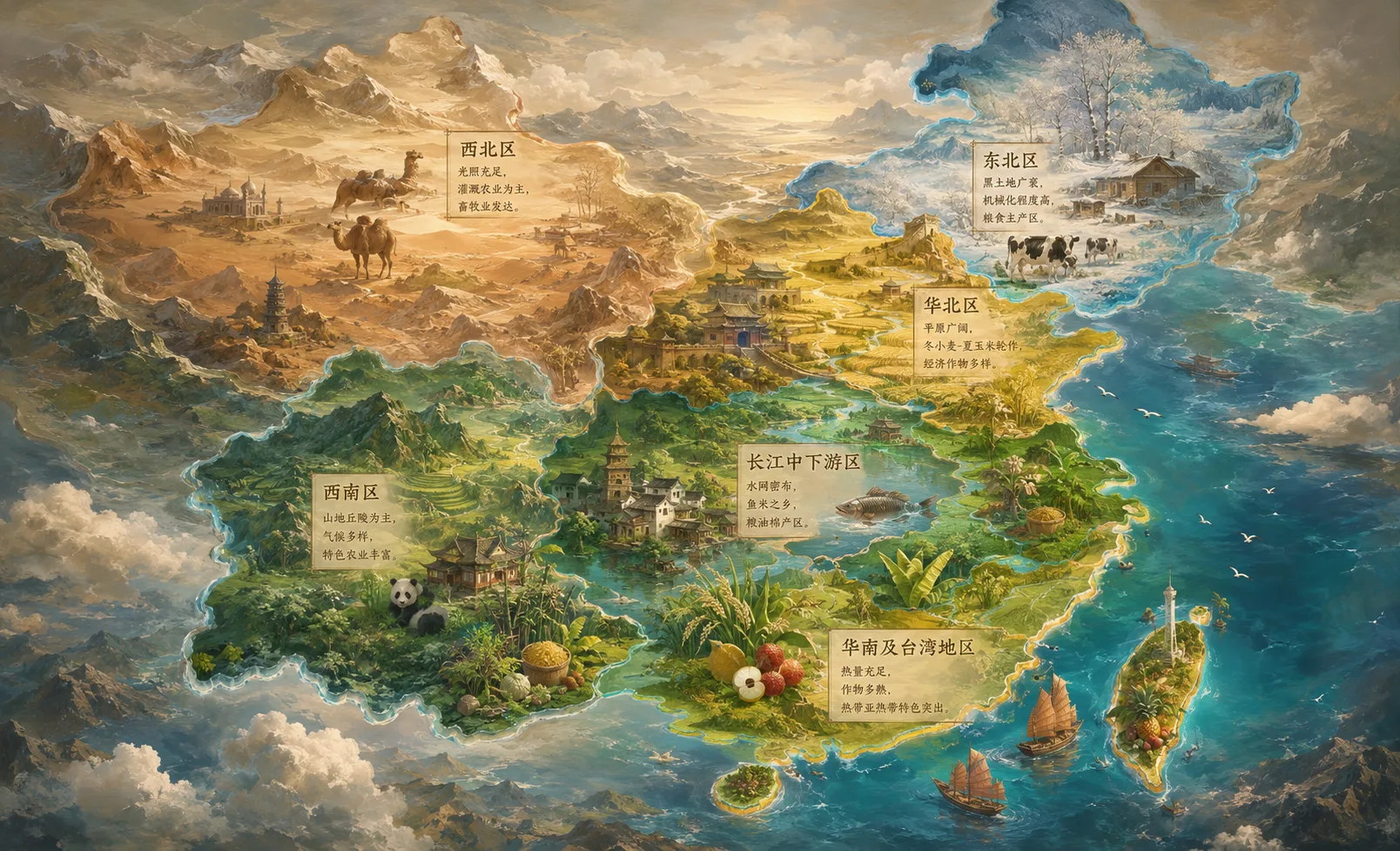
Northeast China
Farming Focus for This Solar Term
Rice transplanting is fully completed and field management enters the…
Farming Advice
- Complete autumn tillage pro…
- Service farm machinery and …
Northwest China
Farming Focus for This Solar Term
Winter wheat enters the later grain-filling stage and approaches matu…
Farming Advice
- Roll winter wheat fields to…
- Apply winter irrigation in …
North China
Farming Focus for This Solar Term
Winter wheat on the Huang–Huai–Hai Plain enters the mature harvest st…
Farming Advice
- Control excessive winter-wh…
- Clear drainage ditches in r…
Middle and Lower Yangtze
Farming Focus for This Solar Term
“芒种芒种,连收带种。” Rapeseed harvesting comes fully to an end, early rice en…
Farming Advice
- Plough promptly after the l…
- Clear drainage ditches in r…
Southwest China
Farming Focus for This Solar Term
Winter wheat harvesting in the Sichuan Basin reaches its peak, mid-se…
Farming Advice
- Check winter-wheat emergenc…
- Top-dress rapeseed seedling…
South China & Taiwan (China)
Farming Focus for This Solar Term
Early rice enters the grain-filling stage, lychee and longan enter th…
Farming Advice
- Harvest late rice during cl…
- Fertilise and earth up suga…
Seasonal Delicacies
Eat with the Seasons · Nothing Out of Season
Seasonal Tastes · A Guide to Eating with the Seasons
Traditional Customs
When Rites Fade, Seek Them Among the People · Old Ways Still Endure
Seasonal Rites · Everyday Traditions
Solar-Term Poetry
Poetry · The Heart of Heaven and Earth
「时雨」
时雨及芒种,四野皆插秧。
家家麦饭美,处处菱歌长。
老我成惰农,永日付竹床。
衰发短不栉,爱此一雨凉。
Modern Translation
Timely rain arrives with Grain in Ear, and across the fields farmers are everywhere transplanting rice seedlings. Every household enjoys fragrant meals made from new wheat, while long songs of water-chestnut gatherers drift from place to place. As for me, old and weakened, I have become a lazy farmer, spending the entire day on a bamboo couch. My thinning hair is too short to need combing; I care only for the coolness brought by this rain.
In-Depth Commentary
In the first four lines, Lu You uses broad strokes to sketch a vivid agricultural scene at Grain in Ear. “时雨及芒种” points to the seasonal conjunction of busy sowing and the plum rains, while “四野皆插秧” depicts the intense labor of rice cultivation in southern paddies. “家家麦饭美” writes the joy of the wheat harvest, while “处处菱歌长” evokes the character of the southern water country. One is field and food, the other water and song; together they vividly present both harvest and labor at Grain in Ear. In the final four lines, the poem turns from agriculture to the self. “老我成惰农” uses self-mockery to express the helplessness of old age, while “爱此一雨凉” returns to the poet’s fondness for the coolness brought by seasonal rain. The poem creates a subtle tension between agricultural busyness and personal leisure, making it representative of Lu You’s later pastoral poetry.
Readers’ Comments
Calendar and traditional culture enthusiasts from around the world, sharing the same moon.
Sign in or register to join the conversation. Your comment account is created automatically the first time you use a connected account.
No comments yet
Share your thoughts with readers around the world.