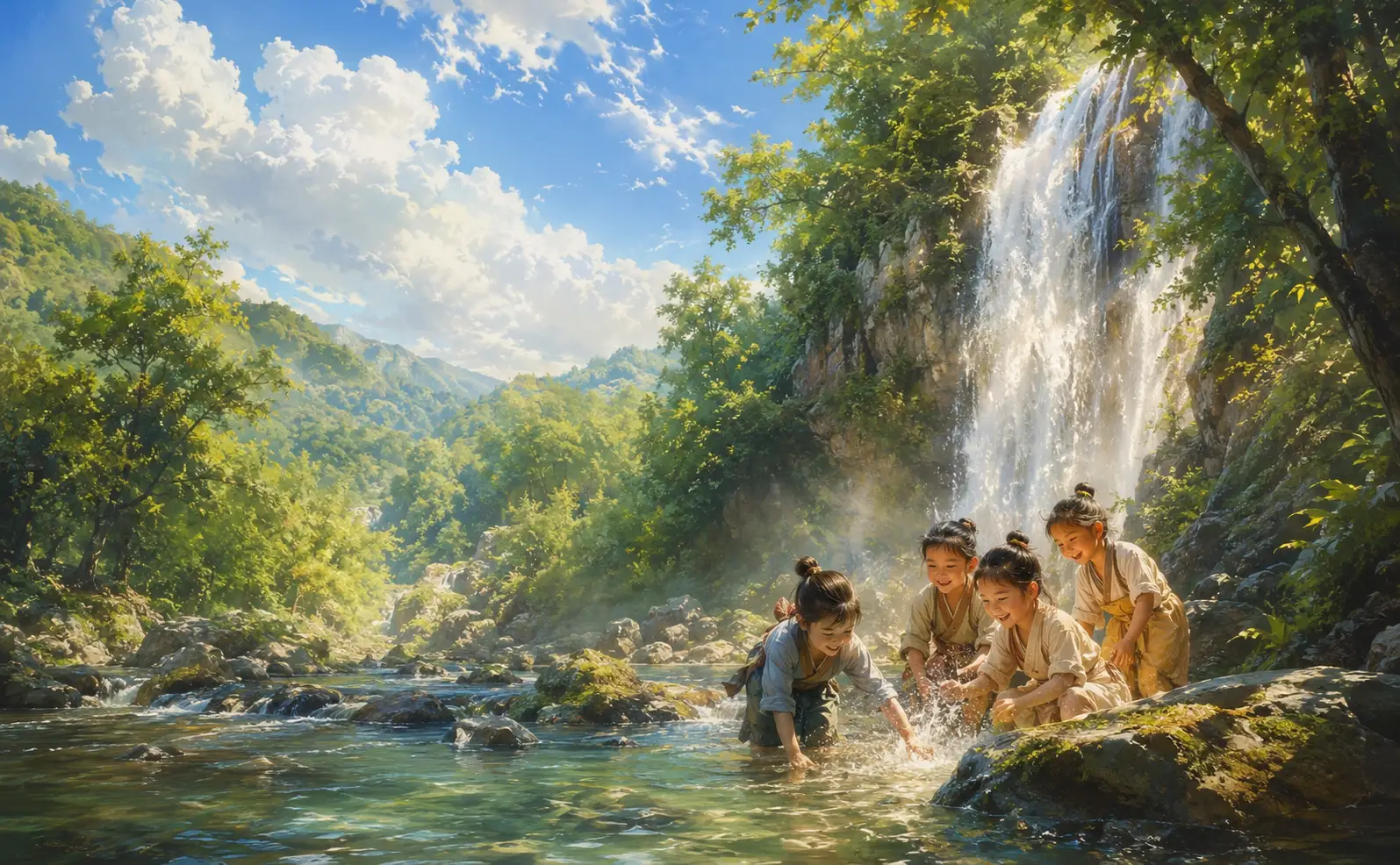
Major Heat
「何以销烦暑,端居一院中。」
Temperatures across most of China reach their highest levels of the year. Average temperatures in North China and the Huang–Huai region rise to around 30–35°C, while Jiangnan and South China generally reach 35–38°C, with many places frequently experiencing extreme heat above 40°C. This is the most difficult and oppressive period of the year’s summer heat.
North and Northeast China enter the critical phase of the “七下八上” main flood season, with frequent heavy rainfall. The middle and lower reaches of the Yangtze emerge from the Plum Rain season and enter a period of summer drought, bringing high temperatures and relatively little rain, while typhoon activity along the coast of South China reaches its annual peak.
Ancient people believed that fireflies were transformed from decaying grass. During Major Heat, fireflies hatch among withered grasses and fallen leaves, and their scattered lights drift through summer nights, creating one of the season’s most romantic phenological scenes.
The weather becomes oppressively hot and humid, while the soil remains both warm and moisture-laden. Dampness rises through the air until Heaven and Earth seem like an enormous steamer, producing a suffocating mixture of heat and humidity.
Major Heat often brings sudden thunderstorms and torrential rain. These downpours not only provide temporary relief from the intense heat but also signal that summer heat is nearing its point of decline and that autumn is quietly drawing closer.
Solar-Term Farming
Farm with the Seasons · Work with Nature
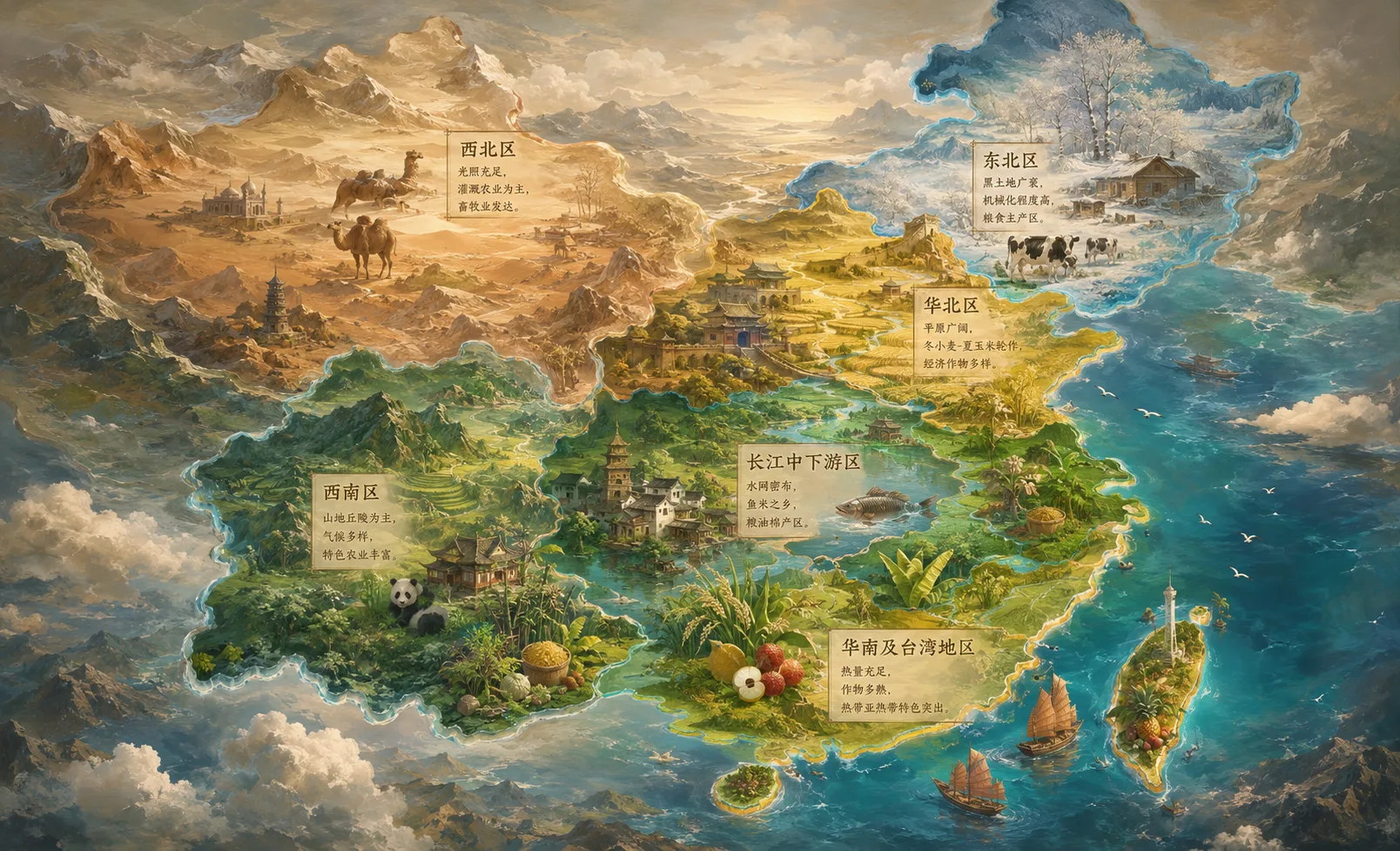
Northeast China
Farming Focus for This Solar Term
Spring maize enters tasseling and silking, rice moves into booting an…
Farming Advice
- Complete autumn tillage pro…
- Service farm machinery and …
Northwest China
Farming Focus for This Solar Term
Spring wheat enters maturity and harvest, cotton reaches peak floweri…
Farming Advice
- Roll winter wheat fields to…
- Apply winter irrigation in …
North China
Farming Focus for This Solar Term
The “七下八上” main flood season arrives, making flood prevention the for…
Farming Advice
- Control excessive winter-wh…
- Clear drainage ditches in r…
Middle and Lower Yangtze
Farming Focus for This Solar Term
The intense “双抢” campaign of rapidly harvesting early rice and transp…
Farming Advice
- Plough promptly after the l…
- Clear drainage ditches in r…
Southwest China
Farming Focus for This Solar Term
Mid-season rice enters heading and flowering, flue-cured tobacco reac…
Farming Advice
- Check winter-wheat emergenc…
- Top-dress rapeseed seedling…
South China & Taiwan (China)
Farming Focus for This Solar Term
The early-rice harvest is largely complete, late-rice transplanting a…
Farming Advice
- Harvest late rice during cl…
- Fertilise and earth up suga…
Seasonal Delicacies
Eat with the Seasons · Nothing Out of Season
Seasonal Tastes · A Guide to Eating with the Seasons
Traditional Customs
When Rites Fade, Seek Them Among the People · Old Ways Still Endure
Seasonal Rites · Everyday Traditions
Solar-Term Poetry
Poetry · The Heart of Heaven and Earth
「大暑」
泽国已炎暑,夏天仍永日。
屋头垂钓处,池面风来急。
竹深虫乱鸣,荷静鹭双立。
把扇不能休,挥之汗如溢。
Modern Translation
The watery country is already deep in oppressive summer heat, and the summer days remain long. Beside the house, where one fishes, gusts sweep quickly across the pond. Deep within the bamboo, insects cry in a confusion of sound, while beside the still lotus pond a pair of egrets stands motionless. The fan in my hand cannot stop, yet even as I wave it, sweat pours out as though overflowing.
In-Depth Commentary
Kong Pingzhong uses realistic brushwork to depict both the severe heat and the vitality of Major Heat. “泽国已炎暑,夏天仍永日” establishes the intensity of the heat and the length of the summer day; the character “仍” conveys a sense of helplessness before daylight that still seems endlessly long. “屋头垂钓处,池面风来急” shows the poet attempting to escape the heat through fishing and the breeze over the pond, yet the word “急” suggests that even a strong wind cannot truly dispel the heat. “竹深虫乱鸣” writes the noisy chorus of insects from deep within the bamboo, while “荷静鹭双立” depicts the quiet serenity of two egrets standing by the lotus pond. Noise and stillness together create a complex soundscape of Major Heat. The final couplet, “把扇不能休,挥之汗如溢”, is the focal point of the poem: the fan never stops moving, yet sweat still pours forth like a spring. This exaggerated image of sweating as though in rain renders the oppressive heat of Major Heat with complete vividness. Even within the extreme heat, however, the poem retains an attentive appreciation of natural life—the cries of insects and the standing egrets.
Readers’ Comments
Calendar and traditional culture enthusiasts from around the world, sharing the same moon.
Sign in or register to join the conversation. Your comment account is created automatically the first time you use a connected account.
No comments yet
Share your thoughts with readers around the world.