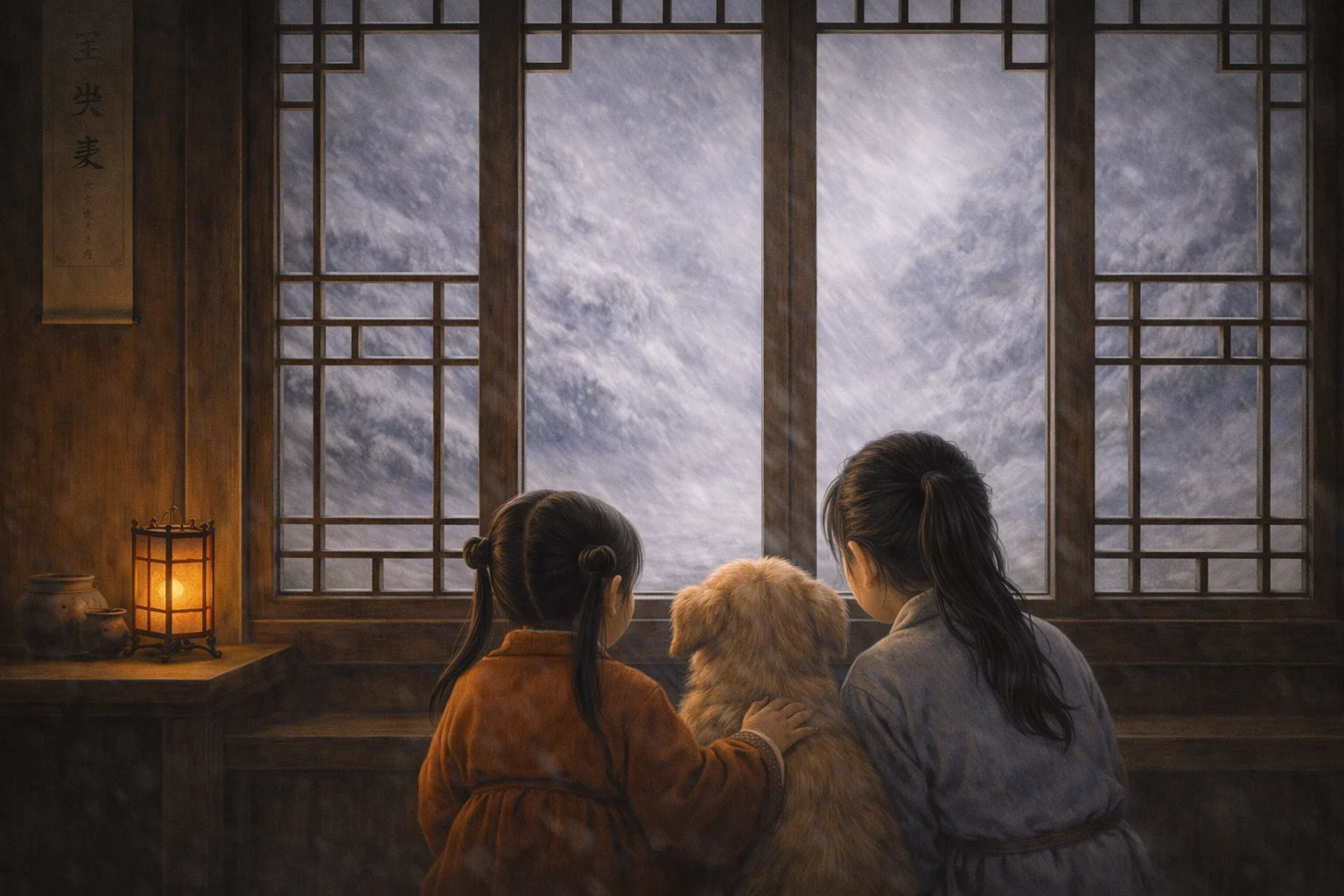
Major Snow Farming
「大雪兆丰年,无雪要遭殃。」
### Farmer’s Proverb
大雪雪满天,来年必丰年。
### General Agricultural Characteristics
During 大雪 (Dàxuě, Greater Snow), temperatures fall further across most of China. Snowfall becomes more frequent in northern regions and stable snow cover begins to form, while the chill intensifies in the south. On the North China Plain, winter wheat enters deep overwintering, with growth fully suspended and snow cover providing insulation against freezing, so field activity largely ceases. Across the Yangtze River basin, rapeseed and winter wheat remain in overwintering, and clearing drainage ditches to prevent waterlogging continues to be a central task. In South China, winter crops enter active growth management while the harvest of tropical fruits approaches its end. In Northeast China, the ground is deeply frozen, agricultural activity is fully in the traditional “猫冬” period, and greenhouse-vegetable production enters its peak season. In Northwest China, winter wheat enters deep overwintering and winter orchard management is fully underway. In the temperate Southern Hemisphere, early summer has arrived: winter-wheat harvesting expands across southeastern Australia and Argentina, while management of summer crops from emergence into early stem elongation continues. Across the tropical Northern Hemisphere, the dry season is established and field management of dry-season crops continues; in the tropical Southern Hemisphere, the rainy season remains in its early stage, with rice sowing and dry-season crop harvesting progressing in parallel.
Global Agriculture
Temperate Regions of the Northern Hemisphere
Phenological Signs
Temperatures fall markedly across most of China. Snowfall increases in the north and stable snow cover begins to form. Across the middle and lower reaches of the Yellow River, persistent snow cover starts to appear, reflected in the saying “大雪封地,小雪封山.” Snowfall also increases in northern Japan, while South Korea enters deep winter.
Farming Activities
On the North China Plain, winter wheat enters deep overwintering. Growth stops completely and plants enter deep dormancy. Snow cover plays an important insulating role in protecting wheat fields from freezing, as expressed in the saying “冬天雪盖三层被,来年枕着馒头睡”—snow cover can raise surface temperatures by 2–3°C, helping wheat seedlings overwinter safely. Field activity therefore largely ceases.
Across the Yangtze River basin, rapeseed remains in overwintering and growth is nearly suspended. Drainage management must continue so that channels remain unobstructed and excess water drains quickly once rainfall stops, because cold, wet winter conditions can cause root rot and seedling death. Winter wheat is likewise in the overwintering stage, and drainage and waterlogging prevention remain ongoing priorities.
In South China, winter crops enter active growth management. Winter potatoes, winter maize, winter vegetables, and other crops move into the seedling stage or vigorous vegetative growth and require stronger water and nutrient management through topdressing, irrigation, inter-row cultivation, and weeding, together with pest control against aphids, cabbage caterpillars, and similar pests and preparation for cold spells through insulating covers. Tropical fruits, especially citrus, enter their peak harvest period.
Across Northeast China, the ground is deeply frozen, with temperatures falling to −20 to −30°C. Agricultural work remains fully in the “猫冬” period, while greenhouse vegetables enter peak production. Cucumbers, tomatoes, leafy vegetables, and other crops continue supplying the market and require close temperature management at 25–28°C during the day and 12–15°C at night, together with insulation, cold protection, and careful light management.
In Northwest China, winter wheat enters deep overwintering, growth stops completely, and snow cover helps insulate the crop against freezing. Winter orchard management continues through sanitation, winter pruning, trunk whitewashing, and cold protection.
Phenological Signs
Temperatures continue to fall across Western Europe and winter wheat enters deep overwintering. France and Germany become distinctly colder and snowfall increases, while Ukraine’s chernozem region is covered by snow and enters deep winter.
Farming Activities
In France and Germany, winter wheat enters deep overwintering and field activity largely stops. Winter wheat in Ukraine’s black-soil region likewise enters deep overwintering.
Phenological Signs
Across the winter-wheat belt of Kansas, Nebraska, and neighboring regions, winter wheat enters deep overwintering. Snow covers farmland across the U.S. Midwest as the region enters deep winter, while Canada is already in a period of severe winter cold.
Farming Activities
Winter wheat across the United States enters deep overwintering. Winter orchard management becomes fully established in California’s Central Valley, while farmland across the Midwest remains in the winter slack period.
Temperate Regions of the Southern Hemisphere
Phenological Signs
Early summer is underway and temperatures rise to 25–30°C. Winter wheat, barley, rapeseed, and other autumn-sown crops enter full harvest, while summer crops move from the seedling stage toward early stem elongation and the fields remain green.
Farming Activities
Autumn-sown crops—winter wheat, barley, and rapeseed—enter full harvest. Wheat ears turn yellow and grains become plump, while combine harvesters work through the fields day and night as farmers take advantage of clear weather to harvest, dry, and store the grain. Management of summer crops continues as maize, sorghum, sunflower, and other crops move from the seedling stage into early stem elongation, requiring seedling-stage topdressing, inter-row cultivation and weeding, pest and disease control, and adequate water supply. Summer pasture management also continues.
Phenological Signs
Early summer brings temperatures of 25–30°C. Winter wheat, barley, rapeseed, and other autumn-sown crops enter full harvest, while summer crops advance from the seedling stage toward early stem elongation.
Farming Activities
Autumn-sown crops enter full harvest and farmers take advantage of clear weather to bring them in. Management of summer crops continues steadily after emergence.
Tropical and Subtropical Regions
Phenological Signs
The dry season continues under clear and dry conditions. Thailand, Myanmar, Laos, and neighboring regions enter the dry-season agricultural slack period, while India remains in the dry season. In southernmost China, winter crops enter active growth.
Farming Activities
Farming enters the dry-season slack and land-maintenance period, during which farmers carry out field rehabilitation, irrigation-facility maintenance, and machinery servicing. Field management of dry-season crops continues through irrigation, fertilization, and pest and disease control. In southernmost China, winter potatoes, winter vegetables, and other winter crops enter active growth and require stronger water and nutrient management, pest control, and preparation for cold weather.
Phenological Signs
The rainy season remains in its early stage and rainfall continues to increase. Central-western Brazil is in the rainy season and the landscape has turned green, while southern Africa is likewise in the wet season.
Farming Activities
Rice sowing and harvesting of dry-season crops proceed in parallel. With the onset of seasonal rains, large-scale rice sowing and seedling raising expand, while the dry-season harvest approaches completion. In Brazil, soybean sowing becomes fully established as farmers take advantage of favorable soil moisture, and the sown area reaches its annual peak around Greater Snow. Maize sowing also expands broadly across southern Africa.
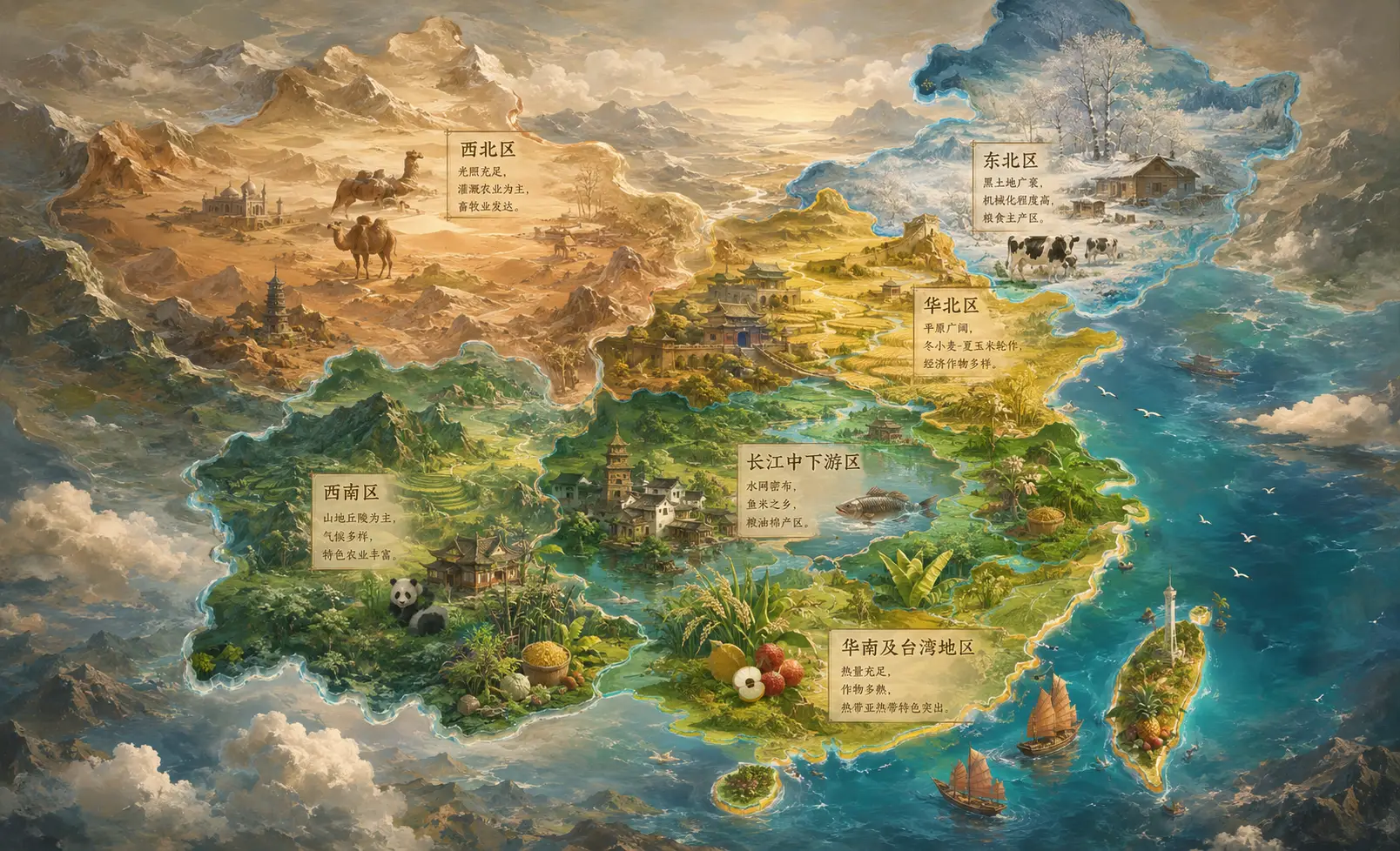
China’s Six Major Agricultural Regions
| Agricultural Region | Major Provinces | Keywords |
|---|---|---|
| Northeast | Heilongjiang, Jilin, Liaoning, eastern Inner Mongolia | Deep freezing, greenhouse production, grain storage, livestock overwintering |
| Northwest | Xinjiang, Gansu, Ningxia, western Inner Mongolia, Qinghai | Winter-wheat overwintering, winter pruning, orchard sanitation and trunk whitewashing, farmland improvement |
| North China | Hebei, Shanxi, Beijing, Tianjin, Shandong, northern Henan | Winter-wheat overwintering, snow cover, winter slack season, input preparation |
| Middle and Lower Yangtze | Hubei, Hunan, Jiangxi, Anhui, Jiangsu, northern Zhejiang, Shanghai | Rapeseed overwintering, winter-wheat overwintering, drainage and waterlogging prevention, winter vegetables |
| Southwest | Sichuan, Chongqing, Guizhou, Yunnan, southeastern Tibet | Rapeseed overwintering, winter-wheat overwintering, winter-potato management, drainage and waterlogging prevention |
| South China and Taiwan | Guangdong, Guangxi, Hainan, southern Fujian, Taiwan Province | Winter-crop management, citrus harvest, tropical-fruit harvest ending, cold preparation |
Heilongjiang, Jilin, Liaoning, eastern Inner Mongolia
During Greater Snow, the ground across Northeast China is deeply frozen, temperatures fall to −20 to −30°C, snow cover becomes deep, and the landscape turns completely white. Outdoor agricultural activity ceases and work is carried out almost entirely indoors.
Deep freezing continues and the “猫冬” period remains in place. The frozen-soil layer continues to thicken, reaching 1–2 meters in northern Heilongjiang, while deep snow cover makes outdoor field work impossible. Farmers use the winter period to manage stored grain, checking temperature and humidity regularly and protecting it from moisture, insects, and rodents while adjusting sales according to market trends. Seeds, fertilizers, pesticides, agricultural film, and other inputs are purchased during the off-season, when prices are relatively low, in preparation for the coming spring. Large agricultural machines undergo comprehensive winter servicing, with engines, hydraulic systems, seeding units, and other critical components inspected and repaired and worn parts replaced so that machinery will be in good condition when spring sowing begins. Farmers also determine the following year’s cropping structure and cultivar choices by considering market conditions, policy direction, soil status, and climate trends. Although “猫冬” is the slowest point in the annual farming rhythm, indoor preparation remains essential.
Winter management in pastoral areas. In eastern Inner Mongolia, livestock management enters a critical winter stage. All animals are housed, shelters are reinforced, bedding is increased, and drafts are prevented, as cold protection becomes the overriding concern under the extremely low temperatures of Greater Snow. Supplementary feeding is fully established, with adequate feed reserves and careful calculation of daily rations to ensure that livestock can survive the long winter. Weak animals, pregnant females, and young livestock need special care, with increased feed and improved nutrition. Particular attention must also be paid to “白灾”, because Greater Snow is a high-risk period for blizzards that can bury grazing land and prevent animals from feeding. Farmers therefore need to monitor forecasts closely and store emergency feed in advance so that adequate supplies remain available if heavy snow blocks roads. The quality of winter pastoral management directly affects livestock survival and the following year’s pastoral income.
Greenhouse vegetables remain in peak production. Cucumbers, tomatoes, leafy vegetables, and other greenhouse crops continue fruiting or harvesting and supplying the market. Because winter daylight is at its shortest, insulation covers need to be opened at suitable times to extend natural light, with artificial supplementary lighting used when necessary. Temperatures should be maintained at 25–28°C during the day and 12–15°C at night, with temporary heating equipment activated during extreme cold. Humidity also requires close control, because winter greenhouses are prone to high moisture and need timely ventilation to prevent diseases such as gray mold. Gray mold, downy mildew, and related diseases become especially likely under low-temperature, high-humidity conditions, so monitoring and control should be strengthened. Before extreme cold arrives, additional inner curtains or thermal covers should be installed to prevent cold-air intrusion.
Xinjiang, Gansu, Ningxia, western Inner Mongolia, Qinghai
During Greater Snow, Northwest China enters a critical winter-management stage. Winter wheat is in deep overwintering, winter orchard management continues, and basic farmland improvement approaches completion.
Winter wheat is in deep overwintering. Growth has stopped completely and plants are in deep dormancy. Snow cover provides insulation and protection from freezing, reflected in the saying “冬天雪盖三层被,来年枕着馒头睡.” Winter irrigation is fully complete, and farmers need to inspect fields periodically to monitor overwintering conditions. Where freezing injury is found, remedial measures such as straw or plastic-film covering should be applied promptly for insulation.
Winter orchard management continues. Winter pruning proceeds from leaf fall until bud break and removes dead, diseased, crossing, and overcrowded branches while adjusting tree structure. Young trees are pruned mainly for training into appropriate forms such as open-center or spindle forms, while mature trees are pruned primarily for renewal and rejuvenation through renewal of fruiting branches, height control, and improved ventilation and light penetration. Orchard sanitation also continues, with dead branches, fallen leaves, diseased fruit, infected wood, and weeds removed and either burned or deeply buried to reduce overwintering pests and pathogens. Trunk whitewashing is likewise continued, coating the lower 1–1.5 meters of the trunk with a mixture of quicklime + sulfur + salt + water to protect against freezing and pests. Young trees and late-autumn shoots also require additional cold protection through straw wrapping, plastic-film covering, or soil mounding.
Basic farmland improvement approaches completion. Autumn fertilization is fully complete, with farmyard manure or compound fertilizer already applied in preparation for spring sowing or winter-wheat green-up. Land leveling is also complete, improving irrigation conditions, while repair of irrigation canals, wells, reservoirs, and other water facilities continues in preparation for spring irrigation. Shelterbelt development likewise continues through winter tree planting for wind protection, sand stabilization, and improvement of the farmland environment. Once the land is fully frozen after Greater Snow, basic farmland construction must already have been completed.
Hebei, Shanxi, Beijing, Tianjin, Shandong, northern Henan
During Greater Snow, winter wheat across North China enters deep overwintering. Snow cover insulates the fields against freezing and field activity comes to a complete stop.
Winter wheat is in deep overwintering. Growth stops completely and the plants enter deep dormancy. Snow cover provides crucial insulation, as expressed in “冬天雪盖三层被,来年枕着馒头睡”: a layer of snow can raise surface temperatures by 2–3°C, protecting wheat seedlings through winter while also increasing soil moisture and helping suppress overwintering pests. Winter irrigation is fully complete, and the pre-freeze watering has left the soil with sufficient moisture. Field activity largely ceases.
Agricultural work fully stops outdoors. During Greater Snow, there is virtually no field work across North China and farmers enter the winter slack season. Indoor preparations nevertheless continue through grain-storage management, off-season purchasing of agricultural inputs, winter servicing of farm machinery, and preparation of the following year’s planting plans based on market conditions, policy direction, and other factors.
Winter orchard management continues. Apple, pear, and other orchards continue with winter pruning, orchard sanitation, and trunk whitewashing.
Vegetable management. Greenhouse vegetables remain in peak production, with cucumbers, tomatoes, leafy vegetables, and other crops continuing to supply the market. Temperatures need to be maintained at 25–28°C during the day and 12–15°C at night, together with effective insulation and protection against severe cold.
Hubei, Hunan, Jiangxi, Anhui, Jiangsu, northern Zhejiang, Shanghai
During Greater Snow, the middle and lower Yangtze enters a critical winter-management period. Overwintering management of rapeseed and winter wheat continues, and keeping drainage channels clear to prevent waterlogging remains the central priority.
Rapeseed overwintering management continues. Rapeseed enters deep overwintering and growth is nearly suspended. Drainage channels must remain clear and fully connected so that excess water drains quickly once rainfall stops, because cold, wet winter conditions pose the greatest threat to overwintering rapeseed and can lead to root rot and seedling death. Weak stands may receive a pre-winter topdressing, based mainly on organic or compound fertilizer, to promote root development and improve cold resistance, at a rate of 5–8 kg of compound fertilizer per *mu* or 500–800 kg of farmyard manure per *mu*. In colder highland areas or years of extreme low temperatures, straw or plastic-film covering may be used to provide insulation against freezing. The quality of overwintering management directly affects winter survival and yield the following year.
Winter-wheat overwintering management continues. Winter wheat enters deep overwintering, while drainage and waterlogging prevention continue alongside topdressing of weak stands and cold-protection measures.
Drainage and waterlogging prevention remain the overriding priority. During Greater Snow, the Yangtze basin still experiences cold and damp winter conditions, so the three-level drainage system must remain fully operational. The main ditch, cross-field ditch, and perimeter ditch should reach minimum depths of 80 cm, 60 cm, and 40 cm, respectively, and remain interconnected so that water drains quickly once rain stops. Although rainfall decreases around Greater Snow, persistent cold and damp conditions can still leave the soil excessively wet, making continued ditch maintenance essential.
Winter-vegetable management. Chinese cabbage, radish, lettuce, spinach, celery, and other winter vegetables enter active growth and require stronger water and nutrient management, pest and disease control, and cold preparation through insulating covers before low temperatures arrive.
Winter orchard management. Citrus and other orchards continue with postharvest pruning and fertilization to restore tree vigor, sanitation to remove dead branches, fallen leaves, diseased fruit, and infected wood, continuing winter pruning, and trunk whitewashing for protection against cold and pests.
Sichuan, Chongqing, Guizhou, Yunnan, southeastern Tibet
During Greater Snow, agricultural activity across Southwest China remains in a critical winter-management stage. Rapeseed and winter-wheat overwintering management continue, while field management of winter potatoes proceeds steadily.
Rapeseed overwintering management continues. Rapeseed enters deep overwintering and growth is nearly suspended. Drainage channels need to remain clear so that water drains rapidly after rainfall; weak stands receive pre-winter fertilizer, and in colder highland areas insulating covers are used to protect plants from freezing.
Winter-wheat overwintering management continues. Winter wheat enters deep overwintering, while drainage and waterlogging prevention, topdressing of weak stands, and cold-protection measures continue in parallel.
Winter-potato field management continues. Winter potatoes enter the stage from seedling growth to tuber formation. Farmers combine inter-row cultivation with earthing up to promote root development and tuber formation while preventing tubers from being exposed to light and turning green. A tuber-development fertilizer dominated by potassium is applied, using 8–10 kg of potassium sulfate per *mu* to promote tuber enlargement. Late blight enters a critical control period, with mancozeb or metalaxyl used for disease control. In high-altitude areas, plastic-film or straw covering is applied before low temperatures arrive to protect the crop from cold. The quality of winter-potato field management directly affects both yield and marketable proportion.
Guangdong, Guangxi, Hainan, southern Fujian, Taiwan Province
#### (1) Mainland South China
Winter crops enter active growth management. During Greater Snow, winter potatoes, winter maize, winter vegetables, and other crops enter the seedling stage or vigorous vegetative growth. Water and nutrient management becomes especially important: irrigation is applied according to soil-moisture conditions because winter rainfall is relatively low; winter maize receives jointing-stage topdressing, winter potatoes receive seedling-stage fertilizer, and winter vegetables receive growth-promoting fertilizer. Inter-row cultivation and weeding are carried out to loosen the soil and remove weeds, while aphids, cabbage caterpillars, cutworms, and other seedling-stage pests enter an important control window. Farmers also prepare for occasional winter frost by applying insulating covers before low temperatures arrive. Winter crops form an important part of South China’s winter agriculture, and the quality of field management directly affects yield and quality.
Citrus enters peak harvest. Around Greater Snow, early- and late-maturing citrus cultivars are marketed simultaneously. “砂糖橘,” “贡柑,” navel orange, and “沃柑” are harvested intensively from late November through January, and farmers take advantage of clear weather to pick, grade, pack, and sell the fruit. Harvest quality directly affects market price and farm income, making harvest timing—based on fruit maturity and market conditions—as well as postharvest grading, packaging, and preservation especially important.
Tropical-fruit management. Banana harvesting approaches completion and is followed promptly by orchard sanitation, fertilization, and cold protection. Lychee and longan enter winter management through postharvest pruning to restore tree vigor, winter fertilization based mainly on organic fertilizer to promote flower-bud differentiation, orchard sanitation to reduce overwintering pests and diseases, and cold protection through covering or smoke-frost protection before low temperatures arrive.
#### (2) Taiwan
Rice: Rice harvesting is fully complete across Taiwan and fields enter either the winter slack period or winter-cropping stage.
Vegetables: During Greater Snow, winter vegetables across Taiwan enter active growth management.
Fruit trees: Citrus enters peak harvest, while banana harvesting approaches completion.
Tea: Tea gardens in central and southern areas such as Nantou and Chiayi enter winter management, as do northern tea-growing areas such as Wenshan and Sanxia.
Fisheries: Fishing continues in waters around Taiwan during Greater Snow, while the northeast monsoon remains active and maritime operations require continued attention to safety.
Farmer’s proverbs and folk customs: Taiwanese folk tradition preserves the saying “大雪大雪,大雪纷飞”, referring to the increase in snowfall around Greater Snow. Another saying, “大雪不冻,倒春寒”, suggests that if the weather is not cold during Greater Snow, a late-spring cold spell may occur the following year. Greater Snow is also associated with the custom of “大雪腌肉”: as expressed in “小雪腌菜,大雪腌肉”, people use the low temperatures to cure winter foods such as preserved pork and sausages.
Global Extreme Weather · Risks & Responses
Temperate Northern Hemisphere: Blizzards and Snow Disasters—the Greatest Threat During Greater Snow
Snowfall increases across northern regions during Greater Snow and severe snowstorms may occur. For greenhouses, heavy snow can collapse structures, causing facility damage and crop freezing and potentially resulting in major economic losses. Farmers therefore need to reinforce greenhouse frames before heavy snowfall and remove accumulated snow promptly once it exceeds 5 cm in depth. In pastoral areas, blizzards can create “白灾”, covering grazing land and preventing livestock from feeding, so emergency feed should be stored in advance to ensure sufficient supplies if roads are blocked. Agricultural transport can also be disrupted by heavy snow, affecting both distribution and sales, so storage and marketing arrangements need to be made beforehand. Close attention to weather forecasts and early preparation—reinforcing greenhouses, reserving feed, and securing transport—are essential.
Temperate Northern Hemisphere: Extreme Low-Temperature Freezing Injury
Temperatures continue to decline across northern regions during Greater Snow and extreme cold below −20°C may occur. Although winter wheat has stronger cold tolerance once it enters deep overwintering, temperatures below −20°C can still kill seedlings. Snow cover is the crop’s best natural insulation, so wheat fields without snow face a higher risk of freezing injury. Farmers need to inspect fields regularly and apply remedial measures promptly where injury is found. Protected agriculture also requires thorough insulation, with additional thermal covers and temporary heating equipment prepared to prevent cold-air intrusion and freezing injury.
Temperate Northern Hemisphere: Cold, Damp Weather—A Continuing Risk in the Yangtze Basin
The middle and lower Yangtze and Southwest China remain under cold, damp winter conditions during Greater Snow, with low temperatures, high humidity, and limited sunshine. Drainage and waterlogging prevention remain the overriding priority, requiring the three-level drainage system to stay clear and fully connected so that water drains rapidly after rainfall and cold, wet conditions do not cause root rot or seedling death in rapeseed and winter wheat. Stored grain also requires continued protection from moisture and mold, with regular monitoring of grain-pile temperature and humidity.
Temperate Southern Hemisphere: Heavy Rain During Harvest and Summer Drought
In early summer in the Southern Hemisphere, around early December, winter-wheat harvesting is fully underway and heavy rainfall during harvest can cause sprouting and mold in wheat ears. At the same time, summer crops are moving from the seedling stage toward early stem elongation, and insufficient rainfall may lead to summer drought and restrict crop growth. Farmers in southeastern Australia and Argentina therefore need to monitor forecasts closely, harvest during clear-weather windows, and irrigate promptly when drought develops.
Tropical Regions: Alternating Drought and Flood Risk
Across the tropical Northern Hemisphere—including Southeast Asia and India—the dry season is established and dry-season crops need protection from drought. Across the tropical Southern Hemisphere—including Brazil and Africa—the rainy season remains in its early stage, creating a need to prevent flooding from heavy rainfall while taking advantage of favorable soil moisture for timely sowing. Around Greater Snow, soybean and maize planting areas reach their annual peak.
-----
Readers’ Comments
Calendar and traditional culture enthusiasts from around the world, sharing the same moon.
Sign in or register to join the conversation. Your comment account is created automatically the first time you use a connected account.
No comments yet
Share your thoughts with readers around the world.