Spring Equinox
「仲春初四日,春色正中分。」
Across most of China, temperatures rise to average seasonal levels for this time of year. Except in high-altitude regions and northern Northeast China, average temperatures in many areas stabilize above 10°C. North China reaches around 10–15°C, while Jiangnan and South China range between 15 and 20°C. The temperature difference between day and night gradually narrows, and the weather becomes mild and pleasant.
Precipitation continues to increase across China. Jiangnan enters the “桃花汛” period, with prolonged cloudy and rainy weather becoming common. Rainfall remains relatively limited in North China, where signs of spring drought begin to emerge, while South China is on the verge of fully entering the early flood season.
玄鸟 refers to the swallow. It arrives at the Spring Equinox and departs at the Autumn Equinox. Swallows return north from their southern wintering grounds, carrying mud to build nests and beginning a new season of reproduction.
As yin and yang contend, spring thunder begins to occur frequently. Ancient people believed thunder to be the product of intense interaction between the yin and yang qi of Heaven and Earth, and a sign that the warm energy of spring had finally overcome the cold qi of winter.
Lightning begins to appear alongside thunder. The ancients attributed “电” to the interaction of sunlight and clouds, regarding it as a sign that the exchange of energy between Heaven and Earth had entered its most active stage and that the scenery of mid-spring had reached its height.
Solar-Term Farming
Farm with the Seasons · Work with Nature
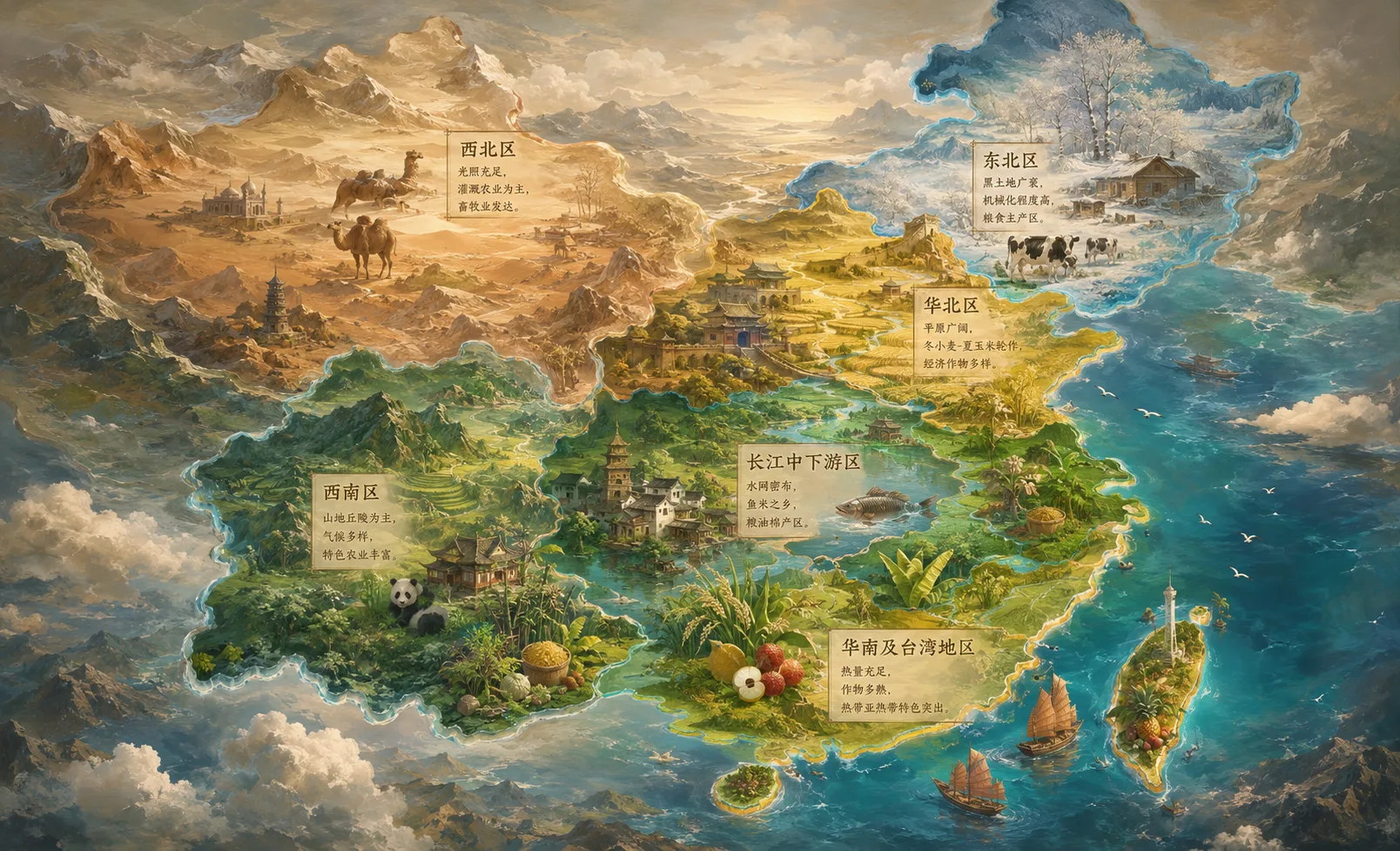
Northeast China
Farming Focus for This Solar Term
The thaw has advanced deeply into the soil, spring wheat sowing begin…
Farming Advice
- Complete autumn tillage pro…
- Service farm machinery and …
Northwest China
Farming Focus for This Solar Term
Spring wheat sowing reaches its peak, with farmers across Xinjiang, t…
Farming Advice
- Roll winter wheat fields to…
- Apply winter irrigation in …
North China
Farming Focus for This Solar Term
Winter wheat on the Huang–Huai–Hai Plain enters the jointing and boot…
Farming Advice
- Control excessive winter-wh…
- Clear drainage ditches in r…
Middle and Lower Yangtze
Farming Focus for This Solar Term
Early-rice sowing and seedling cultivation reach their peak, while ra…
Farming Advice
- Plough promptly after the l…
- Clear drainage ditches in r…
Southwest China
Farming Focus for This Solar Term
Wheat in the Sichuan Basin enters heading and flowering, a crucial pe…
Farming Advice
- Check winter-wheat emergenc…
- Top-dress rapeseed seedling…
South China & Taiwan (China)
Farming Focus for This Solar Term
Early-rice seedlings enter the peak transplanting period and paddy-fi…
Farming Advice
- Harvest late rice during cl…
- Fertilise and earth up suga…
Seasonal Delicacies
Eat with the Seasons · Nothing Out of Season
Seasonal Tastes · A Guide to Eating with the Seasons
Traditional Customs
When Rites Fade, Seek Them Among the People · Old Ways Still Endure
Seasonal Rites · Everyday Traditions
Solar-Term Poetry
Poetry · The Heart of Heaven and Earth
「踏莎行 · 雨霁风光」
雨霁风光,春分天气。千花百卉争明媚。
画梁新燕一双双,玉笼鹦鹉愁孤睡。
薜荔依墙,莓苔满地。青楼几处歌声丽。
蓦然旧事上心来,无言敛皱眉山翠。
Modern Translation
The rain has cleared, and it is the season of the Spring Equinox. A thousand flowers and a hundred kinds of blossoms compete in brightness. Beneath painted rafters, newly arrived swallows fly in pairs, while a parrot in a jade cage sleeps alone in sorrow. Creeping fig vines cling to the wall, and moss covers the ground. From several pleasure houses come clear and beautiful songs. Suddenly, old memories rise in her heart; she says nothing, only draws her brows together, dark and green like distant mountains.
In-Depth Commentary
Set against the Spring Equinox, this lyric writes scenery in the first stanza and emotion in the second, using joyful scenery to heighten sorrow. The opening “雨霁风光,春分天气” establishes both the season and the weather, while the single character “争” in “千花百卉争明媚” conveys the splendor of countless flowers competing in bloom. This is immediately followed by a contrast between new swallows flying in pairs and the parrot sleeping alone. The swallows’ freedom and companionship throw the parrot’s confinement and solitude into relief, while also implying the loneliness of the lyric’s central figure. In the second stanza, “薜荔依墙,莓苔满地” writes the stillness and coolness of the courtyard, while “青楼几处歌声丽” uses the joy of others to heighten her isolation. The closing “蓦然旧事上心来,无言敛皱眉山翠” compares her tightly drawn brows to dark green mountain ridges; countless emotions gather into silence, restrained and suggestive, with a lingering resonance.
Readers’ Comments
Calendar and traditional culture enthusiasts from around the world, sharing the same moon.
Sign in or register to join the conversation. Your comment account is created automatically the first time you use a connected account.
No comments yet
Share your thoughts with readers around the world.