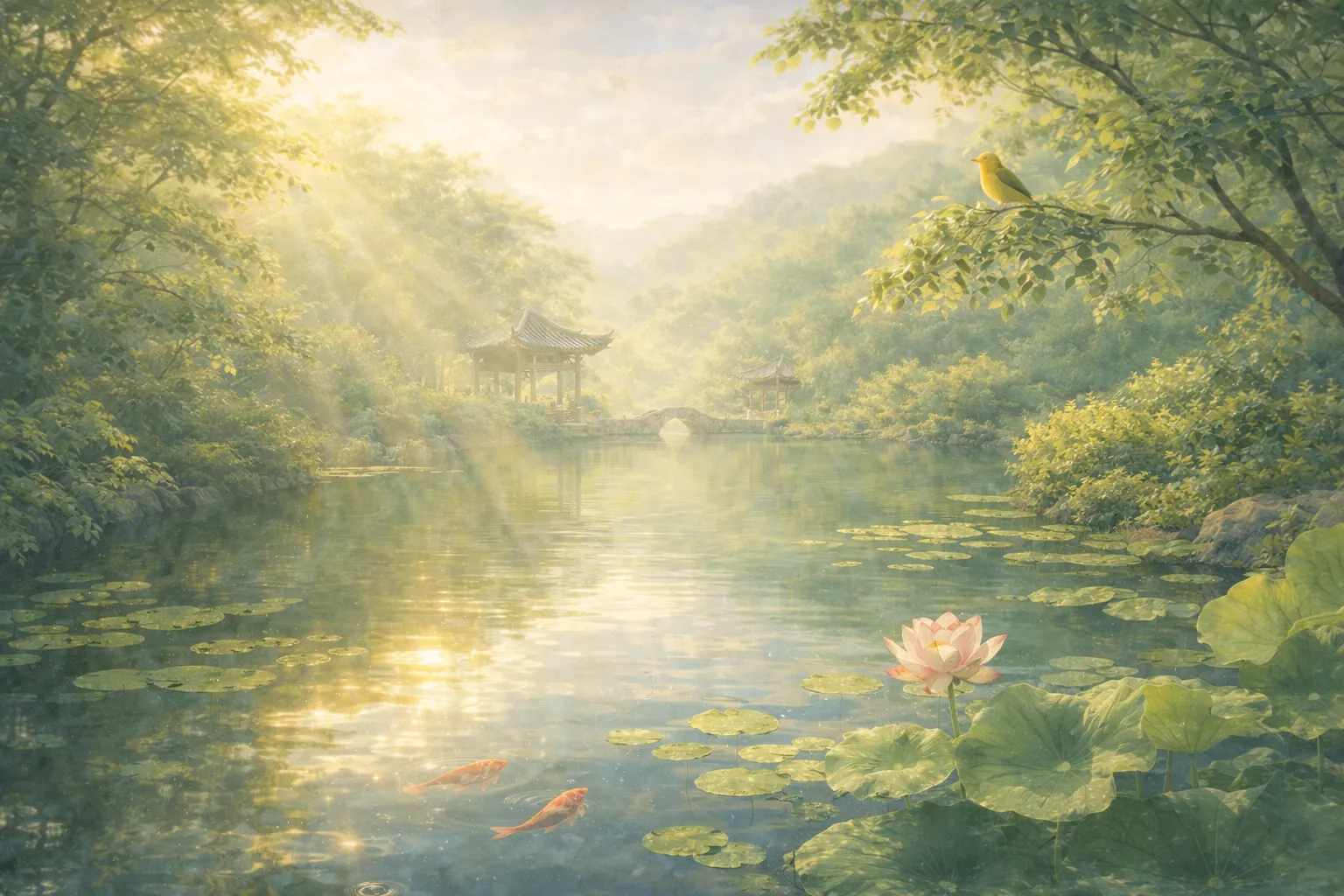
Summer Solstice
「昼晷已云极,宵漏自此长。」
Temperatures across most of China reach their annual peak. Average temperatures in North China and the Huang–Huai region rise to around 28–32°C, while Jiangnan and South China commonly reach 30–35°C or higher. Many places frequently experience temperatures above 35°C, and oppressive summer heat becomes difficult to escape.
The Plum Rain season reaches its height across the middle and lower reaches of the Yangtze, bringing persistent overcast skies, continuous rain, and extremely high humidity. South China remains rainy, with frequent heavy precipitation and typhoon activity, while rainfall increases in North China but remains unevenly distributed.
Deer antlers are associated with yang. At the Summer Solstice, when “one yin is born”, deer are believed to sense the first decline of yang qi and the initial stirring of yin qi between Heaven and Earth, causing their antlers to shed naturally. This is regarded as a phenological sign of the cyclical rise and decline of yin and yang.
蜩 refers to the summer cicada. After the Summer Solstice, cicadas begin calling loudly from the branches, and their repeated cries become one of the most distinctive sounds and sensory memories of high summer.
Banxia is a shade-loving medicinal herb whose name is associated with its emergence around midsummer in marshy ground and rice fields. Its growth is regarded as a sign that, even at the height of summer, yin qi has begun to rise quietly from the surface of the earth.
Solar-Term Farming
Farm with the Seasons · Work with Nature
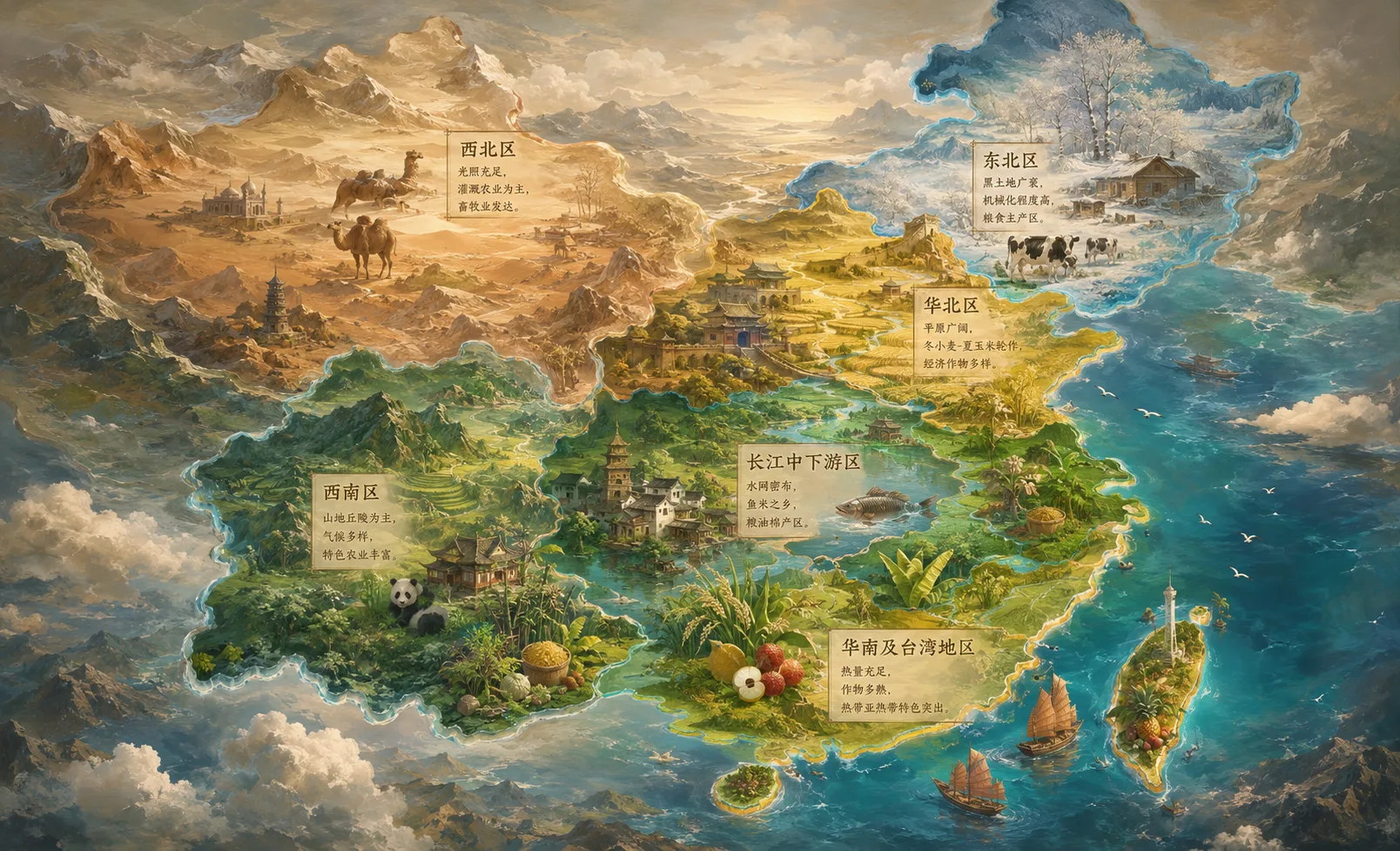
Northeast China
Farming Focus for This Solar Term
Spring maize enters the jointing stage, rice reaches peak tillering, …
Farming Advice
- Complete autumn tillage pro…
- Service farm machinery and …
Northwest China
Farming Focus for This Solar Term
Winter wheat enters maturity and harvest, spring wheat reaches the gr…
Farming Advice
- Roll winter wheat fields to…
- Apply winter irrigation in …
North China
Farming Focus for This Solar Term
The summer harvest and summer sowing season reaches its peak. The fin…
Farming Advice
- Control excessive winter-wh…
- Clear drainage ditches in r…
Middle and Lower Yangtze
Farming Focus for This Solar Term
Early rice enters heading and flowering, single-season mid-season ric…
Farming Advice
- Plough promptly after the l…
- Clear drainage ditches in r…
Southwest China
Farming Focus for This Solar Term
Mid-season rice enters tillering, flue-cured tobacco reaches vigorous…
Farming Advice
- Check winter-wheat emergenc…
- Top-dress rapeseed seedling…
South China & Taiwan (China)
Farming Focus for This Solar Term
Early rice enters grain filling and maturity, lychee and longan reach…
Farming Advice
- Harvest late rice during cl…
- Fertilise and earth up suga…
Seasonal Delicacies
Eat with the Seasons · Nothing Out of Season
Seasonal Tastes · A Guide to Eating with the Seasons
Traditional Customs
When Rites Fade, Seek Them Among the People · Old Ways Still Endure
Seasonal Rites · Everyday Traditions
Solar-Term Poetry
Poetry · The Heart of Heaven and Earth
「夏至日作」
璿枢无停运,四序相错行。
寄言赫曦景,今日一阴生。
Modern Translation
The celestial pivot of the Northern Dipper never ceases its motion, and the four seasons follow one another in turn. I would speak to this blazing summer sunlight: from today, the Summer Solstice, yin quietly begins to arise.
In-Depth Commentary
This five-character quatrain brings astronomy and philosophy into poetry with remarkable concision. “璿枢无停运” writes of the ceaseless motion of the Northern Dipper, implying the unalterable laws governing the heavens. “四序相错行” describes the four seasons alternating in ordered succession. The first two lines begin from the broad laws of the cosmos; the final two narrow their focus to the special moment of the Summer Solstice. “寄言赫曦景” personifies the summer sun, as though the poet were speaking directly to it; “今日一阴生” points to the central astronomical and philosophical meaning of the Summer Solstice: it is the day when yang reaches its height, yet also the moment when yin first begins to emerge—the idea expressed in “夏至一阴生.” Though the poem contains only twenty characters, it encompasses astronomy, seasonal phenomena, and philosophy, embodying the Tang poetic wisdom of seeing the great through the small.
Readers’ Comments
Calendar and traditional culture enthusiasts from around the world, sharing the same moon.
Sign in or register to join the conversation. Your comment account is created automatically the first time you use a connected account.
No comments yet
Share your thoughts with readers around the world.