Double Ninth Festival

Double Ninth FestivalPoetry

「 独在异乡为异客,每逢佳节倍思亲。 」

The Double Ninth Festival originated in the pre‑Qin period and was officially established as a folk festival in the Tang dynasty. At the age of seventeen, while living as a guest in Chang’an, Wang Wei wrote “Thinking of My Brothers in Shandong on…

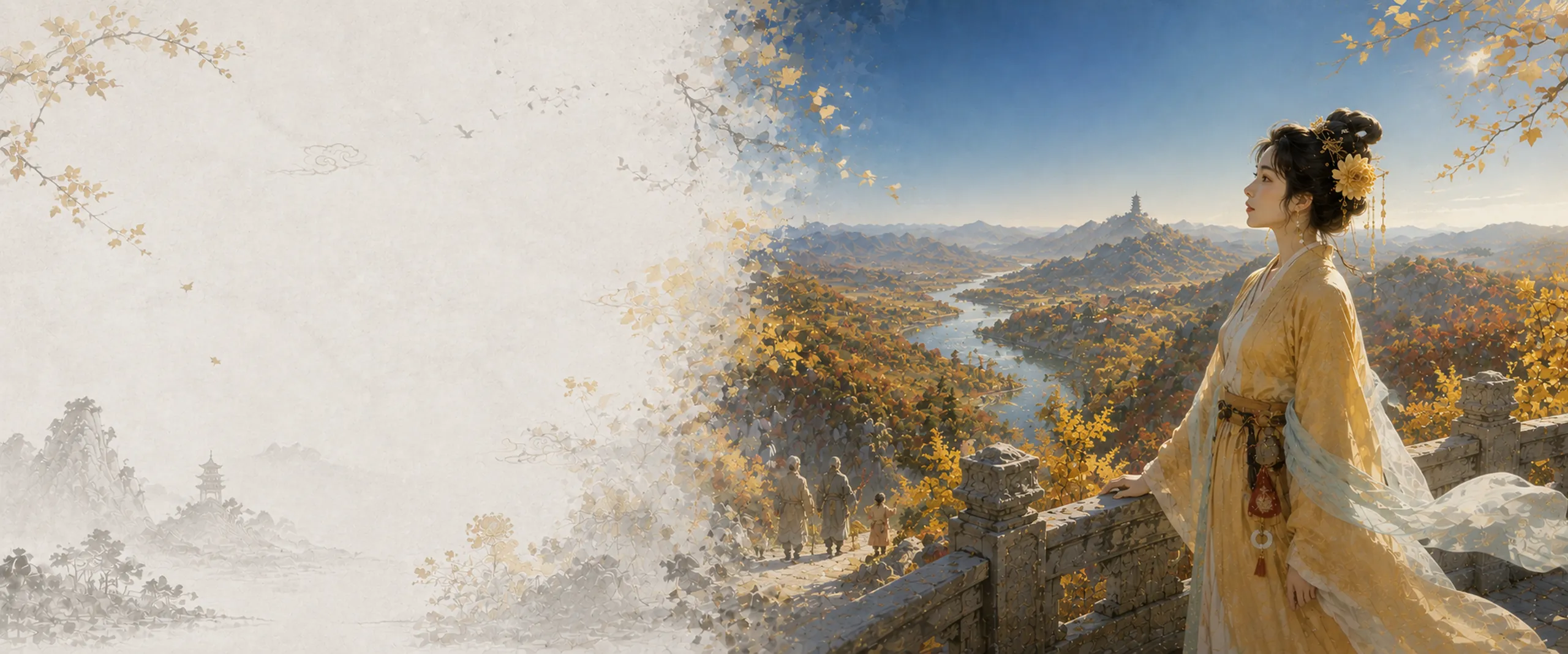
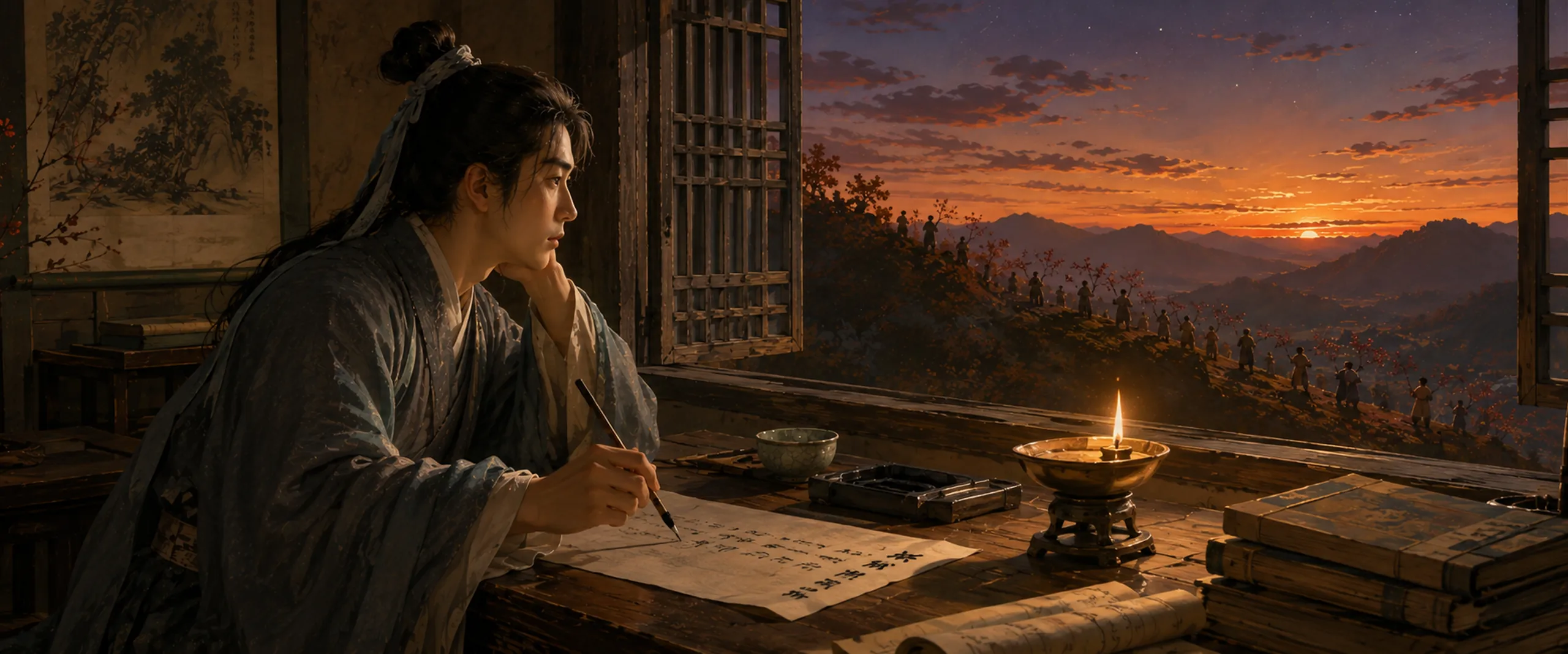
At the age of seventeen, while living away from home in Chang’an, Wang Wei wrote Thinking of My Brothers East of the Mountains on the Ninth Day of the Ninth Month (《九月九日忆山东兄弟》): “独在异乡为异客,每逢佳节倍思亲。遥知兄弟登高处,遍插茱萸少一人。” These lines express with extraordinary depth the homesickness and longing for family felt by a traveler during the Double Ninth Festival. Du Mu writes in Ascending Qishan on the Ninth Day (《九日齐山登高》), “尘世难逢开口笑,菊花须插满头归”, revealing an openhearted and unrestrained spirit during an autumn ascent. Meng Haoran’s Visiting an Old Friend’s Village (《过故人庄》), with “待到重阳日,还来就菊花”, expresses the anticipation of returning at the Double Ninth Festival to drink with friends and admire chrysanthemums. Du Fu’s Ascending (《登高》)—“无边落木萧萧下,不尽长江滚滚来。万里悲秋常作客,百年多病独登台”—fuses the custom of ascending heights with reflections on his own life. Li Qingzhao’s “佳节又重阳,玉枕纱厨,半夜凉初透” captures the solitude and chill of the festival. From Wang Wei to Du Fu, Double Ninth poetry consistently unfolds around three central themes: ascending heights, longing for family, and admiring chrysanthemums.

Double Ninth Festival / Poetry
350 days until Double Ninth Festival October 8, 2027 · Lunar 九月初九

Historical Development

Seasonal Poetry

From the Pre-Qin Period to the Wei and Jin Dynasties

The name “Chongyang” (重阳, Double Yang) is closely connected with the numerical philosophy of the Yijing (《易经》). Nine is considered a yang number; because the ninth day of the ninth lunar month contains two nines, the day is called “Double Yang.” The Double Ninth Festival originated in ancient celestial worship and autumn harvest rituals. During the pre-Qin period, when crops were harvested in the ninth lunar month, people offered sacrifices to the Heavenly Emperor and to their ancestors. This was the festival’s earliest form as an autumn harvest ritual.

Written records of the name “Double Ninth Festival” first appear in the Three Kingdoms period. Emperor Wen of Wei, Cao Pi, wrote in Letter to Zhong Yao on the Ninth Day (《九日与钟繇书》): “岁往月来,忽复九月九日。九为阳数,而日月并应,俗嘉其名,以为宜于长久,故以享宴高会。” This is one of the earliest documentary records of the festival. Beginning from the homophonic relationship between “九” (jiu, nine) and “久” (jiu, long-lasting), Cao Pi endowed the festival with the cultural meaning of “宜于长久”—being auspicious for longevity and endurance. Jingchu Suishiji (《荆楚岁时记》), compiled during the Northern and Southern Dynasties, states: “九月九日宴会,未知起于何代。北人亦重此节。” This indicates that by the Northern and Southern Dynasties, the Double Ninth Festival had already become an important seasonal celebration.

The Tang Dynasty

The Tang dynasty was an important period in which the customs of traditional festivals were integrated and took stable form. Tang poetry on the Double Ninth Festival includes Wang Wei’s youthful homesickness as a traveler away from home, Du Fu’s late-life lament over autumn and illness, and Du Mu’s forced laughter amid frustration in official life. By the Tang, customs such as ascending heights, drinking wine, admiring chrysanthemums, and wearing or inserting zhuyu (茱萸) had become established seasonal motifs in poetry. Tang poets used the Double Ninth Festival to write of the joys and sorrows of human life and to reflect deeply on existence itself. Wang Changling writes in Ascending on the Ninth Day (《九日登高》): “茱萸插鬓花宜寿,翡翠横钗舞作愁”. The late-Tang poet Tang Yanqian, in The Ninth Day in Jinling (《金陵九日》), writes with heroic abandon of ascending heights and drinking wine: “野菊西风满路香,雨花台上集壶觞……绿酒莫辞今日醉,黄金难买少年狂。” Tang poetry on the Double Ninth Festival reached an unprecedented height in both quantity and quality.

The Two Song Dynasties

With the rise of ci during the Song dynasty, the Double Ninth Festival acquired a new artistic form. Song ci on the festival presents a wide range of emotional tones: the desolation of Yan Jidao, the delicate sorrow of Li Qingzhao, and the bold openness of Su Shi. Yan Jidao’s Northern Song lyric Ruanlanggui · Frost Forms from Dew beneath the Golden Palm at the Edge of Heaven (《阮郎归·天边金掌露成霜》) has been regarded as one of the most desolate lyrics ever written on the Double Ninth Festival, with “欲将沉醉换悲凉,清歌莫断肠” becoming an enduring line. In Dingfengbo · Double Ninth (《定风波·重阳》), Su Shi expresses a different realm through the openness of “古往今来谁不老,多少,牛山何必更沾衣”. Li Qingzhao’s Zuihuayin · Thin Mist and Heavy Clouds Make the Long Day Sorrowful (《醉花阴·薄雾浓云愁永昼》), meanwhile, uses delicate brushwork to portray her loneliness and solitude while missing her husband during the festival.

Yuan, Ming, Qing, and the Modern Era

During the Yuan, Ming, and Qing dynasties, Double Ninth customs largely continued those established during the Song. Although its poetry no longer reached the brilliant peaks of the Tang and Song, the tradition remained unbroken. In the modern era, Mao Zedong’s Caisangzi · Double Ninth (《采桑子·重阳》), with the expansive poetic realm of “战地黄花分外香” and “胜似春光,寥廓江天万里霜”, swept away the conventional melancholy of autumn that had long characterized Double Ninth poetry. It opened an entirely new path within the tradition, vividly reflecting Mao Zedong’s personality, broad spirit, optimism, and strength of will.
Core Imagery

Seasonal Poetry

The recurring images of Double Ninth poetry form a distinctive “Double Ninth image system.” They are both literary expressions of festival customs and vehicles for poetic emotion.

Ascending Heights

Ascending is the most central action-image in Double Ninth poetry. Wang Wei’s “遥知兄弟登高处” writes of ascending while longing for family; Du Mu’s “与客携壶上翠微” writes of climbing and drinking; Wang Bo’s “九月九日望乡台” writes of ascending to look toward home. Ascending is not merely a folk custom but also a posture toward life. Standing high above the world opens the field of vision: one can see farther outward, but also more deeply inward. The “height” of the ascent is both spatial elevation and spiritual realm. For the ancients, climbing upward was at once a movement of the body and a momentary release of the spirit.

Chrysanthemums

The chrysanthemum is the most frequently appearing plant image in Double Ninth poetry. As the saying goes, “霜降之时,唯此草盛茂”: while other plants wither in late autumn, chrysanthemums continue to bloom proudly, becoming symbols of purity and resilience. Li Qingzhao’s “人比黄花瘦” uses the chrysanthemum to describe the human figure; Du Mu’s “菊花须插满头归” makes it an ornament; Mao Zedong’s “战地黄花分外香” uses it to express resolve; Li Bai’s “菊花何太苦” uses the flower as a reflection of himself.

The chrysanthemum is both festival decoration and metaphor for poetic character. Not every flower can bloom in the autumn wind, just as not every person can remain steadfast in adversity. The Double Ninth Festival is also known as the “Chrysanthemum Festival,” and chrysanthemums have become deeply bound to its cultural identity.

Zhuyu

Zhuyu (茱萸) is a distinctive folk image of the Double Ninth Festival. The ancients regarded the ninth day of the ninth month as a day of extreme yang. Autumn rains brought dampness, poisonous creatures emerged, and mosquitoes and insects were abundant. Zhuyu, which ripens around the time of the festival, was believed to have the effects of killing insects and disinfecting, dispelling cold, and driving out wind. Wang Wei’s “遍插茱萸少一人” records the custom of inserting zhuyu during the festival.

In poetry, zhuyu is more than a marker of folk custom. It is also a bond of kinship. “插茱萸” symbolizes being together; “少一人” expresses the regret of separation.

Wine

Wine is one of the most contradictory images in Double Ninth poetry. Du Mu’s “但将酩酊酬佳节” uses wine to honor the festival; Yan Jidao’s “欲将沉醉换悲凉” uses it to drown sorrow; Su Shi’s “酩酊但酬佳节了” uses it to forget worry. In Double Ninth poetry, wine is both an object of celebration and a means of dissolving grief. Yet the more one drinks to celebrate, the more sorrow may emerge; the more one drinks to extinguish melancholy, the more awake one may become. This contradiction is one of the truest emotional features of Double Ninth poetry.

Thematic Categories

Seasonal Poetry

Homesickness and Longing for Family

Homesickness and longing for family are the most universal themes in Double Ninth poetry. Wang Wei’s Thinking of My Brothers East of the Mountains on the Ninth Day of the Ninth Month captures the Chinese emotional pattern of missing home during festivals through “每逢佳节倍思亲”. Wang Bo’s The Ninth Day in Shu intensifies homesickness by writing of one traveler bidding farewell to another while already away from home. Against the background of the Double Ninth Festival, these poems express the traveler’s profound longing for homeland and family: the more the festival celebrates reunion, the more alone the traveler feels.

Lamenting Autumn and Aging

The Double Ninth Festival falls in deep autumn, when the natural world is withering, easily stirring poets to reflect on the brevity of life. Du Mu’s Ascending Qishan on the Ninth Day uses “尘世难逢开口笑” to express life’s bitterness and “古往今来只如此” to confront impermanence. Du Fu’s Ascending writes the sorrow of old age and illness in “万里悲秋常作客,百年多病独登台”. With autumn scenery as their background, such poems give voice to profound reflections on the passage of time and the shortness of human life.

Openhearted Transcendence

Double Ninth poetry also contains a spirit of openness and transcendence. Su Shi’s Dingfengbo · Double Ninth writes a calm acceptance of aging through “古往今来谁不老,多少,牛山何必更沾衣”. Mao Zedong’s Caisangzi · Double Ninth praises the beauty of autumn with “胜似春光,寥廓江天万里霜”. These works move beyond the traditional sadness of autumn—not by denying sorrow, but by placing individual sorrow within a larger horizon and thereby gaining the power to transcend it.

Battlefield and Country

Another distinctive theme in Double Ninth poetry connects the festival with the fate of the country. Cen Shen’s Thinking of My Old Garden in Chang’an on the Ninth Day during a Military Campaign (《行军九日思长安故园》) writes: “强欲登高去,无人送酒来。遥怜故园菊,应傍战场开”, capturing the bleakness of the festival amid war. Mao Zedong’s Caisangzi · Double Ninth expresses revolutionary heroism through “战地黄花分外香”. Such works expand the festival beyond individual joy and sorrow toward the rise and decline of the country, giving Double Ninth poetry a broader historical perspective.

Double Ninth Festival Folk Songs

Seasonal Poetry

The Double Ninth Festival is not only a festival of the Han Chinese, but also an important celebration among many ethnic minority communities. In Yunnan, Guizhou, Guangxi, and other regions with significant minority populations, the festival has incorporated distinctive local traditions. Among the Zhuang, customs include ancestor worship, ascending heights, and drinking chrysanthemum wine, accompanied by traditional mountain songs. Miao, Dong, and other peoples also maintain traditions of climbing, admiring chrysanthemums, and antiphonal singing during the festival. Although many of these orally transmitted songs were never recorded in writing, they have been passed down from generation to generation through festival life and, together with the literary poetry of Han writers, form the broader cultural landscape of the Double Ninth Festival within the Chinese nation.

Closing Reflections

Seasonal Poetry

Double Ninth poetry forms a distinctive and profound landscape within the treasury of Chinese verse. From Wang Wei’s “每逢佳节倍思亲” and its immortal expression of longing for family, to Li Qingzhao’s “人比黄花瘦” and its extreme refinement of yearning; from Du Mu’s “尘世难逢开口笑” and its bitter reflection on life, to Su Shi’s “古往今来谁不老” and its openhearted wisdom; from Mao Zedong’s “战地黄花分外香” to the heroic aspirations of the revolutionary spirit—Double Ninth poetry has recorded for a thousand years Chinese reflections on life, longing for loved ones, aspiration toward higher ground, and hope for light.

Within these poems is the heartfelt remembrance of “独在异乡为异客,每逢佳节倍思亲”; the beautiful sorrow of “莫道不销魂,帘卷西风,人比黄花瘦”; the reflection on life contained in “尘世难逢开口笑,菊花须插满头归”; the openhearted transcendence of “古往今来只如此,牛山何必独沾衣”; and the expansive heroic spirit of “胜似春光,寥廓江天万里霜”. The meaning of Double Ninth poetry lies precisely in its ability to carry the autumn longing of ascending heights and gazing into the distance, together with the refined pleasure of drinking wine and admiring chrysanthemums, from a thousand years ago into every succeeding age of Chinese life.

The poetic writing of the Double Ninth Festival forms a long cultural scroll of the spiritual history of Chinese literati. From grieving over autumn to praising autumn, from lamenting age to transcending the fear of age, from the individual to the country—the poetry of Double Ninth reveals, across different eras and different circumstances of life, the varied ways Chinese writers have confronted the finitude of human existence and the seeming eternity of the cosmos. In these lines, Double Ninth is at once the vastness of ascending heights and looking afar, and the longing embodied in everyone wearing zhuyu; it is both the abandon of chrysanthemums filling the hair and the delicate sorrow of a person thinner than the yellow flowers; both the melancholy of “尘世难逢开口笑” and the heroic breadth of “寥廓江天万里霜”. Double Ninth poetry is one of the deepest and most enduring declarations Chinese people have made to “ascending” and “the chrysanthemum,” a record of reflections on life written in ink by generation after generation.

—-

[Language: es]

Continue exploring Double Ninth Festival culture

Readers’ Comments

Calendar and traditional culture enthusiasts from around the world, sharing the same moon.

Sign in or register to join the conversation. Your comment account is created automatically the first time you use a connected account.