Torch Festival

Torch Festival

「 谁把太空敲粉碎,满天星斗落人间。 」

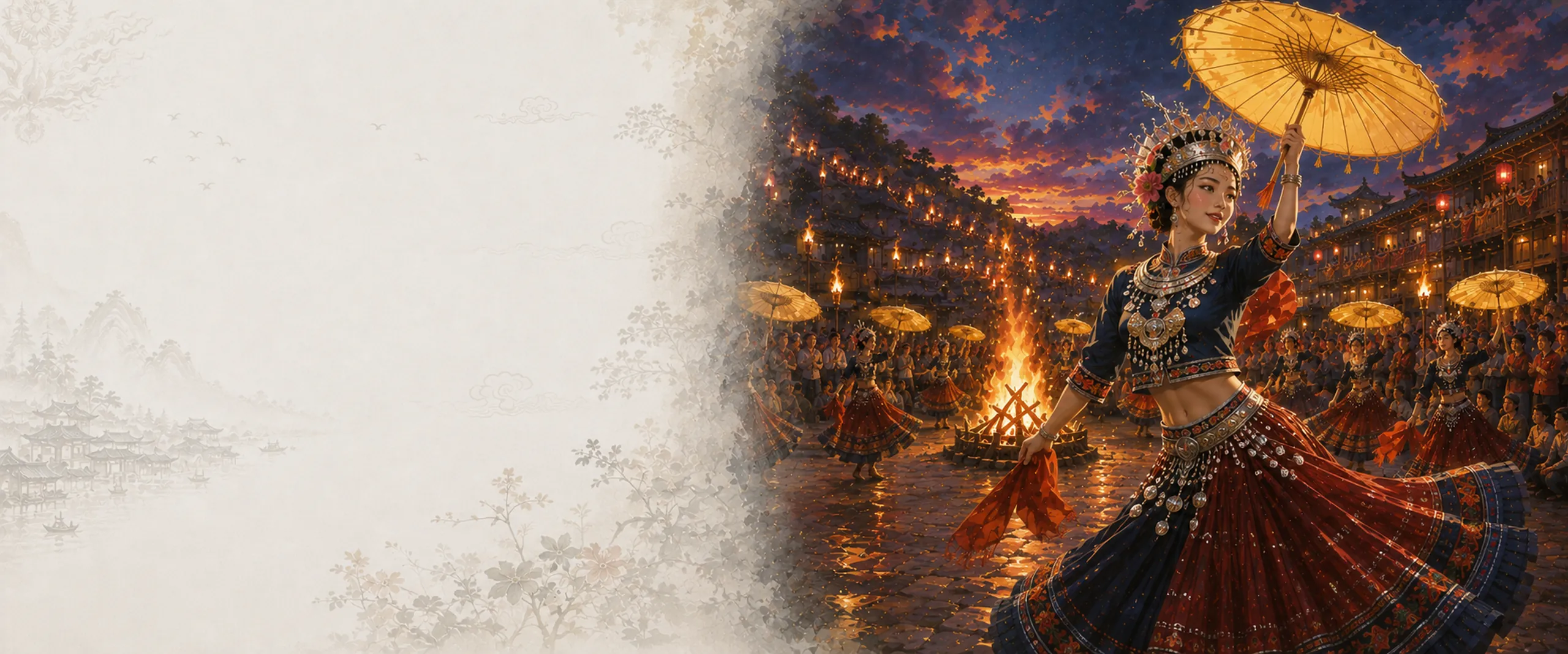
The Torch Festival is the grandest traditional festival of the Yi people, hailed as the “Carnival of the East.” Fire symbolises light — people raise torches high to drive away pests and insects, illuminate the fields and pray for a good harvest…
Torch Festival

The Torch Festival is held around the 24th day of the sixth lunar month each year, celebrated in Yi areas of Yunnan, Guizhou, and Sichuan. It was known in ancient times as the “Star‑Returning Festival.” The Ming‑dynasty scholar Yang Shen, while staying overnight at Mount Lu in Xichang, Liangshan, happened to witness a Torch Festival night and wrote this magnificent poem: “老夫今夜宿泸山,惊破天门夜未关。谁把太空敲粉碎,满天星斗落人间。” (*This old man stays tonight at Mount Lu; startled, the Heavenly Gate remains open through the night. Who has shattered the vast sky into pieces, sending countless stars falling down to the human world?*) He praised the grand spectacle of ten thousand people celebrating with blazing torches. The core custom of the festival is lighting torches — people raise torches made of pine resin and walk through the fields, using the firelight to drive away pests and pray for a good harvest. The festival also features bullfights, wrestling, horse racing, and other activities. As the saying goes: “芦笙踏月歌长夜,骏马迎风竞快鞭” (*Reed‑pipe music and moonlight songs last through the night; fine horses race against the wind with swift whips.*) Fire is light, heat, and life — the Torch Festival expresses, in its most primal form, people’s longing for a bountiful harvest and their love of life.

Lunar Date
24th day of the 6th lunar month
Ethnic Group
Yi and other ethnic groups
Popular Regions
Sichuan, Yunnan, Guizhou and Guangxi
Cultural Heritage
National Intangible Cultural Heritage

Festival Journey

  1. Pre‑Festival Preparations

    Preparations for the Torch Festival begin about ten days in advance. The Tor…

  2. The Day of the Torch Festival

    The Torch Festival is generally held around the 24th day of the sixth lunar…

  3. # Day 1: Fire Worship (Welcoming Fire)

    The first day of the Torch Festival is the Fire Worship Day, called “Du Zai”…

  4. # Day 2: Passing on Fire (Praising Fire)

    The second day is the Fire Passing Day, called “Du Ge” (都格) in the Yi langua…

  5. # Day 3: Sending off Fire

    The third day is the Fire Sending Day, called “Du Sa” (都撒) in the Yi languag…

  6. After the Festival

    The 2026 Torch Festival holiday runs from 5 to 12 August (in some areas from…

Origins & Legends

History · Evolution · Legend
Torch Festival · Origins & Legends

Tracing the Source · Historical Evolution

Content in Progress...

Festival Customs

Customs · Local Traditions · Everyday Life
Festival Foods

Food Traditions · Local Flavors · Taste
Folk Arts

Song & Dance · Living Tradition · Heritage

Torch Festival · Folk Arts

Living Folk Arts · Of Song and Dance

Through Song and Dance · A Living Tradition

Opening Verse: 谁把太空敲粉碎,满天星斗落人间。 Introduction: Torch Festival poetry often centers on blazing torches that light the sky and on exuberant communal singing and dancing. Yang Shen’s “满天星斗落人间” compares the torches to a shower of stars descending into the human world; Wen Zhangfu’s “万朵莲花开海市” likens them to countless lotus blossoms opening in a radiant mirage; and “蹋歌起舞月明中” evokes the all-night revelry of song and dance beneath the moon. The Ming writer Yang Shen wrote in Reflections While Watching the Torches on Mount Lu (《泸山观火炬咏怀》): “老夫今夜宿泸山,惊破天门夜未关。谁把太空敲粉碎,满天星斗落人间”, using the magnificent image of “满天星斗落人间” to portray the spectacle of countless torches blazing through the night and sparks scattering into the darkness. The Yuan poet Wen Zhangfu likewise wrote in Festival of Fire (《火节》), “万朵莲花开海市,一天星斗下人间”, once again drawing on the image of stars descending from the heavens to capture the brilliance of the Torch Festival. Another verse records the joyous atmosphere of the celebration: “连乡火把照天红,六月为期问土风。一匝芦笙吹未断,蹋歌起舞月明中”, describing people playing the lusheng and dancing in rhythm beneath the moonlight throughout the festival night. In Torch Festival poetry, fire is the soul of the celebration, fusing light, passion, and ethnic spirit into verse.

Epic Creation Epic Other Duoluohe” Dati Dance

Global Features

Overseas · Chinese Communities · Celebrations
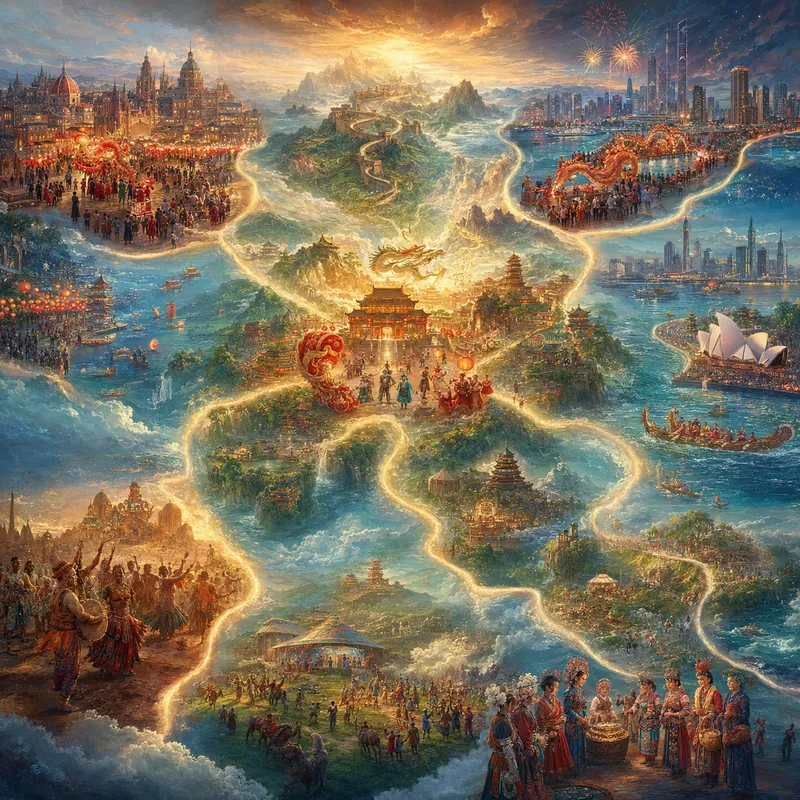
Torch Festival · Global Features

Overseas Celebrations · Lights of Chinese Communities

01
Festival Scenes Abroad United States

The United States was one of the earliest countries in the world to hold overseas celebrations of the Yi Torch Festival. As early as 2005, the flame of the Torch Festival had already been kindled in Los Angeles. Los Angeles: the first overseas Torch Festival (2005). On August 14, 2005, the United Chinese Ethnic Minorities Association Overseas held the opening ribbon-cutting ceremony for the first “Torch Festival” in Los Angeles, hoping to introduce this traditional festival of the Liangshan Yi people in China to mainstream American communities. The event strictly followed the three-day-and-three-night program of the international Yi Torch Festival in Liangshan, China, and was divided into three stages: “worshipping the fire,” “passing on the fire,” and “sending off the fire.” Although no real torches were lit at the venue, members of the overseas Chinese community dressed in ethnic minority costumes sang and danced, while community leaders waved electric batons glowing with fire-red light, creating the distinctive atmosphere of the Torch Festival. Ying Yaodong, chairman of the supervisory board of the association, stated that the organization had previously held activities such as the Dai Water-Splashing Festival, and that the purpose of organizing the Torch Festival was precisely to introduce and promote China’s ethnic minorities to mainstream American society and deepen understanding of China. This was the first recorded formal overseas appearance of the Yi Torch Festival. Arizona: the Torch Festival on stage. In Arizona, the Arizona Chinese Dance Ensemble, led by Xu Aini, performed a Yi “Torch Festival” dance at an arts festival, bringing before American audiences the festive celebrations and ethnic character of villages in Liangshan, Sichuan. Cultural resonance among American netizens. In recent years, videos of the Yi Torch Festival have repeatedly gone viral on overseas social media. The spectacular scenes of fiery dragons filling the sky and crowds singing and dancing have astonished viewers abroad. Many American netizens have commented with emotion: “China seems to have an endless number of fascinating and distinctive festivals: the Spring Festival, Dragon Boat Festival, Water-Splashing Festival, Naadam, and Torch Festival each have their own folk traditions, carrying ethnic stories and the warmth of everyday life.” In their eyes, the Torch Festival is not merely a carnival, but a vivid expression of the vitality of China’s diverse ethnic cultures.

02
Festival Scenes Abroad Australia

Australia has become an important foothold for the spread of the Torch Festival in the Southern Hemisphere. On July 28, 2023, the twenty-sixth day of the sixth lunar month, the Australian Yunnan Association held the First Yunnan Torch Festival, together with the founding ceremony of the Association’s Youth Council and the inauguration of the newly elected executive council, in Box Hill, Melbourne. This marked the first successful staging of the Yi Torch Festival in the Southern Hemisphere. The celebration was grand in scale. Guests included Sun Yan, Deputy Consul General of China in Melbourne; Bruce Atkinson, former President of the Victorian Legislative Council; Su Junxi, president of the Victorian Federation of Chinese Associations; other political and business representatives; as well as leaders of major Melbourne community organizations, cultural figures, and fellow Yunnan natives—around 400 people in total. The celebration officially began at 5:30 p.m. The organizers prepared traditional costumes of Yunnan’s ethnic minorities for guests to try on and photograph, set up stalls selling Yunnan specialties such as flower cakes and Crossing-the-Bridge Rice Noodles, and taught guests the bamboo-pole dance. Professor Qin Lushan, honorary president of the Australian Yunnan Association, and its president, Li Ruge, wore full Yi ceremonial dress and hosted the celebration in Chinese, English, and Yunnan dialect. Deputy Consul General Sun Yan stated: “Yunnan, as a place where many ethnic groups live together, has preserved distinctive and colorful ways of life and culture. The Torch Festival is one of them, carrying the Yi people’s and other ethnic minorities’ beautiful aspirations for life.” Bruce Atkinson, former President of the Victorian Legislative Council, specially wore traditional Yi clothing custom-made by Jin Yongshu, head of the Chuxiong Yi Community in Yunnan. Su Junxi, president of the Federation of Chinese Associations, proposed that at the following year’s Moomba Festival, everyone could wear the sweeping Yi skirts and walk through the streets of Melbourne to promote China’s ethnic cultures. Second Torch Culture Festival (2024). On November 23, 2024, the Australian Yunnan Association successfully held its Second Torch Culture Festival, together with the inauguration ceremony of its fourth-term council, in Melbourne. The event stated: “Yunnan’s Torch Festival is a grand celebration of unity and multiculturalism. It not only carries profound traditions, but also shines with new brilliance in a foreign land. Like a blazing torch, it not only warms the heart, but also illuminates the connections between us.” The continued staging of the Torch Festival in Australia has allowed this traditional Yi festival to take root in the Southern Hemisphere.

03
Festival Scenes Abroad New Zealand and Papua New Guinea

In July 2025, Ms. Julie Arok from Papua New Guinea experienced the Torch Festival in Yunnan and personally took part in this great celebration of tens of thousands of revelers. Through this approach of “inviting people in,” the Torch Festival is sowing seeds of cultural understanding among the peoples of Oceania’s island nations.

04
Festival Scenes Abroad United Kingdom

The United Kingdom is an important node in the spread of the Torch Festival across Europe. On August 3, 2024, the first Yunnan Culture Festival was held in London, with the Yi Torch Festival serving as its climax. The event opened with an ethnic costume fashion show, in which models wore traditional clothing from Yunnan’s ethnic minorities, primarily Yi attire. The exquisite designs drew admiration from the audience. Afterwards, people gathered around the torches, singing and dancing together to celebrate the Yi people’s grandest festival. The event attracted several hundred participants. Arianna Lucente, who had lived in Yunnan for two years beginning in 2007, said at the venue that Yunnan’s ethnic minority cultures and cuisine felt deeply familiar to her and brought back fond memories. She said: “I think London still does not know enough about China, so I am very happy to have the opportunity to let people learn about a part of China that many people know nothing about.” Another participant, Mark Shaw, said: “This festival lets people understand who these people are, what they do, and how they live. It exposes more people to different cultures and helps us understand how different cultures interact.” Zhang Jie, co-founder of the Yunnan Culture Festival, said that seeing so many people from different backgrounds come together to learn about and celebrate Yunnan culture was deeply gratifying.

Visitor Guide

Preparation · Etiquette · Take Part with Confidence
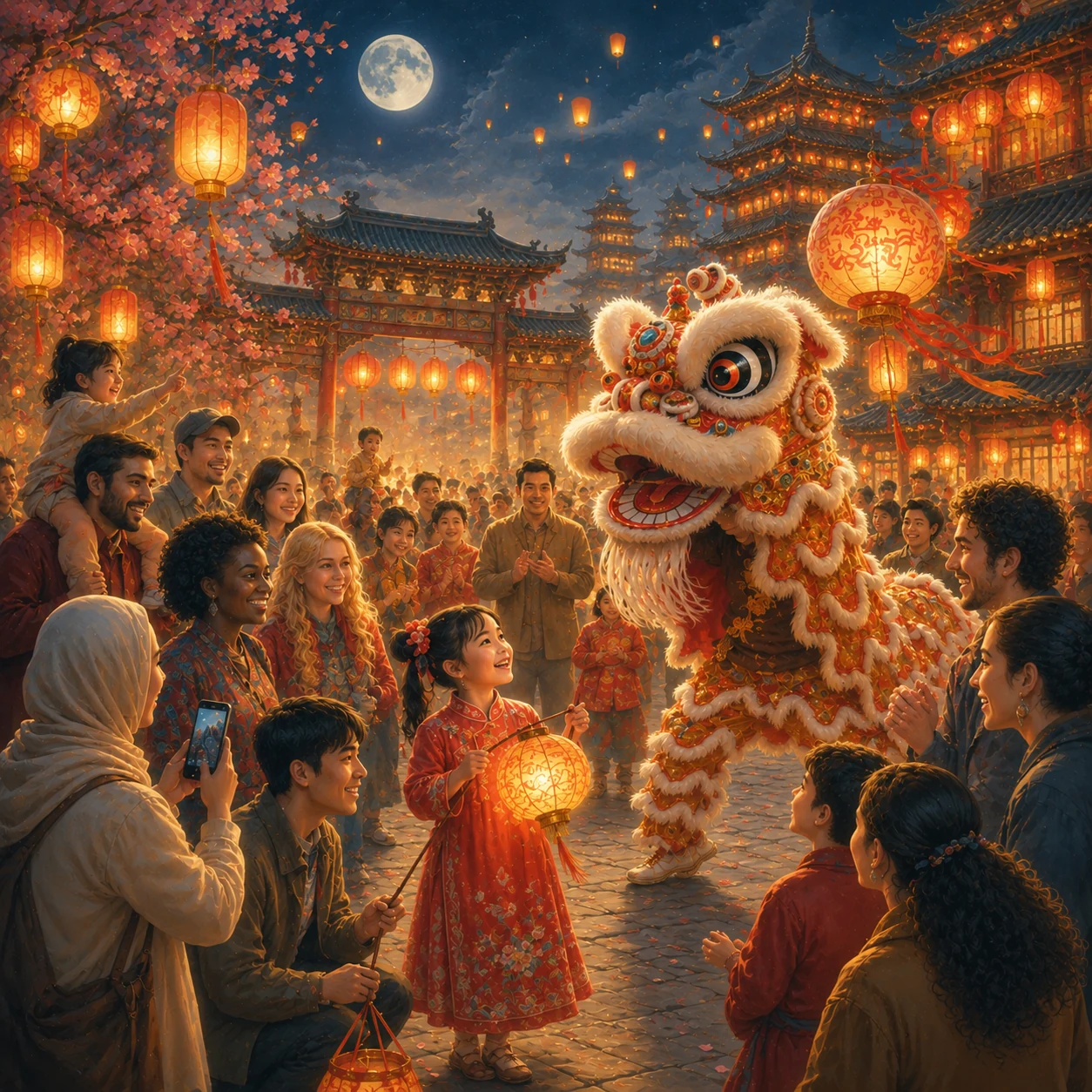
Torch Festival · Visitor Guide

Start with Understanding, Step into the Festival with Confidence

01 Before You Join Event Schedule and Venues ### Core Torch Festival Dates The Torch Festival is held each year around the twenty-fourth day of the sixth lunar month, corresponding to the period from late July to mid-August in the Gregorian calendar. Liangshan Prefecture recognizes the Torch Festival as a statutory holiday, generally falling between late July and early August. Celebrations begin with traditional fire-kindling ceremonies and continue through the end of August, with the main climax concentrated in early August. The core schedule is as follows: Time Activity Description Mid- to Late July Fire-kindling ceremonies begin in different regions Puge County lights the “First Flame” at Ridudisa, marking the beginning of the festival Late July to Early August Folk activities begin across different areas Horse racing, wrestling, silver ornament and costume showcases, and other traditional competitions Early August — around the twenty-fourth day of the sixth lunar month Grand Fire-Worship Ceremony and Torch Carnival Night — main climax Bonfire celebrations and mass dances reach their peak Mid- to Late August Some activities continue Festivals gradually conclude in different regions ### Traditional Torch Festival Customs The Torch Festival is a ritual festival centered on praying for abundant harvests and warding off disasters and evil. Its folk traditions include reverence for Heaven and ancestors, burning insects and driving away epidemics, and praying for good harvests. Its main customs include: Custom Description Fire-Kindling Ceremony At traditional fire-kindling sites such as Ridudisa in Puge County, the Bimo, or ritual priest, conducts ancient rites and lights the “First Flame” Grand Fire-Worship Ceremony Solemn ceremonies are held at places such as the October Solar Calendar Cultural Park in Chuxiong, formally opening the festival Bonfire Celebration After nightfall, people sing and dance around bonfires, with traditional dances such as Dati Dance and Left-Foot Dance performed in succession Torch Parade Participants carry torches through the streets, with tens of thousands of flames forming a “flowing golden fire dragon” Traditional Competitions Horse racing, Yi-style wrestling, bullfighting, and other traditional athletic contests Traditional Beauty Contests Yi beauty competitions selecting titles such as “Golden Soma” and “Golden Eagle” Intangible Cultural Heritage Performances Duolehe Yi costume shows, silver ornament and costume displays, intangible heritage parades, and other performances ### Recommended Activities by Region Liangshan Yi Autonomous Prefecture, Sichuan — Core Main Venue: The 2026 Liangshan Yi Torch Festival begins on July 19 with the fire-kindling ceremony in Puge County and continues through the end of August. Across all 17 counties and cities of the prefecture, 98 distinctive cultural and tourism activities are organized. Puge County lights the “First Flame” and simultaneously holds traditional competitions such as horse racing and wrestling. Butuo County organizes silver ornament and costume performances, folk competitions, and Torch Carnival Night. Yuexi County presents the “Terraced Fields Spark” Torch Show. Huili hosts an ancient-city light-and-shadow show and a torch night tour along Binhe Road. The “Liangshan · Xichang Torch Festival Opening Ceremony and Sound of the Mountains Music Festival” opens grandly at Xingyue Lake Park, while the central climax, Torch Carnival Night, takes place along the eastern extension of Hangtian Avenue. Chuxiong Yi Autonomous Prefecture, Yunnan — Core Main Venue: The Chuxiong Yi Torch Festival is held each year in early August under the theme “China’s City of Fire · Songs of Blazing Joy.” As the main venue, Chuxiong City presents more than ten major activities, including the Grand Fire-Worship Ceremony, mass Left-Foot Dance, dragon-boat races, intangible heritage parades, Yi costume shows, and Rock Night. All ten counties and cities of Chuxiong Prefecture simultaneously organize their own festival programs. Shilin, Yunnan: The Shilin Torch Festival is held every year in early August under the theme “Passionate Torches · Joyful Shilin.” Activities include: * Millennia-old fire-kindling ceremony at Guishan * Mass Great Sanxian Torch Parade * Bull-King Championship * Electronic-music carnival evening * Ashima ceremonial costume show Yeyuhai, Guizhou: The Yeyuhai · Haiping Yi Torch Season begins each year in mid-July and continues until mid-August. More than 30 regular featured activities in six categories are planned, creating a program in which there are “performances every day and themes every week.” The festival also introduces an innovative dual-IP model combining the “Haiping Yi Torch Season” with the “Yushe Forest Camping Music Festival.” 02 Before You Join Pre-Trip Preparation ### Visas and Entry Major Torch Festival destinations, including Liangshan in Sichuan and Chuxiong in Yunnan, are subject to China’s unified visa policies: * 240-Hour Visa-Free Transit for Citizens of 54 Countries: Travelers may enjoy visa-free transit for up to 240 hours, with permitted stay areas covering administrative regions including Sichuan and Yunnan. * Tour Groups from ASEAN Countries: Organized groups may enter visa-free through designated ports. * Other Nationalities: Apply in advance for a tourist visa, or L visa, through the relevant Chinese embassy or consulate, and ensure your passport remains valid for more than six months. * Latest Policies: Before departure, consult the official website of China’s National Immigration Administration or the relevant Chinese embassy or consulate. ### Adapting to the Climate The Torch Festival falls in midsummer, but climate conditions differ across destinations: * Liangshan Prefecture — Xichang: Average annual temperature is around 17°C. Summers are cool, earning the region the name “Cool Liangshan.” Temperatures may fall below 20°C during nighttime Torch Festival activities, so a light jacket is recommended. * Chuxiong Prefecture: Average annual temperature is 17.9°C, with warm summer days and cool nights. * Yeyuhai, Guizhou: Average summer temperature is only around 19°C, making it a popular summer retreat. Special Reminder: Torch Festival venues contain concentrated bonfires and dense crowds, so the perceived temperature can rise significantly. Layered clothing is recommended: wear a short-sleeved shirt underneath and carry a light jacket so you can adjust easily as temperatures change. ### Travel Insurance It is strongly recommended to purchase travel insurance covering: * Accidental injury and medical treatment for acute illness, including outpatient care * Loss of or damage to personal belongings * Travel delays or cancellations ### Currency and Payment * Currency: Renminbi (CNY). * Cash: Carry a reasonable amount of cash. Network coverage at some remote event sites may be poor, making cash more reliable. * Cards: Visa and MasterCard are accepted at major hotels and shopping centers. * Mobile Payment: Alipay and WeChat Pay are widely used and can be linked to overseas bank cards. ### Communications and Internet * Local SIM cards with short-term data packages can be purchased at airports using a passport. * Hotels, restaurants, and scenic areas generally provide free Wi-Fi. * Important: Torch Festival venues attract very large crowds, and 4G/5G networks may become severely congested. It is strongly recommended to download offline maps in advance. Baidu Maps or AutoNavi are recommended; download maps of your destination to your phone while connected to Wi-Fi. 03 Before You Join How to Get There ### Core Venue 1: Xichang, Liangshan, Sichuan Transportation Details Air Xichang Qingshan Airport serves Chengdu, Beijing, Shanghai, Guangzhou, and other major Chinese cities. Tickets are scarce during the Torch Festival, so booking 1–2 months in advance is recommended High-Speed Rail Direct trains from Chengdu reach Xichang West Station in about 3 hours; trains also connect directly from Kunming and other cities Driving Beijing–Kunming Expressway provides direct access, but traffic controls apply in the city during the festival. Park at designated parking areas outside the city High-Speed Rail Ticket Tip: Tickets are extremely difficult to obtain during the Torch Festival. China Railway Chengdu Group adds temporary passenger trains in addition to regular services. Booking in advance through the Railway 12306 App is recommended. Airport Transfer: After arriving at Xichang Qingshan Airport, use DiDi or AutoNavi ride-hailing to book a vehicle. ### Core Venue 2: Chuxiong, Yunnan Transportation Details Air Fly to Kunming Changshui International Airport, then transfer by high-speed rail or coach to Chuxiong. High-speed rail from Kunming to Chuxiong takes about 1 hour High-Speed Rail Frequent high-speed rail services operate from Kunming to Chuxiong, with a journey time of around 1 hour Driving Hangzhou–Ruili Expressway provides direct access; traffic controls apply to some urban roads during the festival ### Urban Transportation During the Festival Strict traffic controls are implemented in major Torch Festival destinations. Xichang: * Traffic controls apply in the carnival area along the eastern extension of Hangtian Avenue. * Free Shuttle Services: Xichang deploys large numbers of free shuttle buses on multiple dedicated routes. * Free Parking: Some parking areas are opened free of charge during the festival. Travel Recommendations: * Rely primarily on walking and free shuttle buses. * Drivers should check official parking guidance in advance. * Private vehicles are prohibited from entering core activity areas. 04 Before You Join Accommodation Reservations Key Point Recommendation When to Book Accommodation becomes extremely scarce during the Torch Festival. Book 1–2 months in advance. Hotel occupancy across Xichang exceeds 98% Recommended Areas in Xichang Around Qionghai Lake — lake views and concentrated attractions; Hangtian Avenue / city center — close to the main venue; Qionghai 17 Degrees · Xingyue Lake — near the main carnival venue Recommended Areas in Chuxiong Around the China Yi October Solar Calendar Cultural Park and Yi Ancient Town Scenic Area Butuo County — Original Homeland of the Torch Festival Budget hotels in the county town; book at least half a month in advance Price Reference Prices rise during the festival: budget around RMB 200–400 per night, mid-range RMB 400–800, high-end above RMB 800 Booking Platforms Major platforms such as Ctrip, Qunar, and Meituan; rooms with free cancellation are preferable

Readers’ Comments

Calendar and traditional culture enthusiasts from around the world, sharing the same moon.

Sign in or register to join the conversation. Your comment account is created automatically the first time you use a connected account.