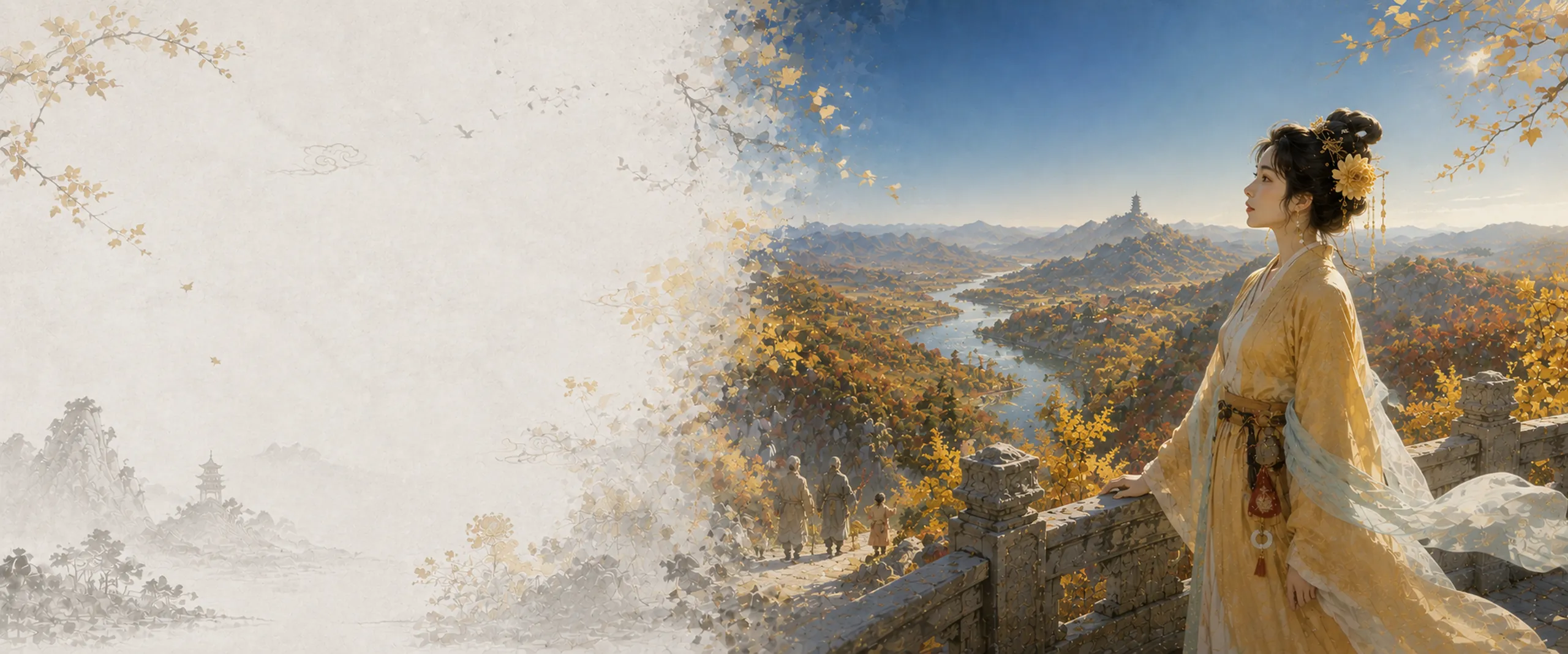

The Double Ninth Festival originated in the pre‑Qin period and was officially established as a folk festival in the Tang dynasty. At the age of seventeen, while living as a guest in Chang’an, Wang Wei wrote “Thinking of My Brothers in Shandong on the Ninth Day of the Ninth Month” (《九月九日忆山东兄弟》): “独在异乡为异客,每逢佳节倍思亲。遥知兄弟登高处,遍插茱萸少一人。” (*Alone in a foreign land, I am a stranger; on every festive day, I miss my family twice as much. From afar, I know my brothers have climbed to the heights — wearing dogwood all around, but one is missing.*) These lines capture the deep homesickness of a traveller on the Double Ninth. The central custom is climbing high — the ancients believed this could avert disaster and pray for blessings. Enjoying chrysanthemums and drinking chrysanthemum wine are also important activities. Du Mu, in his poem “Climbing Mount Qi on the Ninth Day” (《九日齐山登高》), wrote: “尘世难逢开口笑,菊花须插满头归。” (*In this mortal world, it is rare to find a moment of joy; we must return with our hair adorned with chrysanthemums.*) This expresses the carefree and broad‑minded spirit of autumn climbing. Wearing dogwood was meant to ward off evil and misfortune, and eating Double Ninth cakes (chongyang gao) — the word “gao” (cake) is a homophone for “gao” (high) — symbolises rising step by step. In 1989, the Double Ninth Festival was designated as the “Elderly Festival,” carrying forward the tradition of respecting and caring for the elderly in the new era.
Festival Journey
Origins & Legends
History · Evolution · Legend
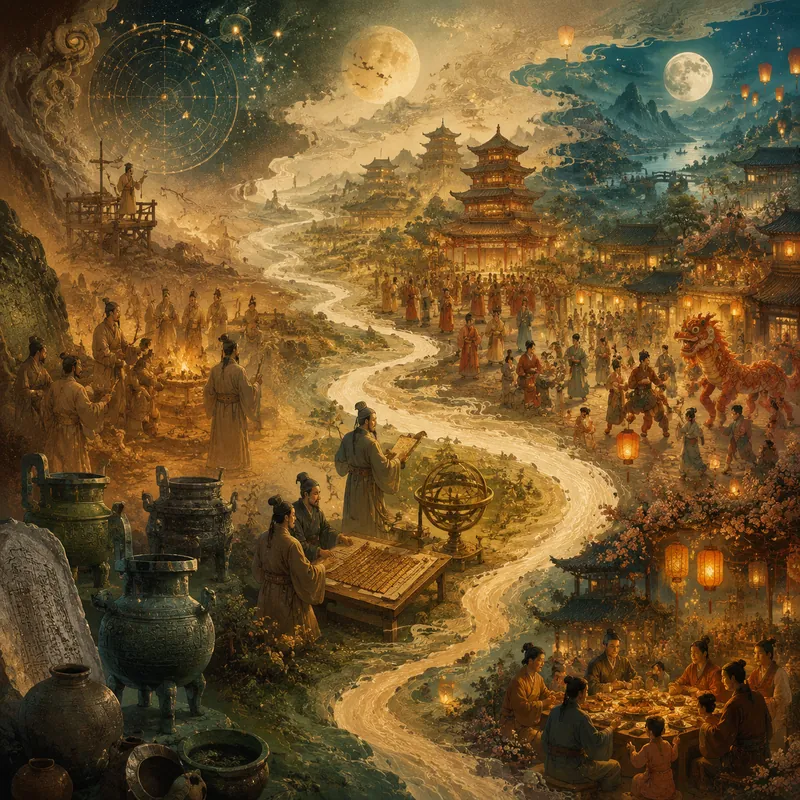
Tracing the Source · Historical Evolution
- Han Dynasty From the pre-Qin period to the Han dynasty, the Double Ninth Festival underwent a transition from scattered autumn customs to a relatively stable body of festival practices
- Wei, Jin, and the Northern and Southern Dynasties The Wei, Jin, and Northern and Southern Dynasties formed the crucial period during which the ninth day of the ninth month evolved from a calendrical date into the cultural symbol of the Double Ninth Festival
- Tang Dynasty The Tang dynasty was the decisive period in the development of the Double Ninth Festival
- Song, Yuan, Ming, and Qing Dynasties By the Song dynasty, the festival had become even more lively
Festival Customs
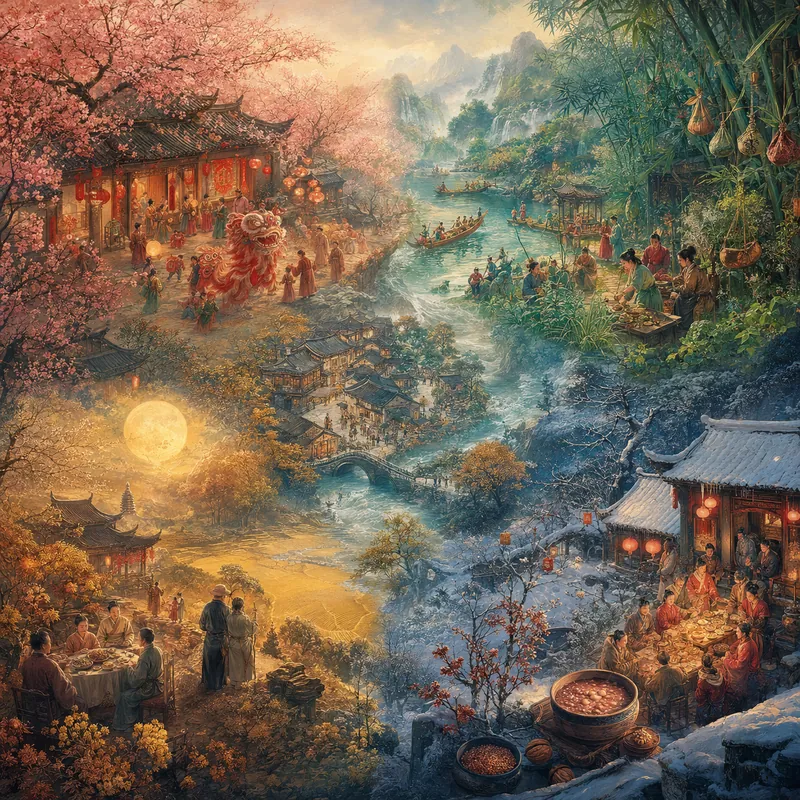
Customs · Local Traditions · Everyday Life
Festival Foods
Food Traditions · Local Flavors · Taste
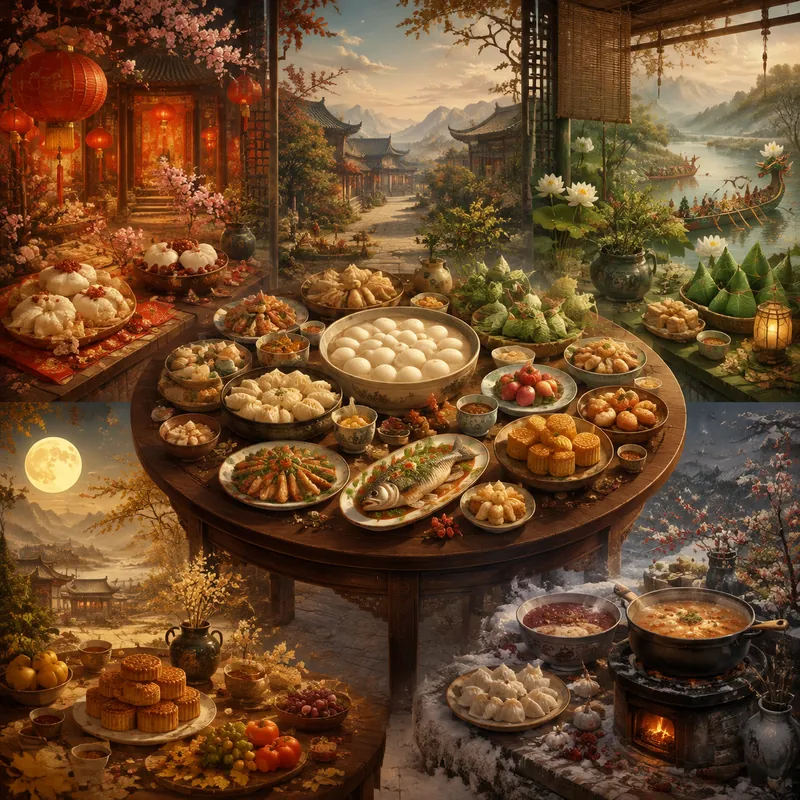
Seasonal Flavours · Seasonal Menu
Poetry & Verse
Classics · Imagery · Legacy
Representative Poems · Classic Selections
「九月九日忆山东兄弟」
独在异乡为异客,每逢佳节倍思亲。
遥知兄弟登高处,遍插茱萸少一人。
Global Features
Overseas · Chinese Communities · Celebrations
Overseas Celebrations · Lights of Chinese Communities
The United States is home to one of the world’s largest Chinese communities. Although the Double Ninth Festival is not a statutory holiday, activities honoring older people have become an important annual cultural tradition in Chinese communities in New York, San Francisco, Northern California, New Jersey, and other areas with large Chinese populations. Celebrations in the United States are characterized by multiethnic participation, the combination of creative handicrafts with tradition, and sustained involvement by overseas Chinese associations. New York: Eight consecutive years of a signature Double Ninth program honoring the elderly. On October 30, 2025, the American Fujian Houyu Association held its eighth Double Ninth Festival gala honoring the elderly in New York. Consuls Xiang Yutao and Zhang Rui from the Chinese Consulate General in New York, a representative of New York City Council Member Ma Tai, leading members of the American Fujian Houyu Association, members of the Zhang clan, guests from various sectors, and people from Houyu all attended the evening. In his remarks, Xiang Yutao stated that respecting, honoring, caring for, and helping older people are fine traditions of the Chinese nation. People should remember the contributions of their elders, carry gratitude in their hearts, and pass the spirit of respecting the elderly from generation to generation. Zhang Zinan, president of the American Fujian Houyu Association, said that respecting and honoring older people had always been one of the association’s founding principles, and sincerely thanked the elders for their selfless contributions to their families, communities, and people-to-people cultural exchange between China and the United States. The American Fujian Houyu Association has organized Double Ninth activities honoring older people for eight consecutive years. These events have not only promoted the traditional Chinese virtue of respecting and caring for the elderly and demonstrated the overseas Chinese community’s positive spirit of honoring the worthy, respecting older people, maintaining unity, and striving forward, but have also become an important bond connecting overseas Chinese sentiment and transmitting affection for the homeland. They have likewise developed into an influential cultural brand within New York’s overseas Chinese community. On October 29, the ninth day of the ninth lunar month, which also marked the 1,038th anniversary of the apotheosis of Mazu, the Heavenly Holy Mother, the American Mazu Foundation solemnly held its annual Mazu Autumn Sacrifice Ceremony at the Mazu Temple in Flushing, New York, conducting rites simultaneously with Mazu temples around the world in remembrance of the Holy Mother’s benevolence. The coincidence of the Mazu autumn sacrifice with the Double Ninth Festival filled Flushing that day with both a solemn religious atmosphere and a warm spirit of respect for the elderly. Northern California: A Double Ninth gathering for 300 seniors. On the morning of November 1, 2025, the Northern California Taiwanese Seniors Association held its “2025 Double Ninth Festival Celebration” at the Culture Center of Taipei Economic and Cultural Office in the San Francisco Bay Area. Around 300 members and community residents attended, celebrating together a festival dedicated to older people. Wu Zhixiang, director of the San Francisco office, Zhuang Yashu, director of the San Francisco Bay Area Culture Center, and others attended and extended sincere congratulations and care to the seniors. The Northern California Taiwanese Seniors Association was founded in 1981 and has now existed for more than forty years. In addition to cultural performances and participatory singing games, the celebration offered plentiful food and prize drawings, allowing the older participants to enjoy the festival in a cheerful atmosphere. New Jersey: A multiethnic “Make Kites to Celebrate the Double Ninth” event. On November 8, 2025, the New Jersey Cultural and Creative Exchange Promotion Association held a “Make Kites to Celebrate the Double Ninth” event at Bridgewater Library. Combining creative handicrafts with traditional festival culture, the activity attracted many local residents from different ethnic backgrounds, including grandparents, parents, and children. Youth volunteers from Polaris introduced the origins and meaning of the Double Ninth Festival in a lively way, explaining that the ninth day of the ninth lunar month—“Double Nine” (九九重阳)—symbolizes enduring length and longevity, and that the festival is an important occasion for honoring older people and expressing gratitude toward one’s elders. The subsequent kite workshop brought the event to its climax. President Wu Liqing specially invited a kite-making expert, who carefully demonstrated each step, from kite structure and material selection to the principles that allow a kite to fly steadily in the air, before parents and children designed their own individual kites together. After completing them, everyone tested their kites on the lawn in front of the library. Wu Liqing said that the event hoped to use kites as a medium to transform the Double Ninth Festival from “a festival in textbooks” into “an experience in everyday life,” allowing local residents, even those from different countries and cultures, to experience Chinese culture through the process of creating kites.
Chinese communities in Canada likewise organize a wide variety of activities honoring the elderly during the Double Ninth Festival. Vancouver’s Thousand Seniors Banquet is an influential Double Ninth signature event in Canada. It invites one thousand people aged seventy and above, including not only Chinese seniors but also some older people from other ethnic groups. In addition to providing a free lunch, the event offers lively cultural performances and carefully prepared gifts, promoting the traditional virtues of reunion and respect for older people during the Double Ninth period. Although Canada does not have a traditional Double Ninth Festival, October 1 each year is Canada’s National Seniors Day, when the government calls on the public to honor older people. The Double Ninth activities organized by Chinese communities resonate with Canada’s National Seniors Day, allowing a culture of respect for elders to find common ground within both Chinese and Canadian traditions.
On November 2, 2025, which marked the 54th anniversary of the establishment of diplomatic relations between China and Peru, a distinctive “Double Ninth Transoceanic Dialogue on Respecting the Elderly” was held simultaneously in Beijing and Lima, the capital of Peru. In Lima, more than one hundred people attended, including representatives from the Peruvian Congress, Ministry of Health, institutions of higher education, leaders of overseas Chinese communities, and local seniors. Health products made from ginseng grown in the Changbai Mountains of Jilin were presented to local older people, conveying an Eastern health-preservation concept of “honoring the elderly with ginseng.” This was the first time Double Ninth culture had been transmitted in Latin America through a “transoceanic dialogue.”
On October 29, 2025, the traditional Chinese Double Ninth Festival, a major cultural event themed “Traditional Chinese Medicine Connects the World · The Fragrance of Ginseng Fills the Double Ninth” was held at the Palais des Nations in Geneva, Switzerland. The event was jointly organized by the Permanent Mission of China in Geneva, China’s National Administration of Traditional Chinese Medicine, and the CPC Jilin Provincial Committee and the People’s Government of Jilin Province. It skillfully combined the Double Ninth Festival’s cultural meaning of respecting and honoring the elderly with the millennia-old wisdom of traditional Chinese health preservation, using ginseng—the “king of the hundred herbs” growing in Jilin’s Changbai Mountains—as a medium through which to present to the world Eastern ideas of caring for older people and maintaining health. More than 300 people gathered, including permanent representatives in Geneva from over thirty countries such as France, Greece, Pakistan, Ghana, and Cameroon, senior diplomats from more than sixty countries, and representatives of international organizations. The event featured numerous highlights. A video produced by People’s Daily Online introduced audiences to the culinary world of ginseng, where 116 innovative ginseng dishes served at a health-preservation venue drew admiration. Through an introduction to “Changbai Mountain Ginseng-Gathering Customs,” a national-level intangible cultural heritage tradition, guests learned more about the long history of ginseng. Visitors sampled health foods including ginseng essence and honeyed ginseng slices. In the handicraft heritage area, participants made zhuyu sachets (茱萸香囊)—fragrant pouches associated with the traditional Double Ninth custom of using zhuyu for warding off harmful influences and praying for blessings. Long lines formed for traditional Chinese medicine services such as tuina, massage, and acupuncture in the health-preservation area, while demonstrations of tai chi, Baduanjin (八段锦), the traditional “Eight Brocades” exercise set, and tai chi fan routines drew repeated admiration. When the “fragrance of ginseng” met the “Double Ninth,” this became more than a cultural event: it was a deeper form of people-to-people exchange, “using the fragrance of ginseng as a medium and respect for the elderly as a bridge.” It allowed the natural gifts of China’s Changbai Mountains and the Chinese nation’s tradition of honoring older people to shine brilliantly on the stage of the Palais des Nations. This was the first time the Double Ninth Festival entered United Nations Headquarters, marking the formal arrival of Double Ninth culture on the stage of global dialogue among civilizations.
Visitor Guide
Preparation · Etiquette · Take Part with Confidence
Readers’ Comments
Calendar and traditional culture enthusiasts from around the world, sharing the same moon.
Sign in or register to join the conversation. Your comment account is created automatically the first time you use a connected account.
No comments yet
Share your thoughts with readers around the world.