Double Ninth Festival

Double Ninth FestivalGlobal Spread

「 遥知兄弟登高处,遍插茱萸少一人。 」

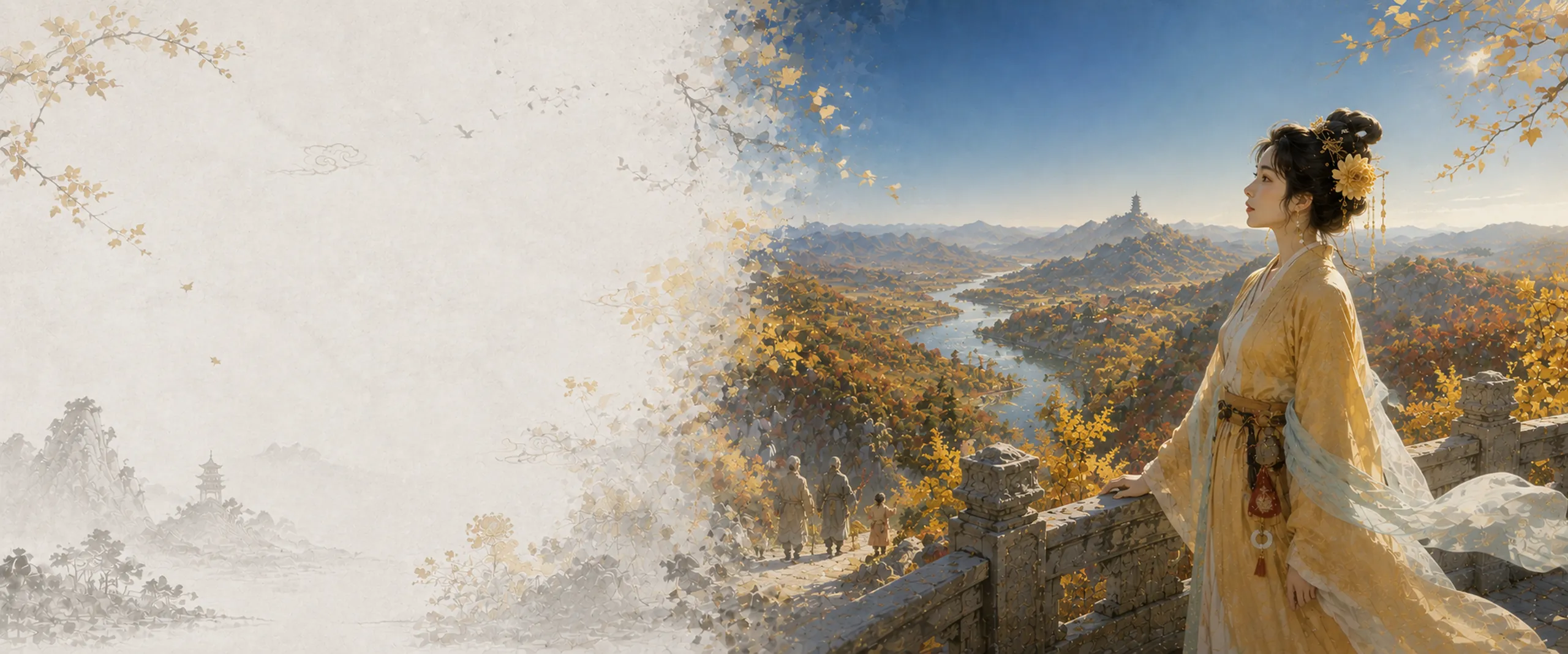
The Double Ninth Festival originated in the pre‑Qin period and was officially established as a folk festival in the Tang dynasty. At the age of seventeen, while living as a guest in Chang’an, Wang Wei wrote “Thinking of My Brothers in Shandong on…

The Double Ninth Festival has followed Chinese migration to communities around the world. In Chinese-populated areas of Southeast Asia, including Malaysia, Singapore, and Indonesia, Chinese associations organize climbing activities and banquets honoring older people during the festival, continuing the traditional virtue of “respecting and honoring the elderly.” In North America, Chinese communities in San Francisco, New York, and elsewhere hold chrysanthemum-viewing activities and tea gatherings for seniors, inviting older members of the community to celebrate the festival together.

As the influence of Chinese culture has grown, increasing numbers of people outside Chinese communities have also begun to understand the cultural meaning of the Double Ninth Festival. After China designated the festival as the “Festival for Respecting the Elderly” in 1989, its themes of respecting, caring for, and showing affection toward older people gradually became better known internationally. Centered on ascending heights to look into the distance, honoring the elderly, and praying for blessings, the Double Ninth Festival carries, in the hearts of overseas Chinese, both longing for the homeland and deep respect for older generations.

Double Ninth Festival / Global Spread
350 days until Double Ninth Festival October 8, 2027 · Lunar 九月初九

Celebrated Worldwide

Regional Highlights
01

The Americas

United States

The United States is home to one of the world’s largest Chinese communities. Although the Double Ninth Festival is not a statutory holiday, activities honoring older people have become an important annual cultural tradition in Chinese communities in New York, San Francisco, Northern California, New Jersey, and other areas with large Chinese populations. Celebrations in the United States are characterized by multiethnic participation, the combination of creative handicrafts with tradition, and sustained involvement by overseas Chinese associations.

New York: Eight consecutive years of a signature Double Ninth program honoring the elderly. On October 30, 2025, the American Fujian Houyu Association held its eighth Double Ninth Festival gala honoring the elderly in New York. Consuls Xiang Yutao and Zhang Rui from the Chinese Consulate General in New York, a representative of New York City Council Member Ma Tai, leading members of the American Fujian Houyu Association, members of the Zhang clan, guests from various sectors, and people from Houyu all attended the evening.

In his remarks, Xiang Yutao stated that respecting, honoring, caring for, and helping older people are fine traditions of the Chinese nation. People should remember the contributions of their elders, carry gratitude in their hearts, and pass the spirit of respecting the elderly from generation to generation. Zhang Zinan, president of the American Fujian Houyu Association, said that respecting and honoring older people had always been one of the association’s founding principles, and sincerely thanked the elders for their selfless contributions to their families, communities, and people-to-people cultural exchange between China and the United States.

The American Fujian Houyu Association has organized Double Ninth activities honoring older people for eight consecutive years. These events have not only promoted the traditional Chinese virtue of respecting and caring for the elderly and demonstrated the overseas Chinese community’s positive spirit of honoring the worthy, respecting older people, maintaining unity, and striving forward, but have also become an important bond connecting overseas Chinese sentiment and transmitting affection for the homeland. They have likewise developed into an influential cultural brand within New York’s overseas Chinese community.

On October 29, the ninth day of the ninth lunar month, which also marked the 1,038th anniversary of the apotheosis of Mazu, the Heavenly Holy Mother, the American Mazu Foundation solemnly held its annual Mazu Autumn Sacrifice Ceremony at the Mazu Temple in Flushing, New York, conducting rites simultaneously with Mazu temples around the world in remembrance of the Holy Mother’s benevolence. The coincidence of the Mazu autumn sacrifice with the Double Ninth Festival filled Flushing that day with both a solemn religious atmosphere and a warm spirit of respect for the elderly.

Northern California: A Double Ninth gathering for 300 seniors. On the morning of November 1, 2025, the Northern California Taiwanese Seniors Association held its “2025 Double Ninth Festival Celebration” at the Culture Center of Taipei Economic and Cultural Office in the San Francisco Bay Area. Around 300 members and community residents attended, celebrating together a festival dedicated to older people.

Wu Zhixiang, director of the San Francisco office, Zhuang Yashu, director of the San Francisco Bay Area Culture Center, and others attended and extended sincere congratulations and care to the seniors. The Northern California Taiwanese Seniors Association was founded in 1981 and has now existed for more than forty years. In addition to cultural performances and participatory singing games, the celebration offered plentiful food and prize drawings, allowing the older participants to enjoy the festival in a cheerful atmosphere.

New Jersey: A multiethnic “Make Kites to Celebrate the Double Ninth” event. On November 8, 2025, the New Jersey Cultural and Creative Exchange Promotion Association held a “Make Kites to Celebrate the Double Ninth” event at Bridgewater Library. Combining creative handicrafts with traditional festival culture, the activity attracted many local residents from different ethnic backgrounds, including grandparents, parents, and children.

Youth volunteers from Polaris introduced the origins and meaning of the Double Ninth Festival in a lively way, explaining that the ninth day of the ninth lunar month—“Double Nine” (九九重阳)—symbolizes enduring length and longevity, and that the festival is an important occasion for honoring older people and expressing gratitude toward one’s elders.

The subsequent kite workshop brought the event to its climax. President Wu Liqing specially invited a kite-making expert, who carefully demonstrated each step, from kite structure and material selection to the principles that allow a kite to fly steadily in the air, before parents and children designed their own individual kites together. After completing them, everyone tested their kites on the lawn in front of the library.

Wu Liqing said that the event hoped to use kites as a medium to transform the Double Ninth Festival from “a festival in textbooks” into “an experience in everyday life,” allowing local residents, even those from different countries and cultures, to experience Chinese culture through the process of creating kites.

Canada

Chinese communities in Canada likewise organize a wide variety of activities honoring the elderly during the Double Ninth Festival. Vancouver’s Thousand Seniors Banquet is an influential Double Ninth signature event in Canada. It invites one thousand people aged seventy and above, including not only Chinese seniors but also some older people from other ethnic groups. In addition to providing a free lunch, the event offers lively cultural performances and carefully prepared gifts, promoting the traditional virtues of reunion and respect for older people during the Double Ninth period.

Although Canada does not have a traditional Double Ninth Festival, October 1 each year is Canada’s National Seniors Day, when the government calls on the public to honor older people. The Double Ninth activities organized by Chinese communities resonate with Canada’s National Seniors Day, allowing a culture of respect for elders to find common ground within both Chinese and Canadian traditions.

Peru

On November 2, 2025, which marked the 54th anniversary of the establishment of diplomatic relations between China and Peru, a distinctive “Double Ninth Transoceanic Dialogue on Respecting the Elderly” was held simultaneously in Beijing and Lima, the capital of Peru.

In Lima, more than one hundred people attended, including representatives from the Peruvian Congress, Ministry of Health, institutions of higher education, leaders of overseas Chinese communities, and local seniors. Health products made from ginseng grown in the Changbai Mountains of Jilin were presented to local older people, conveying an Eastern health-preservation concept of “honoring the elderly with ginseng.” This was the first time Double Ninth culture had been transmitted in Latin America through a “transoceanic dialogue.”

02

Europe

Switzerland

On October 29, 2025, the traditional Chinese Double Ninth Festival, a major cultural event themed “Traditional Chinese Medicine Connects the World · The Fragrance of Ginseng Fills the Double Ninth” was held at the Palais des Nations in Geneva, Switzerland.

The event was jointly organized by the Permanent Mission of China in Geneva, China’s National Administration of Traditional Chinese Medicine, and the CPC Jilin Provincial Committee and the People’s Government of Jilin Province. It skillfully combined the Double Ninth Festival’s cultural meaning of respecting and honoring the elderly with the millennia-old wisdom of traditional Chinese health preservation, using ginseng—the “king of the hundred herbs” growing in Jilin’s Changbai Mountains—as a medium through which to present to the world Eastern ideas of caring for older people and maintaining health.

More than 300 people gathered, including permanent representatives in Geneva from over thirty countries such as France, Greece, Pakistan, Ghana, and Cameroon, senior diplomats from more than sixty countries, and representatives of international organizations.

The event featured numerous highlights. A video produced by People’s Daily Online introduced audiences to the culinary world of ginseng, where 116 innovative ginseng dishes served at a health-preservation venue drew admiration. Through an introduction to “Changbai Mountain Ginseng-Gathering Customs,” a national-level intangible cultural heritage tradition, guests learned more about the long history of ginseng.

Visitors sampled health foods including ginseng essence and honeyed ginseng slices. In the handicraft heritage area, participants made zhuyu sachets (茱萸香囊)—fragrant pouches associated with the traditional Double Ninth custom of using zhuyu for warding off harmful influences and praying for blessings. Long lines formed for traditional Chinese medicine services such as tuina, massage, and acupuncture in the health-preservation area, while demonstrations of tai chi, Baduanjin (八段锦), the traditional “Eight Brocades” exercise set, and tai chi fan routines drew repeated admiration.

When the “fragrance of ginseng” met the “Double Ninth,” this became more than a cultural event: it was a deeper form of people-to-people exchange, “using the fragrance of ginseng as a medium and respect for the elderly as a bridge.” It allowed the natural gifts of China’s Changbai Mountains and the Chinese nation’s tradition of honoring older people to shine brilliantly on the stage of the Palais des Nations.

This was the first time the Double Ninth Festival entered United Nations Headquarters, marking the formal arrival of Double Ninth culture on the stage of global dialogue among civilizations.

France

On October 29, 2025, the Qingtian Association in France solemnly held an activity in Paris dedicated to respecting and caring for the elderly. Counsellor Wan Lei and Secretary Zha Junyan from the Consular and Overseas Chinese Affairs Section of the Chinese Embassy in France attended by invitation, joining the association’s first president Yan Zhizhao, permanent honorary president Sun Xiefa, president Zhou Wei, other association members, and elderly people from Qingtian living in France in offering festival greetings.

President Zhou Wei said in his remarks: “The Double Ninth Festival is a traditional festival of the Chinese nation for respecting the elderly, honoring older people, practicing filial devotion toward one’s family, and expressing gratitude. On this day, we not only remember our relatives, but also take the opportunity to express our respect and gratitude toward the generations before us.”

The association specially prepared a “small gift for health”—electronic blood-pressure monitors—to help older people pay closer attention to their health. Zhou Wei personally presented one to the oldest attendee, 95-year-old Xu Meiyu.

Counsellor Wan Lei stated that the Double Ninth Festival, as a traditional festival of the Chinese nation, reveals a deep culture of filial piety. He emphasized that Chinese filial piety is not merely a family virtue, but also an important expression of national cohesion.

Many older attendees said that, living in a foreign country, they could feel a strong sense of familial affection, almost as if they had returned to their hometown. Yan Zhizhao, the first president of the Qingtian Association in France, reflected: “For many years, whenever the Double Ninth Festival arrives, we gather as promised. This traditional spirit of respecting and honoring the elderly is precisely the family ethos that Qingtian people have passed down from generation to generation.”

In Paris, the Double Ninth Festival also finds an interesting cultural echo: the French Catholic observance of Toussaint, All Saints’ Day, falls in early November and is also associated with visiting cemeteries and commemorating those who have passed away. Ancient customs from Europe and Asia thus unexpectedly resonate with one another at this time of year.

Portugal

On October 6, 2025, the Fifth Branch of the Lisbon Chapter of Buddha’s Light International held a grand Double Ninth Festival celebration at Fo Guang Shan Portugal, attracting more than sixty members and children from the Buddhist community. The atmosphere was warm and lively. Fo Guang Shan’s Double Ninth activities combine the Buddhist spirit of compassion with the Chinese tradition of respecting the elderly, revealing a distinctive fusion of faith and culture.

Bulgaria

On October 29, 2025, during the Double Ninth Festival, Juancheng County in Shandong Province and Plovdiv University in Bulgaria jointly organized an exchange event themed “Warmth in Golden Autumn · Love at the Double Ninth.”

Through cultural introductions and interactive experiences, the event vividly explained the cultural foundations and folk traditions embodied in the festival, while comparing the Chinese nation’s virtues of respecting older people, honoring the elderly, esteeming virtue, and aspiring toward goodness with local Bulgarian customs.

Geng Xiaohan, a student from Juancheng studying abroad, first introduced Bulgarian students to the long history and cultural meaning of the Double Ninth Festival. The subsequent interactive session brought the event to a climax: foreign participants personally made Double Ninth floral hair ornaments (重阳簪花) symbolizing auspiciousness, tasted fragrant chrysanthemum tea, and wrote their impressions and festival wishes on specially designed postcards.

Local student Мариявасирева said: “This is such a novel and heartwarming experience! The postcard I wrote is going to my grandparents. Although we do not celebrate the Double Ninth Festival, I want to send them these beautiful wishes from the East.”

Another participant, веселинпетков, said that connecting chrysanthemum tea with a festival filled with respect was “very poetic.”

Serbia

During the 2025 Double Ninth Festival, the Confucius Institute at the University of Novi Sad in Serbia organized a “Double Ninth Elegant Gathering.” Through activities including ascending heights to admire the autumn scenery, drinking chrysanthemum tea, and reciting Double Ninth poetry, the event introduced local teachers and students to Double Ninth culture. It not only deepened Serbian participants’ understanding of traditional Chinese festivals, but also injected new vitality into people-to-people exchange between China and Serbia.

03

Asia

Asia is the region where Double Ninth culture has spread most deeply. The festival is celebrated not only by Chinese communities: Japan, South Korea, Vietnam, Singapore, and other countries have also formed distinctive Double Ninth traditions of their own.

Southeast Asia

Chinese communities in Southeast Asia mainly preserve two Double Ninth traditions: ancestor worship, or autumn sacrifice, and ascending heights.

Singapore: The “Autumn Sacrifice” tradition of clan associations. In Singapore, some clan associations still preserve the Double Ninth custom of worshipping ancestors, known as the “Autumn Sacrifice” (秋祭). Unlike the comprehensive grave-sweeping associated with Qingming, Double Ninth observances in Singapore are more often collective rituals organized by clan and native-place associations. On the festival itself, these associations hold autumn-sacrifice ceremonies to honor distinguished figures of earlier generations and deceased predecessors within their own organizations.

The Double Ninth Festival is not a public holiday in Singapore, but its cultural traditions continue within clan associations and Chinese families.

Malaysia: More than one hundred people “coincidentally” climb a mountain. On October 29, 2025, the ninth day of the ninth lunar month, more than one hundred people went hiking on Mount Pulai in Kulai, Johor, Malaysia. Interestingly, most of the hikers did not know that the day was the Double Ninth Festival and were simply carrying out their usual leisure activities.

This phenomenon of “observing the festival without knowing it is the festival” illustrates precisely how the Double Ninth custom of “ascending heights and looking into the distance” has moved beyond conscious festival transmission and become part of everyday life. On the ninth day of the ninth month, people naturally make their way toward the mountains and countryside, climbing and enjoying the outdoors.

As local media put it: “The Double Ninth Festival is a day for ascending heights and looking into the distance, well suited to hiking and outings.”

Japan

The Double Ninth Festival was introduced from China to Japan during the Heian period. Known as Kiku no Sekku (菊の節句), the Chrysanthemum Festival, it is one of Japan’s five seasonal festivals. During the Heian court period, aristocrats and members of the nobility held chrysanthemum-viewing banquets at the palace every year on the ninth day of the ninth lunar month.

The Japanese developed a distinctive custom for the Double Ninth Festival: on the evening before the festival, pieces of cotton cloth were placed over chrysanthemums, and after becoming damp with dew by the next day, the cloth was used to wipe the body in a prayer for longevity.

Other Japanese Double Ninth customs include eating eggplant, eating chestnut rice, and making offerings to chrysanthemums. Similar to the Chinese customs of viewing chrysanthemums and drinking chrysanthemum wine, Japanese Double Ninth culture likewise takes the chrysanthemum as its central symbol, with the flower regarded as an emblem of longevity.

South Korea

In ancient Korea, the Double Ninth Festival was known as “Junggu” or “Double Nine” (重九). As early as the Silla period, there was a custom of ascending towers and composing poetry on this day. By the Goryeo dynasty, banquets held on the ninth day of the ninth month had even developed into a custom with a state character, with court ministers celebrating together.

Unlike China, where chrysanthemum viewing is a major activity, Korean Double Ninth customs mainly include eating flower pancakes and flower dishes, playing flower-pancake games, and flying kites.

In terms of food, in addition to flower cakes and chrysanthemum wine, Koreans also eat distinctive foods such as chrysanthemum jeon, pancakes decorated with chrysanthemums, and chestnut cakes. Chrysanthemum jeon is made by placing chrysanthemum flowers onto prepared glutinous-rice dough and pan-frying it.

Modern Koreans primarily celebrate the Double Ninth Festival by eating, drinking, and enjoying leisure activities—eating chrysanthemum jeon and chestnut cakes, drinking chrysanthemum wine, and gathering in groups to hike outdoors. Because of local geography, Seoul’s Namsan and Bukhansan are among the principal climbing destinations.

Vietnam

Ahead of the 2025 Double Ninth Festival, on October 26, the Nanning Saturday Charity Volunteer Association and the Guangxi Enterprises Federation of the Vietnam Chinese General Chamber of Commerce jointly organized the “Love on Saturday” 2025 International Volunteer Service for Respecting the Elderly at the Double Ninth Festival on Phúc Tân Street in Hồng Hà Ward, Hanoi.

Numerous Chinese and Vietnamese volunteers responded actively, bringing warmth and care to several elderly residents facing difficulties.

The activity took “respect one’s own elderly and extend that respect to the elderly of others” as its theme, seeking to carry the Chinese Double Ninth tradition of honoring older people onto the international stage and promote people-to-people friendship between China and Vietnam.

Volunteers bent down to listen and spoke warmly with elderly women. One local senior said that the activity provided not only material assistance, but also emotional comfort, allowing her to experience sincere affection and warmth that transcended national borders.

04

Oceania

Australia

Chinese communities in Australia display a strong atmosphere of respect for older people during the Double Ninth Festival, with native-place associations and community organizations holding a wide variety of activities honoring seniors.

Sydney: A family activity honoring the elderly organized by the Jinjiang Association. On October 26, 2025, as the Double Ninth Festival approached, the Australian Jinjiang Association organized a heartwarming activity at the Canada Bay Club in Sydney to honor older people, attended by nearly one hundred respected elderly members of the Jinjiang community and their families.

The program was rich and varied, including traditional Cantonese dim sum, talks centered on care and well-being, entertaining games, flower-arranging experiences, and red envelopes and gifts specially prepared for participants aged sixty-five and above. Silver hair and smiling faces came together to form a moving scene, while affection for the homeland seemed to flow gently through the air of a foreign country.

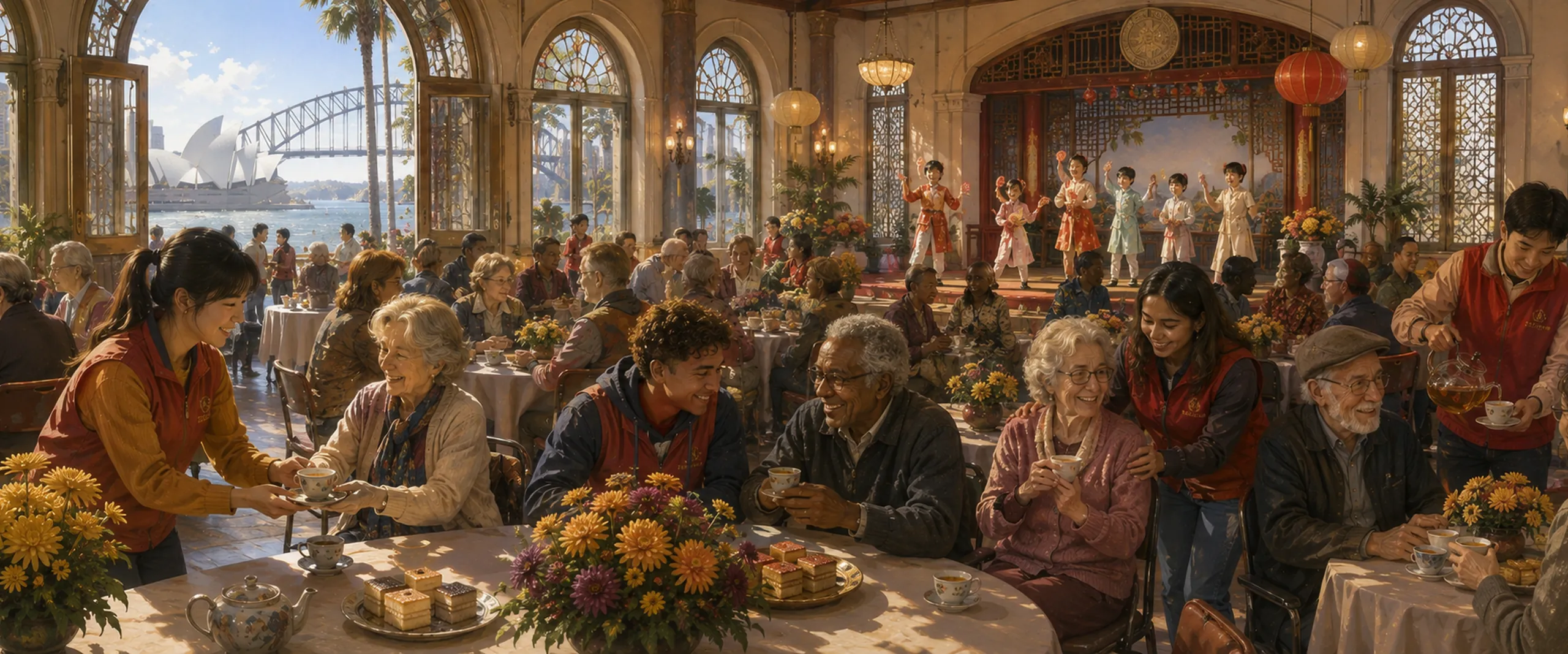
Melbourne: A multicultural Double Ninth celebration. On November 9, 2025, a multicultural Double Ninth celebration organized by Melbourne’s Multicultural Chuxiangqing Club and supported by the Australian Chinese Federation, the Hubei Association of Australia, and Hubei Chamber of Commerce president Ji Jianmin was held in Melbourne.

Nearly 200 older people sat around tables, drinking tea, enjoying fresh food, chatting, and watching performances. On stage, seniors of different skin colors and speaking different languages took turns performing. Their voices were strong and their dancing graceful: they sang and danced, practiced martial-arts forms, and wielded swords, as though the passing years had never taken away the warmth of youth.

In the Southern Hemisphere, far from their homeland, this gathering carried particular significance. It was not merely a festive celebration, but something closer to emotional support—allowing time to slow down, replacing loneliness and isolation with laughter and conversation, and allowing the tradition of “respecting and caring for the elderly” to continue in a second homeland as one of its most beautiful sights.

Melbourne: The Beijing Association honors the elderly at the Double Ninth. On the evening of October 18, 2025, the Melbourne Beijing Association successfully held a Double Ninth event themed “Warmth in Melbourne · Sharing Dreams of Beijing Together.” The activity sought to allow people from Beijing living in Australia to experience the warmth of home and the roots of their culture during the festival.

Brisbane: The Hakka Association combines Mid-Autumn and Double Ninth respect for the elderly. On the morning of October 5, the Queensland Hakka Association held its “2025 General Meeting and Celebration of the Double Ninth Festival Honoring the Elderly and the Mid-Autumn Festival” at Xin Zhu Restaurant in southern Brisbane.

Because the Mid-Autumn and Double Ninth festivals fall close together, the Queensland Hakka Association combined the two celebrations, taking “reunion” and “respect for the elderly” as their themes. In doing so, it demonstrated the flexibility with which overseas Chinese communities integrate traditional festivals.

New Zealand

Chinese communities in New Zealand likewise organize activities honoring older people during the Double Ninth Festival. Native-place associations and cultural centers in different regions use tea gatherings, cultural performances, and visits to older community members to carry the festival’s spirit of respect for elders into the islands of the South Pacific.

As Li Fen, chair of the New Zealand Huaxia Multicultural Arts Exchange Center, has said, overseas Chinese are witnessing outstanding traditional Chinese culture take root in foreign lands【此前中秋节内容】—and the same is true of the Double Ninth Festival.

05

Africa

The spread of the Double Ninth Festival in Africa is still at an early stage. Its culture of respect for older people is being sown across the continent primarily through Confucius Institutes, Chinese-funded enterprises, and Chinese medical teams assisting Africa.

“Sharing This Same Moment Across the World · Double Ninth Affection Overseas”: Activities honoring older people at Chinese enterprises in Africa. As the 2025 Double Ninth Festival approached, the Overseas Business Division of CCCC Second Highway Engineering Bureau planned a festival program themed “天涯共此时 海外重阳情”, integrating cultural transmission with warm personal care for its overseas employees.

The activities covered project sites in several African countries and carried the Double Ninth spirit of respecting older people to employees working on the front lines of Belt and Road construction overseas.

Double Ninth cultural classes at Confucius Institutes. Confucius Institutes in several African countries opened special classes on Double Ninth culture during the festival, introducing African students to the festival’s origins, the customs of ascending heights and viewing chrysanthemums, and traditions of respecting and caring for older people.

In Kenya, South Africa, Egypt, and other countries, Chinese and local teachers and students at Confucius Institutes made zhuyu sachets, drank chrysanthemum tea, and recited Double Ninth poetry, allowing African participants to experience the warmth of Chinese Double Ninth culture.

Double Ninth in the Cloud

In-Depth Feature

With the development of digital technology, the Double Ninth Festival has generated entirely new forms of celebration among overseas Chinese communities—“Double Ninth in the Cloud.” This is both a product of technological innovation and a form of cultural adaptation by overseas Chinese facing geographic separation.

Cloud-based climbing: Lighting up a climbing map through daily step counts. During the 2025 Double Ninth Festival, some communities launched innovative “cloud climbing” activities. Daily walking step counts were automatically recorded and used to illuminate ten locations on a climbing map, with each unlocked point triggering a random interactive game.

By combining the traditional custom of ascending heights with modern concepts of health and digital technology, this approach allowed overseas Chinese who could not physically climb mountains to “ascend in the cloud” while living in the city, celebrating the Double Ninth Festival in a health-conscious way.

Online poetry chains and knowledge quizzes. During the 2025 Double Ninth Festival, several universities and institutions organized online activities. Poetry-chain sessions transformed participants into poetry specialists competing energetically in the digital space, demonstrating their knowledge and experiencing the appeal of Double Ninth poetry.

Knowledge quizzes covered the festival’s history, cultural meaning, and other topics, deepening participants’ understanding of the festival. The School of Languages and Culture at Northwest A&F University likewise organized an online Double Ninth cultural knowledge quiz, enabling more people to understand and become familiar with the festival’s cultural significance.

Digital presenters and a cloud-based cultural feast. On October 29, 2025, the Heze Digital Publicity Group held a livestream themed “Talking Health and Well-Being on the Double Ninth” in Luxi New Area. A digital presenter named “Xiaojie,” created using technology replicating a real person, made an eye-catching appearance and presented to more than 50,000 online viewers a cultural program combining the foundations of traditional folk custom with modern humanistic care.

Video calls: Family affection crossing mountains and seas. In the contemporary era, the internet has become an important medium for online Double Ninth activities. Many families use video calls to allow children living abroad and their elderly parents to “reunite in the cloud.”

For many overseas Chinese, the Double Ninth Festival may not make it possible to return home and accompany their parents in person, but a video call or a recorded message of good wishes can still convey longing for and gratitude toward older family members.

Mutual Learning Among Civilizations

In-Depth Feature

The Double Ninth Festival has gradually journeyed from a traditional festival of the Chinese nation toward the world. Its path differs from those of the Spring Festival, Lantern Festival, Qingming, Dragon Boat Festival, and Mid-Autumn Festival: if the Spring Festival takes “reunion” as its emotional core, the Lantern Festival “lantern lights” as its visual symbol, Qingming “remembrance” as its spiritual core, the Dragon Boat Festival “dragon boat racing” as its cultural emblem, and the Mid-Autumn Festival the “bright moon” as its greatest common denominator, then the Double Ninth Festival takes “respect for the elderly” as its universal value.

The “fragrance of ginseng” at the Palais des Nations: Double Ninth culture reaches the global stage. On October 29, 2025, the event “Traditional Chinese Medicine Connects the World · The Fragrance of Ginseng Fills the Double Ninth” was held at the Palais des Nations. This was the first time the Double Ninth Festival entered United Nations Headquarters.

More than 300 participants attended, including representatives from over thirty countries, senior diplomats from more than sixty countries, and representatives of international organizations. From zhuyu sachets to tai chi demonstrations, from ginseng tasting to traditional Chinese tuina, Double Ninth culture unfolded on the United Nations stage with “respect for older people” and “health” as its two wings, revealing the radiance of Eastern culture.

Respecting the elderly: A universal value across cultures. The fundamental reason the Double Ninth Festival has been able to spread overseas so smoothly is that respecting older people is a moral principle shared by humanity.

In France, the Qingtian Association has organized Double Ninth activities honoring older people for many consecutive years. In Bulgaria, local students sent postcards to their grandparents, carrying beautiful wishes from the East. In Australia, nearly two hundred seniors of different ethnic backgrounds sat together drinking tea, singing, and dancing. In New Jersey, families from different ethnic groups made kites together to celebrate the festival.

These scenes demonstrate that a culture of respect for older people can be understood around the world without translation.

As one older participant at a Double Ninth event organized by the Qingtian Association in France said: “In a foreign country, having one’s family watching over you and companions from one’s hometown beside you is the most precious kind of later life.”

And as a Bulgarian student said, although they do not celebrate the Double Ninth Festival, they still “wanted to send these beautiful wishes from the East” to their own grandparents.

The spirit of respecting and honoring older people carried by the Double Ninth Festival is crossing borders and warming hearts.

Cultural dialogue with Western festivals for older people. The Double Ninth Festival resonates deeply in spirit with Western festivals devoted to seniors. France has Grandmothers’ Day, held on the first Sunday in March, when museums across the country open free of charge to grandmothers; Canada has National Seniors Day on October 1; Japan has Respect for the Aged Day.

Like the Double Ninth Festival, these occasions all embody human gratitude toward and care for older people.

When the Double Ninth Festival entered a Bulgarian campus, organizers deliberately compared the Chinese virtues of respecting and honoring older people with local Bulgarian customs. Through this form of cross-cultural dialogue, the Double Ninth Festival is becoming not only a festival of Chinese communities, but also a window through which the world can understand the Chinese cultural spirit of respecting the elderly and caring for one’s family.

Closing Note

Lingering Notes

The global spread of the Double Ninth Festival traces a long journey from the ancient mountaintops of China to the world’s five continents. Its inclusion in China’s national list of intangible cultural heritage in 2006 marked its transition from a folk festival into the sphere of national protection; its first entry into the Palais des Nations in 2025, meanwhile, marked the formal arrival of Double Ninth culture on the stage of global dialogue among civilizations.

Unlike the Spring Festival, with its farewell to the old and welcome of the new; the Lantern Festival, radiant with lights; Qingming, with its reverent remembrance of earlier generations; the Dragon Boat Festival, with its racing boats; or the Mid-Autumn Festival, with its bright moon and reunion, the overseas spread of the Double Ninth Festival takes “respect for the elderly” as its warmest cultural core, while “ascending heights” and “health” serve as vehicles for universal values.

The human heart is the same in respecting older people; the human wish is the same in seeking health and longevity. Wherever one may be, gratitude toward and care for older generations are shared human moral principles; whatever one’s culture, the pursuit of health and long life is a common human aspiration.

Across the Americas, from New York’s eighth Double Ninth gala honoring the elderly to the gathering of 300 seniors in Northern California, from New Jersey’s multiethnic “Make Kites to Celebrate the Double Ninth” event to the autumn-sacrifice ceremony at New York’s Mazu Temple, the festival’s spirit of respect for older people warms the North American continent.

Across Europe, from the “fragrance of ginseng” at the Palais des Nations to the warmth of the Qingtian Association’s activities honoring seniors in Paris, from the Double Ninth celebration at Fo Guang Shan in Portugal to the aroma of chrysanthemum tea on a Bulgarian campus, the fragrance of the Double Ninth drifts across the European landscape.

Across Asia, from the autumn-sacrifice traditions of Singapore’s clan associations to the hundred-plus hikers in Malaysia, from chrysanthemum-viewing banquets at the Japanese court to climbing and poetry on Seoul’s Namsan, Double Ninth traditions display distinctive forms across neighboring countries.

Across Oceania, from the Jinjiang Association’s family activity honoring seniors in Sydney to Melbourne’s multicultural Double Ninth celebration, the warmth of the festival reaches the Southern Hemisphere.

In Africa, the seeds of Double Ninth culture are being sown across the vast continent through Confucius Institutes and Chinese-funded enterprises.

More moving still is the moment when “Double Ninth in the Cloud” allows overseas Chinese and elderly relatives in their hometowns to “reunite in the cloud” in digital space; when “cloud climbing” reinterprets an ancient tradition of ascending heights through modern technology; when Double Ninth culture flies into the Palais des Nations on the twin wings of “respect for the elderly” and “health.”

In these moments, the Chinese nation offers, in its own way, its most heartfelt expression of “old age” and “filial piety,” “tradition” and “innovation.”

The chrysanthemums of the Double Ninth Festival are blooming in every corner of the world.

—–

Continue exploring Double Ninth Festival culture

Readers’ Comments

Calendar and traditional culture enthusiasts from around the world, sharing the same moon.

Sign in or register to join the conversation. Your comment account is created automatically the first time you use a connected account.