

Yak Yogurt
Drinks & Fine WinesBasic Information
- Category: Dairy product / fermented drink
- Popular regions: Throughout Tibet, especially Lhasa
- Main ingredient: Yak milk
- Other names: Daxue, Exue, Tibetan yogurt, plateau yogurt
Historical Origins
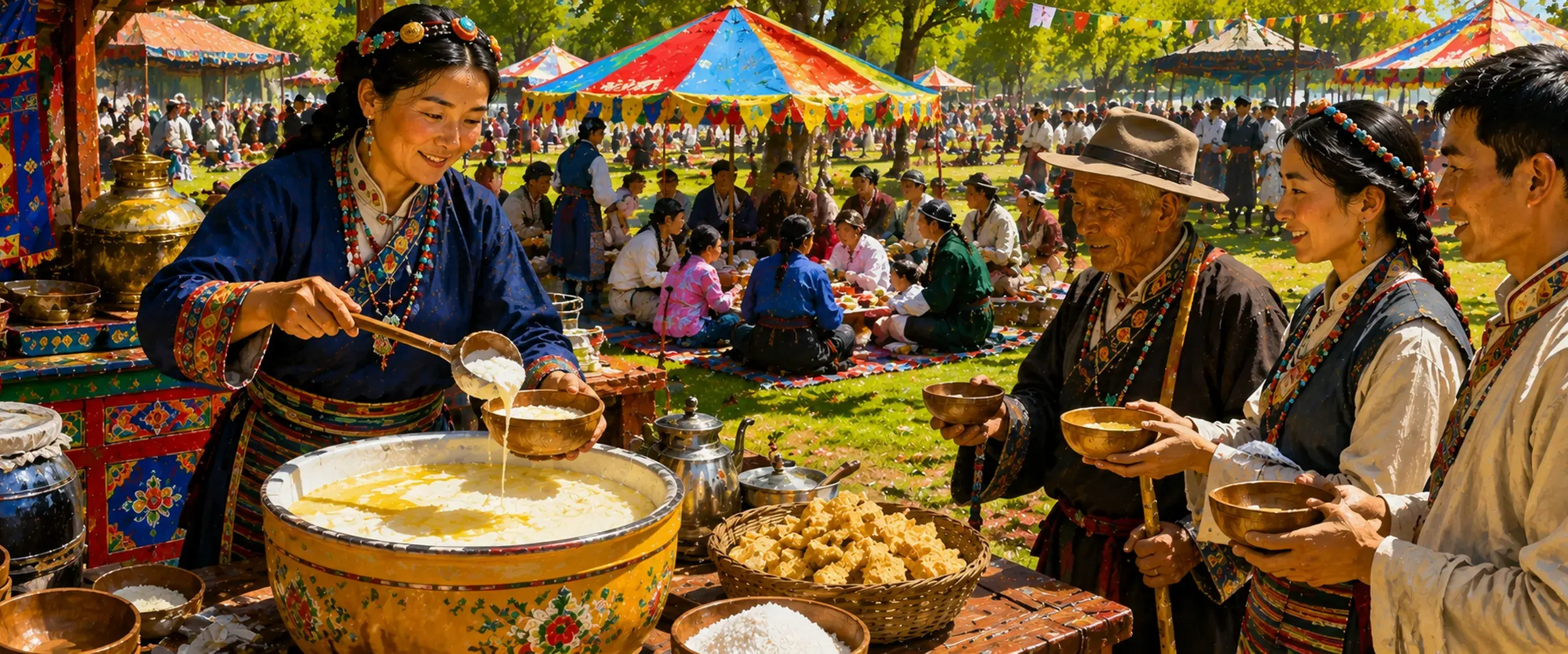
Yogurt is unquestionably the “protagonist” of the Shoton Festival. In Tibetan, “Shoton” means “eating yogurt”; literally, the Shoton Festival is a festival for eating yogurt. A fondness for yogurt has been one of the ancient living customs of the Tibetan people who have inhabited the snowy plateau for generations. As an indispensable food and offering in Tibetan regions, yak yogurt has a history of more than a thousand years.
The yogurt tradition of the Shoton Festival is closely connected with the Tibetan Buddhist system of “summer retreat.” Every year, from the fifteenth to the thirtieth day of the sixth month of the Tibetan calendar, a period of restriction was observed. Lamas in monasteries large and small were not permitted to go outside, so as to avoid accidentally stepping on and killing small insects. Only after the restrictions were lifted on the thirtieth day of the sixth month could they descend from the mountains. As the lamas came down, ordinary people brought out yogurt and offered it to them. This custom of sustaining monks with yogurt is among the oldest cultural genes of the Shoton Festival.
Another folk legend is also associated with the festival’s yogurt tradition. In the mid-11th century, Atiśa, a master of the Later Dissemination of Tibetan Buddhism, traveled from India to Tibet to spread Buddhism. In his later years, he settled on the plains of Nyethang, twenty kilometers southwest of Lhasa. He was very fond of yogurt. During the summer retreat, local people brought yogurt to him, which delighted him greatly. Out of reverence, people began to imitate this practice, and the custom of bringing yogurt to monks during summer continued thereafter. Regardless of which account is followed, “yogurt” has always remained the central cultural symbol of the Shoton Festival.
Cultural Meaning
Tibetan yogurt is divided into two types. One is called “Daxue,” made from milk after the butter has been extracted. The other is made from milk from which the butter has not been extracted and is called “Exue” in Tibetan. Because Daxue is produced from the buttermilk remaining after butter extraction, its flavor is relatively light. Exue, made from full-fat yak milk, has a richer and more mellow taste.
The traditional method of making yogurt involves pouring yak milk into a smooth-walled wooden bucket, blending it, and allowing it to ferment. The fermentation culture comes from the wooden bucket itself—the bucket should not be scrubbed too clean, so that the culture remains for the next batch. This method of “natural inoculation,” passed down from generation to generation, is the source of the distinctive flavor of Tibetan yogurt. Unlike many yogurts from other parts of China, Tibetan yogurt is made extremely thick and must be eaten with a spoon. A little white sugar is sprinkled on top. Because the yogurt is cold and dense, the sugar does not dissolve immediately, so every mouthful has a slight crunchy sound. This is a distinctive part of the experience of eating plateau yogurt.
Anyone who has tasted local Tibetan yak yogurt is likely to remember its flavor. Served in a refined porcelain bowl or wooden bowl, it is as white as snow. Gently stirred with a spoon, it reveals a dense, creamy texture. A yellow, firm layer of milk skin containing cream forms on the surface. Once the skin is lifted away, the yogurt beneath is soft, sticky, and thick—similar in consistency to jelly—and as white as snow, almost like doufunao. It is intensely fragrant, rich, sweet and sour, cool and refreshing. It may be served with fruit pieces, honey, ginseng fruit, roasted barley puffs, and some people even pair it with chili sauce, creating yet another distinctive flavor. In each mouthful, sourness and sweetness accompany one another, the texture is delicate and silky, and the sensation is cool and refreshing.
Yak yogurt carries multiple layers of cultural meaning. First, “honoring the sacred through purity.” The “whiteness” of yogurt corresponds with the noble symbolism of white in Tibetan culture. Offering yogurt to monks means presenting the purest food to the most honored practitioners. Second, “gratitude toward nature.” Every cup of yogurt is a generous return from nature for people’s hard work within a healthy ecological system. Third, “festival symbol.” The Shoton Festival itself is named after yogurt, making yogurt its most recognizable cultural symbol. Fourth, “a gift of the plateau.” During the festival, people offer rich yak yogurt whose sweetness carries within it the gifts of the high plateau.
During the Shoton Festival, fresh yogurt is sold in Tibetan restaurants throughout Lhasa, and some restaurants even create special yogurt banquets. Yogurt shops on Jokhang’s nearby Ramoche Temple Street are particularly popular with local residents, while yogurt shops at the foot of the Potala Palace enjoy an excellent reputation among tourists because of their immense online popularity. Yogurt-eating competitions have also become one of the distinctive festival activities during Shoton.
Readers’ Comments
Calendar and traditional culture enthusiasts from around the world, sharing the same moon.
Sign in or register to join the conversation. Your comment account is created automatically the first time you use a connected account.
No comments yet
Share your thoughts with readers around the world.