What Is “Duoluohe”?
“Duoluohe” is the most representative collective women’s song-and-dance form performed during the Torch Festival among the Yi people of Liangshan, and one of the brightest jewels of Torch Festival folk culture.
In the Yi language, it is also called “Duolehe” or “Duhuo,” meaning “a song in praise of fire.” “Duo” means fire and “he” means praise, so “Duoluohe” may be understood as a song-and-dance performance celebrating fire or the torch.
It is found primarily in Butuo County, Puge County, Ningnan County, and other parts of the Liangshan Yi Autonomous Prefecture in Sichuan Province. In 2007, “Duoluohe” was included in Sichuan Province’s provincial-level intangible cultural heritage list.
The origins of “Duoluohe” can be traced back to the hunting era. It was originally a dance performed by women to welcome men returning from the hunt. After society entered the agricultural age, it became integrated with the Torch Festival and continued to be passed down.
From mixed-gender festive singing to a women’s collective song-and-dance tradition, “Duoluohe” has survived the passage of centuries. Its original cultural meanings and distinctive artistic forms remain deeply worthy of study.
Butuo County, celebrated as the “Home of the Torch Festival,” offers one of the clearest demonstrations of the extraordinary wisdom of the Yi people in preserving and transmitting the Duoluohe tradition.
Performance Form
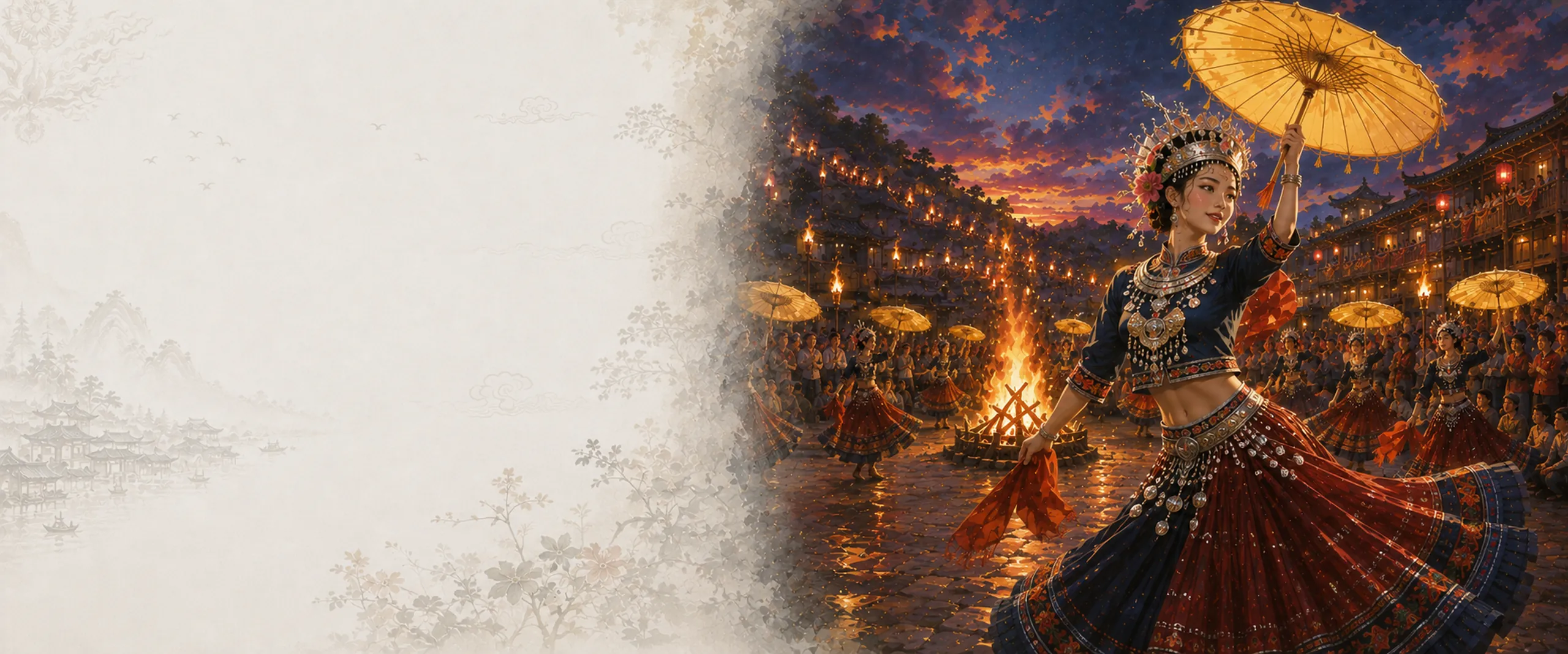
The second day of the Torch Festival marks the climax of the celebration. Yi women dress in full festive costume, hold yellow umbrellas, and form a circle. Led by a lead singer known as the “Hemo,” the women improvise verses in a call-and-response style.
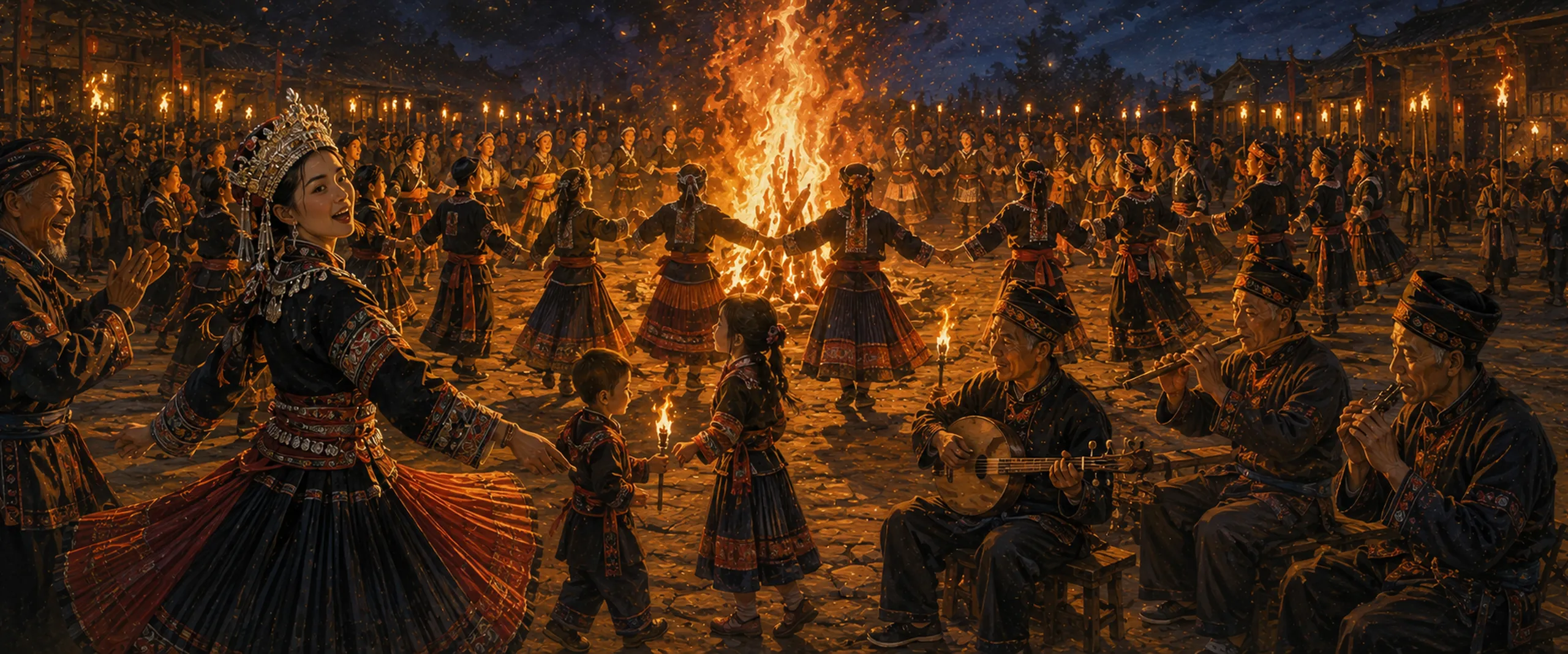
Participants form a circle, holding hands or linking themselves with headscarves or triangular bags. Carrying yellow oilcloth umbrellas, they take delicate, closely spaced dance steps while singing the traditional “Duoluohe” repertoire.
During the performance, dancers lower their heads slightly, move with light steps, and hum the moving songs of the local Yi people while singing and dancing at the same time.
Dozens of women in Yi dress appear slowly beneath yellow oilcloth umbrellas, singing graceful melodies. The umbrellas turn gently, silver ornaments shimmer, and the spectacle is extraordinarily striking.
Large-scale Duolehe performances involving thousands of participants have been staged repeatedly in places such as Puge and Butuo. At the opening ceremony of the 2026 Liangshan Yi Torch Festival, 600 Yi women performed the intangible cultural heritage program 《朵乐荷》, presenting this ancient art form before a vast audience.
The vocal style of “Duoluohe” preserves the archaic unity of poetry, song, and dance, with a rich variety of melodies. The Puge Duolehe troupe once took part in an international intangible cultural heritage festival and won a gold award.
Classic Lyrics
The lyrics of “Duoluohe” frequently employ analogical and evocative imagery, and their themes include Yi history, mythology, customs, and everyday life. More than ten melodic forms are still preserved today.
Among the classic verses that continue to be sung are the following:
《七月的祈祷》
“朵洛荷,点起火把来哟,朵洛荷!
草生原野中啊,荞叶绿青青,朵洛荷!
害虫要远离啊,荞花花金灿灿,朵洛荷。
看那滩头石头亮光光啊,洪水走河道,朵洛荷!
朵洛荷!朵洛荷!年年都丰收啊,朵洛荷!”
“朵洛荷,点起火把来啊,灾荒要远去,朵洛荷!
朵洛荷!举起火把来啊,饥饿要远离,朵洛荷!
朵洛荷!舞起火把来啊,瘟疫不要作,朵洛荷!
朵洛荷,岁岁都平安啊,朵洛荷!”
“朵洛荷,不灭的火把举起来,朵洛荷。
朵洛荷,欢乐的火把舞起来,朵洛荷!
朵洛荷,熊熊的火把燃夜空,朵洛荷!”
《火把欢歌》
“(合)朵洛荷,朵洛荷……
(女)太阳点燃天上的火把,
(男)彝家点燃人间的火把。
(女)星星点燃夜空的火把,
(男)我们点燃心中的火把。”
“火把照亮百褶裙,火把照亮察尔瓦!
火把是天边最美的云霞,火把是世上最美的鲜花!
火把是彝人心中的灯塔,火把是生命灿烂的光华!”
A Duoluohe performance is generally divided into seven or eight sections and uses evocative comparison and imagery to sing of buckwheat, crops, pests, harvests, peace, and other themes.
Expressions such as “荞叶绿青青” and “荞花花金灿灿” convey prayers for abundant harvests. “害虫要远离”, “灾荒要远去”, “饥饿要远离”, and “瘟疫不要作” call for the expulsion of disaster.
These are precisely poetic expressions of the Torch Festival’s core functions: illuminating the year and praying for prosperity, driving away insects, and protecting the crops.
Lines such as “不灭的火把举起来”, “欢乐的火把舞起来”, and “熊熊的火把燃夜空” are among the most passionate celebrations of the festival’s spirit of communal revelry.
Readers’ Comments
Calendar and traditional culture enthusiasts from around the world, sharing the same moon.
Sign in or register to join the conversation. Your comment account is created automatically the first time you use a connected account.
No comments yet
Share your thoughts with readers around the world.