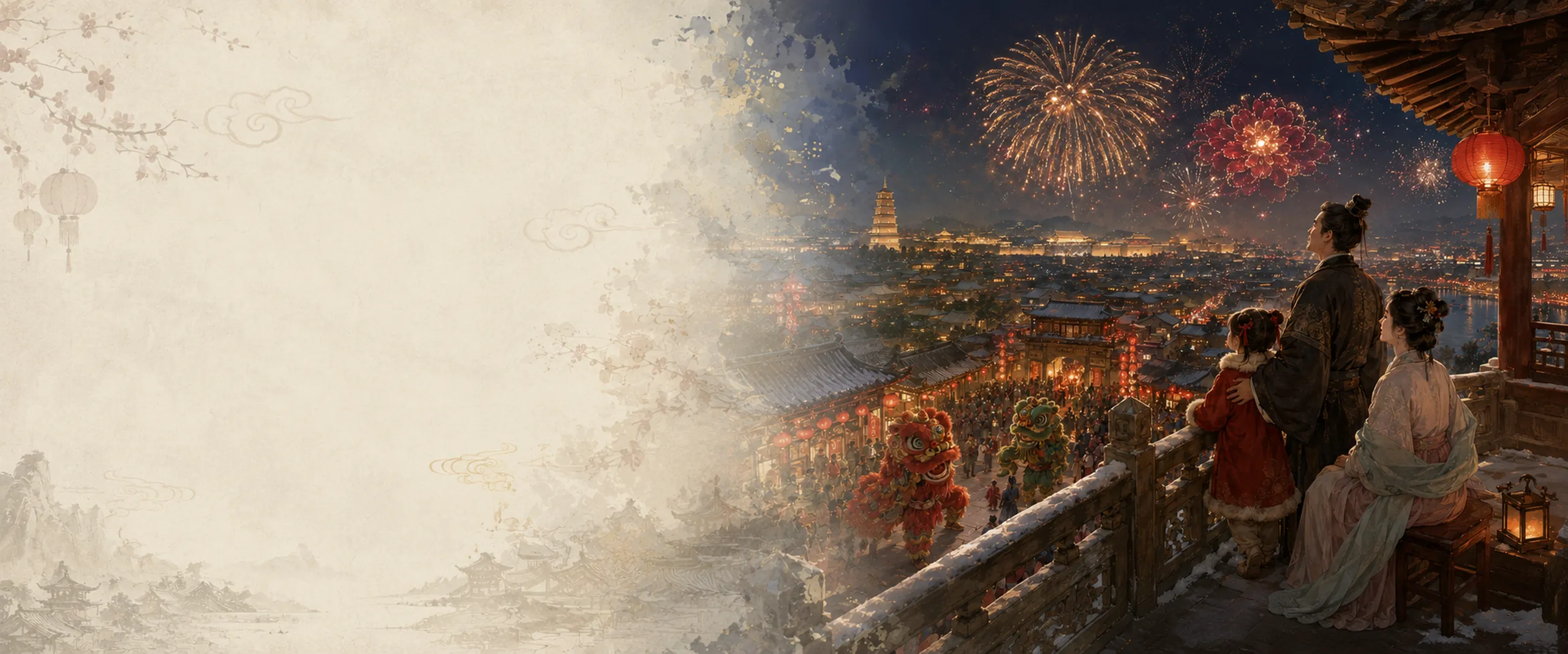
The Spring Festival is China’s grandest traditional festival and one of its richest in cultural meaning. It is also a shared spiritual bond for Chinese communities worldwide. As Chinese culture has reached a broader global audience, the Spring Festival has long since crossed national borders—from Vietnam, South Korea, Singapore, and Malaysia in Asia, to the United States and Canada in North America, the United Kingdom and France in Europe, and Australia, South Africa, and many other places. It has become a cultural festival celebrated in numerous countries. Suriname, Panama, and several other countries have even designated it an official public holiday. In 2026, the Spring Festival falls on February 17, the first day of the first lunar month. From late January to early March, colorful celebrations are held around the world, allowing visitors to experience the atmosphere of the Chinese New Year without traveling all the way to China.
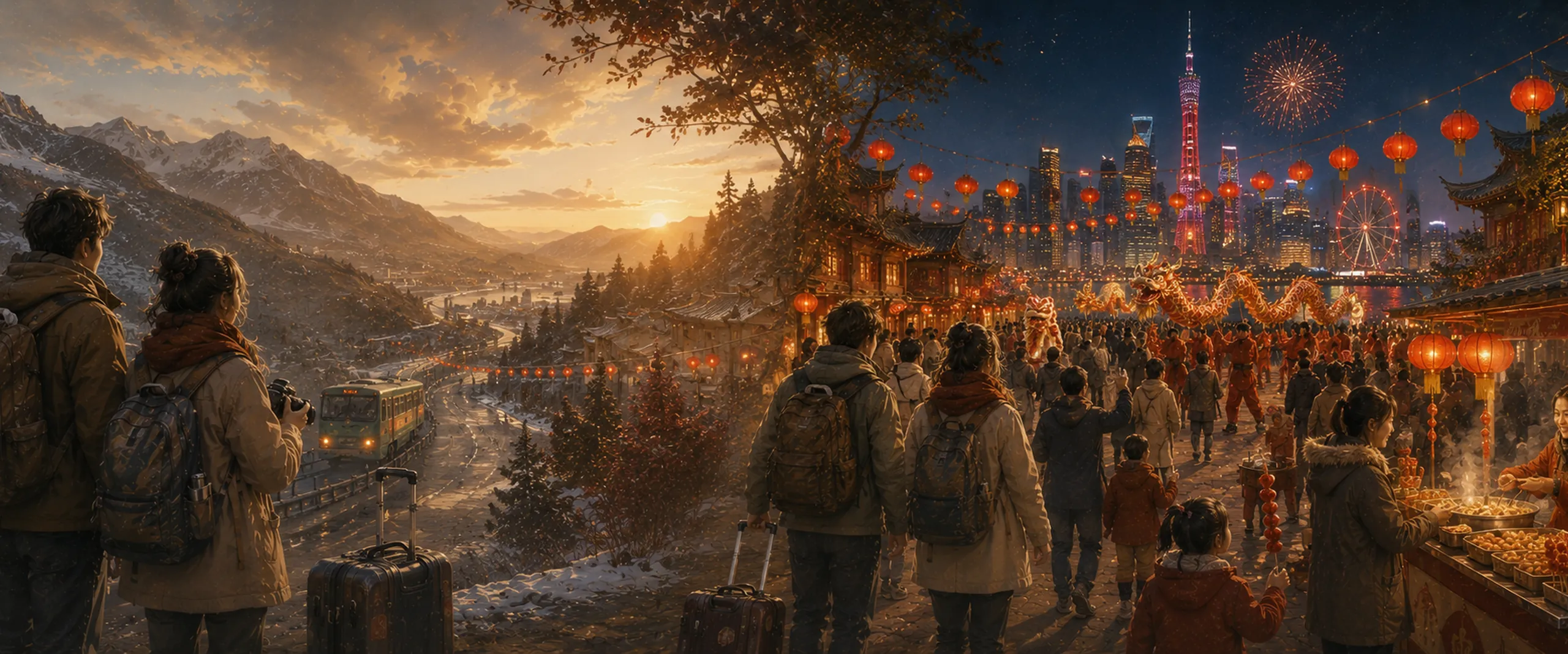
Pre-Trip Preparation:
### Adapting to the Climate
From mid- to late February, climate conditions vary significantly across China:
| Region | Temperature Range | Climate Characteristics | Clothing Recommendations |
|---|---|---|---|
| North China (Beijing, Xi’an) | -5°C to 5°C | Cold and dry, with frequent wind and dust | Down jacket, thermal underwear, scarf, gloves, face mask |
| East China (Shanghai, Hangzhou) | 0°C to 10°C | Damp cold; the perceived temperature is often lower | Down jacket, thermal underwear, waterproof outerwear |
| South China (Guangzhou, Shenzhen) | 8°C to 18°C | Mild, with occasional rain | Lightweight down jacket or thick coat; bring rain gear |
| Southwest China (Chengdu, Chongqing) | 3°C to 12°C | Chilly and humid, often foggy | Thick coat, thermal underwear, rain gear |
| Northeast China (Harbin, Changchun) | -20°C to -8°C | Severe cold, with snow and ice | Extreme-cold-weather down jacket, snow boots, and full heavy thermal clothing |
General Advice: Indoor spaces in northern China are generally heated. Layered clothing—lighter layers inside and heavier layers outside—is recommended so you can adjust easily when moving between indoor and outdoor environments.
### Travel Insurance
It is strongly recommended to purchase travel insurance covering the following:
* Accidental injury and medical treatment for acute illness, including outpatient care
* Loss of or damage to personal belongings
* Travel delays or cancellations, which are especially common for flights and trains during the Spring Festival travel rush
### Currency and Payment
* Currency: Renminbi (CNY).
* Cash: Cash is often more reliable at temple fairs, markets, and similar venues. Carrying RMB 200–500 in cash is recommended.
* Cards: Visa and MasterCard are accepted at major hotels and shopping centers.
* Mobile payment: Alipay and WeChat Pay are widely used throughout China.
### Communications and Internet
* Important: Crowds are extremely large during the Spring Festival period, and 4G/5G networks may become congested. It is strongly recommended to download offline maps in advance. Baidu Maps and AutoNavi are recommended; download maps for your destination cities to your phone while connected to Wi-Fi.
How to Get There:
### Distribution of Major Celebration Venues
The Spring Festival is celebrated nationwide, with events held throughout China. The following destinations are particularly recommended:
| Destination | Highlights | Transportation |
|---|---|---|
| Beijing | Ditan Temple Fair, Longtan Lake Temple Fair, Forbidden City Spring Festival special exhibitions | Beijing Capital International Airport / Daxing International Airport; Beijing Railway Station / Beijing West / Beijing South high-speed rail hubs |
| Xi’an | Grand Tang Mall Spring Festival Lantern Festival, City Wall Lantern Festival | Xi’an Xianyang International Airport; Xi’an North Railway Station |
| Hongdong, Shanxi | Dahuaishu Folk Chinese New Year celebrations | Fly to Linfen Airport or take high-speed rail to Linfen West, then transfer by road to Hongdong |
| Chengdu | Wuhou Shrine Grand Temple Fair, Jinsha Sun Festival, lantern fairs | Shuangliu / Tianfu airports; Chengdu East Railway Station |
| Guangzhou | Yuexiu Flower Market, Guangfu Temple Fair | Baiyun International Airport; Guangzhou South Railway Station |
| Harbin | Ice and Snow Festival, ice-lantern garden fairs | Taiping International Airport; Harbin West Railway Station |
| Shanghai | Yuyuan Lantern Festival, City God Temple Fair | Pudong / Hongqiao airports; Hongqiao Railway Station / Shanghai Railway Station |
### Special Transportation Reminders
The Spring Festival travel rush, or Chunyun (春运), is the world’s largest annual movement of people and places enormous pressure on transportation systems:
Flights:
* The week before and after the Spring Festival is the busiest period. Booking flights two to three months in advance is recommended.
* Fares are highest during the three days before Lunar New Year’s Eve.
* Traveling during off-peak periods, such as on Lunar New Year’s Eve itself or on the first day of the first lunar month, may offer lower fares.
High-Speed Rail / Trains:
* Tickets during Chunyun often sell out almost immediately after release. Use the Railway 12306 App to purchase tickets exactly fifteen days in advance.
* The waitlist function can improve your chances of securing a ticket; selecting multiple train services for the waitlist is recommended.
* For short-distance journeys such as Beijing → Tianjin or Shanghai → Hangzhou, long-distance buses may be considered, as tickets are often relatively easier to obtain.
Driving:
* During the Spring Festival period, small passenger vehicles with seven seats or fewer may use expressways free of charge; exact dates are subject to announcements by the State Council.
* Expressways are often heavily congested during the toll-free period. Traveling outside peak hours is recommended.
* Check real-time traffic conditions in advance and avoid congested routes.
Urban Transportation Tips:
* Traffic controls are imposed around temple fairs and lantern festivals, and private vehicles are prohibited from entering certain areas.
* Metro and public buses are recommended for reaching event venues.
* Major temple fairs are generally located near metro stations, making public transportation convenient and efficient.
Accommodation Reservations:
| Key Point | Recommendation |
|---|---|
| When to book | Accommodation is in very high demand nationwide during Chunyun. Book two to three months in advance. Hotel prices in popular destinations may double or even triple |
| Recommended areas | Near major event venues in each city, such as around Ditan Park in Beijing, Grand Tang Mall in Xi’an, or Wuhou Shrine in Chengdu |
| Accommodation types | Luxury hotels for full-service comfort, budget chain hotels for value, and distinctive guesthouses or courtyard residences for cultural experiences |
| Price reference | Prices generally rise during the Spring Festival: budget hotels around RMB 300–600 per night, mid-range hotels around RMB 600–1,200, and high-end hotels above RMB 1,200 |
| Booking platforms | Major platforms such as Ctrip, Qunar, and Meituan; rooms with free cancellation are preferable |
| Spring Festival features | Some hotels and guesthouses offer reunion-dinner packages and dumpling-making activities; ask when booking |
Event Schedule and Venues:
### Pre-Festival Preparations
*(Twenty-third day of the twelfth lunar month through the days before Lunar New Year’s Eve)*
| Date | Activity | Description |
|---|---|---|
| Twenty-third day of the twelfth lunar month (February 9) | Little New Year | Worship the Kitchen God and begin the year-end cleaning. In northern China, Little New Year falls on the twenty-third day; in southern China, it is generally observed on the twenty-fourth |
| Twenty-fourth day of the twelfth lunar month until before New Year’s Eve | Sweeping Away the Dust | Clean the house thoroughly, clearing away the old and welcoming the new |
| Twenty-eighth day of the twelfth lunar month (February 14) | Put up paper-cut window decorations and Spring Festival couplets | In some areas, households begin putting up couplets, the character 福, and window paper-cuts |
| Twenty-ninth day of the twelfth lunar month (February 15) | Prepare New Year goods and steam niangao | Final New Year shopping and preparation of ingredients for New Year’s Eve |
| Lunar New Year’s Eve (February 16) | Reunion Dinner and Staying Up for the New Year | Put up Spring Festival couplets, worship ancestors, gather for the family reunion dinner, stay awake late to welcome the New Year, and receive lucky money from elders |
### During the Spring Festival
*(First through seventh day of the first lunar month)*
| Date | Activity | Description |
|---|---|---|
| First day of the first lunar month (February 17) | Spring Festival | Set off opening firecrackers, exchange New Year greetings, eat dumplings / tangyuan / niangao; avoid sweeping the floor or taking out rubbish |
| Second day (February 18) | Married daughters return to their parental homes; welcome the God of Wealth | Married daughters visit their birth families, while shops worship the God of Wealth |
| Third day (February 19) | Red Dog Day | A day traditionally suited to quiet rather than activity; people in some areas go out less |
| Fourth day (February 20) | Welcome the Kitchen God | Ceremonially welcome the Kitchen God back |
| Fifth day (February 21) | Breaking the Fifth and Welcoming the God of Wealth | The most important day for welcoming the God of Wealth; businesses formally reopen |
| Sixth day (February 22) | Sending Away Poverty | Send away the God of Poverty and carry out a thorough cleaning |
| Seventh day (February 23) | Renri (人日) | Traditionally regarded as the birthday of humankind |
### Major Recommended Events by Region
Beijing Ditan Temple Fair
*(First through sixth day of the first lunar month)*:
* One of Beijing’s most famous traditional temple fairs, with a history spanning several centuries
* Folk performances, traditional snacks, intangible cultural heritage crafts, and reenactments of Qing-style rites of sacrifice to the Earth
* Location: Ditan Park, Dongcheng District; direct access from Yonghegong Station on Metro Lines 2 and 5
Beijing Longtan Lake Temple Fair
*(First through sixth day of the first lunar month)*:
* Known for folk culture, water-based activities, and an ice-and-snow carnival
* Location: Longtan Lake Park, Dongcheng District
Xi’an Grand Tang Mall Spring Festival Lantern Festival
*(From Lunar New Year’s Eve to the fifteenth day of the first lunar month)*:
* Tens of millions of lanterns illuminated at once, accompanied by Tang-style parades
* Signature performances such as the “Tumbler Girl” and “Prosperous Tang Mystery Box”
* Location: Grand Tang Mall, Qujiang New District, Xi’an
Xi’an City Wall Lantern Festival
*(Spring Festival through Lantern Festival)*:
* A large-scale lantern festival staged along the ancient Ming-dynasty city wall
* Location: Xi’an City Wall, with access from the South Gate
Chengdu Wuhou Shrine Grand Temple Fair
*(First through seventh day of the first lunar month)*:
* A large-scale temple fair combining Three Kingdoms culture with traditional folk customs
* Location: Chengdu Wuhou Shrine Museum
Hongdong Dahuaishu Folk Chinese New Year, Shanxi
*(First through fifteenth day of the first lunar month)*:
* Twelve zodiac animals welcoming the New Year, the “first incense” of the Hundred Surnames, and genealogical root-seeking activities
* Large-scale nightly light shows and live performances
* Traditional food festival, intangible cultural heritage performances, and blessing ceremonies
* Location: Dahuaishu Root-Seeking and Ancestor-Worship Park, Hongdong County, Linfen, Shanxi
### Lantern Festival
*(Fifteenth day of the first lunar month, March 3)*
The Lantern Festival marks the final climax of the Spring Festival celebrations:
| Activity | Description |
|---|---|
| Viewing Lanterns | Large-scale lantern festivals are held across China, including the Xi’an City Wall Lantern Festival and Shanghai Yuyuan Lantern Festival |
| Guessing Lantern Riddles | Riddles are hung from lanterns for visitors to solve |
| Eating Yuanxiao | Round glutinous-rice foods symbolizing reunion and fulfillment |
| Dragon and Lion Dances | Folk parades are held through streets across the country |
Pre-Trip Packing Checklist:
| Category | Essential Items | Special Notes |
|---|---|---|
| Upper-body clothing | Down jacket, thermal underwear, sweater / fleece | Northern China is cold and dry; southern China is damp and chilly. Indoor heating in the north is strong, so layered clothing is recommended |
| Lower-body clothing | Thermal trousers, thick long pants | Heavier layers are needed outdoors in the north; lighter layers may suffice in the south |
| Shoes | Non-slip insulated boots / athletic shoes | Non-slip soles are important on icy northern roads, while temple fairs require extensive walking |
| Accessories | Scarf, gloves, warm hat, face mask | Essential for wind, dust, and frost protection in northern China |
| Sun Protection | SPF 30+ sunscreen for both northern and southern China | Snow in northern China strongly reflects ultraviolet rays; sun protection is also needed in the south |
| Rain Gear | Folding umbrella, essential in the south and useful as backup in the north | Winter rainfall is common in southern China |
| Medication | Cold medicine, gastrointestinal medicine, adhesive bandages | Useful for coping with climate changes and dietary differences |
| Electronics | Power bank, phone, camera | Charging facilities at temple fairs are limited, and low temperatures drain batteries faster |
| Storage | Small bag / waist pouch for documents and cash | Crowded temple fairs require extra attention to personal belongings |
| Other | Thermos, tissues / wet wipes | Outdoor activities may last for long periods |
Participation Rules:
### Basic Spring Festival Etiquette
New Year Greeting Etiquette:
* Greet others by saying “新年好” or “恭喜发财”
* When receiving a red envelope, or yasuiqian (压岁钱), accept it with both hands and express thanks
* When elders give red envelopes, younger family members should receive them with both hands and should not open them immediately in front of the giver
Red-Envelope Culture:
* Red envelopes, or yasuiqian (压岁钱), are an important Spring Festival custom, symbolizing the warding off of evil and misfortune and conveying wishes for peace and safety
* If invited to celebrate the New Year at the home of relatives or friends, you may prepare red envelopes for younger family members. The amount is flexible; sincerity matters most
* Amounts are preferably even numbers, such as 20, 50, or 100. Avoid the number 4 because si (四, “four”) sounds similar to si (死, “death”)
Spring Festival Taboos:
* On the first day of the first lunar month, avoid sweeping the floor or taking out rubbish, for fear of sweeping away wealth and good fortune
* Avoid saying inauspicious words, such as “death,” “illness,” or “poverty”
* In some regions, using knives or scissors and breaking bowls or plates are avoided
* In some places, cutting one’s hair during the first lunar month is considered inappropriate
### Temple Fair Etiquette
Temple fairs are among the most important folk activities of the Spring Festival. The following guidelines are recommended:
* Maintain order: Temple fairs can be extremely crowded. Follow instructions from on-site staff, do not push, and do not create disturbances
* Tickets: Temple fairs usually require paid admission. Purchase tickets in advance through official channels
* Performance etiquette: When watching historical ritual reenactments or folk performances, remain within designated viewing areas and do not interfere with the performance
* Food tasting: Temple fairs feature many snack stalls. Queue in an orderly manner and avoid wasting food
* Child safety: Temple fairs are places where children can easily become separated from their families. Keep accompanying children under close supervision
### Firecracker and Fireworks Safety
* Regulations: Local authorities impose strict rules on the use of fireworks and firecrackers. Follow local regulations
* Designated areas: Where fireworks are permitted, they must be used in designated areas. Never set them off in prohibited zones or inside buildings
* Safe distance: Keep a safe distance when watching fireworks and supervise children carefully
* Buy approved products: Purchase only fireworks and firecrackers bearing proper official labeling
### Photography Etiquette
* Ask permission: Before photographing local people in traditional clothing, temple-fair performers, elderly people, or children, smile and ask politely first
* Respect portrait rights: Do not use photographs of others for commercial purposes without their consent
* Drone regulations: Flying drones in crowded areas such as temple fairs and lantern festivals requires advance registration with local public security authorities; some areas prohibit drone flights entirely
### General Responsible Participation
* Protect the environment: Do not litter, especially food packaging from temple fairs
* Maintain order: Queue patiently, do not cut in line, and avoid crowding
* Waste sorting: Major Chinese cities have implemented waste-sorting systems. Dispose of waste according to local regulations
Practical Emergency Information:
| Item | Contact / Notes |
|---|---|
| Emergency Numbers | Police 110, Fire 119, Ambulance 120 |
| Major Hospitals | Municipal and People’s Hospitals in major cities; emergency departments remain open 24 hours during the Spring Festival |
| Tourist Police / Lost Property | Temple fairs and scenic areas generally have permanent police posts. If valuables are lost, report immediately to the nearest police office |
| Tourist Information | Official platforms of local culture and tourism authorities |
| Time Zone | UTC+8, China Standard Time |
| Voltage / Plugs | 220V; plug types A / C / I |
Special Reminders:
* Spring Festival travel is at its busiest: Chunyun is the world’s largest annual movement of people. Flights, train tickets, and accommodation should all be planned two to three months in advance.
* Holiday business hours: From Lunar New Year’s Eve through the third day of the first lunar month, some restaurants, shops, and attractions may close early or suspend operations. Check opening hours in advance and carry some food and water.
* Temple fair dates: Most temple fairs are held from the first through the sixth day of the first lunar month, while some continue until the fifteenth. Confirm exact dates before traveling.
* Cold protection in the north: Winters in northern China are cold and dry, and keeping warm is the highest priority. Face masks can also help protect against wind, dust, and influenza.
* Damp cold in the south: Winter in southern China often feels colder than the actual temperature suggests. Waterproof outerwear and thermal underwear are essential.
* Health protection: Winter is a peak season for influenza. Wearing masks in crowded places and washing hands frequently are recommended.
* Fireworks restrictions: Most central urban areas prohibit fireworks and firecrackers, and violations may result in fines. Follow local regulations and watch displays only at officially designated sites.
* Food precautions: Spring Festival offers an abundance of food. Pay attention to food hygiene and avoid excessive eating and drinking.
*May you experience the distinctive charm of Chinese culture amid the rich atmosphere of the New Year, and amid the lively temple fairs and brilliant lantern lights, receive the heartfelt blessings of “an auspicious New Year and may all your wishes come true”!*
—-
Cultural Background:
The Spring Festival originated in China and has a history of more than four thousand years. Traditionally, it extends from the Little New Year on the twenty-third day of the twelfth lunar month to the Lantern Festival on the fifteenth day of the first lunar month, with the main celebrations concentrated between Lunar New Year’s Eve and the seventh day of the first lunar month.
As Chinese communities spread across the world, Spring Festival culture traveled with them. Today, the festival has become an important part of multicultural life in many countries:
* Asia: In Vietnam it is known as Tết (New Year), while in South Korea it is called Seollal (설날). Singapore, Malaysia, Indonesia, and other Southeast Asian countries all hold large-scale celebrations.
* North America: Chinatowns in major cities across the United States and Canada hold New Year parades, temple fairs, and flower markets.
* Europe: London hosts the largest Spring Festival celebration outside Asia.
* Oceania: Each year, the Sydney Opera House is illuminated in “Chinese red” to mark the opening of the Spring Festival season.
* Latin America: Suriname, Panama, and other countries have designated the Spring Festival an official public holiday, while Spring Festival customs are becoming increasingly widespread.
The year 2026 is the lunar Bingwu Year of the Horse (丙午马年), symbolizing strength, speed, and perseverance.
Major Celebration Cities
| Continent | Country / Region | Core City | Featured Activities |
|---|---|---|---|
| Asia | Singapore | Singapore | Chingay Parade — one of Asia’s largest Lunar New Year parades |
| Malaysia | Kuala Lumpur | Fifteen days of Spring Festival celebrations, temple fairs, and fireworks displays | |
| Thailand | Bangkok | “Light Up Yaowarat” festive illuminations and Chinatown temple fairs | |
| Philippines | Manila | “Prosperity Horse” light installation and Chinese food markets | |
| Vietnam | Hanoi / Ho Chi Minh City | Tết Nguyên Đán — a nationwide statutory holiday | |
| South Korea | Seoul | Seollal (설날) — ancestor worship, New Year greetings, and traditional games | |
| Europe | United Kingdom | London | “Cultures of China, Festival of Spring” celebration at Trafalgar Square — the largest outside Asia |
| United Kingdom | Birmingham, York, Edinburgh, Cardiff | Dragon and lion dances in Chinatowns and festive New Year illuminations | |
| Hungary | Cegléd, Jászfenyszaru, and others | “Chinese Spring” Cultural Festival | |
| North America | United States | New York | Lunar New Year Firecracker Cultural Festival in Manhattan Chinatown and Lantern Festival parade |
| United States | San Francisco | Chinatown Spring Festival Flower Market and Grand Parade — among the largest of their kind worldwide | |
| Canada | Vancouver, Toronto | Chinatown Lunar New Year parades and temple fairs | |
| Oceania | Australia | Sydney | Sydney Opera House illuminated in “Chinese red,” lion dances, and immersive light-and-shadow exhibitions |
| Africa | South Africa | Johannesburg | Chinatown Grand Lunar New Year Celebration |
| Middle East | United Arab Emirates | Dubai | Burj Khalifa illuminated in “Chinese red” and Chinese contemporary-style concerts |
| Latin America | Argentina | Buenos Aires | Puente de la Mujer illuminated in “Chinese red” and Chinese temple fairs |
Recommended Activities by Destination
### 3.1 London, United Kingdom
London hosts the largest Spring Festival celebration outside Asia. In 2026, the London Lunar New Year celebrations mark their 25th anniversary, making the festivities especially significant.
| Date | Activity | Location |
|---|---|---|
| February 21, Saturday | Chinese New Year Temple Fair at Camden Market — red arches, lanterns, Chinese knots, and Year of the Horse decorations fill the market, accompanied by intangible cultural heritage crafts, Chinese snacks, and cultural performance stalls | Camden Market |
| Ansai waist-drum performance, an item of Chinese intangible cultural heritage, at Burlington Arcade | Burlington Arcade | |
| February 22, Sunday | “Cultures of China, Festival of Spring” celebration — float parade, dragon and lion dances, traditional folk programs, cultural performances, and food experiences throughout the day | Trafalgar Square and Chinatown |
| Around the Spring Festival | Dragon and lion dances in Birmingham Chinatown; festive New Year illuminations in York, Edinburgh, Cardiff, and other cities | Various locations across the United Kingdom |
Transport Tip: Trafalgar Square is located in central London and can be reached directly from Charing Cross Station on the Bakerloo and Northern lines or Leicester Square Station on the Piccadilly and Northern lines.
### 3.2 New York, United States
The Lunar New Year celebrations in Manhattan Chinatown are among the most influential Spring Festival events on the East Coast of the United States.
| Date | Activity | Location |
|---|---|---|
| February 7, Saturday | Lunar New Year celebration at the Metropolitan Museum of Art | Metropolitan Museum of Art |
| February 17, Tuesday | Lunar New Year Firecracker Cultural Festival — dragon dances, lion dances, and firecracker displays attracting thousands of participants | Manhattan Chinatown |
| March 1, Saturday | Lantern Festival Parade — fireworks, firecrackers, dragon dances, and lion dances | Eighth Avenue Chinatown, Brooklyn |
Transport Tip: Manhattan Chinatown can be reached via Canal St Station on the N/Q/R/W/J/Z/6 lines.
### 3.3 San Francisco, United States
San Francisco Chinatown is home to one of North America’s oldest Chinese communities, and its Lunar New Year celebrations run from late January through early March.
| Date | Activity | Location |
|---|---|---|
| February 4, Wednesday | Chinatown Lunar New Year Block Party | Grant Avenue |
| February 14–15 | Year of the Horse Spring Festival Flower Market — dragon dances, lion dances, folk performances, and New Year shopping | San Francisco Chinatown |
| February 19, Thursday | Guzheng performance | San Francisco International Airport |
| March 7, Saturday | Chinese New Year Grand Parade — one of the world’s largest parades of its kind | Downtown San Francisco |
Transport Tip: San Francisco Chinatown is located in the city center and is served by multiple bus routes.
### 3.4 Sydney, Australia
Sydney’s Spring Festival celebrations open with landmark buildings illuminated in “Chinese red,” blending traditional culture with modern technology.
| Date | Activity | Location |
|---|---|---|
| February 12, Thursday | Sydney Opera House illuminated in “Chinese red” — marking the opening of the Spring Festival season | Sydney Opera House |
| February 17, Tuesday | Lion dance performance at Town Hall | Sydney Town Hall |
| From February 17 | Immersive “Calligraphy Scroll” light-and-shadow exhibition and “Journey Through Chinese Cities” 7D experience at the Imperial Entertainment Park | Sydney Imperial Entertainment Park |
| February 28, Saturday | Lunar New Year Street Cultural Festival — lasting about seven hours and attracting thousands of participants | Castle Hill area, northwestern Sydney |
Transport Tip: The Sydney Opera House can be reached directly from Circular Quay Station by train, ferry, or light rail.
### 3.5 Southeast Asia
Southeast Asian countries have large Chinese communities and some of the strongest Spring Festival atmospheres outside China.
Singapore (February 17–early March):
* Chingay Parade: one of Asia’s largest Lunar New Year parades, combining creativity with vibrant color
* Spring Festival celebrations continue for fifteen days
Kuala Lumpur, Malaysia (February 17–early March):
* Fifteen days of Spring Festival celebrations featuring temple fairs, fireworks displays, dragon dances, and lion dances
* The Chinese Embassy in Malaysia organizes “Warm Spring Welcome” gift distributions and New Year visits
Bangkok, Thailand (mid- to late February):
* The “Amazing Thailand · 2026 Happy Chinese New Year” event is held at Siam Paragon
* Yaowarat Road, Bangkok’s Chinatown, is illuminated with festive lights
Manila, Philippines (late January–February):
* Chinatown lights up the “Prosperity Horse” installation
* Chinese food markets continue for several consecutive days
### 3.6 Other Regions
Dubai, United Arab Emirates: Burj Khalifa illuminated in “Chinese red,” accompanied by Chinese contemporary-style concerts
Johannesburg, South Africa: Chinatown Grand Lunar New Year Celebration on February 28
Hungary: The eighth “Chinese Spring” Cultural Festival is held in Cegléd, Jászfenyszaru, Kozármisleny, and other cities
Buenos Aires, Argentina: Puente de la Mujer illuminated in “Chinese red”
Pre-Trip Packing Checklist
| Category | Recommended Items | Notes |
|---|---|---|
| Clothing | Dress for the local climate — February is cold in the Northern Hemisphere, so bring a down jacket; summer conditions in the Southern Hemisphere call for short sleeves and sun protection | Outdoor events may last for long periods; prepare for warmth or sun protection as needed |
| Shoes | Comfortable, non-slip athletic shoes | Parades and temple fairs often require long periods of standing and walking |
| Camera / Phone | For photographing float parades, dragon and lion dances, and illuminated landmarks | Prepare suitable equipment for night photography |
| Cash | Small amounts in local currency | Some temple-fair stalls and food markets may not accept cards |
| Power Bank | Portable charger | Outdoor activities may last for many hours |
| Translation App | Google Translate and similar apps | Useful when communicating with local Chinese residents or stallholders |
Participation Etiquette:
### 5.1 General Spring Festival Etiquette
* New Year greetings: Say “新年快乐” (Happy New Year) or “恭喜发财” (Gong Xi Fa Cai / Kung Hei Fat Choy) when greeting others.
* Red-envelope culture: If invited to celebrate the New Year with a Chinese family, you may prepare red envelopes for younger family members. The amount is flexible; the gesture matters most.
* What to wear: Red is an auspicious color during the Spring Festival, and wearing red clothing can help you blend into the festive atmosphere.
### 5.2 Etiquette When Watching Ceremonies and Performances
* Watching parades: Stay within designated viewing areas and do not enter the parade route.
* Photography etiquette: Before photographing dragon- or lion-dance troupes, performers, or Chinese participants in traditional dress, first smile and gesture politely to ask permission.
* Temple fairs: Queue in an orderly manner. Do not crowd or cut in line.
### 5.3 Chinatown / Temple Fair Precautions
* Protect your belongings: Crowds can be dense, so keep your personal items secure.
* Child safety: Temple fairs and parades are high-risk places for children becoming separated from their families. Keep accompanying children under close supervision.
* Follow instructions: Observe directions from on-site staff and volunteers.
Travel Tips
| Item | Notes |
|---|---|
| Best time to participate | The peak period is generally one to two weeks before and after Spring Festival Day, February 17 |
| Plan ahead | Hotels in popular cities such as London, New York, and Sydney should be booked in advance |
| Transport | Traffic controls are often imposed around event venues, so public transportation is recommended |
| Weather | February is cold in the Northern Hemisphere and hot in the Southern Hemisphere; check local weather before departure |
| Local culture | In some countries, the Spring Festival is a statutory holiday, including Singapore, Malaysia, Vietnam, and South Korea; some shops may close |
| Multicultural experience | Spring Festival celebrations in different countries incorporate local cultural features, creating distinctive experiences |
Special Reminders:
* The Spring Festival is a global festival: You do not need to travel to China to experience its atmosphere. London, New York, San Francisco, Sydney, Singapore, Kuala Lumpur, Bangkok, and many other cities hold large-scale celebrations.
* 2026 is the Year of the Horse: Decorations and events in many places use the horse as a central motif.
* Dates vary by location: Some cities begin their celebrations several weeks before Spring Festival Day, so check official local event schedules in advance.
* Largest celebration outside Asia: The Lunar New Year celebration at Trafalgar Square in London is the largest Spring Festival event outside Asia, and 2026 marks its 25th anniversary.
* Do not miss landmark illuminations: The Sydney Opera House, London Eye, Burj Khalifa in Dubai, Empire State Building in New York, and other landmarks in different countries are illuminated in “Chinese red” during the Spring Festival period.
*May you experience the unique charm of the Chinese New Year in every corner of the world, and amid the drums, gongs, and lantern lights of distant lands, receive the heartfelt blessings of “an auspicious New Year and may all your wishes come true”!*
Readers’ Comments
Calendar and traditional culture enthusiasts from around the world, sharing the same moon.
Sign in or register to join the conversation. Your comment account is created automatically the first time you use a connected account.
No comments yet
Share your thoughts with readers around the world.