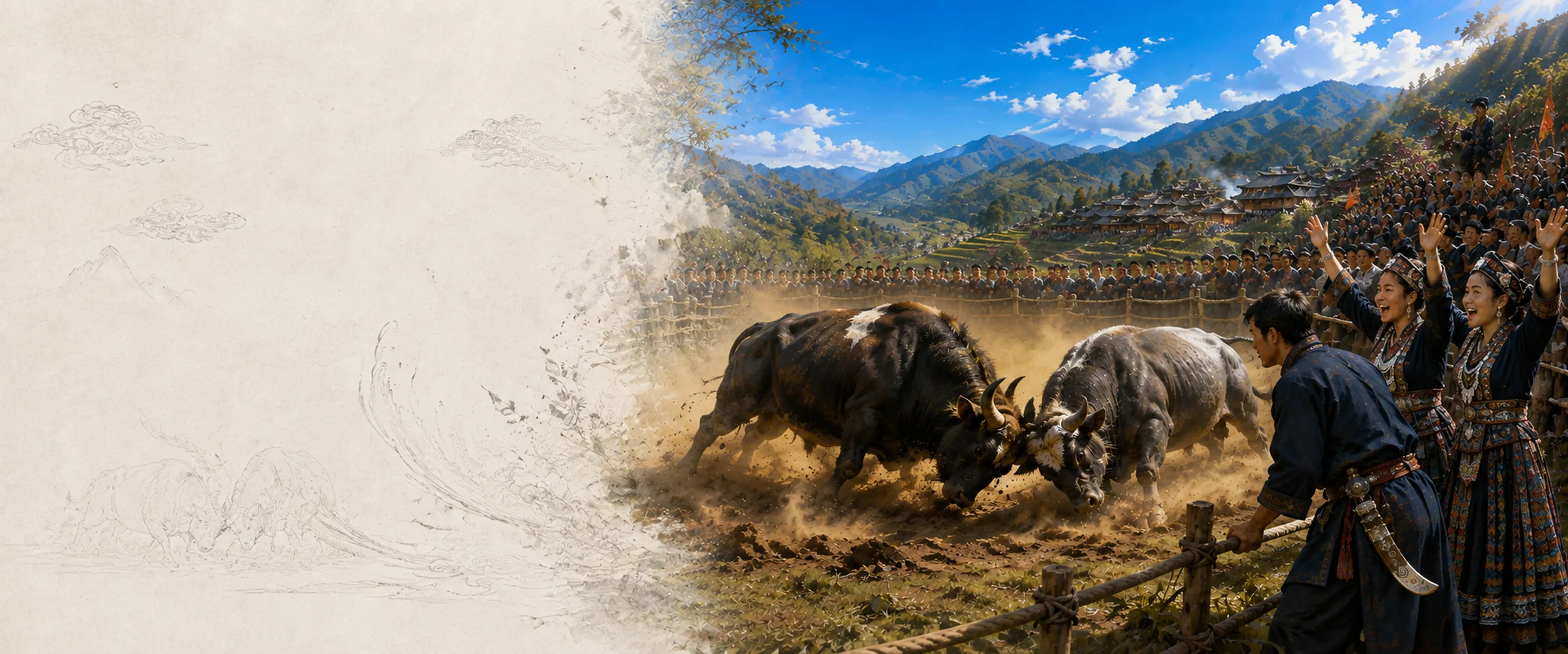
Miao New Year is the most important traditional festival of the Miao people and holds a place comparable to the Spring Festival among the Han Chinese.
There is no single nationwide date for Miao New Year. It is generally celebrated between the tenth and eleventh lunar months, after the autumn harvest has been completed. Dates vary from region to region and even from village to village. This distinctive custom of “each village celebrating at its own time” gives travelers the opportunity to follow the festival from one community to the next.
Miao clothing has been praised as “history worn on the body, culture carried in dress.”
As Miao communities have spread around the world, Miao New Year has become a cultural festival celebrated in many cities internationally — from a celebration in Sacramento, California, drawing around 50,000 people, to gatherings of nearly 30,000 in Wisconsin; from a cultural festival in Seattle that is free and open to the public to traditional ceremonies preserved in Laos, Vietnam, and other parts of Southeast Asia.
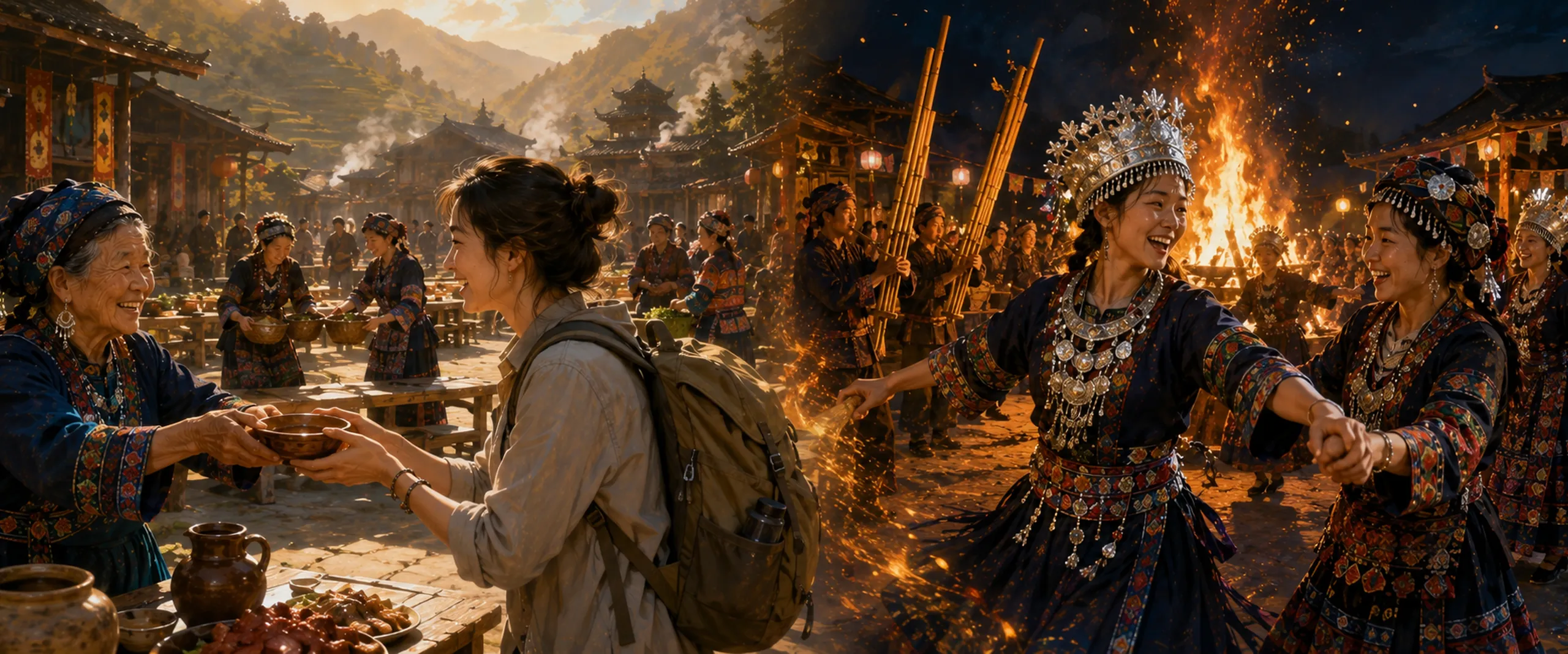
Event Schedule and Venues
### Core Miao New Year Dates
Miao New Year has no single nationwide date. Dates differ among regions and villages. Even within Leishan County, celebrations in Xijiang and Langde may fall several days apart.
In 2026, the Leishan Miao New Year series of activities runs from November 1 to 15, covering Leishan County town as well as major Miao villages including Xijiang and Langde.
Celebrations across the region unfold in stages from late October through mid-November.
The year 2026 also coincides with a “Guzang Year”, when the once-every-twelve-years Guzang Festival falls in the same period as Miao New Year. The ceremonies are consequently more solemn and the program far richer than in an ordinary year.
| Time | Activity | Description |
|---|---|---|
| From November 1 | Leishan Miao New Year series officially begins | Leishan County town and major Miao villages |
| Early November | Intangible Cultural Heritage Parade — Miao participants in ceremonial clothing present soaring Miao songs, lusheng dance, bronze-drum dance, golden-pheasant dance, and other heritage traditions; intangible heritage performances and opening ceremony — concentrated displays of Miao song, dance, instruments, and clothing | Main streets of Leishan County town and Cultural & Sports Center |
| Mid-November | Thousand-Person Long-Table Banquet — a thousand-meter-long banquet table stretches along Xijiang’s main street, filled with Miao dishes | Main street of Xijiang Thousand-Household Miao Village |
| Throughout Miao New Year | Demonstrations of silverwork, batik, and other heritage crafts; Miao singing competitions, lusheng competitions, and other community cultural activities | Leishan County town and Xijiang Miao Village |
| November 9 — some villages | Miao New Year’s Eve vigil — family reunion and preparation for the new year | Various Miao villages |
| November 10 — some villages | First Day of Miao New Year — peak of New Year celebrations | Various Miao villages |
### Traditional Miao New Year Customs
Miao New Year customs are rich and varied. Major traditions include:
| Custom | Description |
|---|---|
| Ancestor Worship | The central ritual of Miao New Year. A respected clan leader leads the community in honoring ancestors and praying for protection, peace, and prosperity |
| Ceremonial Costume Parade | Miao participants wear elaborate silver ornaments and festive clothing, parading to showcase a clothing culture known as “history worn on the body” |
| Antiphonal Miao Singing | Songs are used to convey affection and form friendships; soaring songs, love songs, and other vocal styles each have distinctive characteristics |
| Lusheng Dance | Traditional dance accompanied by the lusheng and one of the festival’s most representative performance forms |
| Thousand-Person Long-Table Banquet | Miao hosts prepare abundant dishes, with hosts and guests seated together, exchanging toasts and songs |
| Making Ciba | Families pound ciba (糍粑) during Miao New Year, making it one of the festival’s most important food-preparation activities |
### Major Recommended Activities
Leishan County Town, Guizhou — Intangible Heritage Parade and Opening Ceremony:
Leishan County town is the central venue for Miao New Year and offers the most convenient transportation, dining, and accommodation.
During the intangible cultural heritage parade, Miao participants wear ceremonial clothing and present multiple nationally recognized heritage traditions, including soaring Miao songs, lusheng dance, bronze-drum dance, and golden-pheasant dance.
The opening ceremony is held at the Cultural & Sports Center, bringing together Miao song and dance, musical instruments, and clothing in a concentrated showcase.
Community activities such as Miao singing competitions and lusheng competitions take place during the same period.
Xijiang Thousand-Household Miao Village — Thousand-Person Long-Table Banquet and New Year Celebrations:
Xijiang Thousand-Household Miao Village is the largest Miao settlement in China and even in the world, making it an excellent place to experience the atmosphere of Miao New Year.
During the thousand-person long-table banquet, a banquet table extending approximately one kilometer is set up along the village’s main street. Dishes such as fish in sour broth, Guzang pork, and chicken rice porridge are served one after another.
During the New Year celebrations, terraced fields, traditional stilted wooden houses, spectacular night views, and lively festivities blend together, allowing visitors to immerse themselves deeply in the atmosphere of Miao New Year.
Langde Miao Village — Traditional Miao New Year Experience:
Langde is comparatively less crowded and receives fewer tourists. It preserves more traditional Miao New Year rituals and offers a more locally rooted experience.
Kongbai, Maliao, and Other Silversmith Villages:
These villages are associated with the origins of traditional Miao silver-forging techniques and offer opportunities to experience silverwork.
Pre-Trip Preparation
### Visas and Entry
Major Miao New Year destinations — including Qiandongnan in Guizhou, Wenshan in Yunnan, and Xiangxi in Hunan — are subject to China’s unified visa policies:
* 240-Hour Visa-Free Transit for Citizens of 54 Countries: Travelers may enjoy up to 240 hours of visa-free transit, with permitted stay areas covering administrative regions including Guizhou, Yunnan, and Hunan.
* Tour Groups from ASEAN Countries: Groups organized through travel agencies may enter visa-free through designated ports.
* Other Nationalities: Apply in advance for a tourist visa, or L visa, through the relevant Chinese embassy or consulate and ensure that your passport remains valid for more than six months.
* Latest Policies: Before traveling, consult the official website of China’s National Immigration Administration or the relevant embassy or consulate.
### Adapting to the Climate
During Miao New Year in November, local climate conditions vary by region:
* Qiandongnan — Leishan and Xijiang: Average November temperatures of around 8°C–17°C, with large differences between morning and evening. Rainy weather is common and conditions often feel damp and cold.
* Xiangxi — Fenghuang and Jishou: Average November temperatures of around 9°C–18°C, with a climate similar to Qiandongnan and predominantly damp, chilly conditions.
* Wenshan, Yunnan: Average November temperatures of around 12°C–21°C, relatively warmer but still with noticeable day–night temperature differences.
Clothing Recommendation: Use a layered system — thermal underwear as the base layer, fleece or a light sweater in the middle, and a windproof, waterproof shell as the outer layer.
Bring a scarf, gloves, and a warm hat, especially for mornings, evenings, and nighttime outdoor activities.
Shoes should be non-slip and waterproof, preferably hiking or athletic footwear suitable for wet roads and paths through fields.
### Travel Insurance
It is strongly recommended to purchase travel insurance covering:
* Accidental injury and acute illness treatment, including outpatient care
* Loss of or damage to personal belongings
* Travel delays or cancellations, including weather-related flight delays
### Currency and Payment
* Currency: Renminbi (CNY).
* Cash: Carry a reasonable amount of cash. Network signals in Miao villages and rural markets may be weak, making cash more reliable.
* Cards: Visa and MasterCard may be used in larger hotels and supermarkets in county towns; villages generally do not accept cards.
* Mobile Payment: Alipay and WeChat Pay are widely used in county towns and scenic areas.
### Communications and Internet
* Important: Miao New Year attracts large crowds, and 4G/5G networks may become congested. Mountainous areas also contain many places with weak signals.
* It is strongly recommended to download offline maps in advance. Use Baidu Maps or AutoNavi and download the entire Qiandongnan map to your phone while connected to Wi-Fi.
How to Get There
### Core Venue: Leishan County, Qiandongnan, Guizhou
| Transportation | Details |
|---|---|
| Air | Guiyang Longdongbao International Airport, Guizhou’s largest aviation hub, serves major domestic and international destinations. From the airport, continue by high-speed rail or road to Leishan |
| High-Speed Rail | The Shanghai–Kunming High-Speed Railway stops at Kaili South Station, the most convenient rail gateway to Leishan. Travel from Guiyang North Station takes about 40 minutes |
| Bus | After arriving at Kaili South, transfer at Kaili Bus Station or Kaili South Station Coach Terminal to a bus for Leishan, about 1 hour. Leishan Bus Station operates multiple daily services to Xijiang Thousand-Household Miao Village, about 40 minutes, and Langde Miao Village, about 20 minutes |
| Driving | Shanghai–Kunming, Xiamen–Chengdu, and Kaili–Leishan expressways provide direct access. Traffic controls apply around Miao villages during the festival; park in designated areas |
High-Speed Rail Ticket Tip: Tickets are in high demand during Miao New Year in early November. Booking in advance through the Railway 12306 App is recommended.
### Urban Transportation During the Festival
Strict traffic controls are implemented in Leishan County town and Xijiang during Miao New Year:
* Leishan County Town: Major streets are closed or controlled during parade activities, and private vehicles must take alternative routes.
* Xijiang Thousand-Household Miao Village: Large parking areas are located at both the North Gate and West Gate, but spaces become limited during the festival. Public transportation or direct scenic-area shuttle services are recommended.
* Driving: Roads between Leishan County town and Miao villages are mostly mountainous, with numerous bends and narrow sections. Drive carefully.
Travel Recommendation: Rely mainly on walking and scenic-area shuttle buses. Major venues within Leishan County town are within walking distance of one another.
Accommodation Reservations
| Key Point | Recommendation |
|---|---|
| When to Book | Accommodation becomes extremely limited during Miao New Year. Book more than one month in advance |
| Recommended Areas in Leishan | Leishan County town — convenient transportation and concentrated activities; inside Xijiang Thousand-Household Miao Village — immersive Miao New Year experience |
| Accommodation in Xijiang | View rooms overlook the nighttime panorama of the thousand-household village but are more expensive and should be booked early |
| Langde Miao Village | Less crowded and less visited, offering a more locally rooted Miao New Year atmosphere |
| Price Reference | Prices rise during the festival: budget around RMB 200–400 per night, mid-range RMB 400–800, high-end view rooms above RMB 800 |
| Booking Platforms | Major platforms such as Ctrip, Qunar, and Meituan; rooms with free cancellation are preferable |
| Special Experience | Staying in a village guesthouse may allow participation in activities such as pounding ciba and preparing Miao New Year meals |
Pre-Trip Packing Checklist
| Category | Essential Items | Special Notes |
|---|---|---|
| Clothing | Thermal underwear, fleece, windproof waterproof shell, wool socks | Qiandongnan is damp and cold in November, so warmth is the priority. Cotton underwear should not be used, as it loses heat quickly when damp |
| Shoes | Non-slip waterproof hiking shoes / athletic shoes | Miao villages have many stone-paved lanes and field paths that may be wet and muddy |
| Accessories | Scarf, gloves, warm hat, umbrella / raincoat | Large morning-evening temperature differences and frequent rain |
| Sun Protection | SPF30+ sunscreen, sunglasses | Ultraviolet exposure in plateau areas should not be ignored |
| Medicine | Cold medicine, gastrointestinal medicine, adhesive bandages, motion-sickness medicine | Mountain roads are winding, and sour and spicy foods may challenge sensitive stomachs |
| Electronics | Power bank, phone, camera, spare batteries | Low temperatures accelerate battery drain |
| Storage | Small bag / waist pouch for documents and cash | Protect valuables in crowded areas |
| Other | Insulated bottle for hot water, tissues / wet wipes | Facilities in mountainous areas may be limited |
Cultural Respect
### Respect for Belief and Ritual Etiquette
During Miao New Year, villages hold ceremonies honoring their ancestors. These are among the most solemn spiritual activities of the Miao people:
* Remain Solemn: Stay quiet and respectful during rituals. Do not shout, laugh loudly, or play around.
* Do Not Interfere: Do not obstruct or disturb the normal conduct of rituals without reason.
* Viewing Etiquette: If visitors are permitted to observe a ceremony, remain within designated areas, do not move around freely, and do not touch offerings or ritual objects.
* Photography Restrictions: Ritual ceremonies generally prohibit photography. Confirm with the host or village elder in advance.
### Visiting Miao Homes
Miao New Year is a festival of family reunion. If invited into a Miao household, observe the following etiquette:
* Entering the Home: Greet the host before entering and wait for permission.
* Hearth Customs: The household hearth is the center of a Miao home and symbolizes ancestors and the continuation of the family. Do not straddle, step across, or tread on the hearth without permission.
* Drinking Etiquette: Miao hospitality is generous, and alcohol is often used to express respect. If you do not drink much, take a small sip while holding the cup with both hands, then smile and explain.
* Food Taboos: Some Miao branches have specific dietary restrictions. If uncertain, ask politely.
### Photography Etiquette
* Ask Permission: Before photographing Miao people in ceremonial clothing, ritual ceremonies, elderly participants, or children, smile and ask first.
* Respect Portrait Rights: Do not use photographs of others commercially without consent.
* Drone Regulations: Flying drones above Miao villages requires advance registration with the local public-security authorities.
### Safety Guidelines
* Fire Safety: Many Miao villages consist of wooden diaojiaolou, or stilted houses. Fire prevention is critically important. Smoking and the use of open flames inside wooden buildings are strictly prohibited.
* Food Hygiene: Long-table banquets are outdoor communal meals. Fully heated cooked food is recommended.
* Crowd Safety: Parades and long-table banquets draw dense crowds. Stay alert and supervise elderly family members and children.
* Property Safety: Store valuables in the hotel safe and carry only essential belongings at festival venues.
Emergency Information
| Item | Contact / Description |
|---|---|
| Emergency Numbers | Police 110, Fire 119, Ambulance 120 |
| Major Medical Facilities | Leishan County People’s Hospital, Xijiang Township Health Center; serious illnesses require transfer to Kaili |
| Tourist Police / Lost Property | Permanent police posts are located at major venues. Report lost valuables immediately to the nearest police office |
| Tourist Information | Official platforms of the Leishan County Culture, Sports, Radio, Television and Tourism Bureau and Xijiang Thousand-Household Miao Village Scenic Area |
| Time Zone | UTC+8, China Standard Time |
| Voltage / Plugs | 220V; plug types A / C / I |
Special Reminders
* Miao New Year Dates Are Not Uniform: Dates vary by region and village. Confirm the specific date for your target village before traveling. Xijiang, Langde, and other scenic areas publish official announcements in advance.
* 2026 Is a “Guzang Year”: Leishan Miao New Year coincides with the once-every-twelve-years Guzang Festival. Ceremonies are more solemn and activities more extensive, but crowds are also larger and accommodation more limited.
* Remain Solemn at Rituals: Miao New Year ancestor ceremonies are among the community’s most solemn spiritual activities. Always ask permission before taking photographs, and never photograph when photography is prohibited.
* Fire Safety in Wooden Buildings: Many Miao diaojiaolou are built entirely of wood. Smoking and the use of open flames inside wooden buildings are strictly prohibited.
* Traffic Controls: Traffic restrictions apply during parades and major activities. Plan travel routes in advance and prioritize walking or public transportation.
* Weather Awareness: Mountain areas are damp, rainy, and cold in November. Check weather conditions before departure and bring sufficient warm and waterproof clothing.
*May you discover the unique charm of a thousand years of living heritage amid the cooking smoke and lusheng melodies of Miao villages, and in this once-in-twelve-years “Guzang Year,” receive the beautiful blessing: “Enter the village for Miao New Year, and may good fortune remain forever.”*
—-
Cultural Background:
Miao New Year, known in the Miao language as Neng Yang, is a traditional festival through which the Miao people celebrate the harvest, honor their ancestors, bid farewell to the old year, and welcome the new.
There is no single nationwide date for Miao New Year. It is generally celebrated between the tenth and eleventh lunar months after the autumn harvest. Dates vary among different regions and villages. Even within Leishan County, Miao New Year in Xijiang Miao Village and Langde Miao Village may fall several days apart.
Miao New Year customs are rich and diverse:
* Ancestor Worship: The central ritual of Miao New Year. A respected clan leader guides the community in honoring their ancestors and praying for their protection, peace, and prosperity.
* Ceremonial Costume Parade: Miao participants wear magnificent silver ornaments and festive clothing, parading through the streets to showcase Miao dress culture.
* Lusheng Dance: A traditional dance accompanied by the lusheng, a reed-pipe instrument, and one of the most representative performances of Miao New Year.
* Pov Pob Ball Tossing: A traditional social activity for young men and women and one of the most romantic elements of the festival.
* Long-Table Banquet: Miao families lay out abundant feasts, with hosts and guests seated together, exchanging toasts and songs.
* Bullfighting: A traditional competitive activity in some regions.
* Antiphonal Miao Singing: People use song to express emotion and form friendships.
As Miao communities have spread around the world, Miao New Year has become a cultural festival celebrated by Miao and Hmong communities internationally.
In the United States, more than 330,000 Hmong Americans continue this tradition. In Southeast Asian countries such as Laos, Vietnam, and Thailand, Miao and Hmong villages preserve some of the most traditional forms of Miao New Year rituals.
Major Celebration Cities Worldwide:
Overseas Miao New Year celebrations are concentrated primarily in countries and regions with large Miao or Hmong communities:
| Country / Region | Core City | Featured Activities |
|---|---|---|
| United States | Sacramento, California | 21st Sacramento Hmong New Year Festival in November — attracts 40,000+ participants |
| Stockton, California | Stockton Hmong New Year Celebration, November 14–15 — traditional clothing, food, cultural performances | |
| Milwaukee, Wisconsin | Milwaukee Hmong New Year, December 12–13 — nearly 30,000 participants | |
| Seattle, Washington | Seattle Hmong New Year, November 14 — free and open to the public | |
| Eau Claire, Wisconsin | Eau Claire Hmong New Year, October 17–18 | |
| Southeast Asia | Laos | Hmong New Year, late November to December — traditional ball tossing and lusheng performances |
| Vietnam | Hanoi “Street Hmong New Year,” January 31 — held on Trinh Cong Son Walking Street | |
| Europe | France | Paris International Fair — “Village T” Miao New Year cultural presentation |
Major Activities by Region:
### United States
The United States is home to more than 330,000 Hmong Americans, and Miao New Year celebrations take place across the country on a large scale.
Sacramento, California — 21st Sacramento Hmong New Year Festival, November:
Sacramento has the third-largest Hmong population in the United States, with around 30,000 residents of Hmong heritage.
The 21st Sacramento Hmong New Year Festival is held at Cal Expo.
* Draws more than 40,000 people, making it one of the largest Hmong cultural celebrations in the United States.
* Participants come from across the country, with some visitors traveling from overseas.
* Activities include beauty pageants, sporting competitions, cultural showcases, traditional music and dance, costume displays, handicrafts, and food markets.
* Among the most striking sights are the brilliant Hmong costumes: women wear elaborate silver ornaments and embroidered pieces, while men wear traditional embroidered vests and belts. Each garment carries symbolic connections to family and history.
Stockton, California — Hmong New Year Celebration, November 14–15:
The Stockton Hmong New Year celebration takes place from November 14 to 15 and includes:
* Traditional costume displays
* Various sporting competitions
* Traditional food stalls
Milwaukee, Wisconsin — Hmong New Year, December 12–13:
The Milwaukee Hmong New Year is organized by the Hmong American Friendship Association and takes place from December 12 to 13.
Nearly 30,000 people gather inside the venue:
* Participants of all ages dress in festive attire, sing, and dance.
* Traditional Hmong foods include fermented fish, cured meats, beef with pickled greens, and fish in sour broth.
* Bubble tea, increasingly popular in recent years, is especially favored by younger participants.
* The event is attended not only by Hmong communities, but also by organizations from other ethnic groups presenting products and services.
Seattle, Washington — Hmong New Year, November 14:
Seattle Hmong New Year takes place on November 14 at the Seattle Center Armory Food & Event Hall and forms part of the Seattle Center Festál cultural-festival series.
* Free and open to the public
* Celebrates the harvest season and showcases exquisite clothing, dance, and food.
* Traditionally, Miao New Year celebrations last ten days; in the United States, they have generally been shortened to one or two days.
* Pov Pob, or traditional ball tossing, is a particularly popular activity. Two people toss a ball back and forth as part of a traditional courtship practice.
Eau Claire, Wisconsin — Hmong New Year, October 17–18:
The Eau Claire Hmong New Year takes place from October 17 to 18 at the Sonnentag Event Center.
Characteristics of Miao New Year in the United States:
* The date is not fixed and celebrations are generally scheduled on weekends, usually in autumn.
* Towns and cities with significant Hmong communities celebrate the New Year, with the largest-scale event taking place in Saint Paul, Minnesota.
* In California, celebrations progress one after another from Sacramento southward through Stockton, Merced, and Fresno.
* Typical activities include song and dance performances, ball-tossing games, football matches, and food stalls.
### Southeast Asia
Laos — Hmong New Year, late November to December:
Laos is one of the major regions of Hmong settlement. Each year from late November into December, Hmong communities celebrate the New Year.
Traditional activities include:
* Ball tossing, singing competitions, and Qeej performances
* Bullfighting, ball games, and other sporting activities
* Young Hmong women wearing their finest new embroidered clothing
Vietnam — Hanoi “Street Hmong New Year,” January 31:
On January 31, 2026, the event “Street Hmong New Year 2026” officially returned to Trinh Cong Son Walking Street in Hanoi, bringing Hmong New Year culture into the streets of the Vietnamese capital.
### Europe
Paris, France — Miao New Year Appears at the Paris International Fair:
In May 2026, Guizhou’s “Village T” made its first appearance at the Paris International Fair.
Miao clothing, silver ornaments, and other forms of intangible cultural heritage from Guizhou were presented on the “most beautiful avenue in the world.” French visitors and performers joined in celebrating Miao New Year together, demonstrating how an ethnic tradition can also speak to the world.
French Hmong communities also actively participate in global Miao New Year gatherings. Hmong groups from France and more than 20 other countries have previously gathered in Leishan, Guizhou, China, to celebrate Miao New Year together with local communities.
Pre-Trip Packing Checklist:
| Category | Recommended Items | Notes |
|---|---|---|
| Clothing | Prepare according to local climate — November and December are cold in the United States, so bring a down jacket; Southeast Asia is warmer, so light clothing is appropriate | Outdoor activities may last a long time |
| Shoes | Comfortable, non-slip athletic shoes | Celebrations and markets require extended standing and walking |
| Camera / Phone | For photographing ceremonial costume parades, song and dance, and traditional food | Bring a power bank |
| Cash | Small amount of local currency | Food and handicraft stalls may not accept cards |
| Translation App | Google Translate or similar | Useful when communicating with community members |
| Cultural Awareness | Learn basic Miao customs in advance | Respect traditional etiquette |
Participation Etiquette:
### General Miao New Year Etiquette
* Festival Greetings: You may greet people with “Happy Miao New Year” or “Happy New Year.”
* Admiring Ceremonial Clothing: Miao clothing has been called “history worn on the body.” Admire it respectfully and do not touch it casually.
* Photography Etiquette: Before photographing people wearing ceremonial dress, smile and ask permission.
* Long-Table Banquet: If invited to join a long-table banquet, respect local dining customs and do not waste food.
### Pov Pob and Song-and-Dance Etiquette
* Pov Pob Ball Tossing: This is a traditional social activity for young men and women. If you wish to participate, respect the customary rules and follow on-site guidance.
* Watching Music and Dance: Remain quiet while watching lusheng dance and Miao singing performances and do not disturb performers.
* Joining In: If invited to dance, feel free to participate and experience Miao culture directly.
### Ritual Etiquette
* Remain Solemn: Ancestor rituals are among the most solemn parts of Miao New Year. Remain quiet and respectful; do not shout, laugh loudly, or play around.
* Do Not Interfere: Do not obstruct or disturb the normal conduct of ritual ceremonies without reason.
* Photography Restrictions: Ritual ceremonies generally prohibit photography. Confirm with organizers or local participants in advance.
### General Responsible Participation
* Protect the Environment: Do not litter; keep activity spaces clean.
* Maintain Order: Queue properly, do not cut in line, and avoid crowding.
* Respect Diversity: Miao New Year celebrations often include participants from different ethnic backgrounds and can offer a valuable opportunity to experience multicultural life in the United States.
Travel Tips:
| Item | Description |
|---|---|
| Best Time to Participate | October through December is the peak period for Miao New Year celebrations |
| Plan Ahead | Large events in places such as Sacramento and Milwaukee attract many visitors, so travel planning in advance is recommended |
| Transportation | Traffic is often heavy around event venues; leave early |
| Weather | November and December are cold in the United States; check local weather and bring sufficient warm clothing |
| Free Event | Seattle Hmong New Year is free and open to the public |
| Cultural Background | Many Hmong Americans came from Laos and resettled in the United States after the Vietnam War |
Special Reminders:
* Miao New Year Dates Are Not Fixed: There is no single nationwide date. Dates differ among cities and from year to year. Confirm the exact date of your destination before traveling.
* The United States Has the Largest Overseas Celebrations: More than 330,000 Hmong Americans live in the United States, and celebrations take place throughout the country. Sacramento draws around 40,000 people, Milwaukee around 30,000, while Seattle, Stockton, Eau Claire, and other cities also host large events.
* Sacramento — One of the Largest Hmong New Year Celebrations in the United States: Sacramento has the country’s third-largest Hmong population, and its Hmong New Year festival is among the largest Hmong cultural celebrations nationwide.
* Seattle Hmong New Year Is Free: It forms part of the Seattle Center Festál cultural-festival series and is free and open to the public.
* More Traditional Experiences in Southeast Asia: Those wishing to experience more traditional Miao New Year rituals may find that Hmong villages in Laos, Vietnam, and other Southeast Asian countries preserve especially traditional forms of celebration.
* Cultural Diversity: Miao New Year in the United States has incorporated local elements — football matches, beauty pageants, bubble tea, and other contemporary features now coexist with traditional customs.
* Check Ahead: Dates in each city are set by local organizing committees. Consult the websites of local Hmong communities or cultural institutions before traveling.
*May you experience the distinctive charm of Miao New Year in different corners of the world and receive the beautiful blessing of “good fortune and health for the whole family” amid the brilliance of silver ornaments and the resonant melodies of the lusheng!*
Readers’ Comments
Calendar and traditional culture enthusiasts from around the world, sharing the same moon.
Sign in or register to join the conversation. Your comment account is created automatically the first time you use a connected account.
No comments yet
Share your thoughts with readers around the world.