
Shanlan Wine
Drinks & Fine WinesBasic Information
- Category: Fermented / distilled alcoholic beverage
- Popular Areas: Li communities across central and southern Hainan, especially Wuzhishan, Qiongzhong, Baisha, and Baoting
- Main Ingredients: Shanlan rice (upland glutinous rice), natural fermentation starter made from wild orange leaves, mountain-ginger leaves, sugarcane leaves, rice flour, and other ingredients, plus mountain spring water
- Also Known As: Shanlan Wine, biang wine—the transliteration of the Li word for “wine”—and Youbing Jiu
Historical Origins
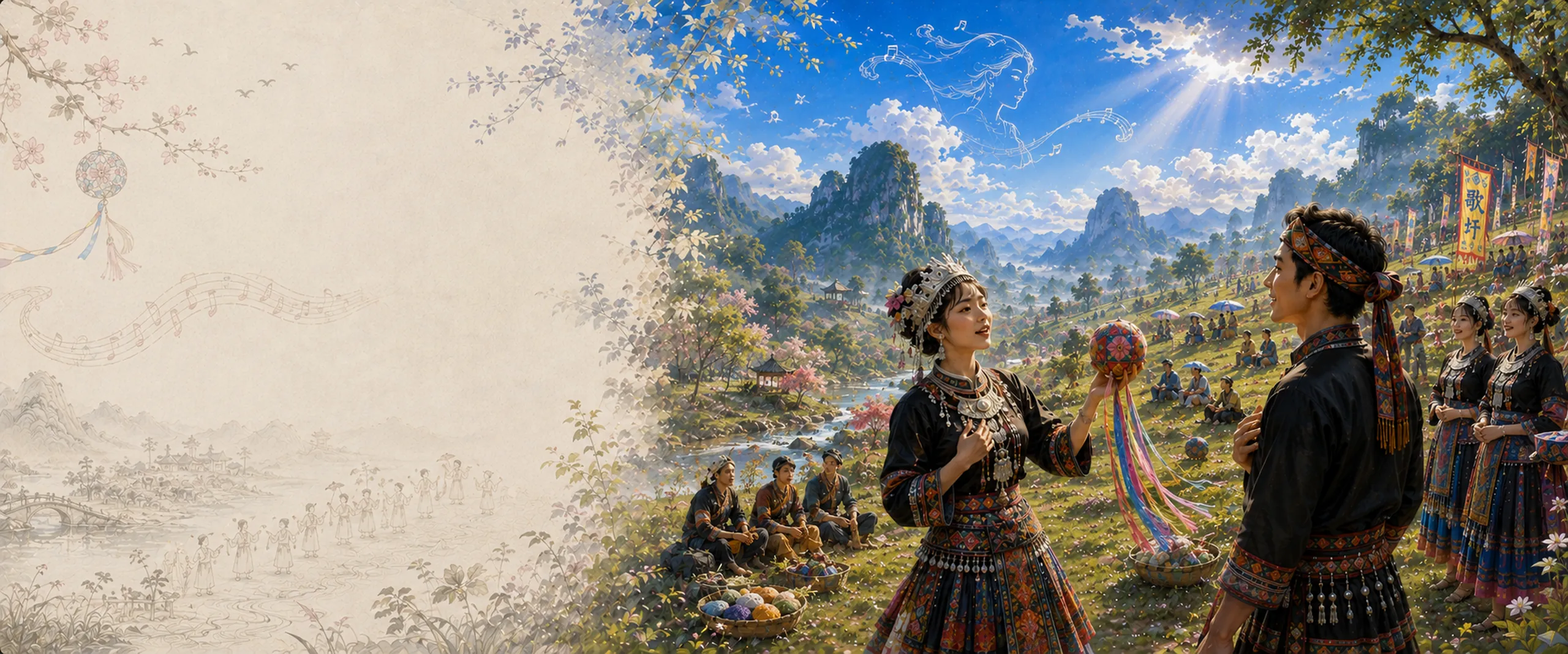
Shanlan Wine is one of the oldest alcoholic drinks of the Li people and an indispensable “festival wine” at Third Day of the Third Lunar Month banquets.
Its brewing tradition has been passed down for generations. During the Northern Song dynasty, the great writer Su Shi left the line “小酒生黎法,干糟瓦盎中”, referring to the ancient winemaking methods of the Li people. In 2021, traditional Li winemaking techniques were included on Wuzhishan City’s municipal list of intangible cultural heritage.
The fundamental ingredient is Shanlan rice, a mountain-grown upland rice selected by the Li through long experience as a variety suited to dry-land cultivation. Shanlan rice is traditionally cultivated without chemical fertilizer or pesticides, using an ecological growing method, and is naturally fermented to produce Shanlan Wine with a rich range of flavors.
Shanlan Wine has been described as “the Maotai of the Li people.” In Li it is called “biang” with the fourth tone. In Wuzhishan there is a saying: “美不过黎族三月三,甜不过黎家山栏酒”—nothing is more beautiful than the Li Third Day of the Third Lunar Month, and nothing sweeter than Li Shanlan Wine.
Cultural Meaning
The key to good Shanlan Wine lies in the fermentation starter, the agent that drives the brewing process. Traditional starters are made by combining grains with microorganisms and allowing them to ferment.
Methods vary somewhat from place to place, but the basic process is similar. Ingredient selection is taken seriously. Li families in Sanya commonly use wild orange leaves, mountain-ginger leaves, and rice flour. Villagers in Shibao, Wuzhishan, generally use wild mountain-ginger rhizomes or fresh ginger leaves together with sugarcane leaves and Shanlan rice flour.
One maker explained: “生姜叶的辛香能唤醒酒魂,甘蔗叶的甘甜能驯服烈性”—the pungent fragrance of ginger leaves can awaken the soul of the wine, while the sweetness of sugarcane leaves can tame its fierceness.
In parts of Ledong, some brewers deliberately leave a portion of rice bran when making the starter from rice, believing that “糙米中的灵气更旺”—the vital spirit in unpolished rice is stronger.
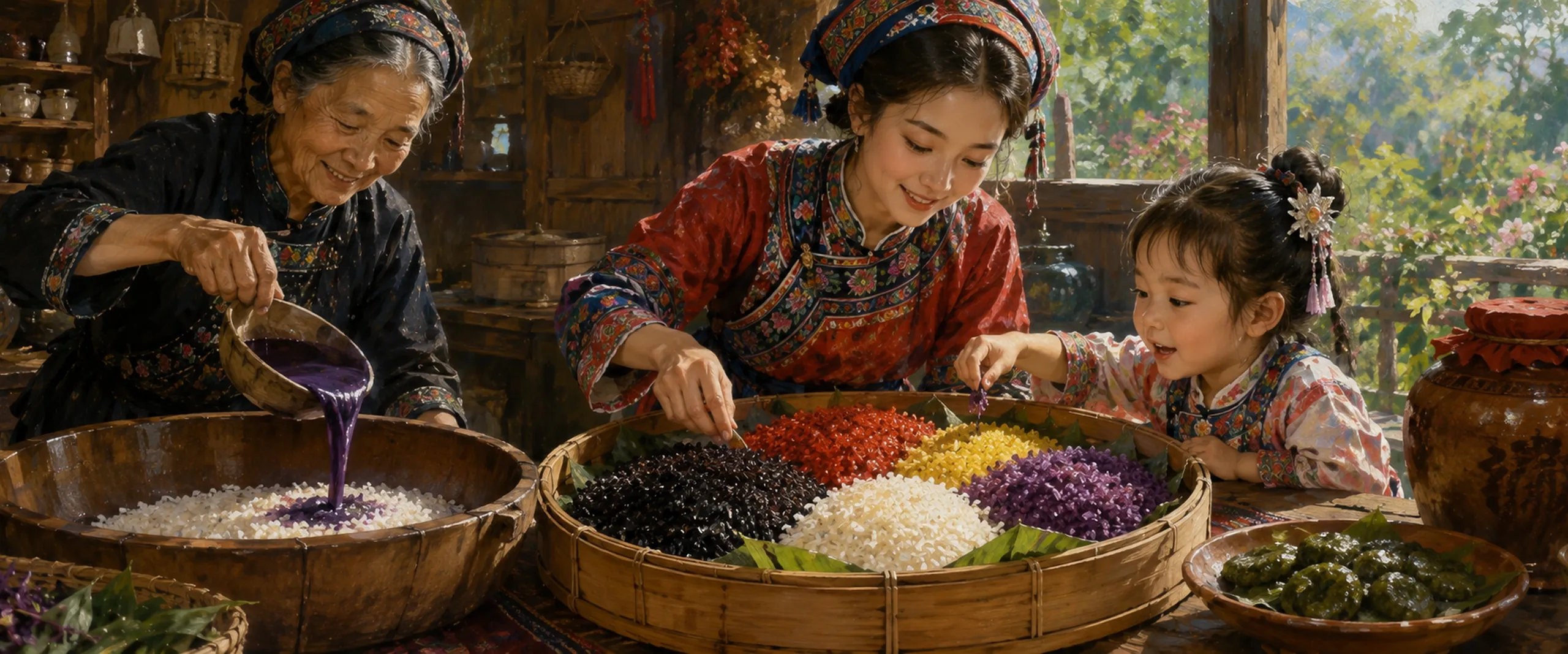
The brewing process begins by husking, washing, and soaking dried Shanlan rice for three hours. It is then steamed for two to three hours. Once cooked, the rice is spread out to cool completely.
Fermentation starter is sprinkled over the surface, the rice is turned, and starter is added again. It is left to ferment for two days before being transferred to a jar. The mouth of the jar is sealed with banana leaves and the wine is stored for thirty days.
Another method steams Shanlan rice and separates it grain by grain, then mixes it with powdered “ball cakes” made from particular Li mountain plants and rice flour. The mixture is packed into a jar. After one day, a small amount of cool water is added, the jar is sealed, and it is buried beneath a banana tree to mature naturally into wine.
At long-table banquets, Shanlan Wine is often poured into coconut-shell cups or bamboo tubes and placed prominently along the table. Distinguished guests and clan elders are given the “first bowl of wine” before others, symbolizing the highest courtesy shown to a guest.
People sit together and sing as they drink. Hosts and guests answer one another in traditional melodies, while diners use bamboo chopsticks to take food from the table. Drinking songs and laughter soon intermingle, bringing the festive atmosphere to its height.
Shanlan Wine occupies an honored place in Li culture. First, “a brew for honoring the spirits.” During ancestral ceremonies on the Third Day of the Third Lunar Month, village elders dip bamboo tubes into Shanlan Wine and sprinkle it toward household shrines, mountains, and rivers while reciting blessings. Second, “the courtesy of hospitality.” When friends arrive from afar, they should be welcomed with good wine and invited to share the mellow fragrance of Shanlan Wine. Third, “the taste of time.” Shanlan Wine requires months of patient waiting and may even mature across an entire year, embodying the Li brewing wisdom of “exchanging time for flavor.”
Readers’ Comments
Calendar and traditional culture enthusiasts from around the world, sharing the same moon.
Sign in or register to join the conversation. Your comment account is created automatically the first time you use a connected account.
No comments yet
Share your thoughts with readers around the world.