Li Folk Songs
Folk Song 黎族A Long Tradition
Li folk songs are a form of oral literary art created by the Li people through their long history of production and everyday life, and they are one of the most important vehicles of Li culture. The Li people have no written script, and all culture has been transmitted from generation to generation through oral instruction and direct teaching. Folk songs therefore became their most important means of recording history, transmitting culture, and expressing emotion. Li folk songs possess a long historical tradition and distinctive ethnic characteristics. In terms of content, they include narrative songs, labor songs, love songs, drinking songs, wedding banquet songs, songs of daily life, and songs about current affairs and politics. In terms of singing style, they include pingdiao, gaodiao, changdiao, and other vocal forms, while Li folk songs from different regions and dialect groups each possess their own distinctive characteristics.
The Third Day of the Third Lunar Month is the most concentrated platform for the presentation of Li folk songs. Antiphonal singing for the purpose of choosing a partner is itself a core means through which Li folk songs are transmitted. During the festival, song continues from daytime until deep into the night, spreading from the ritual altar throughout the mountain villages.
Yazhou Folk Songs
Yazhou folk songs are a distinctive folk-song form native to Hainan Island. Although they belong ethnically to the Han folk-song tradition, their area of circulation overlaps extensively with that of the Li Third Day of the Third Lunar Month festival, making them an important part of the festival’s folk arts. Yazhou folk songs are traditional songs sung in Chinese dialects by Han communities in the Yazhou region of Hainan Island and have a history of transmission spanning a thousand years. In 2006, Yazhou folk songs were included in the first batch of China’s national intangible cultural heritage list.
The language of Yazhou folk songs is approachable and accessible, their melodies simple and graceful, and their subject matter encompasses labor and daily life, love and marriage, historical legends, and many other aspects of experience. During the Third Day of the Third Lunar Month, Yazhou folk songs and Li folk songs complement one another, together forming the festival’s rich soundscape. Over the course of their long development, Yazhou folk songs absorbed elements of Li folk songs and developed a distinctive artistic style, becoming testimony to the interaction and blending of multiple cultures on Hainan Island.
Antiphonal Love Singing
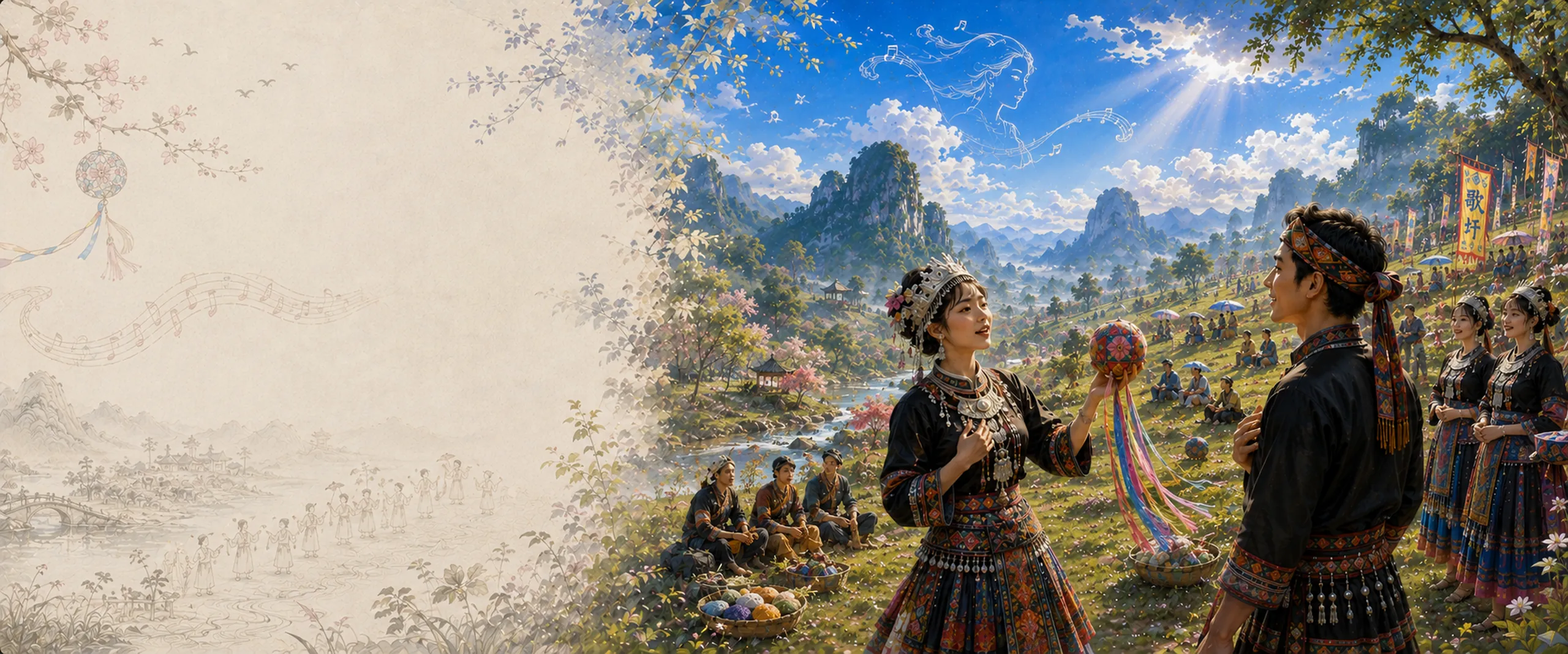
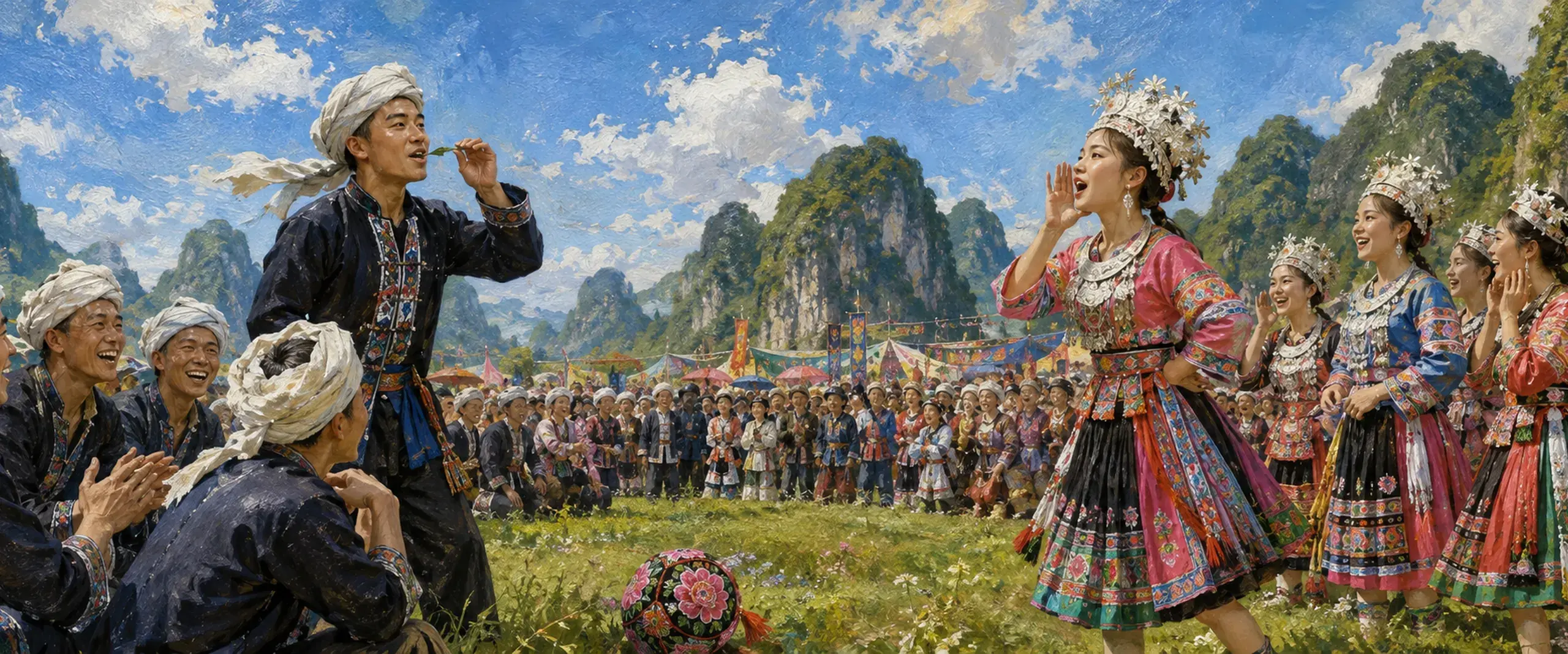
Antiphonal singing is the central activity of the Third Day of the Third Lunar Month and also one of the most vital forms of Li folk-song performance. At the festival, antiphonal singing is not merely an artistic presentation; it is also a way for young men and women to meet, fall in love, and choose a partner.
Its forms are varied and flexible. Two people may sing to one another, several people may sing in exchange, or participants may divide into male and female groups and sing antiphonally. The songs may be long-established traditional folk songs or may be improvised by the singers themselves. Improvised antiphonal singing best demonstrates a singer’s talent—responding emotionally to the scene, singing about the people one encounters, praising the things one sees, composing lyrics spontaneously and fitting them to the melody. The content of the exchange begins with mutual greetings and self-introduction, then gradually deepens into declarations of affection and expressions of longing. Antiphonal singing is the most romantic way for young Li men and women to meet—“以歌为媒,以歌传情”.
In areas speaking the Meifu dialect, young men and women rise early on the day of the Third Day of the Third Lunar Month, put on festive attire, take shoulder baskets, food, umbrellas, and other belongings, and go to a previously agreed mountain forest or open field. They first engage in “集体攀谈”, asking one another about their villages and names, and then begin singing in antiphonal exchange. Through this process, the two sides come to know one another, and those who find themselves mutually compatible become partners.
When night falls, older people gather to drink and reminisce, while young men and women meet in groups. People sing back and forth throughout the night, using song to convey affection. Young men and women in particular take advantage of the festival to revel together, making friends through song and expressing emotion through dance, immersing themselves in the happiness of love. Only as dawn approaches do they reluctantly part, promising to meet again at the next Third Day of the Third Lunar Month. This tradition of all-night antiphonal singing is the most moving soundscape of the Li festival—the songs continue from dusk until dawn, singing out every shade of longing and every joy of life.
Contemporary Transmission
Li folk songs are transmitted primarily through “口传心授”, with elders teaching younger generations vocal styles, lyrics, and performance techniques. On the festival stage, older singers perform ancient songs while younger singers continue the tradition in contemporary voices. Inheritors of Yazhou folk songs sustain the cultural vitality of this ancient song form through festival performances. Today, both Li folk songs and Yazhou folk songs have become important components of cultural presentations during the Third Day of the Third Lunar Month. Through antiphonal singing competitions, folk-song showcases, and other forms, these ancient voices continue to resonate in contemporary society.
Readers’ Comments
Calendar and traditional culture enthusiasts from around the world, sharing the same moon.
Sign in or register to join the conversation. Your comment account is created automatically the first time you use a connected account.
No comments yet
Share your thoughts with readers around the world.