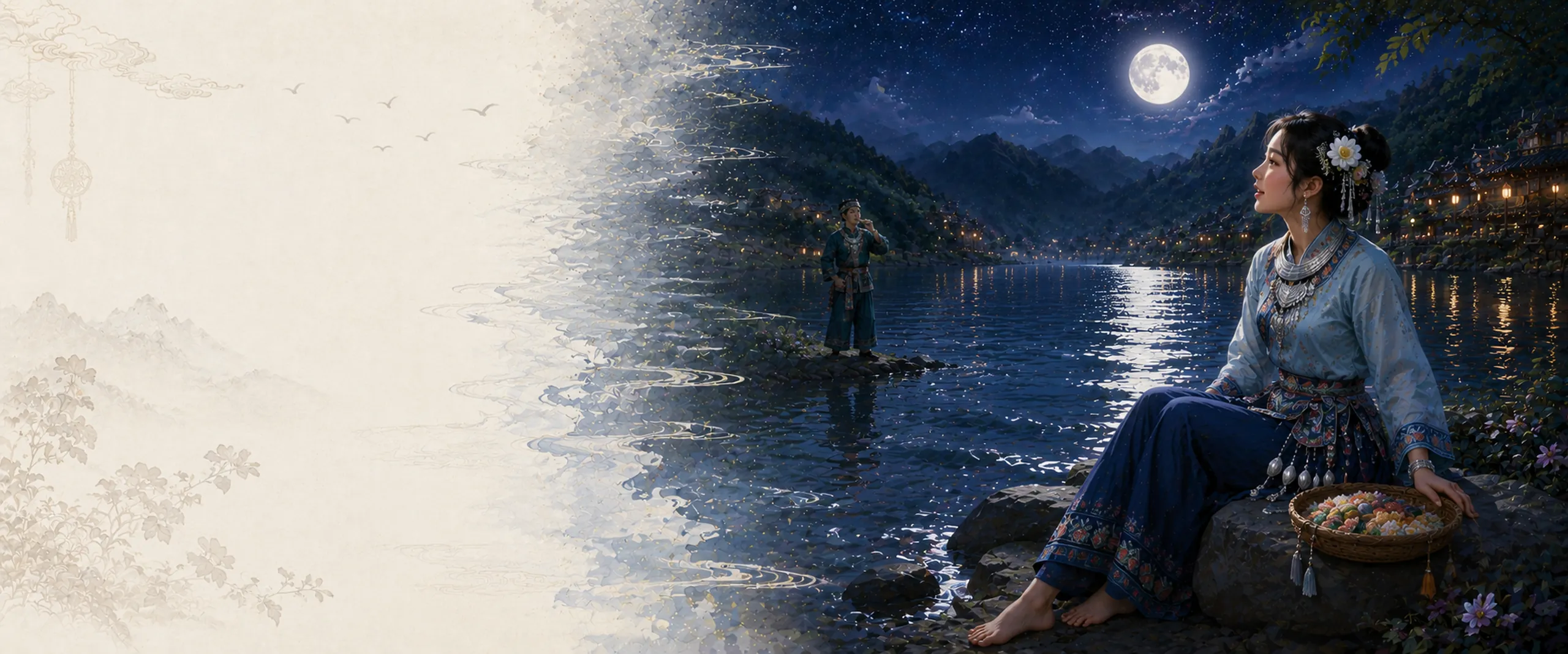

The Sisters' Festival is a traditional festival of the Miao people, celebrated in the Qiandongnan Miao and Dong Autonomous Prefecture of Guizhou, generally held around the 15th day of the third lunar month. The most distinctive custom of the festival is “Sisters' Rice” — glutinous rice dyed in five colours (red, yellow, blue, white, and black) using natural plant pigments, then steamed to produce a colourful and aromatic dish. Sisters' Rice is not only a delicacy but also a token of affection between young men and women: young women present the rice to the young men they admire, with different colours or small objects hidden within (such as pine needles, bamboo hooks, or chillies) conveying different messages — from “I'm willing to be with you” to a gentle refusal — all without a single word. During the festival, activities such as drum dancing, antiphonal singing, and bullfighting are also held, allowing young men and women to meet through song and dance and get to know one another through games. The Sisters' Festival, in its most subtle and romantic way, embodies the Miao people's courtship and marriage culture.
Festival Journey
Origins & Legends
History · Evolution · Legend
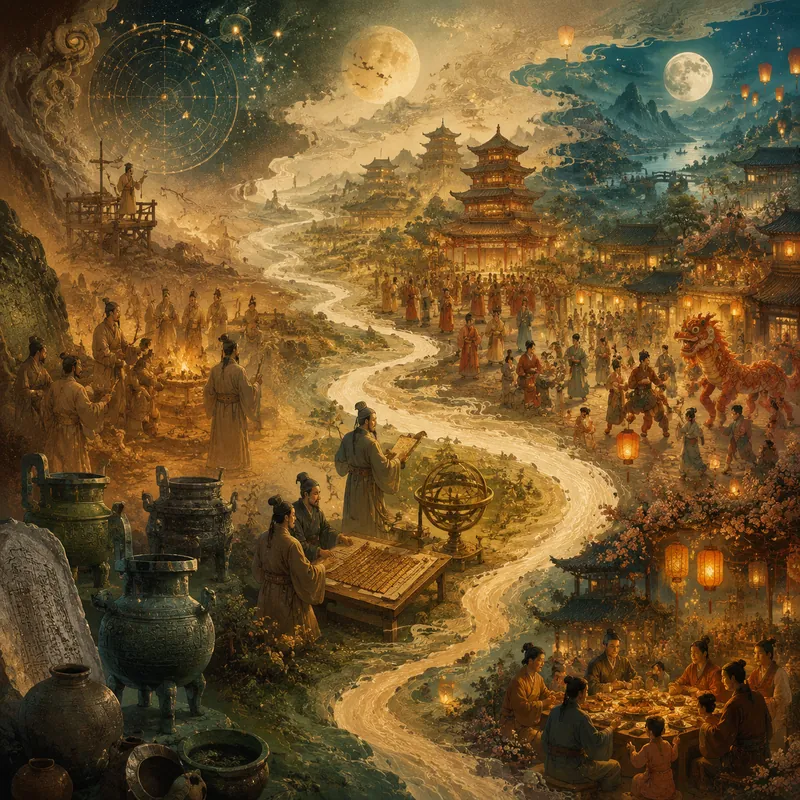
Tracing the Source · Historical Development
- The Period of Early Society The Sisters’ Festival can be traced back to the era of primitive matrilineal clans and matriarchal social organisation
- The Migration Period The Miao people experienced a long and often painful history of migration
- From the Ming and Qing Dynasties to the Republican Period During the Ming and Qing dynasties, intensified state administration and development in southwest China brought profound changes to Miao society
- After the Founding of the People’s Republic of China After the founding of the People’s Republic of China, the social system in Miao regions underwent fundamental change
- The Contemporary Era On 20 May 2006, the Miao Sisters’ Festival was approved by the State Council for inclusion in the first national list of intangible cultural heritage, under project number Ⅹ-22
Festival Customs
Customs · Local Traditions · Everyday Life
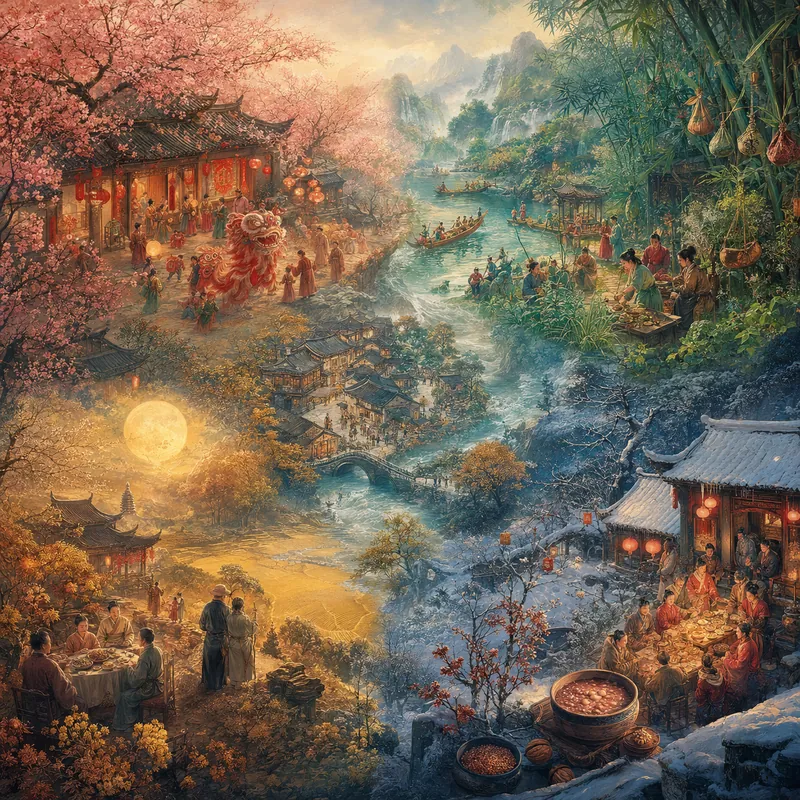
Seasonal Snapshots · Customs & Local Life
Festival Foods
Food Traditions · Local Flavors · Taste
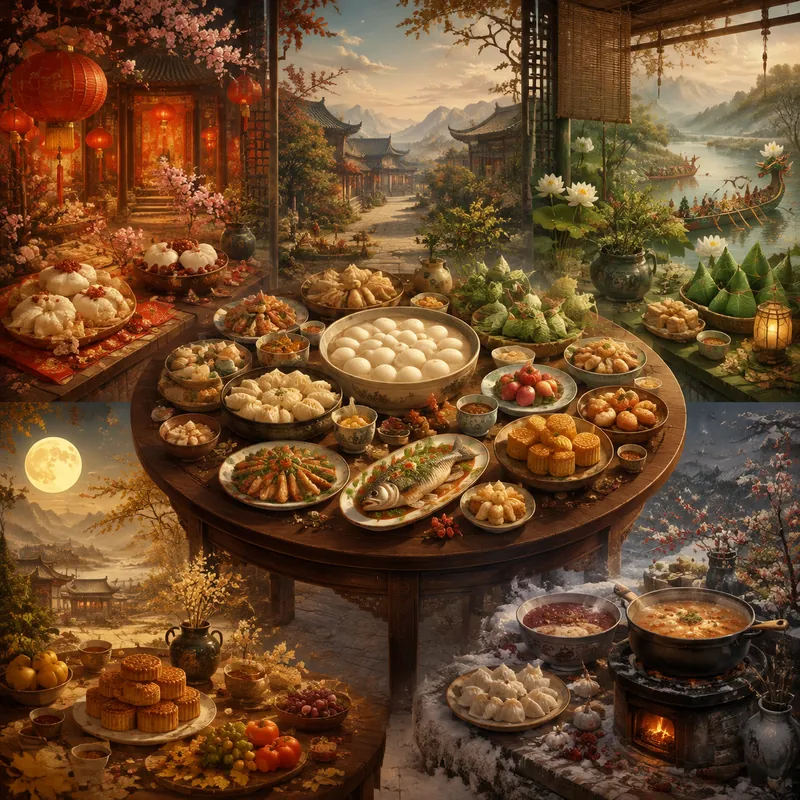
Seasonal Flavours · Seasonal Menu
Folk Arts
Song & Dance · Living Tradition · Heritage
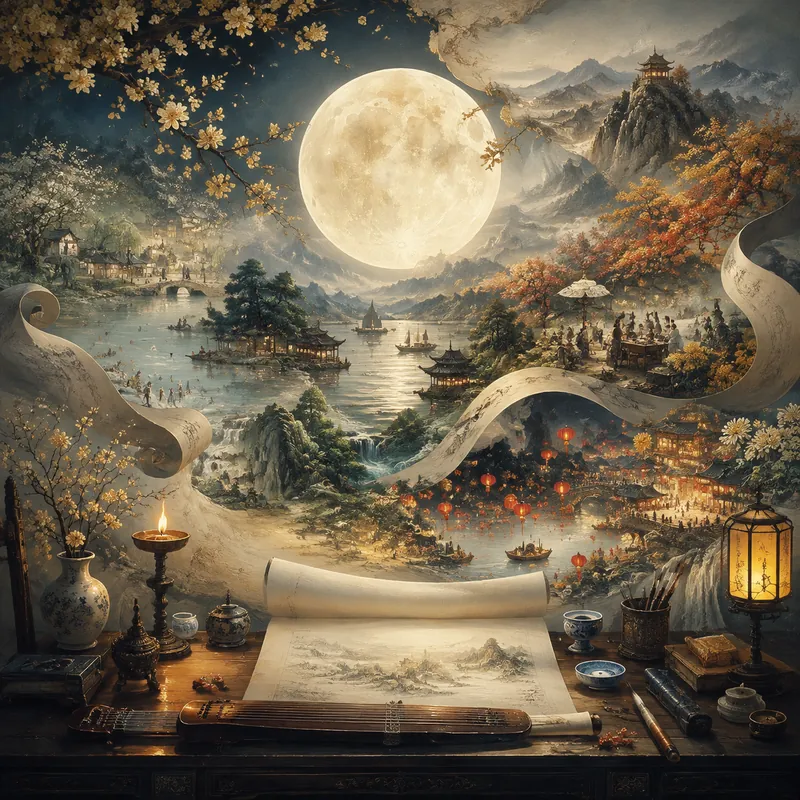
Living Folk Arts · Of Song and Dance
Through Song and Dance · A Living Tradition
Opening Verse: 姊妹节里姊妹饭,五彩斑斓寄深情。 Introduction: Poetry associated with the Sisters’ Festival centers on five-colored Sisters’ Rice and antiphonal singing as a means of expressing affection. Sisters’ Rice is dyed in five colors using natural plants. The poetry often records romantic scenes in which young women convey their feelings through Sisters’ Rice, while young men and women meet and come to know one another through antiphonal singing on the youfang slopes. The Sisters’ Festival is a festival of young Miao women. The Miao folk saying “姊妹节里姊妹饭,五彩斑斓寄深情” precisely captures its central image—five-colored Sisters’ Rice. Sisters’ Rice uses glutinous rice in five colors—red, blue, yellow, black, and purple—as its medium. Young women give it to the young men they admire, with different colors or different objects wrapped inside the rice conveying different meanings. Ancient Miao songs record the origins of the Sisters’ Festival through the story of Ajiao and Jindan, who resisted an arranged marriage, secretly met with rice hidden in a bamboo basket, and ultimately became husband and wife. The poetry and songs of the Sisters’ Festival take five-colored Sisters’ Rice as a central image, recording the romantic tradition through which young Miao men and women convey affection through song and entrust their feelings to rice.
Global Features
Overseas · Chinese Communities · Celebrations
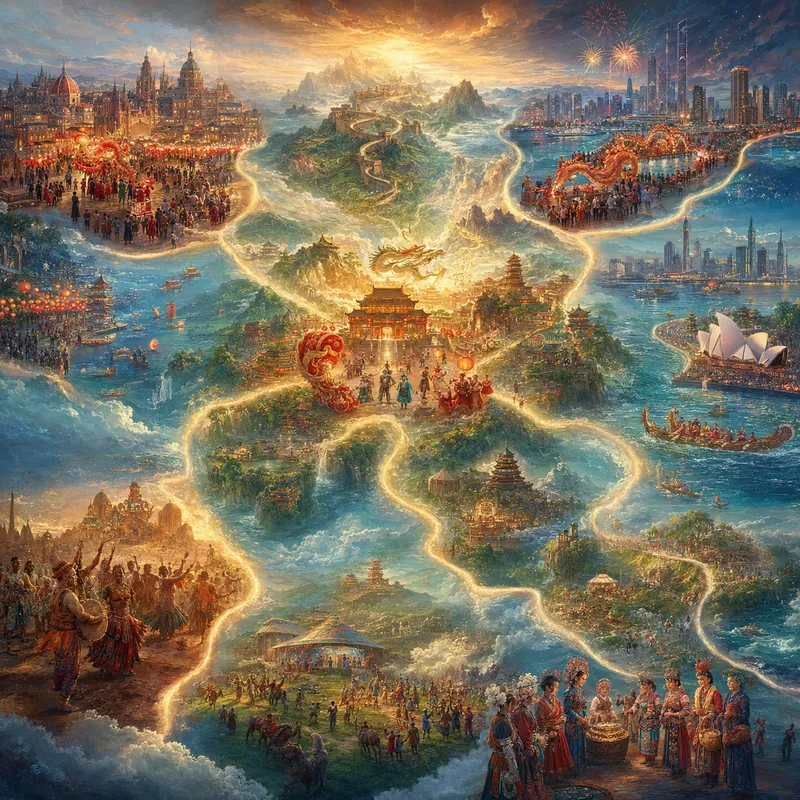
Overseas Celebrations · Lights of Chinese Communities
Japan was the earliest and most systematic arena for the overseas dissemination of the Miao Sisters’ Festival. Translation and research by Japanese scholars. Since the twentieth century, Japanese scholars have conducted sustained research on ethnic minorities in southwestern China. In the course of studying the Miao people of Guizhou, Japanese researchers took notice of the distinctive festival culture of the Miao Sisters’ Festival. They introduced translations of the festival’s legends, rituals, and cultural meanings into Japanese academic circles, bringing the Miao Sisters’ Festival into international scholarly view for the first time. These research成果 helped deepen understanding and awareness of the festival within Japanese academia. Documentary materials indicate that the dissemination of Miao Sisters’ Festival culture in Japan has mainly followed three paths: academic publications, promotion by Chinese and Japanese travel agencies, and online travel writing by Japanese visitors. Firsthand experiences of Japanese visitors. As ethnic minority cultural tourism in Guizhou developed, increasing numbers of Japanese tourists traveled to Qiandongnan to experience the Miao Sisters’ Festival for themselves. They recorded what they saw and felt in online travel journals, which then circulated through the internet in Japan. These firsthand accounts by travelers proved more communicative than academic works, allowing more ordinary members of the Japanese public to learn about this “oldest Eastern Valentine’s Day.” Promotion by Chinese and Japanese travel agencies. Travel agencies in China and Japan have promoted the Miao Sisters’ Festival as a distinctive product of ethnic minority cultural tourism in Guizhou. Through travel brochures, promotional videos, itinerary recommendations, and other formats, the festival has been introduced to a wider pool of potential Japanese visitors. This model of “culture + tourism” has given the Sisters’ Festival sustained visibility in Japan.
The most direct form of global dissemination for the Miao Sisters’ Festival is to “invite” the world into the Miao villages of Taijiang, Guizhou, allowing international visitors to participate personally in this “festival hidden in a flower’s heart.” One hundred thousand visitors from China and abroad gather in Taijiang. According to China Daily, the Miao Sisters’ Festival once attracted 100,000 visitors from Hong Kong, Macao, Taiwan, Russia, the United States, France, and other countries and regions. The Miao Sisters’ Festival is a grand traditional celebration of the Miao people of Taijiang, presenting a rich array of Miao songs, dances, and costume arts, with magnificent scenes of ethnic custom and community life. Visitors from China and abroad not only witnessed one of the most concentrated displays of Miao culture in Taijiang, but also experienced firsthand the warmth and hospitality of the Miao people. A family from Chicago visits Taijiang. During the 2026 Miao Sisters’ Festival, a family of friends from Chicago in the United States came to participate at the invitation of friends in Taijiang. Having just watched the grand costume parade involving ten thousand participants, they eagerly sampled Kaili sour soup on the street. While tasting the sour soup, the family marveled at the exquisite splendor of Miao clothing. The young girl in the family was even more captivated by the continuous green mountains, saying that she had “never seen so many mountains before.” Their journey from the American Midwest into the depths of the Miao Mountains of southwestern China offers a vivid example of the festival’s “inviting the world in” mode of dissemination. A “journey to the roots” for overseas Miao guests. In 2018, Miao residents of Taijiang County and overseas Miao guests gathered together to celebrate the Miao Sisters’ Festival. The Miao are a cross-border people: beyond China, Miao communities are also found in Vietnam, Laos, Thailand, Myanmar, the United States, France, Canada, Australia, and other countries. For Miao communities overseas, returning to China to take part in the Sisters’ Festival is a cultural “journey to the roots.” Together with compatriots in their ancestral homeland, they dance the lusheng (芦笙) dance, eat Sisters’ Rice, affirm cultural identity through a shared festival, and transmit collective ethnic memory.
A spokesperson for China’s Ministry of Foreign Affairs introduces the festival to the world. In May 2023, Chinese Foreign Ministry spokesperson Wang Wenbin introduced the Miao Sisters’ Festival of Taijiang, Guizhou, to a global audience. Promotion by a Foreign Ministry spokesperson gave the festival national-level support in external communication and brought it into the view of the global public. Coverage by international-facing media such as CRI. International-facing media including CRI have continuously reported on the Miao Sisters’ Festival. In 2024, CRI published a report titled “Taijiang, Guizhou: Ten Thousand Miao People Parade in Festive Dress, Displaying Confidence in Folk Culture.” In 2026, CRI again published an in-depth report titled “Ten-Thousand-Person Costume Parade Staged at Guizhou Taijiang Miao Sisters’ Festival, More Than 20 Teams Paint a ‘Moving Feast of Intangible Heritage.’” These reports were translated into multiple languages and disseminated around the world through CRI’s multilingual platforms. Attention from global media. Mainstream media such as China News Service and China Daily have also maintained continuous coverage of the Miao Sisters’ Festival. China Daily once published a report under the headline “One Hundred Thousand Guests from China and Abroad ‘Enchanted’ by Guizhou Sisters’ Festival.” Through international media networks, such reporting has carried the cultural appeal of the Miao Sisters’ Festival to readers around the world.
The Miao Sisters’ Festival is evolving from a traditional ethnic festival into a cultural tourism brand oriented toward the world. Brand positioning as “the world’s oldest Valentine’s Day.” The Miao Sisters’ Festival has been described as “the oldest Eastern Valentine’s Day.” This positioning precisely captures the festival’s most distinctive and universally appealing cultural core: love. Valentine’s Day is a globally familiar festival concept. Positioning the Sisters’ Festival as “the oldest Eastern Valentine’s Day” enables international audiences to understand its central meaning quickly. As one report put it, the Miao Sisters’ Festival is “a festival centered on courtship and romance among young men and women.” The “Sisters’ Festival + May Day” model of cultural-tourism integration. In recent years, activities associated with the Miao Sisters’ Festival have extended throughout the entire May Day mini-holiday, using the combined appeal of the two celebrations to attract visitors. This model of integrating a traditional festival with a national statutory holiday has further driven sales in local hotels, restaurants, cultural and creative products, and specialty agricultural goods. The Sisters’ Festival is not only a platform for cultural presentation, but also an important engine of local economic development. From “hidden in a flower’s heart” to entering the world. The Miao Sisters’ Festival has been praised as “a festival hidden in a flower’s heart.” This poetic metaphor describes both its beauty and romance and the way it once remained “hidden deep in the mountains, unknown to the outside world.” Today, with advances in intangible heritage safeguarding, cultural-tourism integration, and international communication, this “festival hidden in a flower’s heart” is being seen and appreciated by more and more people.
Visitor Guide
Preparation · Etiquette · Take Part with Confidence
Readers’ Comments
Calendar and traditional culture enthusiasts from around the world, sharing the same moon.
Sign in or register to join the conversation. Your comment account is created automatically the first time you use a connected account.
No comments yet
Share your thoughts with readers around the world.