
Qiaoguo (巧果)
Pastries & SnacksBasic Information
- Category: Fried pastry
- Popular Regions: Nationwide, especially prevalent in the Jiangnan region
- Main Ingredients: Flour, oil, sugar, honey, sesame seeds
- Also Known As: Qiqiao guozi (乞巧果子), Qixi guo (七夕果), xiaoyaner (笑靥儿), guoshi huayang (果食花样), qiaoshi (巧食), zhujie (苎结)
Historical Origins
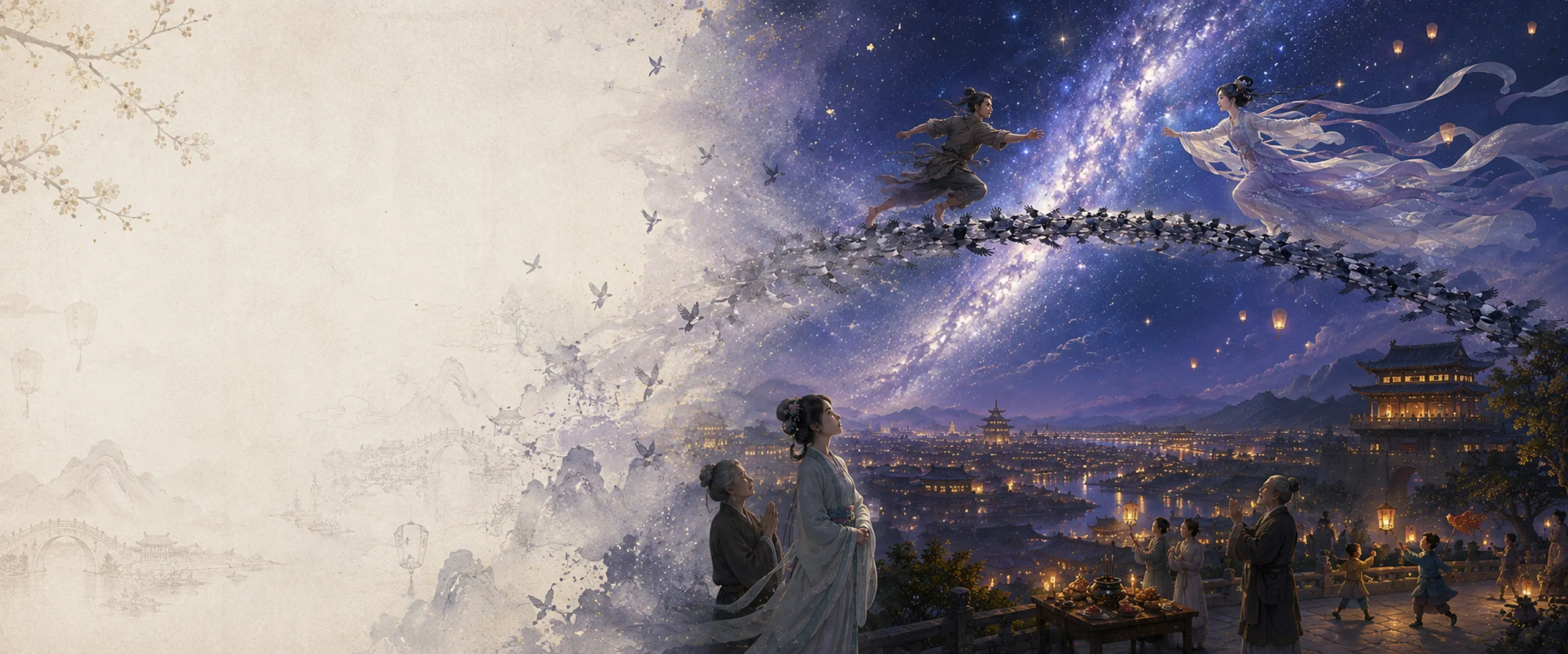
Qiaoguo is the most representative seasonal food of the Qixi Festival and also the most widely distributed Qixi delicacy. Its origins can be traced back to the Northern Song dynasty. According to tradition, it was a food made by women in hopes of asking the Weaver Girl to bestow upon them a pair of skillful hands.
The Song-dynasty writer Meng Yuanlao recorded in Dongjing Menghua Lu (《东京梦华录》): “又以油面糖蜜造成笑靥儿,谓之‘果食’,花样奇巧百端,如捺香方胜之类。若买一斤,数内有一对被介胄者如门神之像,盖自来风流,不知其从,谓之‘果食将军’。” During the Song dynasty, qiaoguo were already sold in street markets for Qixi. If one bought a jin, the assortment would include a pair of armored human figures resembling door gods, known as “guoshi jiangjun” (果食将军, “Generals of Guoshi”). According to Sui Shi Guang Ji (《岁时广记》), “guoshi jiangjun” were human-shaped foods made from sugar and flour during Qixi and could be exchanged as gifts among neighbors.
By the Ming dynasty, the making of qiaoguo had become even more widespread. The Qing-dynasty work Qing Jia Lu (《清嘉录》) by Gu Lu contains an entry titled “Qiaoguo,” describing its ingredients and preparation: “七夕前,市上已卖巧果,有以面白和糖,绾作苎结之形,油氽令脆者,俗呼为‘苎结’。” Pan Rongbi’s Qing-dynasty Dijing Suishi Jisheng (《帝京岁时纪胜》) records: “街市卖巧果,人家设宴,儿女对银河拜,咸为乞巧。”
Cultural Meaning
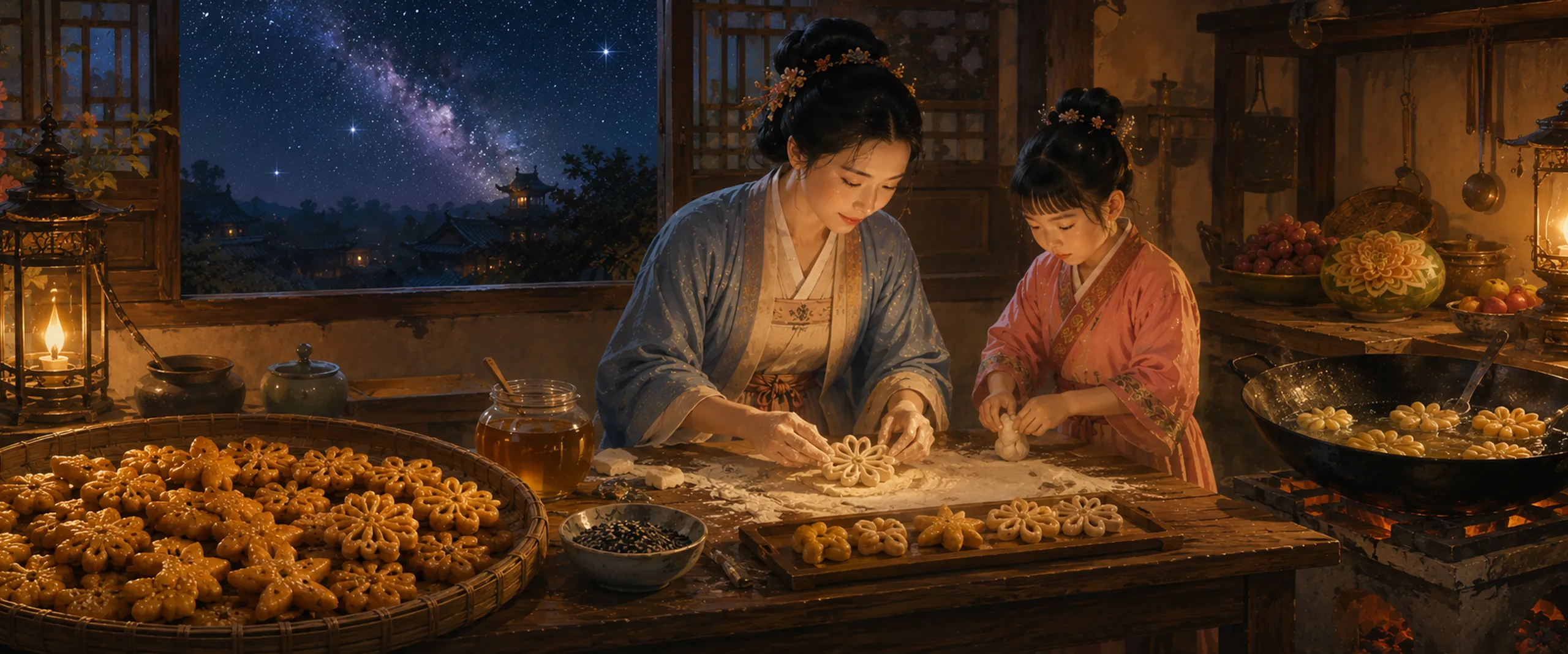
The principal ingredients of qiaoguo are oil, flour, sugar, and honey. Traditionally, white sugar is first heated in a pot until it melts into syrup. Flour and sesame seeds are then added and mixed well. The dough is spread on a work surface, rolled thin, allowed to cool, cut into pieces, and deep-fried until golden. Skillful women would also shape qiaoguo into various forms related to Qixi legends, bringing them out during qiqiao rituals to compare and share with their female companions.
Later, folk artisans carved special molds specifically for making qiaoguo. Common designs included lotus seedpods, peaches, tigers, and chirping cicadas, producing an exceptionally rich variety of forms. Qiaoguo could be made from wheat flour or rice flour, baked in an oven or deep-fried, shaped into round cakes or shuttles—the weaving shuttle of the Weaver Girl—and fashioned into birds, beasts, unusual flowers, and exotic plants.
The cultural symbolism of qiaoguo has several layers. First, “seeking skill and wisdom through qiqiao.” According to tradition, unmarried girls in the past hoped to become clever and dexterous, so they prayed in this way for the Weaver Girl to “send them skill,” hoping that she would bestow upon them a pair of deft hands. Eating qiaoguo thus embodies the wish that the person who eats it will become clever and skillful. Second, “auspicious blessings.” The “qiao” (巧, “skillful”) in qiaoguo is a homophone of “qiao” (俏, “pretty”), carrying connotations of beauty and loveliness. In some regions, people string “qiaoshi” (巧食) together with multicolored threads and toss them onto rooftops so that magpies may carry them away to build a bridge, allowing the Cowherd and Weaver Girl to cross the Milky Way at night and meet.
Regional Evolution
Qiaoguo takes on different forms and flavors across China:
- Suzhou: Qiaoguo is an important Qixi custom in Suzhou. In Nanjing, Suzhou, Changzhou, and other places, people traditionally observed the custom of “eating qiaoguo” during Qixi. The folk expression “seven bends and eight turns” was often used to describe the shape of “qiqiao.” Eating qiaoguo was called “chi qiao” (吃巧, “eating skill”) and was believed to serve the purpose of qiqiao. Wujun Suihua Jili (《吴郡岁华纪丽》) records: “吴中旧俗,七夕,市上卖巧果,以面和糖,绾作苎结形,或剪作飞禽之式,油煮令脆,总名巧果。”
- Zhejiang: In Zhejiang, qiaoguo are made by shaping flour dough into various small objects and deep-frying them. During the evening banquet, qiaoguo, lotus seedpods, white lotus roots, red water caltrops, and other foods are arranged in the courtyard. In Shaoxing, Zhejiang, qiaoguo somewhat resemble the northern fried pastry known as paicha (排叉).
- Tianjin: Tianjin qiaoguo are mainly made from oil, flour, sugar, and honey. Mothers first place leavened dough into wooden molds carved in various floral shapes, then deep-fry or bake the molded dough. Qiaoguo come in a rich array of forms, including scissors, pears, eggplants, melons, pomegranates, apples, chicks, piglets, little lions, goldfish, frogs, crabs, and shrimp.
- Northern China: In some northern areas, large quantities of qiaoguo are made before the Qixi Festival. They may be threaded together on strings and placed around babies as an auspicious symbol. Some northern qiaoguo are also tinted with color, strung together on long threads, and finished with crabapples or patterned cloth at the ends before being hung on walls as decorations.
- Suburban Shanghai: When newly married women return to their natal homes on the seventh day of the seventh lunar month, they bring qiaoguo back from their parents’ homes as gifts for their husbands.
Simple Preparation
- Ingredients: 250 g flour, 50 g white sugar, 20 g honey, sesame seeds as needed, cooking oil
- Steps:
- Heat the white sugar with a small amount of water until dissolved, then add the honey and stir well.
- Sift the flour, add the syrup and sesame seeds, knead into a smooth dough, and let it rest for 20 minutes.
- Roll the dough into a thin sheet (about 3 mm thick), then cut into small squares or strips.
- Fold the pieces into shuttle shapes (or other forms) to make the qiaoguo blanks.
- When the oil reaches about 60% of full frying heat, add the pieces and fry slowly over low heat until golden and crisp.
- Remove, drain off the oil, and allow to cool before serving.
Tip: The thinner the dough is rolled, the crisper the fried qiaoguo will be. Qiaoguo can be made in many shapes—scissors, pomegranates, goldfish, and more—and the more intricate the form, the more fitting it is for the festival. Traditional qiaoguo is prized for four qualities: “flaky, crisp, fragrant, and sweet.”
Readers’ Comments
Calendar and traditional culture enthusiasts from around the world, sharing the same moon.
Sign in or register to join the conversation. Your comment account is created automatically the first time you use a connected account.
No comments yet
Share your thoughts with readers around the world.