Japan
Japan is the country in which Qixi culture has undergone the most thorough transformation after spreading overseas. Qixi was introduced from China to Japan during the Nara period. After the Meiji Restoration, Japan abolished the lunar calendar, and Tanabata came to be celebrated on July 7 of the Gregorian calendar each year. Unlike China, where the love story occupies a central position, Japanese Tanabata places greater emphasis on praying for improvement in skills, particularly the hope that girls will acquire outstanding handicraft abilities. From the Nara period onward, the imperial court and aristocracy began imitating Tang-dynasty customs by holding Tanabata rituals, threading-needle competitions for skill, and elegant poetry gatherings.
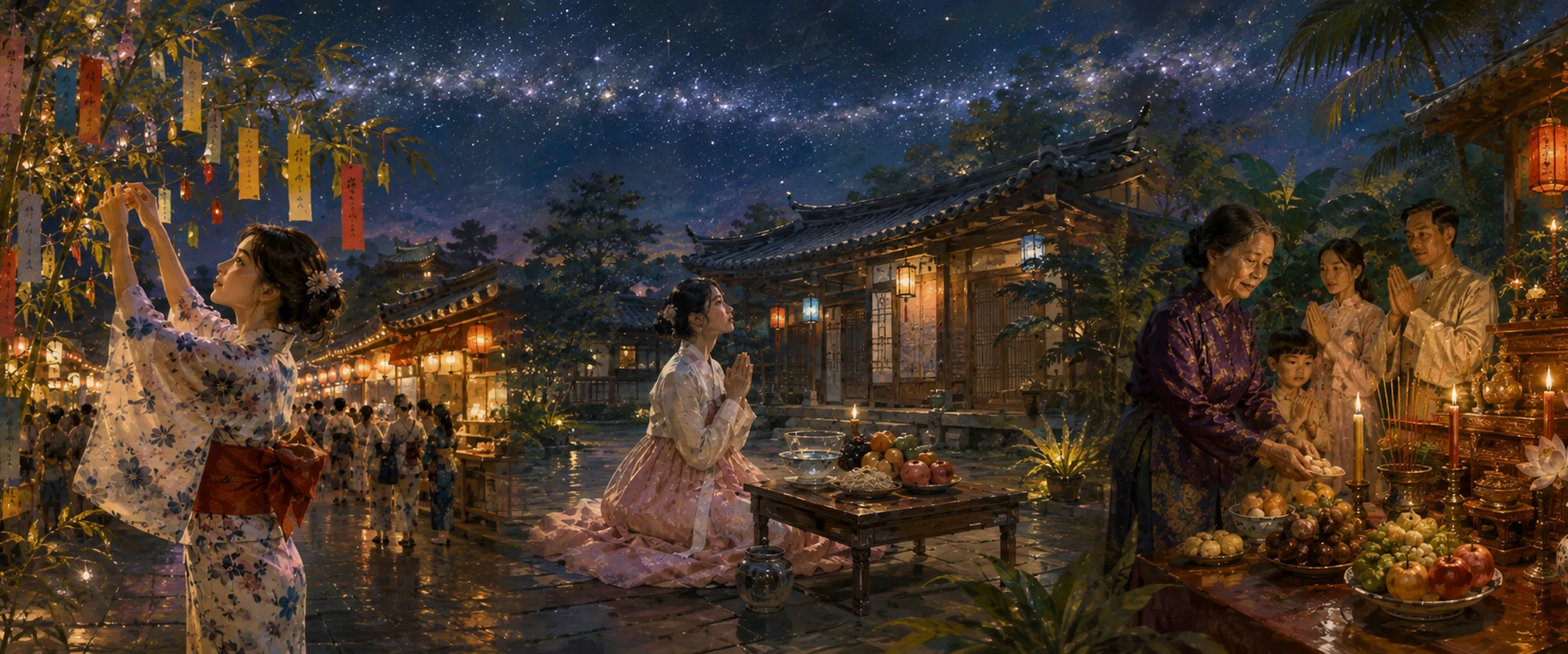
Hanging bamboo and writing poetry slips: the central customs of Japanese Tanabata. Beginning in the Edo period, adults and children would write wishes and poems on colorful elongated paper slips on Tanabata, hanging them together with paper decorations from small bamboo branches before setting the bamboo upright in the courtyard. After Tanabata ended, the bamboo and offerings were placed in rivers, symbolizing the hope that one’s wishes would reach the River of Heaven. In Sendai, Kyoto, and many other places, paper garments associated with Tanabata were regarded as a means of dispelling misfortune—people used these paper garments to pray for favorable winds and timely rain.
Sendai Tanabata Festival: Japan’s largest Tanabata celebration. The Sendai Tanabata Festival is Japan’s largest and one of its most popular Tanabata celebrations. Every year from August 6 to 8, the shopping streets of central Sendai are filled with brightly colored paper and decorations, creating a spectacular sight. Tanabata events are also held throughout Japan, including portable-shrine processions, floats, drum-and-flute ensembles, and parades.
Oita Tanabata Festival: a summer celebration of traditional dance. The Oita Tanabata Festival is the largest summer event in Oita City and is generally held on the first Friday and Saturday of August. Its principal highlight on the first day is “府内戦紙”, in which dance teams and vividly colored floats made with washi paper, shaped as dancers and rising dragons, proceed magnificently along Chuo-dori.
On the second day, the “大分chikirin囃子市民総踊” is held. Dancers move to the cheerful rhythm of chikirin (钲), a traditional percussion instrument long used in Oita, striking bamboo sticks as they perform lively dances, while spectators are also welcome to join in. During the festival, downtown shopping streets are decorated with bamboo, paper cranes, paper wind streamers, and other traditional Japanese Tanabata ornaments.
Goryokaku Tower Tanabata Festival: Qixi culture in Hakodate. Hakodate’s Goryokaku Tower holds a Tanabata Festival each year from July 1 to July 7, introducing the story of the Weaver Girl and the Cowherd and inviting visitors to experience Hakodate’s distinctive Tanabata culture.
Tanabata blessings at the airport: a journey of wishes from Taoyuan to Sendai. Japan Airlines (JAL) once organized a Tanabata blessing activity at Taoyuan International Airport, placing a “Tanabata wishing bamboo” in front of the boarding gate for flights to Tokyo and inviting travelers to write down their wishes and hang them from the bamboo branches. All the wish slips were later flown to Japan and offered at Osaki Hachimangu Shrine in Sendai. By transforming an airport waiting area into a Tanabata prayer space, this creative initiative allowed Qixi culture to travel with people on their journeys.
Readers’ Comments
Calendar and traditional culture enthusiasts from around the world, sharing the same moon.
Sign in or register to join the conversation. Your comment account is created automatically the first time you use a connected account.
No comments yet
Share your thoughts with readers around the world.