Torch Festival

Torch FestivalCuisine of the Torch Festival

「 不吃羊汤锅,白过火把节。 」

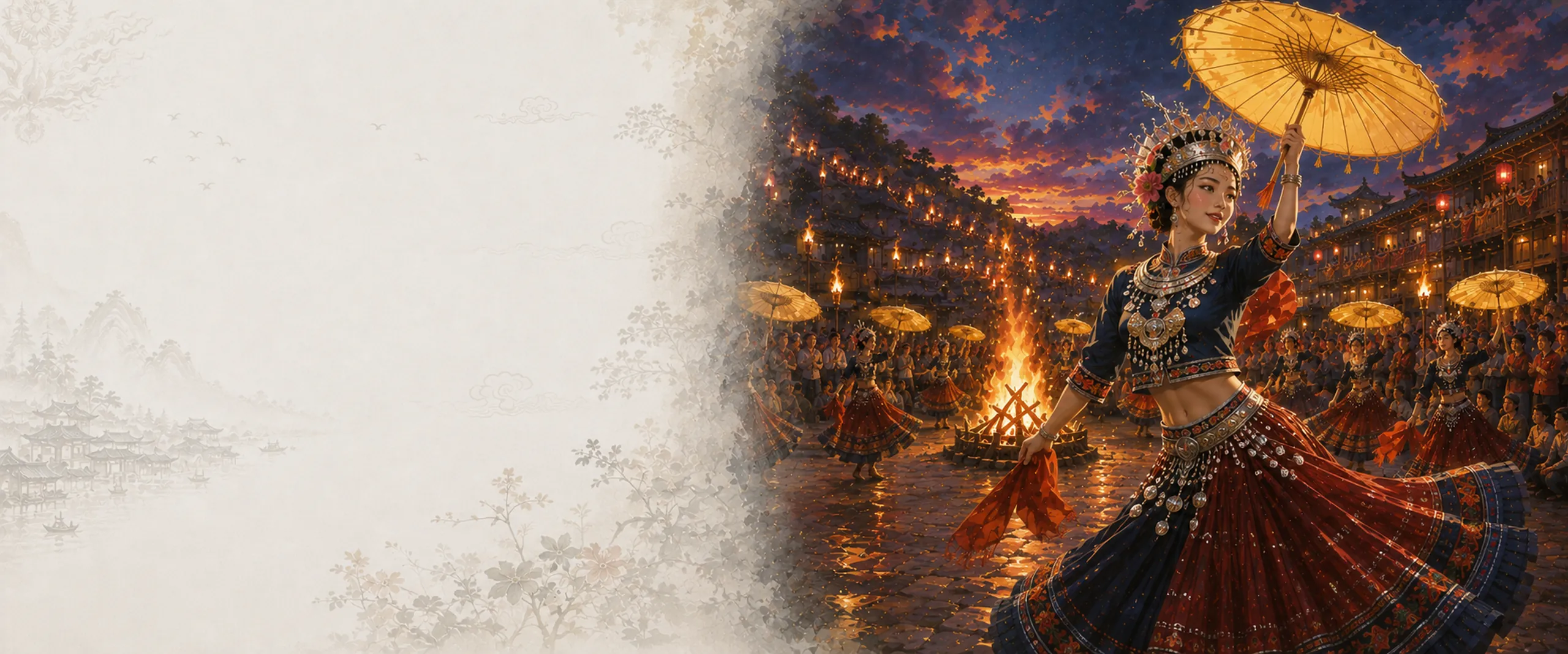
The Torch Festival is held around the 24th day of the sixth lunar month each year, celebrated in Yi areas of Yunnan, Guizhou, and Sichuan. It was known in ancient times as the “Star‑Returning Festival.” The Ming‑dynasty scholar Yang Shen, while…

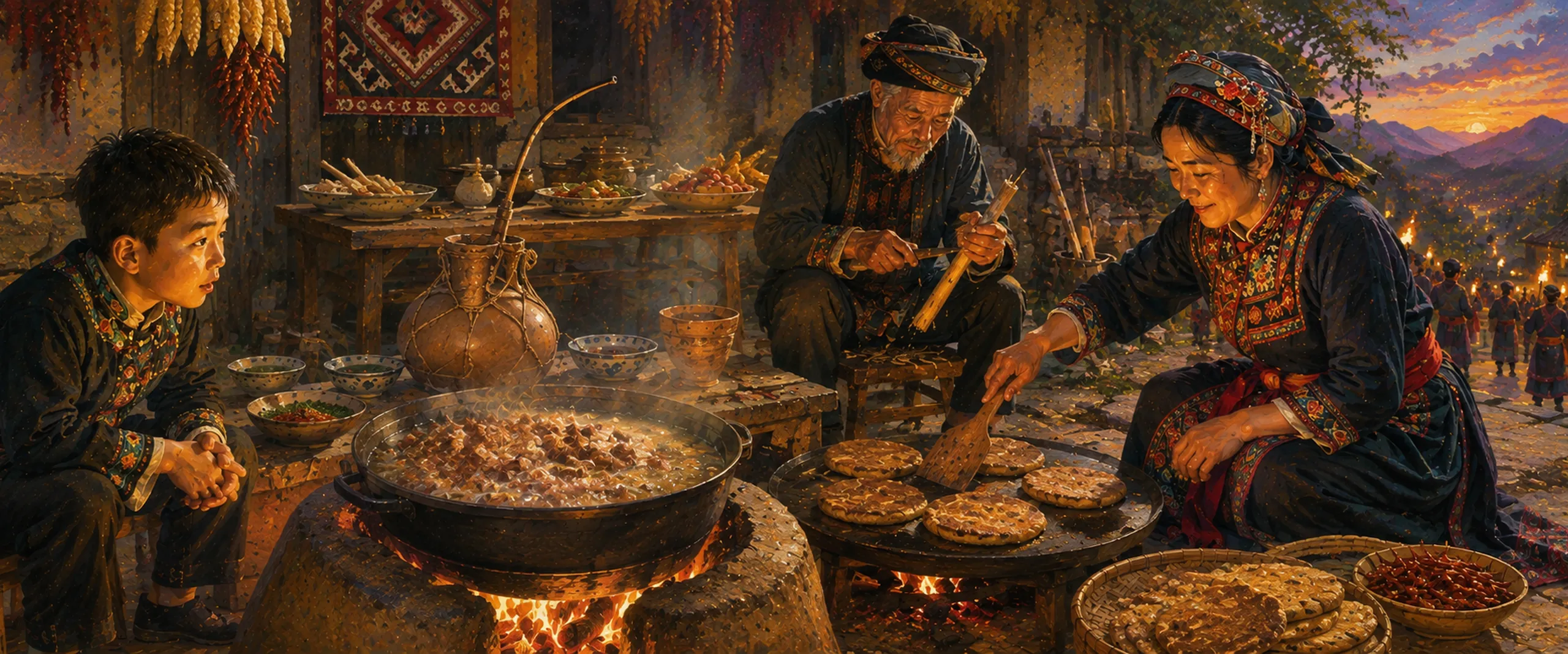
The Torch Festival is the grandest traditional festival of the Yi people, and its cuisine is particularly known for meat. Lamb soup pot is regarded as the festival’s “signature dish.” It uses locally raised black goats from Chuxiong, bringing “all the freshness of the mountains into a single pot,” with meat that is firm yet tender. On the eve of the festival, villages slaughter pigs, sheep, and cattle, welcoming the Fire God and honoring their ancestors with meat and wine. Tuotuorou is a traditional Yi meat dish—large chunks of meat are boiled and eaten directly, preserving the purest flavor of the ingredients themselves. Women also prepare buckwheat buns, tsampa flour, and other staple foods. Beef soup pot is another common Torch Festival dish. During the festival, those living away from home return for the family reunion meal. People sit around the hearth, drinking homemade liquor and eating tuotuorou, sharing joy and happiness. In the most unadorned way, Torch Festival cuisine expresses the Yi people’s reverence for fire and their warm, hospitable approach to life.

Torch Festival / Cuisine of the Torch Festival

Festival Food Gallery

Seasonal Menu

Food in Detail

Seeking the True Flavor

Tuotuorou

Meat & Seafood

Basic Information

  • Category: Meat dish / boiled and stewed preparation
  • Popular regions: Yi-inhabited areas including Liangshan in Sichuan, Chuxiong in Yunnan, and Bijie in Guizhou
  • Main ingredients: Pork, especially Wujin piglets, as well as beef, lamb, and chicken
  • Other names: Wusesijiao, a Yi term meaning “chunks of pork”; hero’s meat; dunzi meat

Historical Origins

Tuotuorou is the most representative traditional food of Yi regions. In the Yi language it is called “wusesijiao,” meaning “chunks of pork.” Yi people traditionally enjoy meat in large pieces, and the larger the pieces, the more hospitable the host is considered to be. Tuotuorou is a signature dish during Yi festivals and when receiving distinguished guests, and is frequently served at the Torch Festival, the Yi New Year, and other celebratory banquets.

The origins of tuotuorou are closely related to the historical circumstances of the Yi ancestors. In the past, repeated external incursions and internal armed feuds led to frequent conflict, forcing Yi communities into unsettled patterns of migration. Under such conditions, boiling large chunks of meat was faster than frying, stir-frying, or stewing. When marching, fighting, or hunting without cooking pots, people washed out the stomachs of cattle, sheep, or wild animals, turned them inside out, tied them across several wooden stakes, and used them as makeshift pots for boiling meat. Tuotuorou also preserved the meat’s original flavor and nutritional qualities. Because of these advantages, the method was passed down from generation to generation as a traditional way of eating.

In Yi culture, tuotuorou is not merely food but a central medium of social interaction. The Yi people often say: “没有酒说话没精神,没有坨坨肉不像招待客人。” Within Yi society, tuotuorou also symbolizes moral etiquette and serves as both a social lubricant and a form of compensation in mediating disputes and resolving conflicts.

Cultural Meaning

The making of tuotuorou looks simple, but considerable care is involved. Taking the most famous piglet tuotuorou as an example, the Yi regard immature piglets as especially pure and sacred. Serving such a sacred animal to guests expresses respect.

The finest tuotuorou uses local Wujin piglets or piglets weighing three or four jin. The piglet is first slaughtered and singed over a wood fire in the hearth; burning it with fern grass is said to give an even better flavor. As it is singed, the hair is scraped away with a knife or wooden scraper. The piglet is then slowly roasted over low heat until the skin turns a pale rice-yellow. The intestines and stomach are removed, the carcass is thoroughly washed, and the meat is chopped into pieces about two cun square—roughly the size of a fist. It is placed in cold water and boiled over high heat for about 30 minutes. When roughly eighty percent cooked, the meat is immediately removed and drained, then seasoned with an appropriate amount of salt, chili, Sichuan pepper, litsea-root powder, and other seasonings to create the distinctive Yi-style tuotuorou.

Pork, beef, lamb, and chicken can all be made into tuotuorou. Each has its own qualities: pork tuotuorou is soft yet pleasantly chewy and intensely aromatic; beef tuotuorou has firm flesh; chicken tuotuorou is tender and flavorful. Jinyang tuotuorou uses local Wujin piglets. After slaughter, the skin is singed over an open flame until the hair can be scraped away, then roasted golden, scraped and washed clean once more, and finally chopped into fist-sized pieces.

Tuotuorou carries several layers of cultural meaning. First, “supreme hospitality.” It lies at the heart of Yi traditions of receiving guests. The size of each chunk directly symbolizes the sincerity of the host—the larger the meat, the greater the hospitality. Through tuotuorou, Yi hosts reveal their warmth and generosity as well as their bold, uninhibited character. Second, “festival symbol.” Tuotuorou is indispensable during major celebrations such as the Torch Festival and the Yi New Year, and eating it during the Torch Festival carries particular meaning. Third, “carrier of morality.” Within Yi society, tuotuorou also symbolizes Yi moral etiquette and serves as a social lubricant for mediating disputes and easing conflicts. Fourth, “the beauty of original flavor.” Its distinctive appeal lies in its rich flavor, tender and delicious flesh, crispness without softness, and richness without greasiness. It is often eaten with dried-pickled-vegetable soup, held directly in the hand and chewed slowly, becoming increasingly fragrant with every bite.

The culinary technique and gastronomic value of tuotuorou have received widespread recognition. In 2021, it was selected as a candidate for Sichuan Province’s provincial Tianfu Tourism Cuisine list. In 2023, the technique of making tuotuorou was included in the sixth batch of representative prefecture-level intangible cultural heritage projects of Chuxiong Prefecture and was also recognized as a representative prefecture-level intangible cultural heritage project in Liangshan Prefecture, Sichuan. In 2025, tuotuorou was selected as Chuxiong Prefecture’s representative dish under the “One Prefecture, One Dish” program.

Simple Preparation

  • Ingredients: Piglet or pork leg, about 3–4 jin; salt; ground Sichuan pepper; chili powder; litsea powder
  • Steps:
  1. Cut the pork, with skin and bone attached, into fist-sized pieces.
  2. Place in cold water and boil over high heat until about eighty percent cooked, approximately 25–30 minutes.
  3. Remove immediately and drain.
  4. While still hot, sprinkle with salt, ground Sichuan pepper, chili powder, and litsea powder, then mix evenly.
  5. Traditionally, the meat is picked up by hand and eaten with dry chili powder or dipping sauce.

Tip: Cooking time is crucial. If the meat is undercooked, it will remain raw; if boiled too long, it becomes overly soft. Piglet meat is the tenderest and is considered the best choice for tuotuorou. Litsea is the soul seasoning of Yi tuotuorou and gives it a distinctive fresh aroma.

Beef and Lamb Soup Pot

Soups, Broths & Congee

Basic Information

  • Category: Soup pot / stewed dish
  • Popular regions: Chuxiong in Yunnan, Liangshan in Sichuan, and surrounding areas
  • Main ingredients: Black goat, yellow cattle, angelica, tsaoko, Sichuan pepper, and other spices
  • Other names: Whole-lamb soup pot, beef soup pot, “the finest fragrance under heaven”

Historical Origins

Beef and lamb soup pot is one of the most representative foods of the Torch Festival and is regarded as the festival’s “signature dish.” Among the many Yi folk songs and melodies, one especially famous line says: “不吃汤锅嘴不香,不唱调子心不甘”. The “soup pot” referred to here means the distinctive lamb and beef soup pots of Chuxiong’s mountain regions, praised as “the finest fragrance under heaven.”

The cattle and sheep of Chuxiong are high-quality local breeds. From birth to maturity they grow in the mountains, eating mountain grasses, drinking clear spring water, and climbing mountain paths every day, developing firm muscles. Special cooking techniques passed down among Yi communities for generations make authentic beef and lamb soup pots especially delicious.

During the Torch Festival, people of different ethnic groups gather together on hillsides covered with fresh pine needles, eating fragrant whole-lamb soup pot and drinking fiery corn liquor while reminiscing, talking about new events, singing, and dancing with the lusheng.

Cultural Meaning

Beef and lamb soup pot wins over the palate with the bold idea of “boiling all the freshness of the mountains in one pot.” Locally raised Chuxiong black goat or yellow cattle are selected for their firm yet tender flesh, then slowly simmered with more than ten spices including angelica, tsaoko, and Sichuan pepper. As the broth boils, it turns milky white. Fresh green scallions and mint are scattered over the top. A sip of the hot broth followed by a bite of tender lamb releases the fragrance of meat and the clear sweetness of the soup across the tongue.

Yi soup pots are famous, and both slaughtering and cooking techniques are particularly elaborate and distinctive. A whole-lamb soup pot usually cooks skin-on lamb together with offal. The broth becomes milky white without a strong mutton odor and is eaten with roasted-chili dipping sauce.

Beef and lamb soup pot carries the meaning of “reunion and shared joy.” During the Torch Festival, everyone sits together on hillsides covered with pine needles, eating steaming beef and lamb soup pot and drinking mellow corn liquor while laughter echoes through the mountains. This is the living warmth of the Torch Festival. Every year on the twenty-fourth day of the sixth lunar month, many visitors travel thousands of li to Chuxiong to feast on the authentic “finest fragrance under heaven.”

Simple Preparation

  • Ingredients: 1,000 g black goat meat or yellow beef; angelica; tsaoko; Sichuan pepper; sliced ginger; scallion; mint; salt
  • Steps:
  1. Wash and cut the lamb or beef into pieces. Blanch from cold water to remove blood foam.
  2. Add fresh water to the pot, then the meat, angelica, tsaoko, Sichuan pepper, and ginger. Bring to a boil over high heat, then simmer over low heat for 2–3 hours.
  3. When the broth turns milky white and the meat becomes tender, season with salt.
  4. Sprinkle with chopped scallion and mint before serving.
  5. Serve with roasted-chili dipping sauce.

Tip: Locally free-range black goats or yellow cattle provide the best meat. Slow simmering over gentle heat is essential for producing a milky broth with a rich flavor. Roasted-chili dipping sauce is the classic accompaniment to Yi soup pot.

Buckwheat Baba (Bitter-Buckwheat Bun)

Grains & Staples

Basic Information

  • Category: Grain staple
  • Popular regions: Liangshan in Sichuan, Chuxiong in Yunnan, Weining in Guizhou, and surrounding areas
  • Main ingredients: Bitter-buckwheat flour or sweet-buckwheat flour
  • Other names: Bitter-buckwheat bun, buckwheat baba, buckwheat cake

Historical Origins

Buckwheat holds an extremely important place in Yi food culture. A Yi proverb says: “人在社会上,母亲位至尊;各类庄稼中,荞麦位至上。苦荞位居首,甜荞位居后”. Another saying widely circulated among Yi communities goes: “吃了荞粑粑,爬山越岭也不累。”“多吃苦荞粑粑,姑娘长得象朵花。” These sayings vividly demonstrate the elevated position of bitter-buckwheat foods in Yi culture.

Buckwheat has a long cultivation history in the Weining region of Guizhou and is one of the Yi people’s staple foods. The Yi grind it into flour and make buckwheat rice, buckwheat baba, and many other foods. During the Ming dynasty, Yi communities made buckwheat pastries and offered them as tribute to the imperial court. Buckwheat foods have thus become an important culinary symbol of Yi culture.

Among all types of baba, those made from buckwheat flour are the most distinctive. It is said that buckwheat baba can aid digestion, reduce accumulation, stop sweating, reduce inflammation, and remain preserved for long periods without spoiling.

Cultural Meaning

The Daliangshan region, renowned for its high-quality bitter buckwheat, is equally skilled at making bitter-buckwheat buns. There are two traditional methods for making buckwheat baba. One mixes buckwheat flour with water into a dough, shapes it into cakes, and roasts them beside the hearth. The other mixes the flour with water into a batter and pan-fries it into pancakes. The Yi have developed buckwheat into many forms, including hearth-roasted cakes and thousand-layer pancakes. Bitter-buckwheat buns are dark brown, sticky yet firm, slightly bitter with a sweet aftertaste. Eaten with tuotuorou, they cut through richness and create a delicious pairing. Dipping buckwheat baba in honey is another classic Yi way of eating it. The slight bitterness of buckwheat and the sweetness of honey mingle on the tongue, making it one of the most popular snacks during the Torch Festival.

Buckwheat baba carries the philosophical meaning of “sweetness after bitterness.” Bitter buckwheat’s slight bitterness followed by a sweet aftertaste mirrors the Yi people’s national spirit of enduring harsh environments with resilience and ultimately reaching sweetness. Buckwheat baba is an indispensable staple during the Torch Festival. On the first day, “duzai,” women hurry to prepare buckwheat buns and tsampa flour, while those living away from home return for the reunion meal. Paired with tuotuorou, one is bitter and one fragrant, one coarse and one refined, together forming a classic combination on the Yi Torch Festival table.

Simple Preparation

  • Ingredients: 250 g bitter-buckwheat flour, warm water as needed, honey for dipping
  • Steps:
  1. Add warm water to the bitter-buckwheat flour and knead into a smooth dough. Let rest for 20 minutes.
  2. Take small portions and shape into round cakes about 1 cm thick.
  3. Roast over low heat in a skillet or beside the hearth until both sides are golden and the surface is lightly charred.
  4. Serve dipped in honey, or alongside tuotuorou to balance the richness.

Tip: Bitter-buckwheat flour differs from ordinary wheat flour because it contains no gluten, so the amount of water must be carefully controlled. Hearth roasting is considered the most authentic method, though a skillet can be used at home. Its slight bitterness followed by a sweet finish is exactly what gives bitter buckwheat its distinctive flavor.

Gangan Liquor (Paoshui Liquor)

Drinks & Fine Wines

Basic Information

  • Category: Fermented alcoholic drink
  • Popular regions: Yi-inhabited areas of Liangshan in Sichuan, Chuxiong in Yunnan, Bijie in Guizhou, and surrounding areas
  • Main ingredients: Corn, buckwheat, sorghum, fermentation starter
  • Other names: Paoshui liquor, za liquor, gangan liquor, zhiyi in Yi, zhiyi in Yi

Historical Origins

Gangan liquor is one of the most distinctive traditional Yi alcoholic drinks. In the Yi language it is called “zhiyi” or “zhiyi,” and it is also known as “paoshui liquor” or “za liquor.” It is popular in Yi areas of Ganluo, Hanyuan, Shimian, and other counties, and is a low-alcohol water wine brewed from corn, sorghum, buckwheat, and other grains. It is known for its pure flavor, sweetness, freshness, and long finish.

Paoshui liquor is among the most precious gifts the Yi offer to guests and is mainly used for receiving visitors during festivals, weddings, and other important occasions. In traditional Yi culture, paoshui liquor and tuotuorou together form the “twin treasures” of hospitality. The Yi people often say: “没有酒说话没精神,没有坨坨肉不像招待客人。”

The brewing technique of gangan liquor has a long history. In 2021, the traditional Yi folk technique for brewing paoshui liquor was recognized in the seventh batch of Sichuan Province’s provincial intangible cultural heritage projects. Its preparation involves selecting, roasting, grinding, mixing, steaming, cooling, firing, fermenting, observing, storing, opening, soaking, drawing, ritual offering, and drinking.

Cultural Meaning

To make gangan liquor, corn, sorghum, and buckwheat are coarsely ground, mixed with water, and steamed. The cooked grain is spread out in a bamboo tray to cool. Once it reaches an appropriate temperature, buckwheat husks are mixed in together with the fermentation starter, and the mixture is sealed in the tray to ferment. After more than 30 hours, it can be transferred to a wooden barrel or earthenware jar. In some methods, the grain is roasted until half black and half red, mixed with bitter-buckwheat husks, steamed, and during fermentation a piece of red-hot charcoal and dried chili are added while prayers are recited.

Storage may last as little as ten days or as long as two or three years. After fermentation is complete, the liquor is sealed in wooden barrels. Before drawing it, offerings must be made to the Wine God, and the brewer or an elder tastes it first. Modern improvements use plastic barrels fitted with taps. The liquor is pale yellow and sweet, and each batch can be diluted with water up to three times.

Gangan liquor carries several layers of meaning. First, “a precious gift.” Paoshui liquor is among the most valued gifts offered by the Yi to guests. Second, “abundant harvests.” During preparations for the Yi New Year, it symbolizes “abundance of the five grains.” Third, “a social medium.” It often serves as a central vehicle of social etiquette during preparations for the Yi New Year. During the Torch Festival, gangan liquor is passed around under the moonlight, each person taking a sip. Before anyone becomes drunk, everyone already feels warm, and conversation begins to flow.

Simple Preparation

  • Ingredients: 1,000 g corn or buckwheat, fermentation starter as needed
  • Steps:
  1. Coarsely grind the corn or buckwheat and steam with water.
  2. Spread out to cool to an appropriate temperature, add buckwheat husks and fermentation starter, and mix evenly.
  3. Seal in a bamboo tray and ferment for more than 30 hours.
  4. Transfer to a wooden barrel or earthenware jar for sealed storage—from around ten days to as long as two or three years.
  5. When drinking, draw out the fermented grain, add water, and drink through a bamboo tube.

Tip: Gangan liquor is characterized by drinking through a “gangan,” or bamboo tube, which gives the drink its name. The longer the fermentation, the richer the flavor. Traditional gangan liquor is a low-alcohol water wine with a pure, sweet, and refreshing taste.

Roast Suckling Pig

Meat & Seafood

Basic Information

  • Category: Barbecue
  • Popular regions: Liangshan in Sichuan and surrounding areas
  • Main ingredients: Wujin piglet
  • Other names: Roast piglet, hearth-roasted pig

Historical Origins

Roast suckling pig is one of the most representative barbecue foods of Liangshan’s Torch Festival. In Yi regions of Liangshan, barbecue is an essential part of the festival table. Especially during the fiery season, barbecue accompanied by beer best expresses both the festive atmosphere and the authentic flavor of Yi cuisine. Piglet meat and free-range chicken are the principal ingredients of Yi barbecue, and the piglet must be a local Wujin pig, which is especially prized during the Torch Festival.

Cultural Meaning

The making of roast suckling pig requires considerable care. A local Wujin piglet is selected. After slaughter, it is moistened with an appropriate amount of cold water and singed over an open flame until the hair can be scraped away. After the hair and skin are thoroughly cleaned, the surface is roasted golden and scraped and washed again. The traditional method uses fern grass for singeing. As the pig is scorched, the hair is scraped away with a knife or wooden scraper, and the piglet is then slowly roasted over gentle heat until the skin turns a pale rice-yellow. The finished suckling pig has fragrant, crisp skin and tender, juicy meat inside. Barbecue in Puge near Xichang is famous throughout Liangshan, and many people from Xichang drive two hours specifically to enjoy it.

Roast suckling pig carries the deep meaning of “fire worship.” In the Torch Festival, a celebration centered on fire, roasting a whole pig is a cooking method that applies the power of fire directly to food. The flames create the pork’s crisp, fragrant exterior and tender interior. Roast suckling pig is also a high form of Yi hospitality, reflecting the Yi people’s bold character of “drinking from large bowls and eating meat in great mouthfuls.”

Simple Preparation

  • Ingredients: 1 piglet, about 10–15 jin; salt; ground Sichuan pepper; chili powder
  • Steps:
  1. Slaughter the piglet, singe off the hair over an open flame, and scrape and wash thoroughly.
  2. Split open the belly, remove the organs, and rinse clean.
  3. Score the meat side several times and season with salt, Sichuan pepper powder, and chili powder. Marinate briefly.
  4. Spread the pig open and slowly roast over charcoal, turning constantly, until the skin becomes golden and crisp.
  5. Slice and serve with chili powder or dipping sauce.

Tip: Heat must remain even during roasting. Slow cooking over gentle heat makes the skin crisp while preserving tender meat inside. Singeing with fern grass is a traditional Liangshan method that gives the roast piglet a distinctive herbal aroma.

Yi Cured Pork and Sausages

Meat & Seafood

Basic Information

  • Category: Cured meat products
  • Popular regions: Liangshan in Sichuan, Chuxiong in Yunnan, and surrounding areas
  • Main ingredients: Pork, salt, Sichuan pepper, chili, and other seasonings
  • Other names: Yi cured pork, Yi baola, Yi blood sausage

Historical Origins

Yi cured pork is an important part of traditional Yi food culture. The quality of the ingredients used for Yi cured meats and sausages needs little explanation, but one feature distinguishes them from other sausages: once prepared, the sausages and cured meat are hung directly above the stove, receiving the smoke and fire of daily cooking. The finished meat carries a light yet persistent wood-smoke aroma, with excellent texture and endless depth of flavor.

The making of Yi cured pork is closely tied to Yi “hearth culture.” The hearth is the center of family life, and cured meat hung above the stove is smoked every day, developing its unique flavor. During the annual pig slaughter for the New Year, high-quality pork tenderloin is selected and seasoned with toasted rice flour, Sichuan pepper, chili powder, salt, and other spices, then placed in an earthenware jar and cured for more than half a year. It can be eaten directly, with a pure, fresh fragrance, deep meat flavor, and distinctive character.

Cultural Meaning

Yi cured pork carries the meaning of “memories of hearth and smoke.” Hanging the meat above the stove where it is exposed daily to smoke and flame reflects the wisdom of allowing both “fire” and “time” to act upon the ingredients. Its preparation requires more than half a year of patient waiting, expressing the Yi philosophy that “fine work comes from slow craftsmanship.” During the Torch Festival, cured pork is indispensable on the Yi table and, together with tuotuorou and soup pot, forms an important part of the festival’s culinary landscape.

Regional Evolution

Yi cured meats take different forms in different places:

  • Yi baola: Whole cuts of pork are wrapped and cured, producing a distinctive flavor.
  • Yi blood sausage: Made by filling sausage casings with pig’s blood, glutinous rice, and spices, this is a distinctive Yi sausage.
  • Oil-preserved meat: Almost every household prepares this after slaughtering the New Year pig. Moderately fatty pork belly, pig’s head meat, and other cuts are boiled until about thirty percent cooked, removed and drained, then fried in rendered fat to a certain degree. The meat is submerged in oil and eaten after about six months, developing a distinctive fragrance while remaining rich but not greasy, fresh and delicious.

After one or two years of curing, aged cured pork is boiled and sliced. The fatty portions become crystal clear while the lean meat develops tightly defined fibers. Slowly chewed, its salty fragrance spreads across the tongue, becoming richer with each bite. It is a classic delicacy on the Yi family table.

Simple Preparation

  • Ingredients: 1,000 g pork belly, 30 g salt, 10 g Sichuan pepper powder, 10 g chili powder, 50 g toasted rice flour
  • Steps:
  1. Cut the pork belly into long strips and coat evenly with salt, Sichuan pepper powder, chili powder, and toasted rice flour.
  2. Place in an earthenware jar and cure for 7–10 days, turning several times during the process.
  3. Remove and hang in a ventilated area to dry, or hang above the stove to smoke.
  4. Dry or smoke for 15–30 days until the meat becomes firm and dry.
  5. Wash, boil, and slice before eating.

Tip: Smoking is the source of the distinctive flavor of Yi cured pork. Hanging it naturally above the stove is considered ideal. The longer it is cured, the richer and more mellow the flavor becomes.

Lianzhacai

Soups, Broths & Congee

Basic Information

  • Category: Soup dish
  • Popular regions: Liangshan in Sichuan, Chuxiong in Yunnan, and surrounding areas
  • Main ingredients: Soybeans, leafy vegetables, sour water
  • Other names: Lianzhacai soup, Yi tofu-vegetable dish

Historical Origins

Lianzhacai is a highly distinctive Yi soup dish. Its preparation resembles tofu making, except that the bean pulp is not filtered. Sour pickled-vegetable water and leafy greens are simply added. The method is extremely plain: soybeans are ground into slurry with a stone mill, leafy vegetables are added, and sour water is used to set the mixture. This approach originated in a time when Yi ancestors lacked fine filtering tools and used the most direct method possible to incorporate all parts of the soybeans into the soup.

Lianzhacai holds an important place in Yi dining. Together with tuotuorou and bitter-buckwheat buns, it forms the “iron triangle” of the traditional Yi table—tuotuorou provides protein, bitter-buckwheat buns provide carbohydrates, and lianzhacai provides plant protein and dietary fiber, creating a balance between meat and vegetables and a nutritionally balanced meal.

Cultural Meaning

To make lianzhacai, soybeans are ground into a slurry using a stone mill and brought to a boil in a pot. Chopped leafy vegetables are added, followed by sour water or pickled-vegetable brine, which causes the mixture to coagulate slightly. Once finished, it can be eaten in its original flavor without any seasoning, or accompanied by a dipping sauce made with roasted chili powder and other seasonings. Its texture can be somewhat divisive, so those who have never tried it may wish to give it a taste.

Lianzhacai embodies the wisdom of “plain and wholesome nourishment.” Soybeans are rich in plant protein, leafy greens provide vitamins, and sour water promotes digestion. Lianzhacai is a nutritionally balanced dish created by Yi ancestors under simple living conditions. Its name, meaning that even the “residue” is retained, also reflects the Yi principle of “making full use of everything”—none of the soybean’s nourishment goes to waste.

Simple Preparation

  • Ingredients: 200 g soybeans, 100 g leafy greens, sour water or pickled-vegetable brine as needed
  • Steps:
  1. Soak the soybeans for at least 4 hours.
  2. Grind the soaked soybeans with water into soy milk without filtering out the pulp.
  3. Pour into a pot and bring to a boil, then add chopped leafy vegetables.
  4. Add sour water or pickled-vegetable brine and stir gently so the bean pulp and greens coagulate slightly.
  5. Cook until the greens are tender. Serve with roasted-chili dipping sauce if desired.

Tip: Lianzhacai retains the soybean pulp instead of filtering it out, preserving all of its nutrients. Sour water is the key ingredient and gives the dish its distinctive flavor. It may be eaten plain or with dipping sauce.

Wild Mushrooms

Seasonal Vegetables

Basic Information

  • Category: Vegetables / mushrooms
  • Popular regions: Chuxiong in Yunnan and surrounding areas
  • Main ingredients: Qingtou mushrooms, boletes, matsutake, bamboo fungus, and other wild mushrooms
  • Other names: Mountain delicacies, junzi

Historical Origins

Chuxiong is praised as the “Kingdom of Wild Mushrooms of the World.” It contains 1,021 species of wild mushrooms and is home to more than half of the world’s edible wild mushroom species. Summer in Chuxiong brings abundant rainfall, and countless wild mushrooms emerge from the forest floor. The Torch Festival falls exactly when the mushrooms are at their plumpest and most flavorful.

The Torch Festival takes place during Yunnan’s rainy season, which is also the time when wild mushrooms arrive on the market in large quantities. Newly emerged mushrooms are exceptionally tender and intensely fragrant. Whether boiled, stir-fried, or gently stewed into soup, they are aromatic, delicious, and remarkably sweet. Wild-mushroom hot pot brings many kinds of fresh mushrooms together in one pot and simmers them in a rich stock, gradually releasing their fragrance into the surrounding air.

Cultural Meaning

Wild mushrooms embody the ecological wisdom of “the gifts of the mountains and forests.” They are among the most generous gifts that nature gives the Yi during the rainy season. Eating wild mushrooms during the Torch Festival is both a way of savoring seasonal freshness and expressing gratitude for the bounty of the mountains. The Yi have long understood the principle of “living from the mountains when one lives by the mountains,” and their knowledge of gathering and eating wild mushrooms has been passed down through generations.

Simple Preparation

  • Ingredients: 500 g assorted fresh wild mushrooms, such as qingtou mushrooms, boletes, and matsutake; stock; salt
  • Steps:
  1. Wash the mushrooms and cut into slices or pieces.
  2. Bring the stock to a boil, add the mushrooms, return to a boil over high heat, then cook over medium heat for 10–15 minutes.
  3. Season with salt. The mushrooms may also be sliced and simply stir-fried.

Tip: Always make certain that wild mushrooms are edible. Unfamiliar mushrooms must not be eaten. Mushroom soup is naturally flavorful, so it should not be cooked for excessively long periods. Simple preparation best preserves the freshness of wild mushrooms.

Food Culture

Foodways

Looking across the culinary traditions of the Yi Torch Festival, several cultural themes run consistently throughout:

I. Fire as the soul. The Torch Festival originated in the ancient Yi people’s primordial worship of fire, which symbolizes their pursuit of light. The mark of “fire” can also be found throughout the festival’s cuisine. Tuotuorou must be singed over an open flame until the skin turns golden before the hair is scraped away; buckwheat baba is roasted beside the hearth; and gangan liquor is passed around and shared beside the fire. The hearth is the center of Yi family life and also the birthplace of festival foods. From slaughtering to cooking, and from preparation to eating, fire runs through the entire culinary process of the Torch Festival.

II. Original flavor as the foundation. Yi cuisine places great emphasis on the ingredients themselves, pursuing freshness and their natural taste. Tuotuorou uses “a cooking method so simple as to seem almost primitive, preserving the flavor and texture of the ingredients to the greatest possible extent.” Lamb soup pot is slowly simmered in clear water and seasoned only with salt and a small amount of spices. These plain and straightforward methods give Yi cuisine its own distinctive character. In the eyes of the Yi people, the best flavor is not created by seasoning—it is something the ingredients themselves have “grown.”

III. Meat as abundance. During the Torch Festival, “the first foods eaten are primarily beef and lamb soup pots, followed by pork, chicken, and fish.” On the first day of the festival, known as “duzai,” or “welcoming the fire,” every village slaughters cattle, sheep, and pigs, welcoming the Fire God and honoring ancestors with meat and wine. Among the many Yi folk songs, one especially famous line says: “不吃汤锅嘴不香,不唱调子心不甘”. Meat is at the heart of Torch Festival hospitality, and the larger the pieces, the more hospitable the host is considered to be.

IV. Wine as the medium. The Yi people often say: “没有酒说话没精神,没有坨坨肉不像招待客人。” During the Torch Festival, people sit around the hearth, drink homemade liquor, eat tuotuorou, and share joy and happiness. Gangan liquor is a precious gift for guests during the festival. People sit together and pass the liquor around in a circle, each taking a sip in turn, conveying kinship and friendship.

Regional Distribution

Foodways
Region Distinctive Torch Festival Foods
Chuxiong, Yunnan Lamb soup pot (the festival’s “signature dish,” made with local black goat and more than ten aromatics such as angelica and tsaoko, slowly simmered until the broth turns milky white and served with chopped scallion and mint); beef soup pot; wild-mushroom banquet (Chuxiong has 1,021 species of wild mushrooms, and the Torch Festival falls at the time when mushrooms are at their fullest and most flavorful; they are used in mushroom soups, stir-fries, and more); tuotuorou; Yi-style cured pork; xianggeda chicken (free-range chicken seasoned with xianggeda powder); Wuding strong chicken (clear-stewed or white-cut); Yao’an stinky-tofu clay-pot rice noodles; donkey-meat hot pot (with fried, fire-roasted, braised, and other preparations); Lufeng Heijing salt-braised chicken (free-range chicken wrapped in xuan paper and braised)
Dali, Yunnan Grilled rushan (fresh milk set into crescent-shaped sheets, grilled over charcoal until lightly browned, then dipped in honey or rose jam); hot-and-sour fish (Erhai crucian carp cooked with plum vinegar and papaya juice in a bubbling red broth); Weishan 𤆵 meat with ersi (pork hind leg roasted until fragrant, then steamed until tender and served with ersi); shengpi (Bai specialty in which pork skin is scorched golden, sliced, and dipped in a sauce of plum vinegar, wild chili, and coriander); Nuodeng ham from Yunlong County; blown liver (traditional Bai festival hospitality dish); termite mushrooms (fried and eaten with rice or noodles); seaweed and taro soup from Eryuan County; qihuang eggs (eggs cooked in Eryuan hot springs, with whites and yolks remaining uncongealed and eaten by sucking)
Kunming, Yunnan — Shilin Lamb soup pot (signature Yi dish and the highest form of hospitality); buckwheat baba (traditional staple made from bitter-buckwheat flour); rubing (traditional sheep’s-milk cheese that can be pan-fried, deep-fried, or grilled); Yi rice wine (homemade traditional rice wine, sweet and mellow, indispensable for receiving guests)
Qujing, Yunnan — Huize Yi-style tuotuorou; crispy pork; local black-goat soup pot slowly simmered over gentle heat; more than 3,000 people sit together to eat at the long-street banquet
Yunlong, Yunnan Long-street banquet, prepared with traditional hearth techniques: amber-gold fire-roasted meat, golden crispy pork, whole-beef soup pot, mountain-delicacy ham and pheasant soup; accompanied by four-shred mountain-vegetable salad, boiled buckwheat baba, and crispy plateau potatoes
Lijiang, Yunnan — Naxi Naxi cured-rib milk hot pot as the main dish of the long-street banquet; chickpea jelly; rice sausage; morel-stewed chicken; salmon; crabapple drink to cool the body and enliven the festivities
Yuanyang, Yunnan Terraced-field red rice, cloud-and-mist tea, salted duck eggs, local dried beef, red-rice noodles, tangguozi, grilled tofu
Baoshan, Yunnan Yangliu Township lamb soup pot (made with locally raised mountain goats slowly simmered in clear water, with fresh fish added to create “fish-and-lamb fresh soup,” accompanied by bird’s-eye chili, mint, and Sichuan pepper); drinking lamb soup during the Torch Festival symbolizes celebrating the harvest and “putting on autumn nourishment”
Lincang, Yunnan — Yongde Limi-style steamed pork with rice flour using pork ribs; lamb 𤆵hu (the largest main dish of the Torch Festival banquet, first stir-fried until moisture evaporates, then slowly simmered after boiling water is added)
Liangshan, Sichuan Tuotuorou (called “wusesijiao” in Yi, the “first dish” of the Torch Festival; made from Wujin piglets cut into fist-sized pieces and plainly boiled, then eaten with dipping sauce or grilled over a fire basin); fire-basin barbecue (small-pig meat, intestines, free-range chicken, and other foods grilled on long bamboo skewers); buckwheat cakes; mountain mushrooms; Qionghai drunken shrimp (live shrimp soaked in a sour-spicy dressing); Yi duleba / lianzhacai, Yi buckwheat buns, Yi piglet tuotuorou, Yi haijiaoshui / chili chicken; Mianning ham, dried rosa roxburghii, and other Anning River Valley flavors
Guizhou — Bijie, Liupanshui Yi za liquor (indispensable at long-table banquets); Yelang lamb soup pot; Yi tuotuorou; gastrodia-stewed chicken; eight-treasure rice, boji dishes; Shuicheng lamb soup pot, laoguo, lamb rice noodles, Cichong chicken hot pot; roasted potatoes, black potatoes dipped in spicy chili powder; long-table and thousand-person long-table banquets are important feast forms during Guizhou’s Torch Festival

Additional Notes:

  • The three core treasures: Torch Festival cuisine centers on tuotuorou, beef and lamb soup pots, and buckwheat baba. Tuotuorou is indispensable at major Yi celebrations; lamb soup pot is known as “the finest fragrance under heaven”; and buckwheat baba is a traditional Yi staple.
  • Banquet forms: During the Torch Festival, long-street and long-table banquets are widespread. Yunlong, Huize, Lijiang, Bijie in Guizhou, and other places all hold them. People of different ethnic groups sit together and share food, making this one of the festival’s most ceremonial dining scenes.
  • Drinks: Essential festival beverages include Yi rice wine—sweet and mellow—gangan liquor, za liquor, and corn liquor.
  • Hearth and barbecue: Liangshan in Sichuan and many parts of Yunnan preserve the tradition of hearth grilling. Tuotuorou, intestines, and free-range chicken are roasted over charcoal as fat drips down and the fragrance of pinewood fills the air, creating one of the most primal and smoky forms of Torch Festival dining.
  • Ethnic differences: Yi cuisine centers on tuotuorou and soup pots; Bai communities feature shengpi, grilled rushan, hot-and-sour fish, and more; Naxi communities have cured ribs, chickpea jelly, and other specialties. Although the foods vary by region, they all point toward the same festive core: “fire as the medium, food as the means of gathering.”

Closing Reflections

Foodways

Across the highlands of Southwest China, festival foods interpret the idea of “eating according to the seasons” in entirely independent ways, transforming it into different songs of life. The Torch Festival is the Yi people’s grand gathering of “fire as the medium and food as the means of reunion”: fist-sized tuotuorou boldly proclaims the bounty of the land, while whole roasted lamb sizzles over charcoal, dripping fat releasing the passionate spirit of a pastoral people. Naadam is the Mongolian celebration of “taking the grassland as the banquet mat,” where hand-held mutton preserves its pure fragrance through slow boiling in clear water, and nai jiaoke melts richly on the tongue; from whole roasted lamb to mutton-offal soup, every bite tells the thousand-year story of “red foods and white foods.” The Shoton Festival literally means “the festival of eating yogurt” in Tibetan. Yak yogurt naturally ferments beneath the fierce plateau sun into its uniquely dense texture, while Tibetan buns and hand-held meat spread across the grassland as a flowing “Lingka picnic.”

At the Water-Splashing Festival, Water-Splashing Baba wraps glutinous rice and brown sugar in banana leaves. What emerges from the steamer is not only softness and sweetness, but a wish for “peace and health year after year.” At the Sisters’ Meal Festival, five-colored Sisters’ Rice uses natural plants to dye glutinous rice into brilliant shades, becoming the “wordless love letter” hidden by Miao girls in bamboo baskets. At the Raosanling long-street banquet, hot-and-sour fish combines sour papaya and chili to release the warmth of Bai hospitality, while shengpi with dipping sauce bears witness to both courage and local terroir. During the Munao Zongge Festival, the Green-Leaf Banquet uses banana leaves as plates and bamboo tubes as bowls. The Jingpo saying “舂筒不响,吃饭不香” allows every dish to preserve the primal romance of mountain ingredients colliding with fragrant spices. During the Qiang New Year, za liquor is drunk in turn through bamboo tubes, concentrating the centripetal force of the community; at the Zhuang Maguai Festival, five-colored glutinous rice is an offering to the Frog God, continuing an ancient belief; and during the Li people’s Third Day of the Third Lunar Month festival, three-colored rice uses maple leaves to dye mountain glutinous rice, steaming together the colors of the mountains and the vastness of the sea.

In the spectacular scene of tens of thousands of people sharing hand-held mutton at Naadam flows an ancient and unchanging gratitude toward heaven, earth, and the ancestors. These rugged yet sincere flavors make ethnic festivals more than markers on the seasonal calendar: they become spiritual points of origin through which each people affirms its own cultural identity. When the tongue touches these flavors from deep within the mountains and rivers, what we taste is the echo of a people’s thousand-year dialogue with heaven and earth.

—

Continue exploring Torch Festival culture

Readers’ Comments

Calendar and traditional culture enthusiasts from around the world, sharing the same moon.

Sign in or register to join the conversation. Your comment account is created automatically the first time you use a connected account.