Miao New Year

Miao New YearOrigins of the Miao New Year

「 <p>蚩尤苗祖,战神殒落,十月岁首,古礼祭之。</p> 」

The Miao New Year is the most solemn festival of the year for the Miao people. The dates vary across regions, but it is generally held after the autumn harvest, around the tenth month of the lunar calendar. During the festival, Miao people dress in…

Scholars hold different views on the origin of the Miao New Year. One theory holds that it originated from the custom of taking the tenth month as the start of the year during the Qin and Han dynasties. According to the *Jingchu Suishiji* (《荆楚岁时记》, a record of seasonal customs in the Jingchu region): “On the first day of the tenth month, the millet ripens; it is commonly called the Qin New Year.” The Miao are one of China’s oldest ethnic groups. Before the Qin and Han dynasties, they lived in what is now western Hunan, adjacent to Jingchu (present‑day Hubei), and thus took the tenth month as the New Year. The origin of the Miao New Year is directly linked to the traditional Miao calendar—ancient Qin, Chu, and early Han dynasties all took the tenth month as the beginning of the year, which may be related to the Dongyi (东夷, eastern tribal peoples) custom of the tenth‑month new year. The tenth‑month new year traditions of Qin, Chu, Han, and Miao are likely of common origin, all derived from the Dongyi. In the southeastern Guizhou region, there are roughly three types of sources for the Miao New Year’s origin: the *Miao Ancient Songs* (《苗族古歌》), the *Seasonal Songs* (《季节歌》), and Miao historical legends. The Miao New Year is celebrated for three reasons: first, to mourn the Miao ancestral leader Chiyou, who fell in a tribal battle over five thousand years ago; second, to celebrate the harvest of the year’s labour; and third, to offer sacrifices to ancestral spirits and to the protective deities of the Miao people—maple trees, bamboo, stone mothers, wells, and so on.

Miao New Year / Origins of the Miao New Year

The Name of the Miao New Year

Origins & Anecdotes · Tracing the Past

The name “Miao New Year” contains rich cultural information. “Miao New Year” (苗年) is the Chinese designation; in the Miao language, it is called “Nongx Niangx” (能央). “Nongx” means “to eat” or “to observe (a festival),” and “Niangx” means “year”; together, “Nongx Niangx” means “to observe the New Year.” This seemingly simple name encapsulates the Miao people’s unique understanding of time and their deep affection for the festival.

For the Miao people, the Miao New Year is a day to celebrate the harvest, the end of the year’s labour and the beginning of joy. When the Miao New Year arrives, the lusheng (芦笙, a reed‑pipe instrument) and drums can be brought out for joyful dancing. The Miao people celebrate the Miao New Year much as the Han Chinese celebrate the Spring Festival. The Miao call the Spring Festival “Han New Year” (汉年), which coexists with the traditional “Miao New Year.” This naming practice of having both “Miao New Year” and “Han New Year” reflects the centuries‑long contact and integration between Miao and Han cultures, while also showing the Miao people’s steadfastness to their own cultural traditions. In different Miao dialect areas, the festival has other names; in Miao it is also called “Nongx Niangx” (能酿). Whatever the name, the core meaning of the Miao New Year remains constant—it is the most important temporal milestone of the year for the Miao people, a grand festival for bidding farewell to the old and welcoming the new, giving thanks to heaven and earth, sacrificing to ancestors, and celebrating the harvest.

Festival Origins

Origins & Anecdotes · Tracing the Past

The origin of the Miao New Year is not singular but the result of the gradual convergence of multiple cultural strands over a long history. These strands include: the Miao ancestors’ deep understanding of astronomy and calendrical systems—the establishment of the Miao calendar and the ten‑month solar calendar, which provided precise temporal coordinates for the Miao New Year; the tragic history of the Battle of Zhuolu (涿鹿之战), which gave the festival its deepest, most solemn national memory and emotional undertone; the rich and varied folk legends, which endowed the festival with romantic cultural narratives; and the harvest celebrations of agricultural civilisation, which gave the festival its most simple and essential meaning. These strands came together from different directions to form the foundation of the Miao New Year.

The Miao Calendar and the Ten‑Month Solar Calendar

To understand the origin of the Miao New Year, one must first understand the unique calendar system of the Miao people. The Miao New Year is not an arbitrary date; it was calculated by the Miao ancestors through long‑term observation of astronomical phenomena, based on a precise calendrical system.

Since ancient times, the Miao have used a calendar different from the Han Chinese “lunar calendar”—the Miao calendar. The Miao calendar is one of the earliest calendars invented by humankind. In human history, the Miao were among the earliest to enter the rice‑cultivation era and were one of the founders of agricultural civilisation. Out of the need to guide agricultural activities, the Miao ancestors developed a calendar; with a calendar came the reckoning of years, and with years came the beginning of the year. The beginning of the Miao calendar year is the Miao New Year. The Miao believe that the year has only two seasons—hot and cold—and that the tenth month of the lunar calendar, when the two alternate, marks both the end of the hot season and the beginning of the cold season, as well as the end of the old year and the start of the new. The Leishan (雷山) Miao New Year is also a product of the ancient calendar established by the early agrarian rice‑cultivating peoples.

The Miao New Year originates from the ancient agricultural calendar system; the Miao ten‑month solar calendar takes the tenth month as the beginning of the year. Its calendrical system is directly continuous with the lunisolar calendar formulated by the Chiyou clan, reflecting the Miao’s cultural identity as descendants of Chiyou. The Miao chronological system is a twelve‑earthly‑branch system, also known as the Jupiter‑year system. The ancients divided the celestial circle near the ecliptic into twelve equal parts, named them in sequence with the twelve earthly branches, each cycle lasting twelve years, repeating endlessly. As the Miao ritual text *Jia · Chaotic Heaven and Earth* (《贾·混沌天地》) says: “From the zi year to the chou year, from the chou year to the yin year … from the you year to the xu year, from the xu year to the hai year.”

In primitive society, totem worship was prevalent. The month names were arranged according to the totem names of the twelve most powerful clans that participated in formulating the calendar. The day names were likewise determined by the totem names of twenty‑eight relatively powerful clans. The method of promulgating the annual calendar to the people was that the clan chief who presided over the calendar’s formulation would choose the date and conduct the great sacrifice to heaven. Overawed by totemic power and to display his ability to transmit the way of heaven, the chief would choose the totem day of his own clan to begin the ceremony, combining the sacrifice to heaven and the sacrifice to ancestors. This is the initial origin of the Miao New Year.

The dates for celebrating the Miao New Year vary across regions, ranging from the ninth month to the first month of the lunar calendar, generally after the grain has been stored, lasting three to five days or up to fifteen days. Some hold it on the first hai day (pig day) of the eleventh lunar month, others on the first mao day (rabbit day) or chou day (ox day) of the ninth, tenth, or twelfth month. There is a customary practice of holding the festival on a rotating basis by mutual agreement, so that different Miao villages take turns being the carnival centre of the Miao region on their respective Miao New Year dates.

In the Leishan area, the Miao New Year is usually held on the mao, chou, or chen days from the tenth to the first half of the eleventh lunar month after the autumn harvest, lasting five to thirteen days. Why choose the mao day? One explanation is that five thousand years ago, when the Miao lived in the Central Plains, their tribal leaders led the people in both productive labour and constant struggles with other tribes for territory. The most solemn “big new year” of the Miao New Year is always held on the first mao day of the tenth lunar month (equivalent to the Han Chinese New Year’s Eve). The Miao regard the tiger as a ferocious animal, so they avoid holding the Miao New Year on a tiger day. The exact date of the Miao New Year must be jointly decided by the village leaders and respected elders. The Miao New Year consists of three separate celebrations: the first, the major, and the last, held respectively on mao and chen days in the tenth and early‑mid eleventh lunar months. The Leishan Miao take the tenth month as the beginning of the year and celebrate the first new year, the same timing as the Miao in the middle and lower reaches of the Bala River.

One important academic view holds that the origin of the Miao New Year lies in the custom of taking the tenth month as the beginning of the year during the Qin and Han dynasties. According to the *Jingchu Suishiji*: “On the first day of the tenth month, the millet ripens; it is commonly called the Qin New Year.” The Miao are one of China’s oldest ethnic groups; before the Qin and Han dynasties, they lived in what is now western Hunan, adjacent to Jingchu, and thus took the tenth month as the New Year. This view links the Miao New Year to the calendar system of the Qin and Han periods. After unifying the six states, Qin Shi Huang implemented the Zhuanxu calendar, which took the tenth month as the beginning of the year. Although this calendar was later replaced, the concept of “taking the tenth month as the beginning of the year” was preserved in Miao culture and became the oldest calendrical basis for the Miao New Year. The Miao New Year is a living transmission of the ancient tradition of “taking the tenth month as the start of the year” in contemporary society.

Chiyou and the Battle of Zhuolu

The origin of the Miao New Year is closely related to the tragic history of the Miao ancestral leader Chiyou and his defeat at the Battle of Zhuolu. This is the deepest and most solemn cultural gene of the festival.

The Miao are an ethnic group with a long history, traceable to the agricultural culture of the Chiyou tribe. The Miao people generally regard Chiyou as their common ancestor. The Miao New Year is celebrated first of all to mourn their ancestor Chiyou, who died in a tribal battle more than five thousand years ago. Chiyou was the great chief of the ancient Jiuli (九黎) tribal confederation and is revered alongside the Yellow Emperor and the Yan Emperor as one of the “Three Ancestors of China.” Chiyou’s tribe was the first to invent metal smelting technology, produced advanced weapons, and achieved high development in farming and handicrafts. However, at the Battle of Zhuolu, the Chiyou tribe was defeated by the allied forces of the Yan and Yellow Emperors, and Chiyou himself was killed in battle.

About six thousand years ago, the great chief of the Jiuli tribes, Chiyou, was defeated and dismembered in the great battle against the Yan and Yellow Emperors. His tribesmen gathered his remains, used glutinous rice cakes to reassemble his body, and buried him in the tenth lunar month with the highest rites of sacrifice to heaven and to ancestors. Since then, the Miao have revered Chiyou’s achievements, taking the tenth month as the beginning of the year, and at the new year they offer sacrifices to Chiyou. Legend has it that Chiyou was captured and killed at the end of the year according to the Miao calendar. To commemorate Chiyou, the Miao people hold grand sacrificial ceremonies at the year’s beginning after the autumn harvest. The Miao New Year in the Xijiang thousand‑household village is closely connected to Chiyou, one of the ancestral founders of the Chinese nation.

The Miao New Year is not only a commemoration of Chiyou but also a collective memory of the Miao people’s more than five thousand years of migration. The Miao have undergone a long migration from the Yellow River basin to the southwestern mountains; every step of their journey has been marked by hardship and tragedy. The various rituals during the Miao New Year—from ancestor worship to staying up late on New Year’s Eve, from lusheng dancing to the “drum‑stamping dance” (踩鼓舞)—are all re‑enactments and commemorations of this migration history.

The legend of Chiyou has shaped the Miao New Year in every respect. First, the timing of the festival—the tenth month after the autumn harvest—is believed to be related to the time of Chiyou’s defeat. Second, the core ritual—ancestor worship—is directly aimed at commemorating Chiyou. Third, the festival food—glutinous rice cakes—are said to have been used to reassemble Chiyou’s remains. Finally, the spiritual core of the festival—the remembrance of ancestors and reflection on the nation’s fate—is also deeply rooted in the tragic background of the Chiyou legend. It can be said that without the Chiyou legend, there would be no Miao New Year as we know it today. The Chiyou legend provides the festival with its deepest historical memory and strongest cultural identity.

Folk Legends

Beyond the grand ethnic memory of the Chiyou legend, many vivid folk tales about the origin of the Miao New Year circulate among the Miao people. Though these legends may not correspond to historical facts, they interpret the festival’s cultural connotations through lively narratives and serve as an important window for understanding the festival.

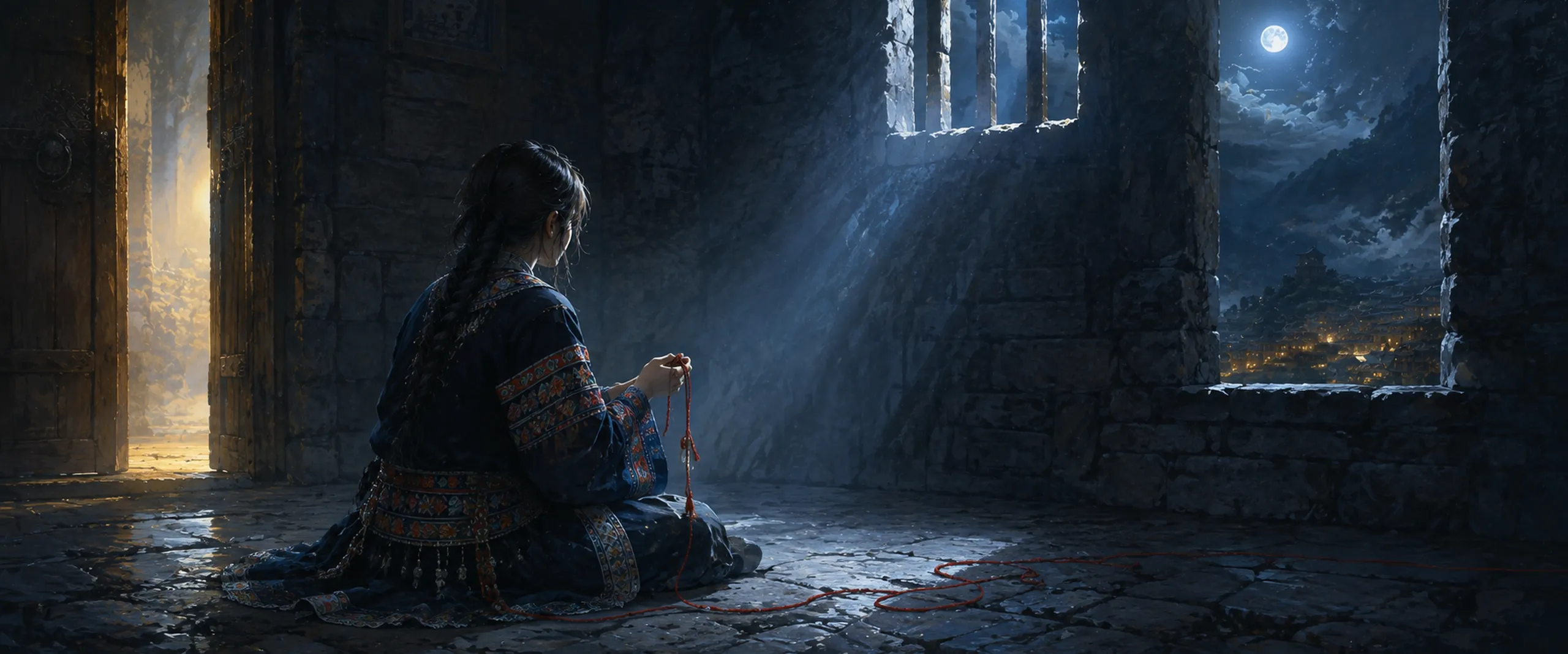
In the Miao areas of southeastern Guizhou, a beautiful legend about the origin of the Miao New Year is widely told. It is said that there was once a Miao girl named Wodu Dui (莴独对), who was beautiful, intelligent, and capable. Heaven and Earth both wanted to marry her, but Wodu Dui was determined to marry Earth. When Heaven heard of this, relying on its height and power, it threatened to send heavenly troops to seize her. Wodu Dui fled, but was captured by Heaven and imprisoned in a cold palace, cut off from the world, suffering unprecedented misery. In the eleventh lunar month, Heaven gave her an ultimatum: she must marry him at midnight, or be stabbed to death. In anger and despair, Wodu Dui cried out: “Better to die a clean ghost than to live unclean; I will hang myself in this cold palace and let my soul return to the human world!” She hanged herself in Heaven’s palace that day. Moved by her unyielding spirit, every household prepared delicious food on the first tiger market day of the eleventh lunar month, sincerely inviting Wodu Dui to return to the human world and share a reunion meal with her people. Then young men and women, dressed in festive attire, visited neighbouring villages to socialise, playing the lusheng, dancing under the moonlight, and watching bullfights and horse races. People believed that Wodu Dui was among them, watching over everyone. Year after year, generation after generation, this became the grand traditional Miao New Year festival.

This legend links the Miao New Year to the image of a steadfast and unyielding woman, giving the festival a dual colouring of romance and tragedy. Wodu Dui’s steadfastness symbolises the Miao people’s indomitable national spirit, and her wish to reunite with the human world embodies the Miao people’s eternal pursuit of reunion, happiness, and a better life.

In southeastern Guizhou, there are roughly three types of sources for the Miao New Year’s origin: the *Miao Ancient Songs*, the *Seasonal Songs*, and Miao historical legends. The *Miao Ancient Songs* are the oldest oral epics of the Miao, recording their creation myths, migration history, and daily life. In these songs, the Miao New Year is seen as a festival tradition formed during the long migration. The songs tell how the Miao ancestors settled in new lands, held grand celebrations after the autumn harvest, and offered sacrifices to ancestors and thanks to heaven and earth. The *Seasonal Songs* explain the festival’s origin from an agricultural perspective. The Miao ancestors, through long agricultural practice, summarised the natural cycle of “sowing in spring, growing in summer, harvesting in autumn, storing in winter.” After the autumn harvest, grain is in the barn, and people finally have a period of leisure. Celebrating at this time is both a summary of the year’s labour and a prayer for the next year’s harvest. The *Seasonal Songs*, with their simple lyrics, sing of the inseparable bond between the Miao New Year and agricultural civilisation. Miao New Year legends are extremely widespread and come in many versions. Some say it commemorates the birthday of the founding mother “Miluotuo” (密洛陀); others say it commemorates the merit of King Lan Lu (蓝陆), who shot down the excess suns to save the Yao people; still others say it marks the death anniversary of the national hero Kaheng (卡亨), who sacrificed himself to introduce grain seeds. These legends from different sources collectively constitute the rich historical narrative of the Miao New Year.

Agricultural Civilisation

The Miao New Year is not only a religious festival for ancestor worship but also a secular festival for celebrating the harvest. Its close connection to agricultural civilisation is the most simple and essential dimension of its origin.

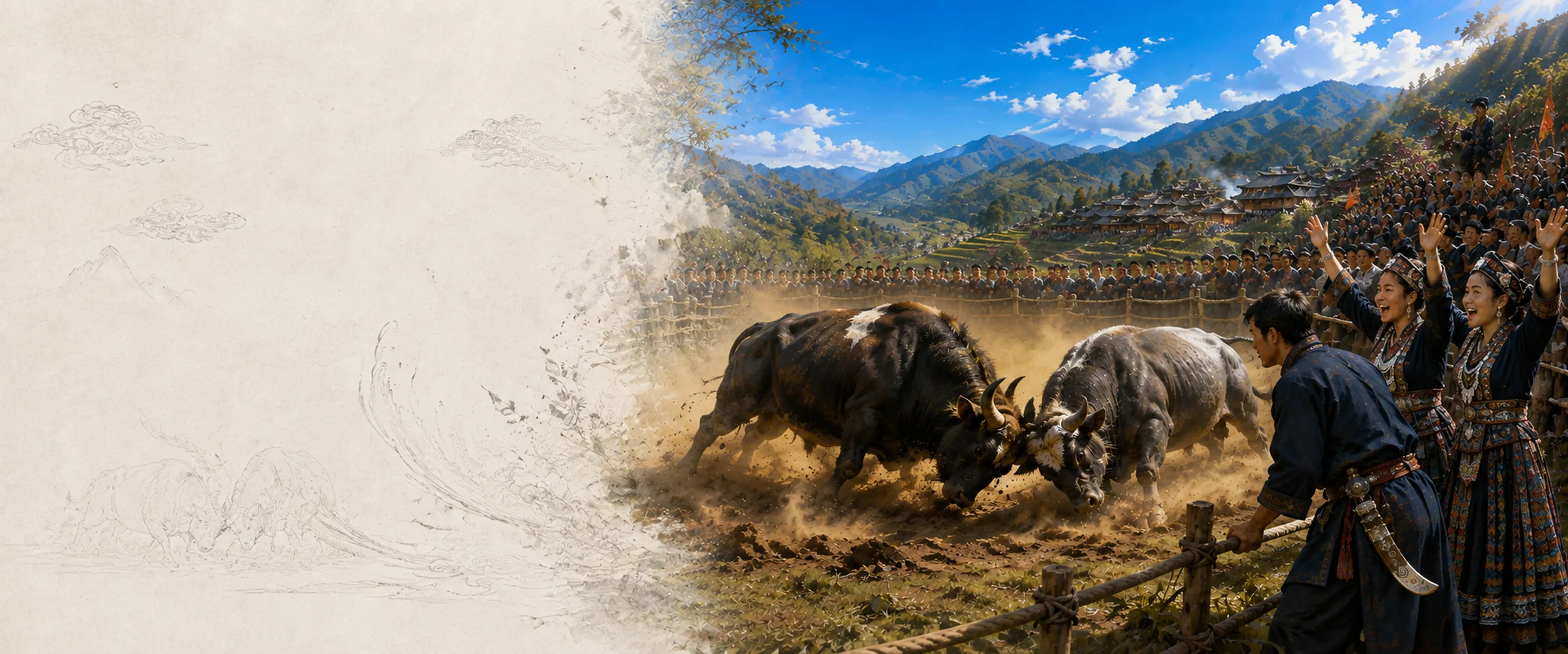
In autumn and winter, grain is stored in the barn, pigs are fat and cattle strong. At this season, people feast and make merry, celebrating the harvest and praying for favourable weather, abundant crops, and thriving livestock in the coming year. Over time, this evolved into the Miao New Year. The festival is generally held after the autumn harvest, when the year’s agricultural work is basically finished. It is a day for the Miao people to celebrate the harvest, the end of labour and the beginning of joy. The Miao are a people who revere the souls of ancestors and the natural elements of heaven, earth, mountains, rivers, trees, and rocks. The Miao New Year is celebrated to give thanks for the year’s harvest and to offer sacrifices to ancestral spirits and to the protective deities—maple trees, bamboo, stone mothers, wells, and so on. During the festival, people slaughter new year pigs, make glutinous rice cakes, honour ancestors, have reunion dinners, drink wine from village to village, and perform lusheng dances. In some areas, bullfights, bird fights, and singing competitions are also held. One celebration follows another; lusheng gatherings move from village to village, and the joy continues until the “Drum‑Turning Festival” in early spring (the second month). The Miao New Year is not only a religious festival but also a secular carnival. During the festival, the Miao people temporarily set aside their daily labour and immerse themselves in festive joy. This joy is a reward for the year’s toil, a sharing of the harvest’s happiness, and a strengthening of community ties.

The festival also includes rituals of “honouring the ox” and “honouring the fields.” In honouring the ox, wine is smeared on the nose of the ploughing ox as a reward for its year of hard work. Honouring the fields is done by the head of each household, who takes a handful of cow dung, a piece of meat, wine, rice, and incense paper to the fields, and utters auspicious words such as “honour the field to get grain, honour the soil to gather cotton.” These rituals embody the Miao people’s gratitude toward nature and animals. In an agricultural society, the plough ox is the most important labour force, and the fields are the basic means of production. Without the ox’s diligent labour and the fields’ generous yield, there could be no harvest joy. The rituals honouring the ox and fields during the Miao New Year vividly express the traditional virtue of “repaying kindness with gratitude.” These rites closely link the festival to agricultural production. The Miao New Year is not only a commemoration of ancestors but also a thanksgiving for nature’s bounty. This spirit of gratitude is the warmest and most simple cultural core of the festival.
Historical Development

Origins & Anecdotes · Tracing the Past

The Ancient Chiyou Period

The history of the Miao New Year can be traced back to the ancient period of Chiyou. The Miao originated from the Jiuli tribes in the Yellow River basin, and their chief Chiyou is revered as the common ancestor. The Chiyou tribe was among the first to enter the rice‑cultivation culture. To guide agricultural activities, the Chiyou clan formulated a lunisolar calendar that took the tenth month as the beginning of the year. This is the earliest historical source of the Miao New Year. In the Battle of Zhuolu, Chiyou was defeated and killed; his tribesmen gathered his remains and buried him in the tenth lunar month with the highest rites, and thereafter took the tenth month as the year’s beginning to honour Chiyou. This event marked the Miao New Year’s transformation from a mere calendrical new year to a sacrificial festival bearing national memory.

Qin and Han Dynasties

The Qin and Han dynasties were an important period for the development of the Miao New Year. After unifying the six states, Qin Shi Huang implemented the Zhuanxu calendar, taking the tenth month as the new year. According to the *Jingchu Suishiji*: “On the first day of the tenth month, the millet ripens; it is commonly called the Qin New Year.” The Miao lived in what is now western Hunan, adjacent to Jingchu, and were deeply influenced by the Qin calendar, so they also took the tenth month as the new year. Although the Han dynasty later adopted the Taichu calendar, taking the first month as the start of the year, the Miao remained in the southwestern mountains, somewhat distant from the central dynasty’s calendar system, and the concept of “taking the tenth month as the beginning of the year” continued to be passed down in Miao society. The term “Miao New Year” itself was a Chinese designation given to the Miao people’s own new year after the Han Chinese “Spring Festival” was introduced to the Miao areas, to distinguish the two new year celebrations.

Migration and Transmission Through the Ages

The Miao are a people who have undergone a long migration. From the Yellow River basin to the southwestern mountains, every step of their journey was accompanied by cultural persistence and transmission. As the Miao’s most important traditional festival, the Miao New Year was never forgotten during the long years of migration. Whenever they settled in a new place, the Miao still held the New Year celebration after the autumn harvest according to the Miao calendar. The lusheng, bronze drums, silver ornaments, and ceremonial costumes—these core elements of the festival—were continuously enriched and developed through generations. The dates for celebrating the festival gradually became staggered by mutual agreement, allowing different villages to take turns being the carnival centre of the region on their respective celebration days.

Contemporary Era

On 7 June 2008, the Miao New Year was approved by the State Council and included in the second batch of China’s National Intangible Cultural Heritage list, with the heritage number Ⅹ‑83. It was declared by Danzhai County and Leishan County in the Qiandongnan Miao and Dong Autonomous Prefecture, Guizhou Province. The inclusion of the Miao New Year in the national intangible cultural heritage list marked its official cultural recognition and protection at the state level. The Miao New Year is the grandest traditional festival of the Miao people and a concrete expression of the continuous transmission of Miao culture. Celebrating this festival well is of positive significance for the Miao to maintain their cultural uniqueness, strengthen ethnic unity, and uphold the world’s cultural diversity.

The contemporary Miao New Year has not declined but has shown a growing trend. Miao people dressed in festive costumes enjoy a long table banquet in the Datang scenic area. Tens of thousands of Miao people celebrate their ethnic festival. The festival activities last for half a month, taking place in the county town, the wooden drum square, the bronze drum square, the Xijiang Grand Ceremony Theatre, and more than a hundred villages, featuring intangible heritage performances and displays of poverty‑alleviation achievements. The Miao New Year is the most concentrated stage for displaying Miao intangible cultural heritage, including costumes, silver ornaments, embroidery, and song and dance. Tens of thousands of Miao compatriots, dressed in festive attire, sing and dance. During the festival, traditional entertainments such as bullfights, horse races, bird fights, lusheng dancing, and drum‑stamping dances are held. The Miao New Year has become an important platform for displaying Miao culture, promoting ethnic unity, and fostering the integration of culture and tourism. Every year during the festival, tourists from all over China and even the world flock to southeastern Guizhou to experience the unique charm of this ancient celebration.

Core Customs

Origins & Anecdotes · Tracing the Past

The customs of the Miao New Year are extremely rich, covering sacrifices, food, song and dance, sports, social interaction, and many other aspects, making it the most concentrated showcase of Miao culture.

Preparing New Year Goods

In the days leading up to the Miao New Year, every household cleans their house thoroughly and actively prepares new year goods. These include making glutinous rice cakes, brewing rice wine, making tofu, and sprouting bean sprouts. Usually, a pig is also slaughtered or pork is bought. Wealthier families may also make sausages and blood tofu, and sew new clothes for family members. The preparation of goods is not only a stockpiling of festival supplies but also a ritual in itself. The process of pounding glutinous rice cakes is a collective family labour; brewing rice wine is a test of time and patience; slaughtering the new year pig is both a celebration of the harvest and a sign of reverence for life. These preparatory activities themselves have become an indispensable part of the Miao New Year.

Staying Up Late and Ancestor Worship

On the evening of the Miao New Year’s Eve, the whole family eats the reunion dinner at home, stays awake until midnight, and then opens the door to set off firecrackers, symbolising welcoming the dragon into the home. At dawn, the elders of each household preside over the ancestor worship ceremony at home. The ritual is very solemn. Offerings include a bowl of glutinous rice, two sour fish, several sour ducks, and a piece of sour pork. Some also place a pair of bamboo baskets outside the door, filled with old household items and clothing, said to commemorate the painful life of frequent migration of the Miao ancestors. During the ritual, the elder recites the invocation, naming the ancestors one by one from the nearest to the most remote. For each name mentioned, a few grains of rice are scattered outside the door. After the recitation, paper money is burned and wine is poured as an offering. The ancestor worship ceremony of the Miao New Year is the most concentrated expression of the Miao tradition of “revering the ancestors and keeping their memory alive.” Through this ritual, the Miao people establish a spiritual connection with their forebears, confirm their place in the family lineage, and strengthen their memory and identification with their ethnic history.

Taboos and Etiquette

The Miao New Year has many taboos and rules of etiquette. For example, married women are not allowed to be present when slaughtering the new year pig. On New Year’s Eve, when offering sacrifices, fish and beef are placed on tree bark, cowhide, or leaves, and the ritual master recites ancient songs to welcome and see off the ancestors, called “qia dixia” (掐地下, literally “pinching the ground”). On New Year’s morning, one must not sweep the floor, blow air, cook raw food, or pour water out of the door, to ensure good luck. People rush to set off firecrackers at midnight to signal the start of cooking; the earliest to draw water from the well is considered diligent. During the first two days of the new year, various taboos apply: not fetching water from outside, not going to the mountains to cut firewood or grass, not sweeping, women not doing needlework (in some areas, women do not cook, and men take over), men not collecting manure, etc. Men and women of the same surname cannot sing love songs. Though these taboos may seem trivial, they form an important part of the festival ritual. They prescribe proper conduct during the festival, preserving its solemnity and sanctity. At the same time, they reflect the Miao people’s reverence for nature, respect for the family, and sense of social responsibility.

New Year’s Greetings and Visiting Relatives and Friends

After breakfast, middle‑aged and young men go to neighbours’ homes to pay New Year’s greetings, called “donf niangx” (对仰) in Miao, meaning “congratulations on the New Year.” From the fourth day onward, some elderly men and women also carry wine, meat, glutinous rice cakes, and other gifts to visit relatives and friends, or stay at home to receive guests. Marriages are generally arranged during the Miao New Year period, which is an important time for social interaction among young men and women. Some young men and women blow the lusheng and dance in their own villages, or perform bronze drum dances and bullfights; or young men go to other villages to “youfang” (游方, courtship singing) in the meeting grounds, where they sing antiphonal love songs to express affection. The customs of New Year’s greetings and visiting relatives strengthen social ties within the Miao community. Through these visits, family bonds, neighbourhood relations, and inter‑village connections are consolidated and deepened. The Miao New Year is not only a family festival but also a community festival.

Artistic Expressions

Origins & Anecdotes · Tracing the Past

The Miao New Year is the most concentrated showcase of Miao art. During the festival, the Miao people express their love of life, pursuit of beauty, and cultural heritage through various art forms—music, dance, costume, and craftsmanship.

Lusheng Dance

The lusheng dance is the most representative art form of the Miao New Year. The lusheng is the most important traditional instrument of the Miao, made of bamboo pipes with a melodious and far‑reaching tone. The lusheng dance is a collective dance accompanied by the lusheng, an important way for the Miao to express joy, honour ancestors, and celebrate the harvest. During the Miao New Year, the lusheng stomping dance is held at the village lusheng ground, with men playing and women dancing; both sexes participate. The dance begins with a short, rapid tune by the small lusheng players, followed by all the large and small lusheng players together. The girls, dressed in “hundred‑bird” costumes, wearing silver ornaments and silver floral crowns, dance gracefully. The crisp jingling of silver ornaments blends with the lusheng music, forming the festival’s moving melody. The lusheng dance is not only an artistic performance but also a form of cultural transmission. The tunes contain the Miao’s historical memory, and the dance steps embody their aesthetic concepts. Through this dance, the Miao pass on their cultural genes from generation to generation.

Bronze Drum Dance and Drum‑Stamping Dance

The bronze drum dance is an important dance form during the Miao New Year. The bronze drum is one of the most ancient instruments of the Miao, regarded as a ritual implement for communicating with spirits. The bronze drum dance is accompanied by the bronze drum, with dancers jumping and spinning around the drum in vigorous and passionate movements. “Drum‑stamping” (踩鼓) is a key activity. On the “shen” day or a similar zodiac day during the Miao New Year, the village ceremonially “starts the drum,” and men and women in festive attire dance around it, called the “drum‑stamping dance.” This dance is highly ritualistic; people believe the drumbeat can communicate with heaven and earth and summon the spirits. Through the drum‑stamping dance, the Miao establish a spiritual connection with their ancestors and deities.

Miao Festive Costumes

The Miao New Year is the festival that most fully displays the tangible culture of Miao clothing, silver ornaments, and arts and crafts. Miao costumes are an “encyclopaedia” of Miao culture, often called “history books worn on the body.” Women’s festive attire is especially exquisite. They wear “hundred‑bird” costumes and silver headdresses, neck rings, bracelets, and belts, shimmering from head to toe. Silver ornaments are not just decorations; they are also symbols of wealth, markers of status, and protective amulets. The craftsmanship of Miao silver ornaments is extremely fine, embodying the Miao people’s aesthetic wisdom and technical skills. During the Miao New Year, tens of thousands of Miao people, dressed in their finest, sing and dance, collectively showcasing the intangible cultural heritage of silver craftsmanship, embroidery, and dance. The Miao New Year has become an important platform for displaying Miao culture.

Social Functions

Origins & Anecdotes · Tracing the Past

The Miao New Year is not only a religious and artistic festival but also a social one. Its various activities serve to strengthen community ties and promote social integration.

Visiting Villages and Forming “Same Year” Bonds

“Visiting villages and forming same‑year bonds” (走寨结同年, zouzhai jie tongnian) is an important folk activity during the Miao New Year. During the festival, villages take turns being hosts and guests, forming “same‑year” relationships. Dozens or even a hundred men and women from a village, carrying lusheng instruments and dressed in festive costumes, beat drums and gongs to go to the paired village for joint celebrations. Before entering the village, they announce their arrival with three lusheng tunes, and the host village, led by the village head, comes out to welcome them. Then, in the lusheng ground, they again play the lusheng and perform the stomping dance as an entry ritual, and the host reciprocates with the same. After the ceremony, guests are invited to various households for hospitality. The guests usually stay for three days; during the day they play the lusheng, perform stomping dances, and hold lusheng competitions; in the evening they have other activities. The “same‑year” bond means sharing weal and woe; on each New Year, they take turns being hosts and guests, “eating the same year” at each other’s homes or villages. In inter‑village “same‑year” feasts, all guests, young and old, stay in the host village for two or three days, and the host village distributes them among families, each slaughtering pigs, sheep, or even oxen, offering the best hospitality. This custom of visiting and forming bonds strengthens inter‑village friendship and promotes unity and harmony within the Miao community.

Youfang (Courtship Singing)

“Youfang” (游方) is an important social activity for young men and women during the Miao New Year. Men from other villages sing antiphonal love songs with local girls in the evenings, continuing for several days until the zi or chou day. Then the young people gather at the next village that celebrates its Miao New Year, continuing the joy. “Youfang” is the traditional way for Miao youths to meet and fall in love. Through antiphonal singing, they get to know each other and express affection. The songs are not only emotional exchanges but also contests of wit—whoever can improvise the best lyrics wins more favour. Youfang combines the carnival of the Miao New Year with youth courtship, making the festival not only a religious and harvest celebration but also a festival of youth and love.

Contemporary Transmission

Origins & Anecdotes · Tracing the Past

Intangible Cultural Heritage Status

On 7 June 2008, the Miao New Year was approved by the State Council and included in the second batch of China’s National Intangible Cultural Heritage list, with the heritage number Ⅹ‑83. It was declared by Danzhai County and Leishan County in the Qiandongnan Miao and Dong Autonomous Prefecture, Guizhou Province. The Leishan Miao New Year was inscribed on the national intangible cultural heritage list in 2008. The festival’s inclusion marks its official cultural recognition and protection at the state level. It is the grandest traditional festival of the Miao people and a concrete expression of the continuous transmission of Miao culture. Celebrating it well is of positive significance for the Miao to maintain their cultural uniqueness, strengthen ethnic unity, and uphold the world’s cultural diversity.

Contemporary Grandeur

The contemporary Miao New Year has not declined but has shown a growing trend. Miao people dressed in festive costumes enjoy a long table banquet in the Datang scenic area. Tens of thousands of Miao people celebrate their ethnic festival. The festival activities last for half a month, taking place in the county town, the wooden drum square, the bronze drum square, the Xijiang Grand Ceremony Theatre, and more than a hundred villages, featuring intangible heritage performances and displays of poverty‑alleviation achievements. The Miao New Year is the most concentrated stage for displaying Miao intangible cultural heritage, including costumes, silver ornaments, embroidery, and song and dance. Tens of thousands of Miao compatriots, dressed in festive attire, sing and dance. During the festival, traditional entertainments such as bullfights, horse races, bird fights, lusheng dancing, and drum‑stamping dances are held. The Miao New Year has become an important platform for displaying Miao culture, promoting ethnic unity, and fostering the integration of culture and tourism. Every year during the festival, tourists from all over China and even the world flock to southeastern Guizhou to experience the unique charm of this ancient celebration.

Integration of Tradition and Modernity

With the passage of time, the Miao New Year is also constantly adapting to the needs of modern society. On the one hand, the traditional core content—ancestor worship, lusheng dancing, bullfights, village visits, and same‑year bonds—has been fully preserved and passed down. On the other hand, the festival is continuously infused with new elements—modern artistic performances, business negotiations, and tourism. The traditional rituals and forms of the Leishan Miao New Year are still kept alive in protection and transmission, but it also faces trends such as the dilution of traditional concepts and customs, the urbanisation of festive activities, and the commercialisation of folk customs. How to maintain the traditional core while adapting to modern needs, and how to preserve the festival’s cultural authenticity amid commercialisation, are important issues facing its contemporary transmission. Yet no matter how the forms change, the core cultural spirit of the Miao New Year—gratitude to ancestors, celebration of the harvest, and community cohesion—remains unchanged.

Cultural Spirit

Cultural Core
Miao New Year carries the Chinese people’s longing for a better life and their devotion to family, embodying the cultural spirit of reunion, harmony, gratitude and blessing — it is one of the most enduring traditional festivals in Chinese culture.
Reverence for Ancestors and Gratitude
Celebrating the Harvest
Community Cohesion

Reverence for Ancestors and Gratitude

The core cultural spirit of the Miao New Year is “revering ancestors and giving thanks.” From the tragic history of Chiyou at the Battle of Zhuolu to the solemn ancestor rituals of the festival, ancestor veneration has always been the most important theme. Through the Miao New Year’s ancestor worship, the Miao people express their remembrance and gratitude toward their forebears, confirm their place in the ethnic lineage, and strengthen their memory and identification with their history. The “reverence for ancestors” in the Miao New Year is not merely a personal commemoration but a reflection on the fate of the entire nation—the hardships of the five‑thousand‑year migration, the resilience of survival, and the persistence of culture—all of which are passed down through the generations in the festival’s rituals.

Celebrating the Harvest

Another important cultural spirit of the Miao New Year is “celebrating the harvest.” The festival is fixed after the autumn harvest, itself a summary and celebration of the year’s agricultural labour. Slaughtering the new year pig, making glutinous rice cakes, and drinking wine from village to village—these core activities are all direct expressions of harvest joy. The Miao New Year integrates “the joy of the harvest” with “remembrance of ancestors”—these seemingly contradictory aspects perfectly embody the Miao people’s unique wisdom in life: at the moment of abundance, they do not forget to give thanks to their ancestors, and in their merriment, they do not forget their national history.

Community Cohesion

The Miao New Year also serves to strengthen community cohesion and ethnic identity. Visiting villages and forming same‑year bonds reinforces inter‑village friendship; youfang promotes social interaction and courtship among young people; New Year’s greetings and visits consolidate family and neighbourhood ties. The festival is not only a family festival but also a community festival; not only a village festival but a festival for all Miao people. Through this periodic collective activity, the Miao continually reinforce their cultural identity—“who we are”—and safeguard their spiritual homeland through long historical changes.

Conclusion

Afterglow

The formation of the Miao New Year is the result of thousands of years of cultural accumulation by the Miao people, continuously infused with the spirit of the times. It originated from the Miao ancestors’ observation of astronomical phenomena and the establishment of the Miao calendar—taking the tenth month as the beginning of the year, bidding farewell to the old and welcoming the new after the autumn harvest—and gained its deepest national memory from the tragic story of Chiyou; it acquired romantic cultural narratives from folk tales such as Wodu Dui; it obtained its simplest festive meaning from the harvest celebrations of agricultural civilisation; it found its most vivid cultural expression in art forms like the lusheng, bronze drums, and silver ornaments; and it developed its most profound social functions through rituals such as ancestor worship, staying up on New Year’s Eve, and visiting villages to form same‑year bonds.

From the formulation of the Miao calendar and the establishment of “the tenth month as the beginning of the year,” to the tragic history of Chiyou’s defeat at Zhuolu; from the generations‑long singing of the *Miao Ancient Songs* and *Seasonal Songs*, to the romantic narrative of the Wodu Dui legend; from the post‑harvest carnival celebrations, to the ritual traditions of ancestor worship, field honouring, and ox honouring; from the artistic expression of lusheng and bronze drum dances, to the social functions of village visiting and youfang—the Miao New Year has undergone a long evolution from calendar to festival, from sacrifice to carnival, from religion to secularity, and from local to national. It carries both the Miao ancestors’ profound understanding of astronomy and calendrical systems and their precise grasp of agricultural production, as well as the Miao people’s gratitude to ancestors, celebration of the harvest, cohesion of the community, and aspiration for a better life.

In 2008, the Miao New Year was inscribed on the second batch of the National Intangible Cultural Heritage list. From the ancient agricultural calendar to contemporary national intangible heritage, the Miao New Year, spanning thousands of years, still illuminates the hearts of every Miao son and daughter with its unique cultural charm. Like the melodious sound of the lusheng—it is not only the melody of the festival but also the cultural heartbeat of the Miao people, who have endured five thousand years of trials and still flourish with vitality.

— [es]

Continue exploring Miao New Year culture

Readers’ Comments

Calendar and traditional culture enthusiasts from around the world, sharing the same moon.

Sign in or register to join the conversation. Your comment account is created automatically the first time you use a connected account.