
Five-Colored Glutinous Rice
Grains & StaplesBasic Information
- Category: Grain staple
- Popular Areas: Zhuang communities along the Hongshui River basin in Guangxi, especially Donglan, Tian’e, and Nandan
- Main Ingredients: Glutinous rice, natural plant dyes including red-blue grass, turmeric, maple leaves, purple fanteng vine, and others
- Also Known As: Five-Colored Glutinous Rice, Five-Colored Rice, Flower Rice
Historical Origins
Five-Colored Glutinous Rice is the most iconic seasonal food of the Maguai Festival and one of the central offerings used by the Zhuang in worship of the Maguai Goddess.
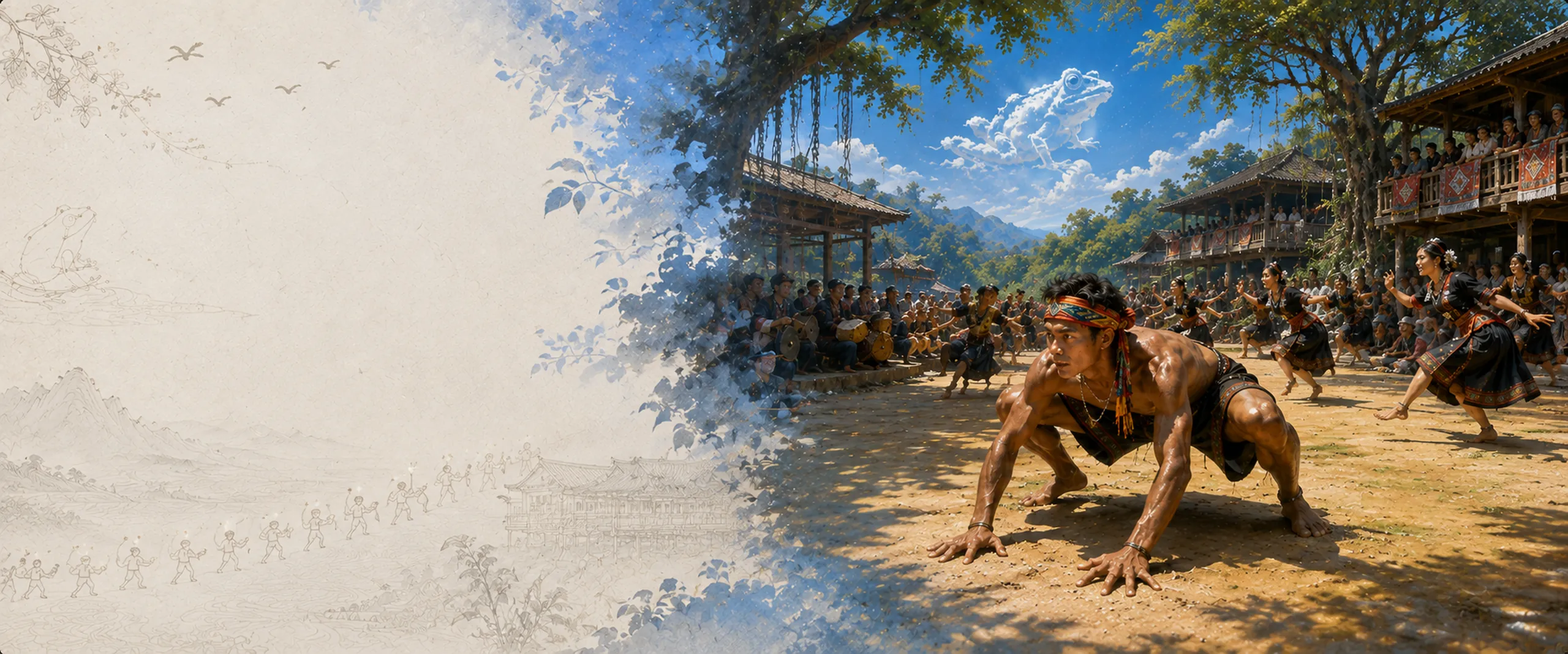
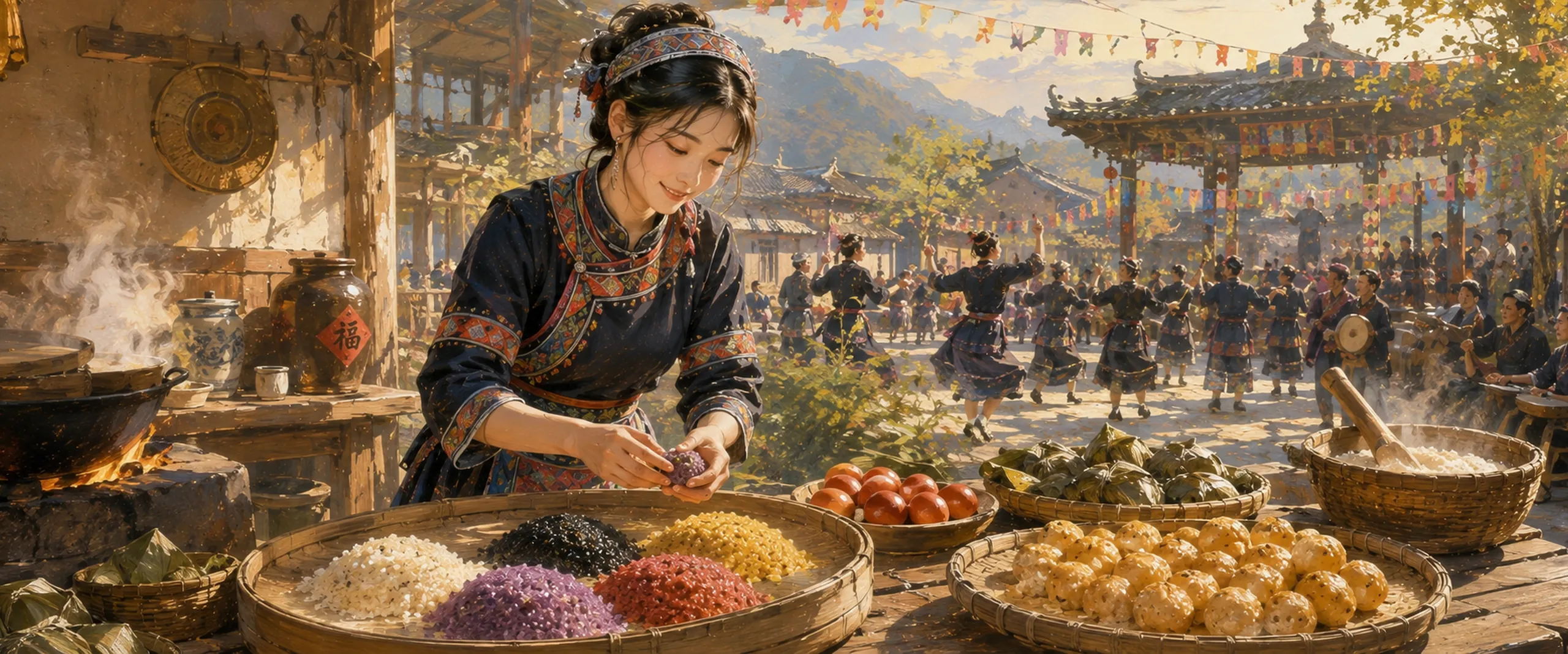
During the festival, local Zhuang villagers slaughter pigs and chickens, steam Five-Colored Glutinous Rice, pound ciba, dress in festive clothing, play suona horns and long brass horns, beat bronze drums, and sing mountain songs as they welcome visitors from afar.
In sacrificial activities, villagers offer pig’s heads, Five-Colored Glutinous Rice, and rice wine to Maguai.
Five-Colored Glutinous Rice is at once a sacrificial offering, a festival food, and a gift exchanged among relatives and friends. Zhuang communities also arrange the rice to form the Chinese characters “板隆蚂拐节”, bringing festival culture and food together.
The technique of making Five-Colored Glutinous Rice has a long history and is a chromatic expression of the Zhuang ecological principle “取于自然、敬于自然”—taking from nature and respecting nature.
All five colors come from natural plants: red from red-blue grass, yellow from turmeric, black from maple leaves, purple from purple fanteng vine, and white from the natural color of the glutinous rice itself.
The Zhuang believe that the five colors symbolize abundant harvests and favorable weather. Eating Five-Colored Glutinous Rice during the Maguai Festival is regarded as one of the most devout offerings to the Frog Goddess.
Cultural Meaning
The preparation of Five-Colored Glutinous Rice is highly meticulous.
Red-blue grass, turmeric, maple leaves, purple fanteng vine, and other natural plants are first separately pounded or simmered to extract their juices, producing red, yellow, black, and purple liquids.
The glutinous rice is divided into five portions and soaked separately in the four colored liquids and in clear water. It is left for several hours so that the colors can penetrate fully.
Each portion is then removed and drained separately, after which the colors are mixed in suitable proportions and the rice is steamed in a traditional steamer.
Once cooked, the rice is brilliant in color, fragrant, and flavorful, and can keep for a relatively long time without spoiling.
At Maguai Festival long-table banquets, Five-Colored Glutinous Rice is an indispensable staple.
Five-Colored Glutinous Rice carries several layers of meaning. First, “abundant harvests.” The five colors symbolize plentiful grain and favorable weather. Second, “auspiciousness and good fortune.” Five-Colored Glutinous Rice represents the Zhuang people’s hopes for good fortune. Third, “an offering to honor the divine.” It is one of the central offerings made to the Frog Goddess during the Maguai Festival. Fourth, “the gift of nature.” The use of natural plant dyes reflects the Zhuang ecological wisdom of “取于自然、敬于自然”—taking from nature and respecting nature.
Readers’ Comments
Calendar and traditional culture enthusiasts from around the world, sharing the same moon.
Sign in or register to join the conversation. Your comment account is created automatically the first time you use a connected account.
No comments yet
Share your thoughts with readers around the world.