Laba Festival

Laba FestivalLaba Festival Cuisine

「 腊八粥,七宝五味香。 」

The Laba Festival originated from Buddhism. It is said that the eighth day of the twelfth lunar month is the day of the Buddha Sakyamuni’s enlightenment, and the festival gradually evolved into a traditional folk celebration. Du Fu, in his poem…

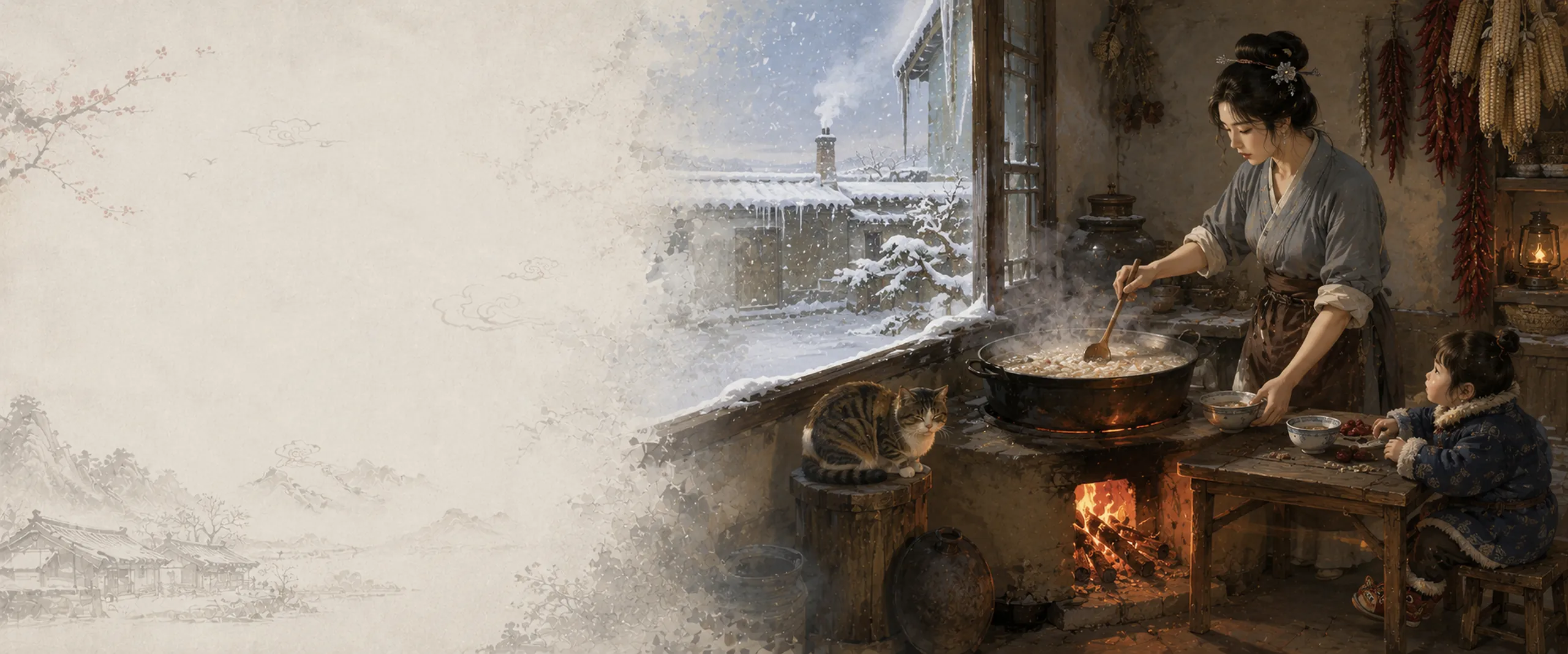
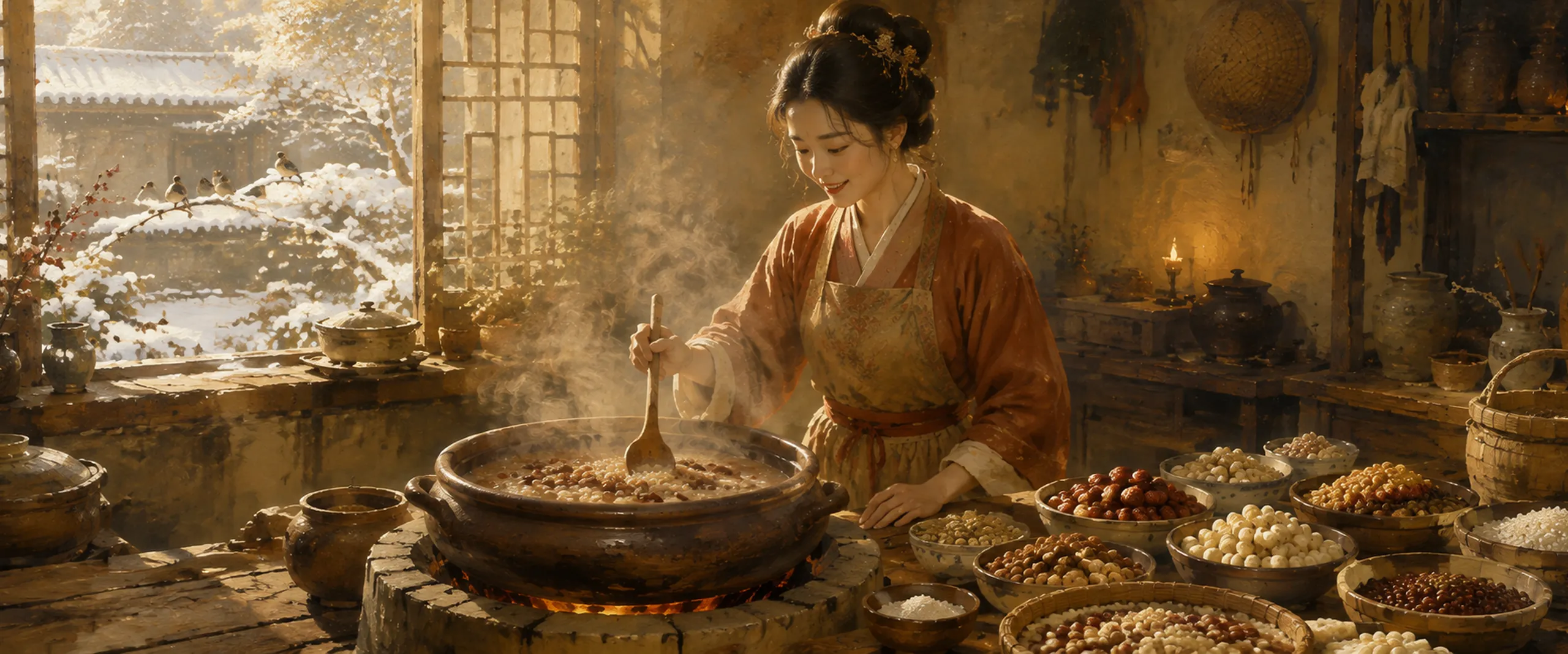
Laba porridge is the most iconic food of the Laba Festival. Its documented history extends back more than a thousand years, with its earliest beginnings traced to the Song dynasty. The Qing-dynasty Yanjing Suishi Ji (《燕京岁时记》) gives a detailed account of its abundant ingredients: “用黄米、白米、江米、小米、菱角米、栗子、红豆、去皮枣泥等,开水煮熟,外用染红桃仁、杏仁、瓜子、花生、榛穰、松子及白糖、红糖、琐琐葡萄,以作点染”. Laba porridge is also called “Seven-Treasure Five-Flavor Porridge.” Because Laba Festival is traditionally believed to mark the day when Shakyamuni Buddha attained enlightenment, Buddhist temples cooked porridge from vegetables, fruits, and grains as offerings to deities and Buddhas and distributed it to the poor. Laba porridge therefore also came to be respectfully called “Buddha Porridge.” Laba porridge may be salty or sweet, contain meat or be vegetarian; what matters is not a fixed recipe, but the lively atmosphere of the approaching New Year and the warmth of family affection.

Laba Festival / Laba Festival Cuisine
84 days until Laba Festival January 15, 2027 · Lunar 腊月初八

Festival Food Gallery

Seasonal Menu

Food in Detail

Seeking the True Flavor

Laba Porridge

Soups, Broths & Congee

Basic Information

  • Category: Porridge and soup
  • Popular Regions: Nationwide
  • Main Ingredients: Glutinous rice, red beans, mung beans, peanuts, lotus seeds, longan, red dates, walnuts, and others
  • Alternative Names: Seven-Treasure Five-Flavor Porridge, Buddha Porridge, Dajia Fan (大家饭), Fangfeng Zhou (防风洲)

Historical Origins

Laba porridge is the most representative seasonal food of the Laba Festival, and its history can be traced back more than a thousand years to the Song dynasty. According to Wu Zimu’s Southern Song Mengliang Lu (《梦粱录》): “八日,寺院谓之‘腊八’。大刹寺等俱设五味粥,名曰‘腊八粥’。” By this time, cooking porridge on Laba had already become a popular food custom.

The origin of Laba porridge is closely connected with Buddhism. According to tradition, Shakyamuni Buddha, seeking to save people from suffering and find a way to relieve the pains of life, gave up the comforts of palace life and undertook ascetic practices. One day, exhausted from long travel, he fainted. A herdswoman offered him milk porridge—porridge cooked from milk and grain. After eating it, Shakyamuni recovered his strength, sat beneath the Bodhi tree in meditation, and finally, on the eighth day of the twelfth lunar month, suddenly attained supreme perfect enlightenment. Later Buddhists, in remembrance of the hardships the Buddha endured before enlightenment, cooked mixed-grain porridge and ate it on this day.

After Laba porridge entered China, it blended with indigenous La sacrifice traditions. According to written records, Laba porridge was originally a sacrificial offering used by the Son of Heaven to worship deities and pray for favorable winds, timely rains, and a good harvest in the coming year. It was also once used as an offering to bodhisattvas, with eighteen kinds of dried fruit added to symbolize the Eighteen Arhats. Later, some temples prepared Laba porridge themselves and distributed it to the poor, calling it “Buddha Porridge.” In 2021, with approval from the State Council, Laba Festival customs were included in the national list of representative intangible cultural heritage projects. What simmers in this bowl is not merely food, but a cultural root worthy of preservation.

Cultural Meaning

A folk legend about the origin of Laba porridge is also widely circulated. It is said that before Zhu Yuanzhang, founding emperor of the Ming dynasty, became emperor, he once suffered imprisonment during a bitter winter. Cold and starving, he managed to dig seven or eight kinds of grain—including red beans, rice, and red dates—out of a rat hole in the prison. Zhu Yuanzhang cooked them into porridge. Folk tradition holds that eating such porridge could bring good fortune. After he later became emperor, he remembered the incident and ordered the imperial kitchen to prepare this porridge on the eighth day of the twelfth lunar month so that he could eat it together with civil and military officials. Laba porridge was thus said to have spread among the people.

Laba porridge is commonly made from ingredients such as glutinous rice, red beans, sesame, walnuts, longan, red dates, and lily bulbs. Some ingredients are also used to convey auspicious meanings—for example, longan represents “reunion,” walnuts symbolize “harmony and beauty,” and lily bulbs signify “harmony in all things.” The Qing-dynasty Yanjing Suishi Ji · Laba Zhou (《燕京岁时记·腊八粥》) records: “腊八粥者,用黄米、白米、江米、小米、菱角米、栗子、红江豆、去皮枣泥等,开水煮熟,外用染红桃仁、杏仁、瓜子、花生、榛穰、松子及白糖、红糖、琐琐葡萄,以作点染。” This is a classic recipe for Laba porridge in Qing-dynasty Beijing.

Laba porridge brings foods from all directions together in one pot and cooks them with rice, carrying the meaning of gathering all things together and harmonizing a thousand spirits. People believe that eating Laba porridge during the festival can bring divine protection and ensure that everything goes smoothly. Since Laba falls during the coldest part of winter, drinking the porridge is also said to dispel cold, warm the body, and nourish the spleen and stomach.

Once Laba porridge has been eaten, preparations for the New Year begin, opening the prelude to Spring Festival.

Regional Evolution

Laba porridge takes on different flavors around China and broadly follows a pattern of “sweet in the north, savory in the south”:

  • Beijing: Laba porridge is especially elaborate. Yellow millet, white rice, glutinous rice, millet, water-caltrop kernels, chestnuts, red cowpeas, peeled date paste, and other ingredients are cooked together in water, while red-dyed peach kernels, almonds, melon seeds, peanuts, hazelnuts, pine nuts, white sugar, brown sugar, raisins, and others are used as decoration. The varieties are numerous and the colors rich.
  • Henan: Mainly uses millet, mung beans, cowpeas, wheat kernels, peanuts, red dates, corn, and other ingredients. Brown sugar and walnut kernels are added before serving, producing a thick, sweet porridge that symbolizes abundant grain in the coming year.
  • Northern Shaanxi: In addition to various kinds of rice and beans, dried fruits, tofu, and meat must also be added, giving the porridge a savory fragrance and rich nutrition.
  • Sichuan and Chongqing: Sweet, savory, and spicy versions are all found. Savory Laba porridge is mainly made with soybeans, peanuts, diced meat, radish, and other ingredients. Spicy versions add chili or chili paste to these ingredients.
  • Jiangsu and Zhejiang: Water chestnuts are a local specialty; in some areas, greens and oil are added to the porridge.
  • Suzhou: Laba porridge is authentically rich and sweet. Carefully selected glutinous rice, red dates, lotus seeds, longan, ginkgo nuts, peanuts, pine nuts, and other ingredients are slowly simmered over low heat until thick, smooth, and glutinous.
  • Fuzhou: Laba porridge has an interesting feature—a small lion made from several kinds of fruit is placed on top to symbolize warding off evil. In the past, Fuzhou households generally began preparing Laba porridge on the evening of the seventh day of the twelfth lunar month, simmering it carefully through the night so that it was ready the next morning.
  • Gansu and Ningxia: Laba porridge is savory, fragrant, and warming, reflecting the wisdom of resisting the severe cold of the northwest.
  • Parts of Shaanxi: Laba porridge must contain “Laba beans”—fermented beans prepared several months in advance. Added to the porridge, they create a distinctive mellow flavor.

Simple Preparation

  • Ingredients: 50 g glutinous rice, 50 g rice, 30 g millet, 30 g red beans, 30 g mung beans, 30 g peanuts, 20 g lotus seeds, 10 red dates, 10 longans, 20 g walnut kernels, rock sugar as needed
  • Steps:
  1. Soak the beans—red beans, mung beans, and peanuts—for 4–6 hours in advance. Wash the glutinous rice, rice, and millet. Remove the bitter cores from lotus seeds and pit the red dates.
  2. Bring water to a boil in a pot, adding enough from the start so that additional water is ideally unnecessary. Add the soaked beans first; bring to a boil over high heat, then cook over medium-low heat for 20 minutes.
  3. Add the glutinous rice, rice, millet, lotus seeds, and peanuts, and continue cooking for 20 minutes.
  4. Add red dates, longan, and walnuts and cook for another 20 minutes, stirring during cooking to prevent sticking.
  5. When the porridge becomes thick, add rock sugar to taste. Turn off the heat and let it rest, covered, for 10 minutes for a better texture.

Tip: Add enough water at the beginning. Rice and glutinous rice are rich in starch and are key to giving Laba porridge its thickness. Soaking beans and similar ingredients for 3–4 hours in advance can greatly shorten the cooking time. The ingredients do not have to be limited to exactly eight kinds: “once eight kinds are gathered, it counts as authentic flavor.”

Laba Garlic

Meat & Seafood

Basic Information

  • Category: Pickled food
  • Popular Regions: North China, especially Beijing and Hebei
  • Main Ingredients: Purple-skinned garlic, rice vinegar
  • Alternative Name: Jade Garlic

Historical Origins

Laba garlic is a traditional northern Chinese pickle named after the fact that it is prepared during the Laba Festival. Although there is no definitive historical research establishing exactly when the custom began, it is closely connected with traditional commercial activity. Suan (蒜, “garlic”) and suan (算, “to calculate / settle accounts”) are homophones. On the eighth day of the twelfth lunar month, businesses traditionally practiced “Laba accounting,” taking stock of income and expenses and collecting debts. A Beijing folk saying goes: “腊八粥、腊八蒜,放账的送信儿,欠债的还钱”. Because Spring Festival was approaching, creditors often avoided directly visiting debtors to demand repayment and instead gave them vinegar-pickled garlic as an indirect way of expressing the intention to collect debts.

The Laba Festival originated in the ancient La sacrifice. In the twelfth lunar month, ancient people performed sacrifices to worship deities and ancestors and pray for a good harvest. The observance gradually became fixed on the eighth day of the twelfth lunar month as a distinct festival and acquired additional meanings of praying for blessings and welcoming auspiciousness. Over time, the classic customs of cooking Laba porridge and pickling Laba garlic gradually took shape.

Cultural Meaning

The method for making Laba garlic is highly distinctive. Purple-skinned garlic cloves are selected, their old outer skins removed, and the cloves are soaked in rice vinegar, sealed in a small jar, and placed somewhere cold. Gradually, the garlic immersed in vinegar turns green until the entire clove becomes emerald green, resembling fine jade. This remarkable transformation from white to green is the most striking feature of Laba garlic.

Laba garlic turns green because, under low-temperature conditions, sulfur-containing compounds in garlic react with amino acids to produce blue and yellow pigments, which combine to form an emerald-green color. This naturally formed jade-green appearance has earned Laba garlic the beautiful name “Jade Garlic.”

About ten or more days after Laba, Spring Festival arrives. Through soaking in vinegar, the garlic becomes completely emerald green and highly attractive, while the vinegar itself acquires the pungent aroma of garlic. On Lunar New Year’s Eve and around Spring Festival, Laba garlic and its vinegar are eaten with dumplings or used to dress cold dishes, producing a particularly delicious flavor.

The central meanings of Laba garlic are “settling accounts” and “welcoming the new.” Because suan (蒜, garlic) and suan (算, calculate / settle) are homophones, Laba garlic carries the meaning of settling year-end accounts: debts and accounts from the old year should be cleared before the New Year so that the new year can be welcomed cleanly. The transformation of Laba garlic from white to green also symbolizes bidding farewell to the old and welcoming the new—from the twelfth lunar month into the first, from the old year into the new. Its emerald color resembles jade and symbolizes auspiciousness and wealth.

Simple Preparation

  • Ingredients: 500 g purple-skinned garlic, enough rice vinegar to cover the cloves, a little rock sugar if desired, 1 clean glass jar
  • Steps:
  1. Peel the outer skin from the purple-skinned garlic while keeping each clove intact. Do not rinse with water, as raw water can easily cause spoilage.
  2. Place the garlic cloves in a clean glass jar free of water and oil.
  3. Pour in rice vinegar, ensuring that the cloves are completely submerged. A little rock sugar may be added for flavor.
  4. Seal the jar and place it in a cool location, ideally at 10–15°C.
  5. Leave for 10–15 days until the cloves gradually turn emerald green.

Tip: Purple-skinned garlic turns green more easily than white-skinned garlic. The container must be completely free of water and oil, otherwise spoilage can occur. It is normal for the color to change from white to green during pickling. The longer the pickling time, the milder the garlic’s pungency becomes and the stronger the garlic aroma of the vinegar.

Laba Noodles

Grains & Staples

Basic Information

  • Category: Grain-based staple food
  • Popular Region: Guanzhong, Shaanxi
  • Main Ingredients: Noodles, saozi topping—diced meat, tofu, carrots, daylily buds, wood ear mushrooms, and others
  • Alternative Names: 腊麪、腊八麪

Historical Origins

Laba noodles are a traditional Laba Festival noodle dish from the Guanzhong region of Shaanxi, popular around Huayin, Dali, Lintong, Fengxiang, and neighboring areas. The custom derives from ancient sacrificial activities associated with the Laba Festival. In the past, in places such as Dali, Lintong, and Fengxiang, people cooked noodles on Laba to honor deities and worship ancestors, praying for abundant grain in the coming year; hence the name “Laba noodles.”

Laba noodles are considered possibly to have evolved from Laba porridge. In parts of northern China where rice was not produced or was produced only in small quantities, people ate Laba noodles instead of Laba porridge. Guanzhong people traditionally regarded beans and corn as coarse and miscellaneous grains, while wheat flour was fine grain—more nutritious and tastier. The good life longed for by villagers was described as “白面馍馍干捞面,油泼辣子调一碗”. Since good days were believed to come from “the Buddha’s light shining everywhere,” Laba noodles were used to honor deities and ancestors.

The Ming imperial court already had a custom of eating Laba noodles. Shen Defu’s Ming-dynasty Yehou Bian · Liechao Yi · Ci Baiguan Shi (《野获编·列朝一·赐百官食》) records: “腊月八日吃腊麪。” Qing scholar Yu Yue wrote in Chaxiangshi Xuchao · Laba Mian (《茶香室续钞·腊八面》): “十二月初八日,释氏以饧果诸物煮粥,名腊八粥。明宫中有腊八麪。” This shows that by at least the Ming dynasty, Laba noodles had already become a seasonal Laba food in both the imperial court and among the people.

Regional Evolution

Laba noodles are prepared differently across Shaanxi:

  • Huayin and Lintong: Noodles are eaten in place of Laba porridge on the morning of the eighth day of the twelfth lunar month.
  • Fengxiang area: Eating begins the day before Laba and continues until the Kitchen God sacrifice on the twenty-third day of the twelfth lunar month.
  • Chengcheng in northern Weibei: Eaten on Laba morning.
  • Heyang: People in Heyang traditionally enjoy noodles, summarized in the saying “顿顿离不了馍,天天离不开面”. This dietary preference inevitably influenced the formation of the local custom of eating noodles on Laba.

Originally, Laba noodles in rural Guanzhong were made by cooking millet and soybeans into porridge and adding noodles. Later, eight kinds of vegetables and meat were cooked into a saozi topping and served with noodles. Today, people combine beans and vegetables, cooking walnuts, sesame, peanuts, lotus seeds, greens, spinach, daylily buds, wood ear mushrooms, and other ingredients together with noodles into a nutritious and flavorful noodle soup.

Simple Preparation

  • Ingredients: 200 g noodles, 100 g diced pork, 50 g dried tofu, half a carrot, daylily buds, wood ear mushrooms, chopped scallion, minced ginger, light soy sauce, salt, five-spice powder
  • Steps:
  1. Marinate the diced pork with light soy sauce for 10 minutes. Dice the dried tofu and carrot; soak and chop the daylily buds and wood ear mushrooms.
  2. Heat oil in a wok and fry the scallion and ginger until fragrant. Add the pork and stir-fry until its color changes.
  3. Add diced carrot, dried tofu, daylily buds, and wood ear mushrooms. Stir-fry, season with light soy sauce, salt, and five-spice powder, add a little water, and simmer briefly to make the saozi.
  4. Cook the noodles separately until done, then transfer them to a bowl.
  5. Spoon the saozi over the noodles and sprinkle with chopped scallion.

Tip: The essence of Laba noodles lies in the saozi—a topping made from eight ingredients, combining meat and vegetables and offering a rich variety of colors. Handmade noodles or wide noodles are preferable because they hold the sauce more effectively.

Laba Tofu

Soy & Egg Dishes

Basic Information

  • Category: Soy product
  • Popular Region: Yixian County, Huangshan, Anhui
  • Main Ingredients: Tofu, salt
  • Alternative Name: Yixian Laba Tofu

Historical Origins

Laba tofu is a traditional folk snack and Laba Festival food custom of Yixian County, Anhui. Every year around the Laba Festival, households throughout Yixian dry tofu. Its origin is closely tied to traditional Huizhou merchant culture. According to tradition, during the Ming and Qing dynasties, Huizhou merchants traveling away on business prepared Laba tofu as durable provisions that could be stored for long periods. The roots of Laba tofu are deeply embedded in the folk culture of Yixian.

According to the Wang Clan Genealogy (《王氏族谱》), its ancestors valued Laba tofu for its portability, making it one of the principal provisions carried by merchant caravans crossing the ancient Huizhou-Hangzhou road. Records already existed during the Daoguang reign of the Qing dynasty. During the height of Huizhou merchant culture, Laba tofu became a “letter from home on the tip of the tongue” that eased homesickness among travelers. In 2009, the techniques for making Laba tofu were formally included in Huangshan City’s municipal intangible cultural heritage list, making it an important symbol of Huizhou food culture.

Cultural Meaning

An interesting folk legend about the origin of Laba tofu circulates in Yixian County. Long ago in Huizhou, a married couple lived together while the husband traveled away on business and the wife managed the household. One day, the wife went to market and bought a piece of tofu. Unexpectedly, an urgent matter arose and she had to return to her parents’ home, so she casually left the tofu on the stone mill outside her house. Two or three months later, when she returned, she found that the tofu had turned golden and hard. When she tasted it, its flavor was unexpectedly distinctive. From then on, people imitated the method and made this easily stored tofu around the time of Laba, giving rise to the name Laba tofu.

Laba tofu symbolizes blessings, auspiciousness, and well-being. This meaning comes from the homophony between fu (腐) and fu (福, “blessing”), representing “holding on to blessings.” It expresses wishes for a prosperous, peaceful, and smooth new year. Its firm golden appearance symbolizes “a hall filled with gold and jade,” while its suitability for long-term storage symbolizes “lasting for a very long time.” In Huizhou merchant culture, Laba tofu also symbolizes frugality, thrift, and the spirit of building a livelihood through hardship.

Simple Preparation

  • Ingredients: 1 block firm tofu, about 500 g; salt as needed
  • Steps:
  1. Wash the firm tofu and cut it into large pieces about 3–4 cm thick.
  2. Rub salt evenly over the surfaces and leave in a ventilated place for about one day to dry the exterior.
  3. String the tofu pieces together with straw rope or cotton thread and hang them in a cool, ventilated place.
  4. Air-dry naturally for 10–15 days until the surface turns golden and the texture becomes firm.
  5. To eat, slice and steam, add to soup, or stir-fry.

Tip: The key to making Laba tofu lies in “drying.” Natural air-drying in the dry north wind of the twelfth lunar month allows moisture inside the tofu to evaporate slowly, creating its distinctive dense texture and rich flavor. Traditional Laba tofu can be stored for several months without spoiling and taken as needed.

Laba Beans

Soy & Egg Dishes

Basic Information

  • Category: Fermented soy product
  • Popular Regions: Hunan, Hubei, Jiangxi, and other areas
  • Main Ingredients: Soybeans, salt, chili, ginger
  • Alternative Name: Laba Douchi (腊八豆豉)

Historical Origins

Laba beans are a traditional Laba Festival food of Hunan, Hubei, Jiangxi, and other regions. Around the Laba Festival each year, soybeans are cooked and fermented to make the distinctively flavored Laba beans, which serve both as an important ingredient in Laba porridge and as an everyday side dish. The method reflects the ancient wisdom of “winter storage”—fermenting beans during the cold twelfth lunar month and using low temperatures to control the fermentation process, producing a seasoning that stores well.

Cultural Meaning

Laba beans carry the meanings of “fermentation” and “transformation.” Soybeans are transformed through fermentation into distinctively flavored Laba beans, symbolizing the accumulation of the old year being transformed into nourishment for the new. Laba beans are the source of the “Laba bean” flavor in Laba porridge and embody the Laba Festival spirit of “gathering all things together.”

Simple Preparation

  • Ingredients: 500 g soybeans, salt, chili powder, minced ginger, baijiu
  • Steps:
  1. Wash and soak the soybeans for 4 hours, cook until soft, then drain.
  2. Spread the cooked soybeans out to cool, sprinkle with salt, chili powder, and minced ginger, and mix well.
  3. Pack tightly into a clean jar, sprinkle a layer of salt over the surface, and pour in a small amount of baijiu.
  4. Seal the jar and ferment in a cool place for 15–30 days before eating.

Tip: The longer the fermentation time, the richer and mellower the flavor. Laba beans may be eaten directly as a side dish or used as a seasoning ingredient in Laba porridge.

Laba Rice

Grains & Staples

Basic Information

  • Category: Grain-based staple food
  • Popular Regions: Cangzhou, Hebei, and other areas
  • Main Ingredients: Rice, millet, mixed grains, beans, dried fruit
  • Alternative Name: Laba Rice

Historical Origins

In Cangzhou, Hebei, and some other areas, the Laba Festival is observed differently from elsewhere: instead of drinking porridge, people eat rice or very thick Laba rice. This food custom reflects the diversity of Laba Festival cuisine. Laba rice uses ingredients similar to Laba porridge—rice, beans, dried fruit, and others cooked together—but contains less water and has a firmer texture, while carrying the same meanings of “gathering all things together” and “abundant grain harvests.” The fan (饭, “rice / meal”) in Laba rice is homophonically associated with fan (反, “return”), giving it the meaning of “returning to the origin,” symbolizing a return to one’s roots and bidding farewell to the old while welcoming the new.

Simple Preparation

  • Ingredients: 100 g rice, 50 g millet, 30 g red beans, 30 g mung beans, 10 red dates, raisins and walnuts as needed
  • Steps:
  1. Soak the beans for 4 hours in advance. Wash the grains.
  2. Cook the beans first for 20 minutes, then add the rice, millet, and dried fruits.
  3. Add water and simmer until the rice is cooked, using slightly more water than for ordinary rice.
  4. Let rest, covered, for 10 minutes before serving.

Tip: Laba rice is thicker than Laba porridge and is suitable as a staple food. Ingredients can be flexibly adjusted according to what is available.

Laba Vinegar

Others

Basic Information

  • Category: Condiment
  • Popular Region: North China
  • Main Ingredients: Rice vinegar, garlic
  • Alternative Name: Laba Garlic Vinegar

Historical Origins

Laba vinegar is a by-product created during the pickling of Laba garlic. As the garlic pickles, the rice vinegar absorbs the garlic’s pungency and aroma, developing a strong garlic fragrance and mellow flavor. When dumplings are eaten on Lunar New Year’s Eve, Laba vinegar is an excellent dipping sauce. Dumplings dipped in Laba vinegar and accompanied by a clove of emerald-green Laba garlic form a classic combination at northern Chinese New Year’s Eve dinners.

Cultural Meaning

Laba vinegar carries a wordplay involving “sourness” and “calculation.” Cu (醋, “vinegar”) sounds like cu (促, “urge / hasten”), carrying the meaning of urging the old year to pass and the new year to arrive. The vinegar’s rich garlic fragrance symbolizes the depth and richness of life.

Simple Preparation

  • Ingredients: Rice vinegar as needed, several cloves of garlic, prepared together when making Laba garlic
  • Steps:
  1. While Laba garlic is being pickled, the vinegar naturally absorbs the garlic’s pungency and aroma.
  2. After 10–15 days, the vinegar turns pale yellow and develops a strong garlic fragrance; it may then be used as a dipping sauce.
  3. On Lunar New Year’s Eve, pour out the Laba vinegar and serve it together with Laba garlic alongside dumplings.

Food Culture

Foodways

Looking across the entire food system of the Laba Festival, several cultural principles can be traced throughout:

1. Taking “union” as beauty. Laba porridge is the ultimate embodiment of “coming together.” Foods from all directions are gathered into one pot and cooked together with rice, carrying the meaning of “gathering all things together and harmonizing a thousand spirits.” Every ingredient comes from a different place of origin and represents a different category of food; brought together in one pot, they symbolize abundant grain harvests and harmony among all things. This idea of “union” is both gratitude for the harvest and a prayer for the coming year—that everything may be complete, harmonious, and well ordered.

2. Taking “newness” as the beginning. The Laba Festival marks the prelude to Spring Festival. A popular children’s rhyme says: “小孩小孩你别馋,过了腊八就是年”. Once Laba arrives, people begin “getting busy for the New Year”—sweeping away dust, preparing New Year goods, writing Spring Festival couplets, and making every preparation for the holiday. Laba Festival food is the first wisp of smoke carrying the flavor of the New Year. On Laba morning, whichever household first sends cooking smoke rising and finishes its Laba porridge is believed to symbolize an early harvest and abundant grain in the coming year.

3. Taking Buddhism as the source. Laba Festival food traditions have deep connections with Buddhism. According to tradition, the eighth day of the twelfth lunar month was the day on which Shakyamuni attained enlightenment. Buddhist temples, following the legend of the herdswoman offering milk porridge, cooked porridge from fragrant grains, fruits, and other ingredients as an offering to the Buddha and called it “Laba porridge.” Temples distributed the porridge to disciples and believers, and the custom later spread among the general population. Laba porridge thus also became known as “Buddha Porridge.” Tradition holds that eating it could bring the Buddha’s protection. The Laba Festival’s cultural character of “the blending of Buddhist and popular traditions” makes it a vivid expression of the inclusiveness of Chinese culture.

4. Taking homophony as delight. Suan (蒜, “garlic”) sounds like suan (算, “to calculate / settle accounts”), so Laba garlic carries the meaning of settling accounts at year’s end. Fu (腐, as in tofu) sounds like fu (福, “blessing”), so Laba tofu symbolizes “holding on to blessings.” Generating meaning through homophones is one of the central symbolic mechanisms of Chinese festival food culture, and Laba foods are no exception.

Regional Distribution

Foodways
Region Distinctive Laba Foods
Beijing Laba porridge—especially elaborate, with more than twenty ingredients including red dates, lotus seeds, walnuts, chestnuts, almonds, pine nuts, longan, hazelnuts, roses, and others; simmered gently from the night of the seventh day of the twelfth lunar month until morning; Laba garlic, a traditional North China food in which garlic cloves are pickled in vinegar until emerald green
Tianjin Laba porridge—rice, beans, and dates are generally indispensable, with lotus seeds, walnuts, chestnuts, almonds, pine nuts, longan, peanuts, and other ingredients; Laba garlic
Hebei Laba porridge; Laba garlic, with a strong pickling tradition; Laba noodles in some areas
Shanxi Laba porridge; Laba garlic
Inner Mongolia Laba porridge, with diamond-shaped pieces cut from buckwheat dough added; jiaotuan sanfan (搅团糁饭), a distinctive Laba tradition in places such as Haibei, Qinghai
Northeast China—Heilongjiang, Jilin, Liaoning Laba porridge; Laba garlic, common throughout North and Northeast China; sticky bean buns and fried cakes, eaten with porridge on warm kang beds
Shanghai Laba porridge, divided into “fine Laba” and “coarse Laba”; Laba garlic
Jiangsu Laba porridge, prepared in both sweet and savory versions; savory porridge may include greens, oil, soybeans, broad beans, peas, peanuts, Chinese yam, winter bamboo shoots, water chestnuts, and others; Laba garlic
Zhejiang Laba porridge: Hangzhou versions use glutinous rice, longan flesh, lily bulbs, walnuts, red dates, and others; Huzhou versions use japonica rice, glutinous rice, red beans, soybeans, red dates, sweet potatoes, taro, water caltrops, greens, and others and are called “邋遢粥”; Ningbo versions are cooked with fish-bone broth and emphasize seafood flavor. The porridge-distribution traditions of Hangzhou Lingyin Temple and Hu Qing Yu Tang are included in the national intangible cultural heritage system
Anhui Laba tofu, an intangible-heritage food from Yixian County, Huangshan, shaped like a doughnut and made mainly from soybeans with chili and five-spice seasoning before pressing, salting, and air-drying; Cunjin candy (寸金糖), a traditional Huizhou confection about 3.3 cm long and shaped like a gold bar; Huizhou Laba porridge, made with eight ingredients such as dried green beans, sweet potatoes, red beans, red dates, and ham
Fujian Laba porridge; Laba garlic, including in places such as Shexian County, Anhui
Jiangxi Laba porridge; Laba beans, made from soybeans with chili, savory, soft, glutinous, and appetizing; Laba rice, with glutinous rice, cured meat, red dates, walnuts, and others; fermented tofu, made around Laba in places such as southern Hunan
Shandong Laba porridge, with dried persimmons and raisins adding sweet-and-sour layers; Laba garlic, especially famous in Baiqiao Town, Shanghe County, known as the “Hometown of Chinese Garlic”
Henan Laba porridge, sweetened further with brown sugar; Laba garlic, with Henan an important production area; Laba rice in parts of Ningxia and Henan
Hubei Laba porridge; Laba garlic, including in Enshi and other areas
Hunan Laba beans, a household dish considered best when made on this day; Laba rice; fermented tofu, made around Laba in southern Hunan and other places
Guangdong Laba porridge, with ingredients such as Lipu taro, Hechi chestnuts, and Bobai dried longan used in Guangxi and other areas; Eight-Treasure Winter Melon Soup (八宝冬瓜羹), a festive folk soup in Guangdong
Guangxi Laba porridge, based on fragrant glutinous rice and ordinary rice, with red and mung beans as standard ingredients; different localities add Lipu taro, chestnuts, dried longan, osmanthus, and more. Yulin adds chopped niuba, diced cured pork from Luchuan, and diced Shatian pomelo peel from Rongxian; ciba, made by Pan Yao communities in Longsheng Various Nationalities Autonomous County
Hainan Laba porridge
Sichuan / Chongqing Laba porridge, available in sweet, savory, and spicy forms; savory versions use soybeans, peanuts, diced meat, white radish, carrots, and other ingredients, while spicy versions add chili or chili paste
Guizhou Laba porridge; ciba
Yunnan Laba porridge
Tibet Laba porridge
Shaanxi Laba noodles, especially in Guanzhong: red beans are cooked into broth, chive-leaf-shaped noodles are added, and hot scallion oil is poured over them; the saozi contains more than ten ingredients such as carrots, white radish, egg pancake, cabbage stems, and diced meat; Laba porridge, with dried fruit, tofu, and meat added in northern Shaanxi
Gansu Laba noodles, a Qingyang specialty made by kneading eggs into the dough and cutting it into long thin noodles, served with mutton or pork saozi soup and also called “辣红面”; jiaotuan (搅团) in Qingyang, symbolizing family reunion
Qinghai Wheat-kernel porridge, containing wheat kernels, beef or mutton, Qinghai salt, tsaoko, miaoxiang, and other seasonings; jiaotuan sanfan (搅团糁饭) in Menyuan County, a distinctive Laba tradition; breaking “Laba ice”, a folk ritual
Ningxia Laba rice, made by cooking lentils, soybeans, red beans, broad beans, black beans, rice, and potatoes into a thick porridge, adding buckwheat-dough shapes called “麦穗子” and “雀儿头”, then pouring scallion oil over it before serving; Laba porridge, with diamond-shaped pieces of buckwheat dough
Xinjiang Laba porridge
Taiwan Laba porridge, now less common in southern China
Hong Kong Laba porridge
Macao Laba porridge

Additional Notes:

  • The “sweet versus savory” debate over Laba porridge: Across China, Laba porridge broadly follows a pattern of “sweeter in the north, more savory in the south,” while Sichuan and Chongqing even have spicy versions. Beijing and Tianjin mainly favor sweet porridge with elaborate ingredients; Jiangsu has both sweet and savory versions; northern Shaanxi adds dried fruit, tofu, and meat to savory porridge; Sichuan offers sweet, savory, and spicy varieties.
  • Ingredients in Laba porridge: They generally include grains—rice, millet, Job’s tears, glutinous rice, japonica rice, and others; beans—red beans, mung beans, kidney beans, soybeans, and others; and nuts—walnuts, peanuts, pine nuts, chestnuts, and others. Local combinations vary freely according to custom and available produce.
  • Three major non-porridge Laba foods:
  • Laba garlic: A northern tradition, especially in North China. It is pickled on Laba and opened on the fifth day of the first lunar month, “Po Wu (破五),” to eat with dumplings. The cloves turn from white to emerald green, making it one of the most ritualistic foods of the festival.
  • Laba tofu: An intangible-heritage food from Yixian County, Huangshan, Anhui. Made primarily from soybeans with chili and five-spice seasoning, it is pressed, salted, and air-dried. It has a golden-yellow color, soft texture, and a savory flavor with a touch of sweetness. In the past, Huizhou merchants needed durable foods for long journeys, giving rise to Laba tofu.
  • Laba noodles: Popular in parts of northern China such as Shaanxi and Gansu. Various beans, vegetables, and meats are cooked into a saozi topping and poured over handmade noodles. Qingyang’s Laba noodles in Gansu are served with mutton or pork saozi broth and are also called “辣红面.”
  • Laba rice: Laba rice is eaten in Ningxia, Henan, and other areas. Ningxia versions contain lentils, soybeans, red beans, broad beans, black beans, rice, and potatoes, along with buckwheat-dough shapes called “麦穗子” and “雀儿头.”
  • Laba beans: In Hunan and other places, Laba beans are made during the festival from soybeans and chili; they are savory, fragrant, soft, glutinous, and appetizing.
  • Distinctive local customs: The Laba porridge distribution traditions of Lingyin Temple and Hu Qing Yu Tang in Hangzhou, Zhejiang, have been included in the national intangible cultural heritage system. Menyuan County in Qinghai has the distinctive folk custom of breaking “Laba ice.” Some regions also have a custom of eating ice during Laba, believing it can clear heat and reduce internal fire.

Closing Reflections

Foodways

Grains nourish, and a hundred flavors are brought into harmony. Laba Festival cuisine uses a steaming pot of porridge to simmer the warmest taste of reunion in the deepest cold of year’s end. The Laba Festival originated in the ancient La sacrifice—at the end of the year, early people hunted birds and beasts to sacrifice to ancestors and the hundred deities, giving thanks for protection over the past year and praying for abundant harvests in the next. After Buddhism entered China, Laba also absorbed the religious meaning of commemorating the Buddha’s enlightenment, and Laba porridge was consequently endowed with the beautiful associations of “Blessing-and-Longevity Porridge” and “Buddha Porridge.” Whatever its precise origins, this thick porridge gathering grains from all directions has long since become the most widely shared cultural symbol of the Laba Festival.

The combination of ingredients in Laba porridge varies enormously from region to region. Beijing’s version is the most elaborate: more than twenty ingredients—including red dates, lotus seeds, walnuts, chestnuts, pine nuts, and longan—are placed over a low flame on the night of the seventh day of the twelfth lunar month and slowly simmered until dawn, when their fragrance fills the entire room. This is the northern Chinese sense of ceremony surrounding Laba at its most solemn. In northern Shaanxi, dried fruits, tofu, and diced meat are added, their savory fragrance carrying the rugged character of the Loess Plateau. Shanghai distinguishes between “fine Laba” and “coarse Laba,” while Suzhou has both sweet and savory varieties; savory porridge may contain greens, broad beans, Chinese yam, and winter bamboo shoots, and a bowl of savory Laba porridge becomes one of the simplest forms of warmth in a Jiangnan winter. Across the country, Laba porridge broadly follows a pattern of “sweeter in the north, more savory in the south,” while Sichuan and Chongqing even have spicy versions, with sweet, savory, and spicy flavors all represented.

The culinary map of Laba extends far beyond a single bowl of porridge. Across North China, households pickle Laba garlic, whose cloves turn from white to emerald green in rice vinegar and are eaten with dumplings on Lunar New Year’s Eve. Laba tofu from Yixian County, Anhui, is made mainly from soybeans and prepared through pressing, salting, and air-drying; golden in color and savory with a trace of sweetness, it once carried the homesickness of Huizhou merchants traveling far from home. In Guanzhong, Shaanxi, Laba noodles are made with red-bean broth and chive-leaf-shaped noodles, then finished with hot scallion oil that lands with a sharp sizzle. Once Laba has passed, the New Year has begun. When the fragrance of Laba porridge rises from the stoves of thousands of households, the prelude to the New Year officially opens. In the deepest nights of the twelfth lunar month, that thick bowl gathering grains from all directions reminds every person of one thing: no matter how far you have traveled, the bowl of porridge at home is always kept warm for you at year’s end.

—–

Continue exploring Laba Festival culture

Readers’ Comments

Calendar and traditional culture enthusiasts from around the world, sharing the same moon.

Sign in or register to join the conversation. Your comment account is created automatically the first time you use a connected account.