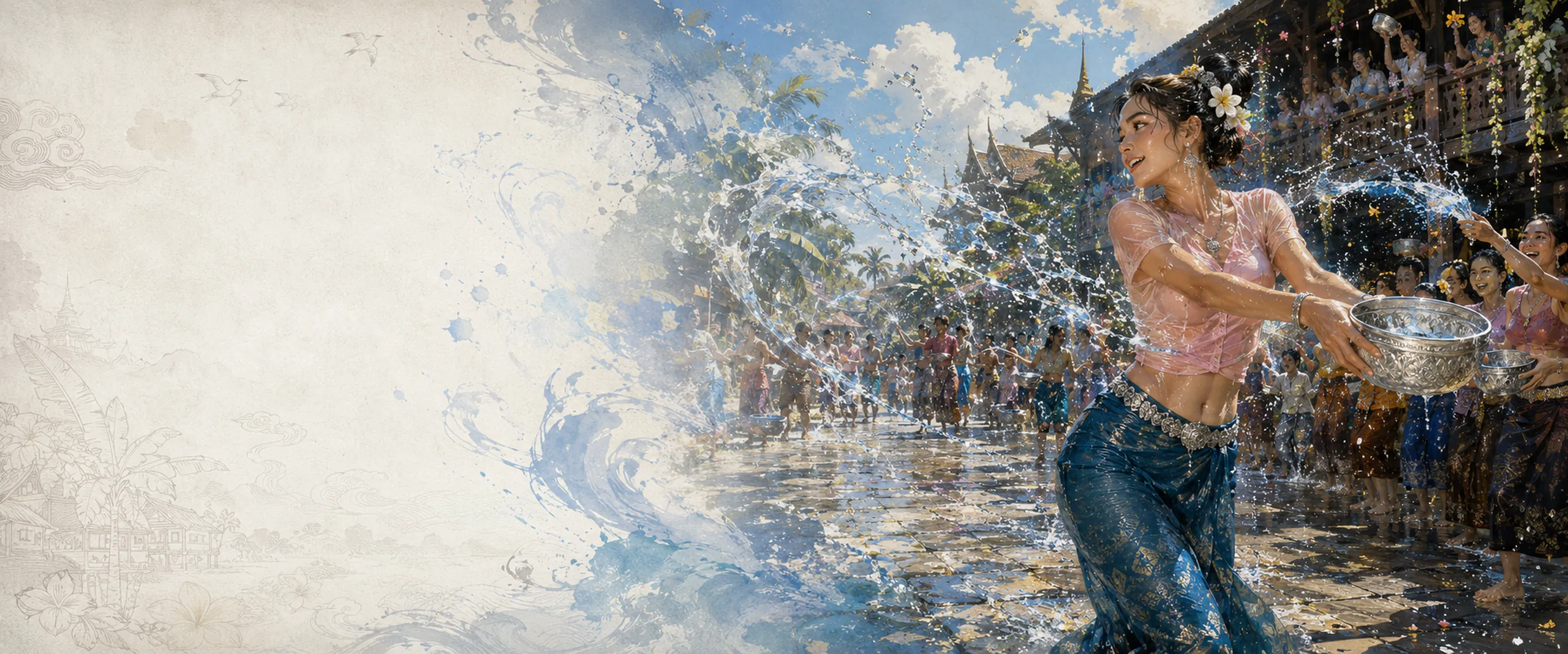
The Water-Splashing Festival is the most important traditional festival of the Dai people. In the Dai language it is called Sangken Bimai, meaning the Dai New Year, and it is also known as the Bathing the Buddha Festival. Every year in mid-April, people splash one another with clean water to wash away the dust of the old year and convey wishes for auspiciousness, happiness, and good health.
The 2026 Water-Splashing Festival marks the Dai calendar year 1388 and is held under the theme “Drinking from the Same River, Splashing the Same Auspicious Water,” highlighting four defining qualities: joy, beauty, brilliance, and charm. Jinghong in Xishuangbanna serves as the main venue, while Mangshi in Dehong and Menglian County in Pu’er hold celebrations at the same time.
Event Schedule and Venues
### Core Water-Splashing Festival Dates
The Water-Splashing Festival is held during the Dai New Year and corresponds to mid-April each year in the Gregorian calendar.
Xishuangbanna Prefecture recognizes the Water-Splashing Festival as a statutory holiday, usually between April 13 and 17. Activities begin gradually about one week before the festival and reach their peak on April 15, when tens of thousands of people join the main water-splashing celebration.
The core schedule is as follows:
| Date | Activity | Description |
|---|---|---|
| Around April 9 | Finals for the Water-Collecting Maiden selection, Yunnan Super League football matches, and other warm-up events | Festive atmosphere gradually intensifies |
| April 12 | New Year Gala, Lancang-Mekong tourism-city cooperation and exchange activities | Official opening of the festival |
| April 13 | Celebration Assembly — wrist-tying ceremony and ethnic song-and-dance performances; traditional dragon-boat exhibition race; mass release of Kongming lanterns; traditional ethnic ganbai market | First festival day, with a dense program of events |
| April 14 | Grand Ethnic Folk Cultural Parade — around 3,000 participants and 45 groups; mass release of floating water lanterns; ganbai music festival | Final buildup before the main climax |
| April 15 | Water-Collecting Ceremony; mass Water-Splashing Carnival — main climax | Festival reaches its highest point |
### Traditional Water-Splashing Festival Customs
The Water-Splashing Festival is the Dai New Year. Its main customs include:
| Custom | Description |
|---|---|
| Bathing the Buddha | Early in the morning, major Buddhist temples hold Bathing the Buddha ceremonies. People use clean water to wash Buddha images and pray for peace |
| Water-Collecting Ceremony | Held on the banks of the Lancang River. The “Water-Collecting Maidens” draw sacred water from the river, opening the main water-splashing festivities |
| Water-Splashing Blessings | People splash one another with clean water, washing away misfortune from the old year and welcoming a pure and auspicious New Year |
| Ganbai | In the Dai language, ganbai means “going to market.” Large festival markets bring together Dai cuisine, handicrafts, and intangible cultural heritage performances |
| Dragon-Boat Racing | Traditional dragon-boat exhibition races are held on the Lancang River, with teams from different villages competing |
| Releasing Kongming Lanterns | At night, thousands of people release Kongming lanterns, sending blessings and wishes into the sky |
| Releasing Water Lanterns | Thousands gather along the Lancang River to release floating lanterns, illuminating the water and expressing hopes for the future |
| Wrist-Tying Ceremony | A traditional Dai blessing ritual in which white thread is tied around the wrist, symbolizing health and good fortune |
### Major Recommended Activities by Region
Jinghong, Xishuangbanna — Core Main Venue:
Jinghong is the central venue of the Water-Splashing Festival, with the largest concentration and scale of activities.
Main venues include:
* Water-Splashing Square: The principal water-battle area, with law-enforcement and support personnel on site, making it the most orderly location.
* Lancang River Viewing Platform: For watching dragon-boat races, water-lantern releases, and the Water-Collecting Ceremony.
* Gaozhuang Xishuangjing: Starlight Night Market, scenic nighttime photography, and one of the designated Kongming lantern release points.
* Dai Villages: A more traditional way to experience water-splashing, often through gentle sprinkling with leaves.
Mangshi, Dehong — Alternative Venue:
With relatively fewer tourists, Mangshi offers a more traditional and less commercialized experience. Activities include flower gathering, prayers for blessings, gayang dancing, antiphonal singing, throwing embroidered pouches, lighting lamps for blessings, and other traditional customs.
Ruili, Dehong — Alternative Venue:
Known for its “one village, two countries” setting, Ruili offers a China–Myanmar cross-border celebration with a strong international atmosphere and highly photogenic scenery.
Longchuan, Dehong — Alternative Venue:
Offers a quieter rural water-splashing experience with fewer visitors.
Menglian, Pu’er — Alternative Venue:
Located near the border, Menglian receives fewer tourists and offers a more traditional local experience.
Pre-Trip Preparation
### Visas and Entry
Water-Splashing Festival destinations such as Xishuangbanna and Dehong in Yunnan are subject to China’s unified visa policies:
* ASEAN Tour Groups of Two or More People: Organized through travel agencies, groups may enter visa-free through Xishuangbanna Gasa International Airport, Mohan Railway Port, or Mohan Highway Port, stay for no more than six days — 144 hours, and remain within the administrative area of Xishuangbanna Prefecture.
* 240-Hour Visa-Free Transit for Citizens of 54 Countries: Travelers may enjoy visa-free transit for up to 240 hours, with permitted stay areas including Yunnan Province and other administrative regions.
* Other Nationalities: Apply in advance for a tourist visa, or L visa, through the relevant Chinese embassy or consulate, and ensure that your passport remains valid for more than six months.
* Latest Policies: Before departure, consult the official website of China’s National Immigration Administration or the relevant Chinese embassy or consulate.
### Adapting to the Climate
In mid-April, Xishuangbanna is transitioning between the dry and wet seasons. Average daytime temperatures range from 25°C to 35°C, with relative humidity reaching 70%–80%, creating a hot and humid feeling.
After being soaked during water-splashing activities, exposure to wind can cause perceived temperatures to fall sharply. It is strongly recommended to carry a quick-dry towel and a portable fan.
Special Reminder: Air conditioning in local shopping malls, hotels, and restaurants is often very strong, and the temperature difference between indoors and outdoors can exceed 10°C. Entering air-conditioned spaces while wearing wet clothes can easily lead to a cold or even fever.
Carry a light windproof jacket or sun-protective outer layer and put it on when moving indoors.
### Travel Insurance
Although China does not require visitors to purchase insurance, the Water-Splashing Festival involves extensive outdoor water activities, crowded public spaces, and increased exposure of personal belongings. It is therefore strongly recommended to purchase travel insurance covering:
* Accidental injury and medical treatment for acute illness, including outpatient care
* Loss of or damage to personal belongings, such as water damage to phones or cameras
* Travel delays or cancellations caused by flight or high-speed rail changes
### Currency and Payment
* Currency: Renminbi (CNY).
* Cash: Carrying RMB 500–1,000 in cash is recommended. Open-air markets such as ganbai may have poor network connectivity, making cash payments more reliable.
* Cards: Visa and MasterCard are accepted at major hotels and shopping centers.
* Mobile Payment: Alipay and WeChat Pay are widely used and can be linked to overseas bank cards.
### Communications and Internet
* Local SIM cards with short-term data packages can be purchased at the airport with a passport.
* Hotels, restaurants, and scenic areas generally provide free Wi-Fi.
* Important: During the Water-Splashing Festival, Jinghong becomes extremely crowded and 4G/5G networks may be severely congested. It is strongly recommended to download offline maps in advance. Baidu Maps or AutoNavi are recommended; download the entire Xishuangbanna map to your phone while connected to Wi-Fi.
How to Get There
### Core Venue: Jinghong, Xishuangbanna
| Transportation | Details |
|---|---|
| Air | Xishuangbanna Gasa International Airport — JHG — serves major Chinese cities and some Southeast Asian routes. During the festival, one-way fares may exceed RMB 1,500. Book 1–2 months in advance. Taxi time from the airport to Gaozhuang is about 20 minutes, and about 15 minutes to Water-Splashing Square |
| High-Speed Rail | The China-Laos Railway runs directly to Xishuangbanna Station, around 3–4 hours from Kunming. Additional trains are operated during the festival. International visitors can enter China by train from Boten, Laos |
| Driving | Kunming–Mohan Expressway provides direct access, but traffic controls are strict during the festival. Park outside the city and transfer to public transport or continue on foot |
High-Speed Rail Tickets: China-Laos Railway tickets are extremely difficult to obtain during the festival and often sell out immediately when released. Tickets can be booked through the 12306 App or the Railway 12306 mini-program. International visitors may use the English-language 12306 App or Trip.com.
Airport Transfer: After arriving at the airport, use DiDi or AutoNavi ride-hailing. Licensed platforms use fare-control mechanisms and provide transparent pricing. Avoid unlicensed vehicles.
### Urban Transportation During the Festival
During the Water-Splashing Festival, traffic controls in Jinghong are strict and shared bicycles are suspended.
Main transportation options include:
* Walking is the primary means of getting around. Electric scooters can be rented in the city for about RMB 50–80 per day and offer flexibility.
* Public buses cover the urban area. Use the “Jinghong Bus” mini-program to check real-time arrival information.
* For farther destinations such as the Botanical Garden or Dai Ethnic Garden, private car hire — around RMB 300–400 per day — or an organized tour is recommended.
Accommodation Reservations
| Key Point | Recommendation |
|---|---|
| When to Book | Accommodation becomes extremely scarce during the festival, when the prefecture receives more than 2.3 million visitors. Prices commonly rise three to five times. Book 1–2 months in advance |
| Recommended Areas | Around Water-Splashing Square — walkable to the main venue and most convenient; Gaozhuang Xishuangjing — excellent night views and immediate access to celebrations; Lancang River waterfront — ideal for dragon-boat viewing and water-lantern releases |
| Best Value | Gasa Town near the airport, where many hotels offer airport transfers |
| Price Reference | High-end RMB 1,200–2,500 per night; mid-range RMB 580–980; budget RMB 380–480 |
| Booking Platforms | Major platforms such as Ctrip, Qunar, and Meituan; rooms with free cancellation are preferable. An official Food and Accommodation Map WeChat mini-program is also available specifically for the festival |
| Noise Reminder | Music festivals and night markets around Gaozhuang Xishuangjing and Water-Splashing Square continue late into the night, while people may begin water-splashing again early in the morning. Light sleepers may prefer hotels in Gasa Town or the Mannongfeng area |
Pre-Trip Packing Checklist
| Category | Essential Items | Special Notes |
|---|---|---|
| Clothing | Quick-dry dark-colored clothing; sports tank tops, with padded options recommended for women; ethnic clothing optional | Avoid light colors because they may become transparent when soaked; midday temperatures can reach 35°C and ultraviolet radiation is intense |
| Shoes | Non-slip sandals, water shoes, clogs | Flip-flops can be washed away and roads become slippery |
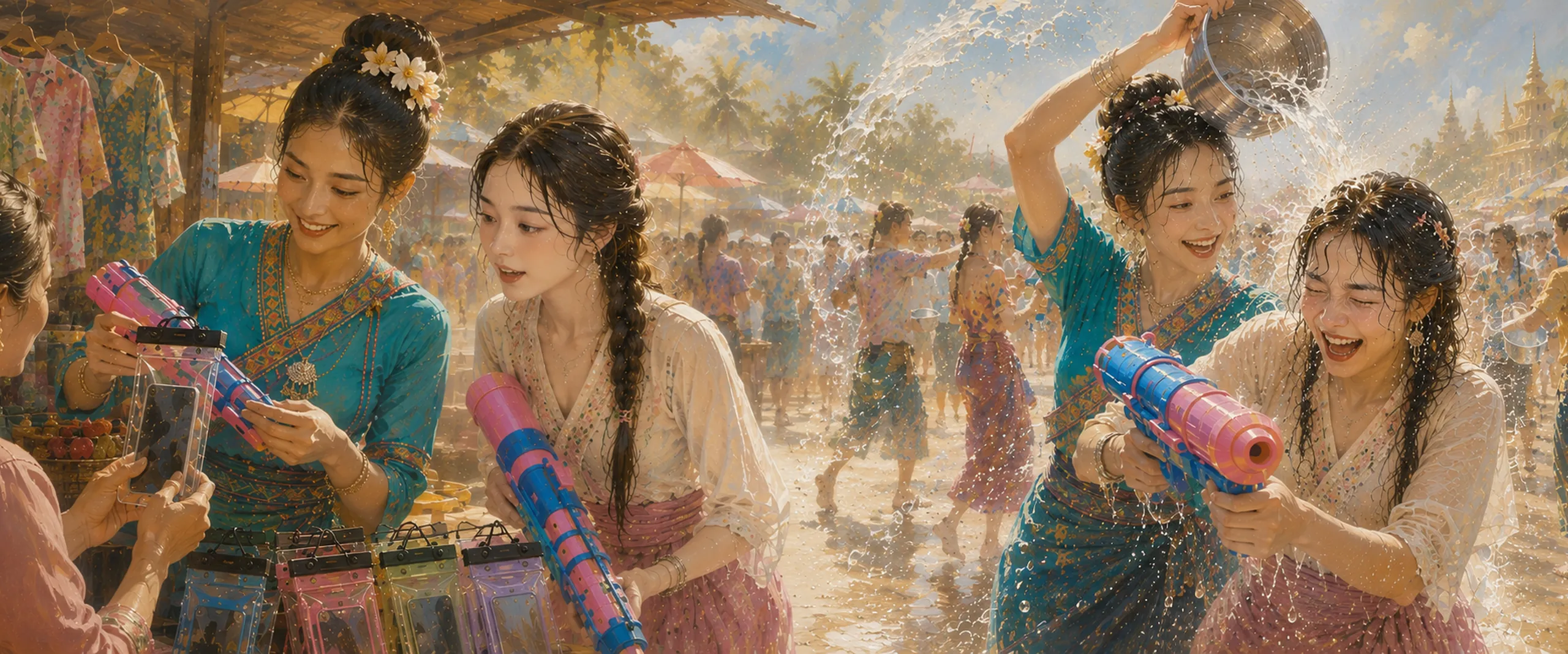
| Water-Splashing Tools | Long-range water guns, folding basins / water scoops for close-range splashing | Available locally; high-pressure water guns are strictly prohibited |
| Protection | Goggles / swimming goggles, SPF50+ waterproof sunscreen, wide-brimmed hat | Protect eyes from water jets; those wearing glasses should prepare an anti-slip retaining strap |
| Waterproofing Electronics | Phone waterproof pouch with lanyard, tested in advance; waterproof camera case | Cheap roadside waterproof pouches may leak and ruin devices; buy a high-quality product in advance and test it |
| Storage | Waterproof waist pouch, sealed bags for documents, cash, and room keys | Never keep them in trouser pockets |
| Spare Clothing | At least 2–3 sets | You may become completely soaked several times each day; changing clothes helps prevent colds |
| Other | Compressed towel, saline solution / eye drops for rinsing eyes, power bank, portable fan | Saline solution is useful if water enters the eyes |
Water-Source Safety Warning: Although official regulations require the use of clean water, the hygiene of water in roadside buckets may vary.
Keep your eyes tightly closed or wear swimming goggles, and never open your mouth to catch splashed water. Water entering the mouth or eyes may easily cause acute gastroenteritis or conjunctivitis. After activities, rinse the eyes immediately with saline solution or eye drops.
Cultural Respect
### Responsible Water-Splashing — Official Regulations
According to notices issued by the Jinghong Water-Splashing Festival Office and the Xishuangbanna Prefecture Regulations on Water-Splashing Activities during the Dai New Year Festival:
* Water: Visitors are encouraged to conserve water and follow ethnic traditions by gently sprinkling water with leaves or by hand. Only clean water may be used. Dirty water, wastewater, water containing stones, glass, sand, mud, itching substances, hot water, and ice water are prohibited.
* Recipients: It is prohibited to splash elderly people, people with disabilities, pregnant women, infants, young children, and anyone who does not wish to participate. It is also prohibited to splash personnel carrying out official duties.
* Tools: High-pressure water guns are strictly prohibited. Water balloons, vehicle-mounted water-storage systems, and other aggressive tools may not be carried or used.
* Behavior: Blocking vehicles and surrounding them with water attacks is strictly prohibited. Splashing moving vehicles is prohibited. Harassing or molesting women under the pretext of water-splashing is strictly prohibited.
* Areas: Water-splashing is prohibited on narrow roads or places prone to congestion, including roads in front of the Gaozhuang Golden Pagoda.
> Anyone who violates these regulations and refuses to comply after being warned will be punished according to law.
### Safety Guidelines
* Traffic Safety: Accidents are more common during the festival. Always look both ways before crossing roads and never splash moving vehicles.
* Heat Protection: Temperatures can reach 35°C at midday. Drink plenty of water, apply sunscreen in the morning, and reapply in the afternoon.
* Valuables: Store valuables in the hotel safe and beware of pickpockets at night markets.
* Children: Parents must supervise children at all times.
* Crowd Safety: Remain alert in crowded areas and avoid dangerous congestion.
### Cultural Etiquette
* Bathing the Buddha: Before the Water-Collecting Ceremony, major Buddhist temples hold early-morning Bathing the Buddha rites. Remain solemn, dress appropriately with shoulders and knees covered, and respectfully pour a small amount of sacred water over Buddha images using a silver bowl.
* Toward Elders: First sprinkle a small amount of clean water gently as a sign of respect before joining the larger celebration.
* Photographing Others: Before photographing local people in ethnic clothing or monks, smile and ask permission. Respect is more important than getting a good photograph.
* Environment: Kongming lanterns may only be released as part of official organized activities. Private production, sale, or release is strictly prohibited, with severe penalties for violations.
Emergency Information
| Item | Contact / Notes |
|---|---|
| Emergency Numbers | Police 110, Fire 119, Ambulance 120, Government Service Hotline 0691-12345 |
| Major Hospitals | Xishuangbanna Prefecture People’s Hospital in Jinghong; Jinghong People’s Hospital |
| Tourist Police / Lost Property | Permanent police posts are located at Water-Splashing Square and Gaozhuang. If a passport or valuable item is lost, report immediately to the nearest police office |
| Tourist Information | The official “Water-Splashing Festival Map” mini-program shows crowd density; the “Food and Accommodation Map” mini-program integrates hotel and dining information |
| Time Zone | UTC+8, China Standard Time |
| Voltage / Plugs | 220V; plug types A / C / I |
Special Reminders
* Festival Dates: The Water-Splashing Festival is held in mid-April each year. Xishuangbanna Prefecture recognizes it as a statutory holiday, generally from April 13 to 15.
* Traffic Peak: Traffic controls apply throughout the city during the festival, and shared bicycles are suspended. Most travel is done on foot.
* Accommodation Shortage: The prefecture receives more than 2.3 million visitors. Book accommodation 1–2 months in advance.
* Kongming Lantern Ban: Outside official mass-release periods, private production, sale, and release are strictly prohibited.
* Responsible Water-Splashing: Follow official regulations. High-pressure water guns are strictly prohibited, as is splashing anyone who does not wish to participate.
* Phone Waterproofing: Buy a high-quality waterproof pouch in advance and test it. Cheap waterproof pouches often leak.
* Weather Awareness: April temperatures in Xishuangbanna are high. Prepare for strong sun and heat, while also carrying a light jacket for the temperature difference between indoor and outdoor environments.
*May you receive blessings amid the splashing water and enjoy a Water-Splashing Festival that is safe, respectful, and unforgettable!*
Cultural Background:
The Water-Splashing Festival, or Songkran, is not unique to China. Traditions of celebrating the New Year through water-splashing are also found in Thailand, Laos, Myanmar, Cambodia, and even Sri Lanka.
These festivals share common historical roots. They originated in ancient Indian calendrical New Year traditions and spread through Theravada Buddhism. Their central meaning is to wash away the misfortunes of the old year with water and welcome a pure and auspicious New Year.
Traditional customs across different countries include:
* Bathing the Buddha: Washing Buddha images to cleanse away the dust, troubles, and worries of the past year.
* Sprinkling Water on Elders for Blessings: Younger people join their palms and gently sprinkle scented water on elders as a sign of respect and blessing.
* Temple Offerings and Prayers: Visiting temples to make merit and pray for blessings.
* Building Sand Pagodas: Carrying sand to temples and shaping it into pagodas to accumulate merit and pray for good fortune.
* Wrist-Tying Ceremony: Elders tie blessed white threads around the wrists of younger family members, symbolically “binding” health, good fortune, and familial affection close to them.
* Water-Splashing Revelry: People take to the streets and splash one another with clean water, symbolically washing away the fatigue and worries of the previous year.
Major Celebration Cities Worldwide:
| Country / Region | Core City | Festival Name | Dates | Characteristics |
|---|---|---|---|---|
| Thailand | Bangkok | Songkran | April 11–15 | The world’s largest water festival, combining electronic music parties with traditional rituals |
| Chiang Mai | Songkran | April 11–19 | The longest-running celebration, with the Old City moat transformed into a major water-battle zone | |
| Phuket | Songkran | April 11–15 | Seaside water-splashing and electronic music with a strong holiday atmosphere | |
| Pattaya | Songkran — Wan Lai | April 17–19 | The ultimate final round of celebrations | |
| Laos | Vientiane | Pi Mai Lao — Lao New Year | April 14–16 | Bathing the Buddha, prayers, float parades, electronic fireworks shows |
| Luang Prabang | Pi Mai Lao | April 14–16 | Water festivities in a World Heritage old town and a “Miss Songkran” parade | |
| Cambodia | Phnom Penh | Chaul Chnam Thmey — Khmer New Year | April 14–19 | “Water City Festival,” centered mainly on cultural performances |
| Siem Reap | Khmer New Year | April 14–16 | New Year festivities set against the backdrop of Angkor Wat | |
| Myanmar | Yangon | Thingyan | April 13–16 | “Walking Thingyan” pedestrian water-splashing zones |
| Mandalay | Thingyan | April 13–16 | Water activities around the Royal Palace moat | |
| Malaysia | Kuala Lumpur | Songkran | Mid-April | Street water celebrations in Thai communities |
| Canada | Vancouver | Vancouver Water-Splashing Festival | July 26 | Chinese traditional culture festival, free and open to the public |
| United States | New York | Midsummer Water-Splashing Festival | August 1 | Organized by the Myanmar Chinese Association of New York, 23rd edition |
| Japan | Tokyo | Thingyan Water Festival | April 11–12 | Nearly 30,000 participants; Japan’s largest Myanmar cultural festival |
Recommended Activities by Region:
### Thailand
Thailand is the largest, wildest, and most internationally famous destination for Water-Splashing Festival celebrations outside China.
In 2026, Thailand’s Songkran Festival takes place from April 13 to 15, with a nationwide five-day holiday from April 11 to 15. Major cities usually begin events in advance, while some continue celebrations until April 19.
The Thai government has launched a “World’s Largest Songkran Festival” initiative, with more than 1,000 events across 28 destinations nationwide, attracting more than 10 million participants.
Bangkok — Center of the Urban Party Scene:
Bangkok is the absolute center of Songkran and can be described as the beating heart of the most intense water battles.
* 2026 Maha Songkran World Water Festival — April 11–15: Held at Benjakitti Park, with free admission. The event brings cultural heritage, live entertainment, and water celebrations together. Opening night features the Maha Songkran World Parade, centered on the Songkran Goddess. A “Five Regions of Songkran” zone showcases Thailand’s cultural diversity through traditional performances, sand-pagoda building, and Bathing the Buddha rituals, while more than 100 stalls serve Thai food. Top Thai artists perform on the main stage daily from 17:00 to 22:00. At the end of each night, more than 1,200 drones create a light show. The venue is conveniently accessible from BTS Asok station and MRT Queen Sirikit National Convention Centre station.
* Khao San Road: A backpacker hub where narrow streets fill with deafening music, water guns, and water balloons. After dark, dramatic lighting intensifies the atmosphere.
* Silom Road: A four-kilometer-long street party with road closures and DJs performing from elevated walkways.
* ICONSIAM Chao Phraya Riverside Water Festival: Especially striking at sunset. The ICONSIAM Thaiconic Songkran celebration runs from April 10 to 15.
* S2O Songkran Music Festival — April 11–13: Held at S2O Land Ratchada, an ultimate pilgrimage destination for electronic music fans.
* SIAM Songkran Music Festival — April 11–14: Another major electronic music event.
Chiang Mai — Tradition and Modernity Combined, with the Longest Celebration:
Chiang Mai blends traditional culture with modern revelry, with festivities stretching across 14 days.
* Old City Moat: The liveliest water-battle zone, with the Tha Phae Gate opening ceremony adding a strong sense of tradition.
* One Nimman: A fashionable water-splashing district with concerts from April 11 to 15, 15:00–22:00.
* Chang Music Connection Electronic Water Festival — April 18–19: Brings Chiang Mai’s 14-day celebration to a close.
Phuket — Seaside Water-Splashing and Electronic Music:
Phuket combines beach holidays with water-festival revelry.
* Patong Beach Bar Street: After dark, the sound of water guns and electronic music continues without pause, with roadside DJs and foam machines creating a sea of white foam.
* Phuket Old Town: Offers a more cultural atmosphere and is especially photogenic for those wearing traditional Thai dress.
* Naka Market “Sad Roi Lhaow” Celebration — April 11–15: Combines food, games, and water-splashing in one venue.
Pattaya — The Ultimate Final Battleground:
Pattaya’s celebrations run from April 17 to 19, making it the final burst of Songkran revelry. Those who have not had enough in Bangkok often continue on to Pattaya.
New 2026 Songkran Regulations in Thailand:
* Alcohol is banned citywide, and all water-splashing activities must be alcohol-free.
* All water-splashing activities must end before 10:00 p.m.
* High-pressure water guns, talcum powder, and foam are prohibited.
* Revealing clothing may result in fines.
### Laos
The Lao Water-Splashing Festival, Pi Mai Lao, is the country’s grandest traditional festival and is comparable in importance to the Chinese Spring Festival. Its central meaning is “washing away impurity, praying for blessings, bidding farewell to the old, and welcoming the new.”
In 2026, the traditional Lao New Year falls from April 14 to 16.
Vientiane — Citywide Celebration in the Capital:
* Morning Bathing the Buddha: At ancient temples such as Wat Si Muang and Wat Ong Teu, people carry sacred water infused with flowers and lemon to bathe Buddha images.
* Wrist-Tying Ceremony: Elders tie blessed white threads around the wrists of younger family members, symbolically securing health, good fortune, and family affection.
* Water-Splashing Revelry: Around That Luang Square, the Mekong riverside, and central roads, people take to the streets with water guns, basins, and coconut shells.
* “Miss Songkran” Float Parade, traditional Lam Vong dancing, and food markets.
* Water-Splashing Float Parade and Electronic Fireworks Show.
* Kongming lanterns and floating water lanterns at night for prayers and blessings.
Luang Prabang: A World Heritage old town where a “Miss Songkran” parade is held during the festival. The early-morning alms-giving ceremony is one of Luang Prabang’s most representative cultural experiences.
### Cambodia
Cambodia’s Water-Splashing Festival is called Chaul Chnam Thmey, or Khmer New Year. Each year around April 13–16, the country observes a three-day holiday to celebrate the Buddhist New Year.
Phnom Penh — “Nokor Sangkran Water City Festival”:
* In 2026, the event runs for six days from April 14 to 19, jointly organized by the Union of Youth Federations of Cambodia and the Phnom Penh Capital Administration.
* Six event venues are established across Phnom Penh, along with the former Phnom Penh International Airport site. Major temples and all 14 districts also hold simultaneous celebrations.
* During the three-day New Year celebration, more than 4.3 million domestic and international visitors participate.
* Foreign visitors total approximately 32,000 over the three days.
Important Reminder: In 2026, the Phnom Penh municipal government issues a notice prohibiting all forms of water-splashing during Khmer New Year, including the use of water guns, dyes, or other tools to throw liquids at others, as well as the setting off of fireworks and firecrackers.
Phnom Penh instead focuses on cultural experiences, including some 20 rotating performances such as the traditional dance drama *Goddess of Battle*. If you want to experience full water-splashing revelry, Siem Reap or other provinces are recommended.
### Myanmar
Myanmar’s Water-Splashing Festival is called Thingyan and marks the arrival of the traditional New Year. It usually takes place from April 13 to 16 and lasts four days.
2026 Highlights:
* Nationwide introduction of “Walking Thingyan” pedestrian water-splashing zones in Yangon, Mandalay, Naypyidaw, and other locations.
* Yangon: Activities around People’s Square, City Hall, the U Wisara Roundabout–Ahlone Road area, and various townships.
* Mandalay: Activities around the Royal Palace moat, Meiktila Lake, and multiple townships.
* Festival pavilions are built across the country, with dance competitions, traditional food donations, and other activities.
### Malaysia
Although Malaysia does not recognize Songkran as a nationwide public holiday, the tradition has long been maintained in Thai communities in Kedah, Perlis, Penang, and multicultural cities such as Kuala Lumpur. Lively street water-splashing celebrations are also held in Kuala Lumpur.
### Vancouver, Canada
The “2026 Chinese Traditional Culture Festival and 18th Vancouver Water-Splashing Festival,” organized by the Chinese Canadian Federation, is held on July 26 at Burnaby Central Park and is free and open to the public.
The event is expected to attract 5,000 to 10,000 participants from different ethnic communities across Greater Vancouver. Activities include multicultural performances, intangible cultural heritage displays, family games, food markets, a beer garden, charitable initiatives, and more than 100 commercial and cultural booths.
The program brings together more than 50 stage performances and nearly 100 cultural, culinary, business, and charitable booths. The festival is also scheduled to expand to Toronto on September 19.
### New York, United States
To celebrate the 250th anniversary of the founding of the United States and the 50th anniversary of the Myanmar Chinese Association of New York, the association holds the 23rd Midsummer Water-Splashing Festival on August 1 at Roosevelt Park in Chinatown.
In addition to water-splashing festivities, the event offers a range of authentic Myanmar foods, attracting many visitors. Representatives attending include the deputy consul general of the Chinese Consulate General in New York, state assembly members, city council members, and other community figures.
### Tokyo, Japan
Nearly 30,000 people attend the Thingyan Water Festival at Kiba Park in Tokyo, making it the largest Myanmar cultural festival in Japan.
Myanmar communities in the United States, Australia, South Korea, Thailand, and other countries also organize celebrations on the weekend before the formal opening of Thingyan.
Pre-Trip Packing Checklist
| Category | Recommended Items | Notes |
|---|---|---|
| Clothing | Quick-dry clothing, spare swimwear | Avoid light colors because they may become transparent when wet; perceived temperatures in Thailand can reach as high as 60°C |
| Shoes | Non-slip sandals / water shoes | Roads are slippery and flip-flops can be washed away |
| Water-Splashing Tools | Water guns, but not high-pressure models; basins / water scoops | High-pressure water guns are strictly prohibited |
| Protection | Goggles / swimming goggles, waterproof SPF50+ sunscreen | Protects eyes from water jets; ultraviolet radiation in Southeast Asia is extremely strong |
| Waterproofing Electronics | Waterproof phone pouch, tested in advance | Cheap roadside versions often leak |
| Storage | Waterproof waist pouch, sealed bags for documents and cash | Never keep valuables in trouser pockets |
| Medication | Huoxiang Zhengqi liquid, adhesive bandages, gastrointestinal medicine | For heatstroke prevention and dietary differences |
| Other | Compressed towel, power bank | Outdoor activities may last for long periods |
Special Thailand Songkran Reminders:
* Alcohol is banned citywide, and water-splashing activities must remain alcohol-free.
* High-pressure water guns, talcum powder, and foam are prohibited.
* Revealing clothing may result in fines.
Participation Etiquette:
### General Water-Splashing Etiquette
* Use Clean Water: Splash only with clean water. Dirty water, wastewater, ice, or hot water are prohibited.
* Respect Those Who Do Not Want to Participate: Do not splash elderly people, pregnant women, infants, young children, or anyone who does not wish to take part.
* No High-Pressure Water Guns: High-pressure water guns are aggressive and expressly prohibited.
* Splash Responsibly: Participate with a spirit of blessing rather than with the intention of playing harmful pranks or attacking others.
### Etiquette at Religious Sites
* Maintain Solemnity During Bathing the Buddha: When joining a Bathing the Buddha ritual at a temple, remain quiet and respectful and dress appropriately, with shoulders and knees covered.
* Photography Restrictions: Photography is usually prohibited during religious rituals. Confirm in advance.
* Do Not Touch: Do not touch Buddha images or religious objects.
### Photography Etiquette
* Ask Permission: Before photographing local people, smile and ask first.
* Respect Portrait Rights: Do not use photographs of others commercially without consent.
Travel Tips:
| Item | Description |
|---|---|
| Best Time to Participate | Mid-April each year, especially April 11–19, is the core Water-Splashing Festival period |
| Thailand Visa | Chinese passport holders may enter visa-free for stays of up to 30 days; bring a passport valid for more than six months, round-trip flight tickets, and hotel booking confirmation |
| Transportation | Traffic congestion is severe during the festival; using Grab for transportation throughout the trip is recommended |
| Weather | April temperatures in Southeast Asia are extremely high, and perceived temperatures in Thailand may reach 60°C; take precautions against heat |
| Accommodation | Hotel prices rise sharply during the festival; book 1–2 months in advance |
| Regional Differences | Thailand centers on water-splashing revelry; Phnom Penh, Cambodia, prohibits water-splashing in 2026 and instead emphasizes cultural experiences |
Special Reminders:
* The Water-Splashing Festival Is Global: You do not need to travel to Yunnan, China, to experience an authentic Water-Splashing Festival. Thailand, Laos, Cambodia, and Myanmar all hold major celebrations. Vancouver, New York, Tokyo, and other cities also host events of considerable scale.
* Thailand Has the Largest Celebrations: Thailand’s Songkran is the world’s largest and most exuberant Water-Splashing Festival, with more than 1,000 activities across 28 destinations in 2026.
* Bangkok’s Main Venue Is Free: The 2026 Maha Songkran World Water Festival at Benjakitti Park offers free admission.
* Water-Splashing Is Prohibited in Phnom Penh: Phnom Penh bans water-splashing in 2026 and instead focuses on cultural experiences. For full water-splashing celebrations, Siem Reap or other provinces are recommended.
* 2026 New Regulations: Thailand bans alcohol during water-splashing activities, prohibits high-pressure water guns, talcum powder, and foam, and requires water-splashing to end before 10:00 p.m.
* Dates Vary by Destination: Thailand April 11–19, Laos April 14–16, Myanmar April 13–16, Cambodia April 14–19. Check the detailed schedule for your destination in advance.
* Heat Precautions: April temperatures in Southeast Asia are extremely high, with perceived temperatures in Thailand reaching as high as 60°C. Sun protection and hydration are essential.
*May you experience the distinctive charm of the Water-Splashing Festival in different corners of the world and receive the beautiful blessing of “soaked for a moment, blessed with happiness for a lifetime” amid clear water, laughter, and celebration!*
Readers’ Comments
Calendar and traditional culture enthusiasts from around the world, sharing the same moon.
Sign in or register to join the conversation. Your comment account is created automatically the first time you use a connected account.
No comments yet
Share your thoughts with readers around the world.