Raosanling

RaosanlingOrigins of Raosanling

「 <p>南诏神都,七十一村,绕灵祈福,白族古风。</p> 」

Rao San Ling is a traditional festival of the Bai people, celebrated in the Bai‑populated areas of Dali, Yunnan, generally held in the latter half of the fourth lunar month. The “Three Spirits” (San Ling) refer to three important temples in the…

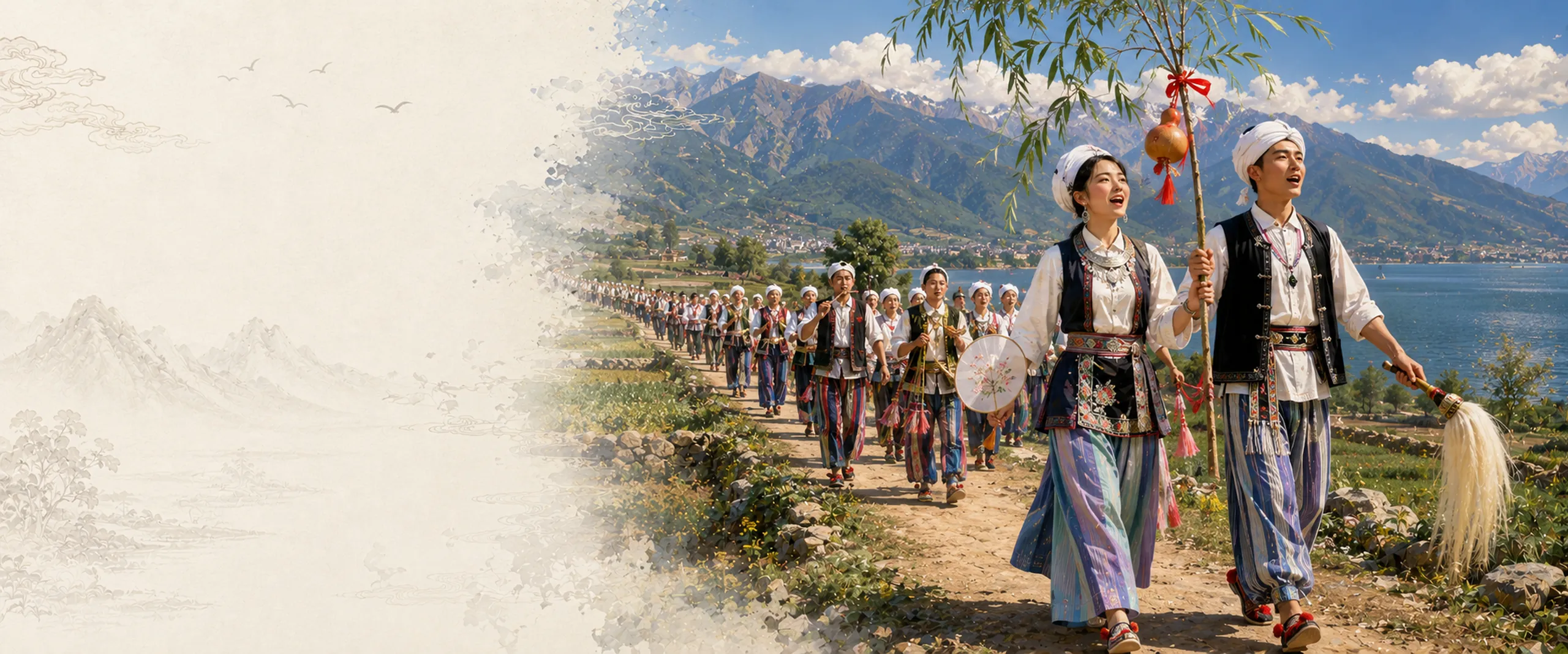
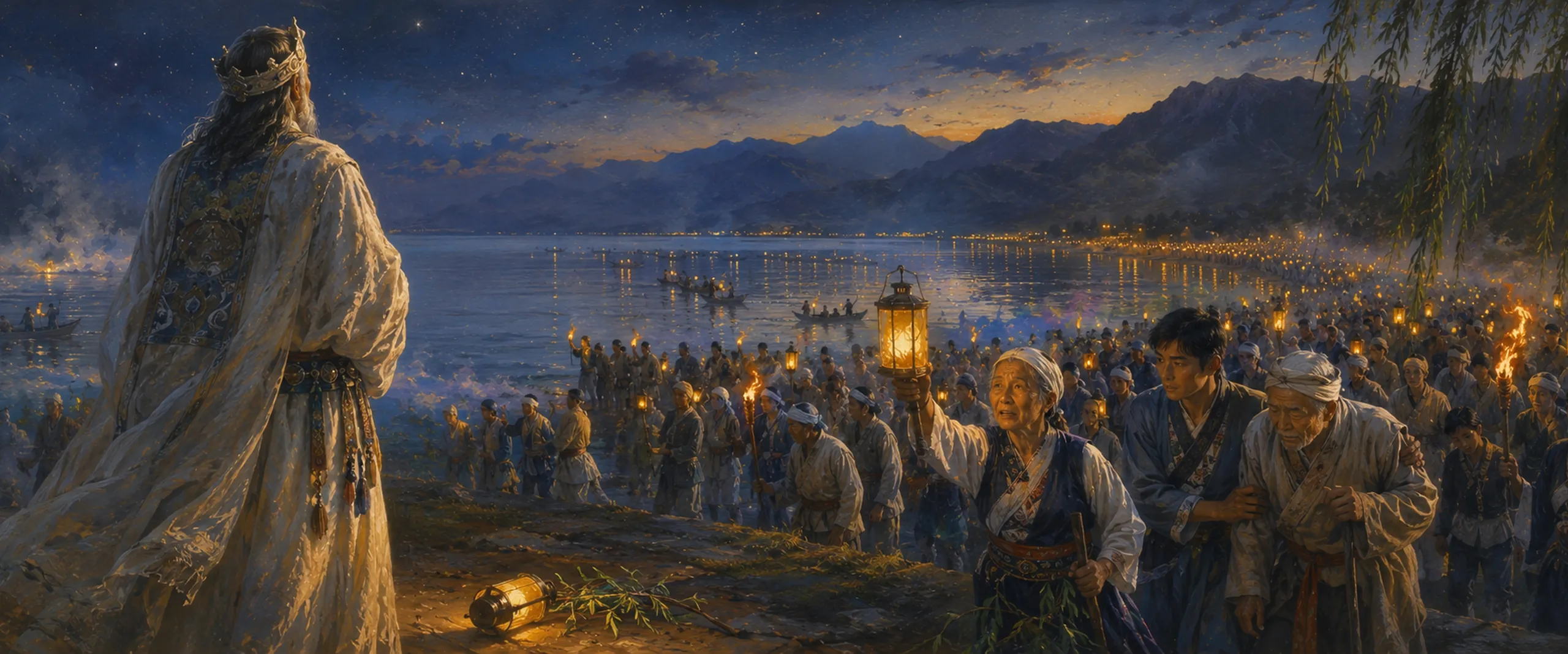
Raosanling is one of the major customary cultural festivals of the Bai people. The “Three Spirits” refer to three divine symbols on the west bank of Erhai Lake—important local deities (本主, Benzhu, village protectors) in the Bai Benzhu worship system and Buddhist deities introduced to the Dali region. The temples enshrining them are respectively called the “Buddha Capital” (佛都, Fodu)—Dali Chongsheng Monastery (大理崇圣寺), the “Spirit Capital” (神都, Shendu)—the Benzhu Temple in Qingdong Village, Dali, dedicated to Duan Zongbang (段宗榜), and the “Immortal Capital” (仙都, Xiandu)—the Erhe Shrine in Heyi City Village, dedicated to Duan Chicheng (段赤诚). According to records, Raosanling originated in the Nanzhao period. A widely held legend says that it was a ceremony performed by representatives of the seventy‑one villages of Dali to pay homage to the “Central Benzhu” at the Spirit Capital, praying for a good harvest. The Qing‑dynasty Bai scholar Yang Qiong recorded in his *Dianzhong Suoji*: “In Dali, there is the Raosanling Festival; every year in the latter part of the third lunar month, men and women gather in swarms, numbering thousands upon thousands, forming groups of tens and hundreds.” Raosanling is a self‑entertaining festival of welcoming spirits and holding competitions among the Bai people during the slack farming season.

Raosanling / Origins of Raosanling

The Name of Raosanling

Origins & Anecdotes · Tracing the Past

The name “Raosanling” itself carries rich cultural information. “Sanling” (Three Spirits) refers to the three divine symbols on the west bank of Erhai Lake—the deities enshrined in the three Bai Benzhu temples, called the “Buddha Capital,” the “Spirit Capital,” and the “Immortal Capital.” “Rao” means to circle or tour—during the festival, Bai devotees tour these three temples in sequence, completing a full ritual cycle of worship and prayer.

The “Buddha Capital” is Dali Chongsheng Monastery, the most famous Buddhist temple in the Dali region, built during the Nanzhao period and enshrining various Buddhas and Bodhisattvas. The “Spirit Capital” is located in Qingdong Village, Dali, dedicated to the Benzhu Duan Zongbang—an important historical figure of the Nanzhao period, later deified by the Bai people as a Benzhu, and the core representative of the “Central Benzhu.” The “Immortal Capital” is in Heyi City Village, dedicated to Duan Chicheng—a hero in Bai folklore who slew a giant python and was enshrined as the Benzhu of the Erhe Shrine.

In the name “Raosanling,” the number “three” not only denotes the three temples but also embodies the philosophical meaning of “three” in Bai culture—heaven, earth, and humanity; the three give rise to all things. By circling the three temples, the Bai ancestors completed a communication and dialogue with the threefold deities of heaven (Buddha Capital), earth (Spirit Capital), and humanity (Immortal Capital), fulfilling their wishes for blessings, disaster avoidance, favourable weather, and national peace.

Festival Origins

Origins & Anecdotes · Tracing the Past

The origin of Raosanling is not singular, but the gradual convergence of multiple cultural strands over time. These include: the formation of Bai Benzhu worship during the Nanzhao period—which provided the core spiritual belief system; the profound influence of Buddhism introduced to the Dali region—which added the important node of the “Buddha Capital” Chongsheng Monastery; the Bai people’s agricultural prayers for a good harvest—which gave the festival its most basic function; and the joint participation of the royal court and the common people during the Nanzhao and Dali kingdoms—which provided both political and social support for the festival. These strands came together from different directions to form the foundation of Raosanling.

Benzhu Worship

The most fundamental cultural root of Raosanling is the unique Benzhu worship of the Bai people. The Benzhu is the protective deity of Bai village communities and the core religious belief of the Bai people. The term “Benzhu” means “lord of this locality” or “lord of this village”; every Bai village has its own Benzhu deity. The Benzhu can be a nature spirit, a historical figure, a legendary hero, or a Buddhist or Taoist deity. The Bai believe that the Benzhu can protect the village, ensure favourable weather, bring abundant harvests, and make livestock thrive.

Bai Benzhu worship has a long history, traceable to ancient ancestor worship and nature worship. Over time, it absorbed elements from Buddhism, Taoism, and other foreign religions, forming a distinctive Bai Benzhu belief system. The three temples circled in Raosanling are precisely the three most representative spiritual symbols in Bai Benzhu worship—“Buddha Capital” Chongsheng Monastery represents Buddhist deities, “Spirit Capital” Qingdong Village Benzhu Temple represents historical figures deified as Benzhu, and “Immortal Capital” Heyi City Village Erhe Shrine represents legendary heroes deified as Benzhu. Together, they form a complete picture of Bai Benzhu faith.

Historical Background of the Nanzhao Period

According to records, Raosanling originated in the Nanzhao period. Nanzhao was a powerful local regime that existed in southwestern China from the 7th to 9th centuries, with its centre of rule in today’s Dali region. During the Nanzhao period, the culture of the Bai ancestors developed unprecedentedly, and cultural elements such as Benzhu worship, Buddhist faith, and agricultural civilisation achieved deep integration under the political framework of Nanzhao.

The religious landscape of the Dali region during the Nanzhao period was extremely diverse—indigenous Benzhu worship, Buddhism transmitted from India and Central China, and Taoism all converged and merged in the Dali area. This coexistence of multiple religions provided the historical soil for the “three‑in‑one” cultural form of Raosanling, combining the Buddha Capital, Spirit Capital, and Immortal Capital. The Nanzhao royal court’s promotion of Buddhism made Chongsheng Monastery the Buddhist centre of Dali; while the people’s adherence to Benzhu worship meant that Benzhu temples were found in every Bai village. The royal court and the common people, Buddhism and Benzhu worship—these two seemingly different belief systems found a harmonious coexistence in the rituals of Raosanling.

Agricultural Prayers

The simplest cultural function of Raosanling is to pray for a bountiful year. According to a widely circulated legend, Raosanling is a ceremony performed by representatives of the seventy‑one villages of Dali, worshipping the “Central Benzhu” at the Spirit Capital to pray for a good harvest. This legend closely links Raosanling with the agricultural desire for favourable weather and abundant crops.

The Dali region is one of the earliest areas in Yunnan to enter agricultural civilisation. The fertile land around Erhai Lake is suitable for rice and other crops. However, agriculture is highly dependent on natural conditions—drought, floods, pests, and diseases can threaten harvests at any time. In times when science was undeveloped, it was a common cultural phenomenon for people to pray to deities for good harvests. Raosanling emerged precisely against this background—the Bai ancestors, by circling the three temples, expressed their sincere reverence to the deities and prayed for their protection for favourable weather and abundant crops in the coming year. This prayer for a bountiful year is the simplest and most essential function of the festival.

Core Activities

Origins & Anecdotes · Tracing the Past

The ritual activities of Raosanling are extremely rich, covering sacrifices, worship, song and dance, feasting, and social interaction. The entire festival generally lasts three days, circling the three temples, each with its specific ritual content and cultural function.

Time and Route

Raosanling is generally held in the latter part of the third lunar month. This is the slack farming season after spring ploughing and before the summer harvest, when people have ample time to participate in the festivities. The route of Raosanling begins at the “Buddha Capital” Chongsheng Monastery, passes through the “Spirit Capital” Qingdong Village Benzhu Temple, and ends at the “Immortal Capital” Heyi City Village Erhe Shrine. The three‑day, three‑night circuit traverses the core area of the Dali plain, linking a Buddhist holy site, a Benzhu temple, and a hero shrine into a complete pilgrimage path.

Day One: Buddha Capital – Chongsheng Monastery

The first stop of Raosanling is the “Buddha Capital” Chongsheng Monastery. Located northwest of Dali’s old town, Chongsheng Monastery was built during the Nanzhao period and is the most famous Buddhist temple in the Dali region. The Three Pagodas of Chongsheng are iconic landmarks of Dali and the most sacred Buddhist site in the hearts of the Bai people. On the first day of Raosanling, Bai devotees, dressed in festive costumes, gather at Chongsheng Monastery from all directions. They burn incense, pray, and worship devoutly in the temple, praying to the Buddhas and Bodhisattvas for favourable weather, national peace, and family happiness in the new year. The pilgrimage to Chongsheng Monastery reflects the profound influence of Buddhism on Bai culture and the Bai people’s devout Buddhist faith.

Day Two: Spirit Capital – Qingdong Village

On the second day of Raosanling, people come to the “Spirit Capital” Qingdong Village Benzhu Temple. The temple enshrines Duan Zongbang, an important historical figure of the Nanzhao period who was later deified as a Benzhu by the Bai people. Duan Zongbang is considered the “Central Benzhu” and holds a core position in the Bai Benzhu belief system. According to legend, Raosanling was precisely a ceremony performed by representatives of the seventy‑one villages of Dali to worship the “Central Benzhu” at the Spirit Capital and pray for a good harvest. The activities at the Spirit Capital on the second day are more spirited—people sing and dance in front of the Benzhu temple, expressing their reverence through joyful song and dance, and also releasing the fatigue of spring ploughing through collective revelry.

Day Three: Immortal Capital – Heyi City Village

The final stop of Raosanling is the “Immortal Capital” Heyi City Village Erhe Shrine. The shrine enshrines Duan Chicheng, a hero in Bai folklore who slew a giant python—legend has it that a giant python once plagued the people in Erhai Lake; Duan Chicheng stepped forward, fought the python, and eventually killed it, sacrificing his own life. The Bai people, grateful for Duan Chicheng’s virtue, enshrined him as a Benzhu deity, honoured him as the god of Erhe, and built a shrine in Heyi City Village. The activities on the third day at the Immortal Capital are not only the end of Raosanling but also the climax of the entire festival. People perform the final sacrificial rites here, gathering the prayers of the three days and offering their most sincere respect to Benzhu Duan Chicheng. After the rituals, people also hold grand picnics and song‑and‑dance events by the shore of Erhai Lake, ending the three‑day pilgrimage in joy.

Artistic Expressions

Origins & Anecdotes · Tracing the Past

Raosanling is the most concentrated showcase of Bai art. During the festival, the Bai people express their love of life, reverence for the deities, and cultural heritage through various art forms—music, dance, costume, and craftsmanship.

Song and Dance Revelry

The description by the Qing‑dynasty Bai scholar Yang Qiong in his *Dianzhong Suoji*—“men and women gather in swarms, numbering thousands upon thousands, forming groups of tens and hundreds”—is a vivid portrayal of the song‑and‑dance revelry during Raosanling. During the festival, people form “groups” by village or family, each with its own song‑and‑dance troupe. Traditional Bai folk dances such as the King’s Whip Dance (霸王鞭舞), the Eight‑Corner Drum Dance (八角鼓舞), and the Straw Hat Dance (草帽舞) are performed in turn. The King’s Whip Dance is the most representative folk dance of the Bai people; dancers hold bamboo whips strung with copper coins, which jingle as they move, with a clear rhythm and vigorous movements. The Eight‑Corner Drum Dance uses the eight‑corner drum as a prop, with dancers drumming and dancing in graceful and spirited movements. These song‑and‑dance activities are both part of the religious ritual and an important form of folk entertainment.

Bai Costumes

During Raosanling, Bai people dress in their finest festive costumes, providing the most concentrated display of traditional Bai attire. Women’s costumes are particularly exquisite—white tops, red vests, blue aprons, with bright and harmonious colours. The headdress is the essence of Bai women’s attire—unmarried women braid their hair and coil it, while married women wear the “wind, flower, snow, moon” headdress, symbolising the four great scenic sights of Dali: the flowers of Shangguan, the wind of Xiaguan, the snow of Cangshan Mountain, and the moon of Erhai Lake. Bai men wear white button‑up tops, blue trousers, and coloured sashes around their waists. During Raosanling, the Bai people wear their most solemn attire to greet this grand festival, displaying the unique charm of Bai culture.

Music and Singing

During Raosanling, in addition to dancing, people also perform traditional Bai narrative singing (大本曲, Dabenqu) and blowing‑and‑singing opera (吹吹腔, Chuichuiqiang). Dabenqu is a traditional Bai storytelling and singing art, performed in the Bai language, with content mostly based on Bai historical legends, folk tales, and love stories. Chuichuiqiang is a traditional Bai opera, integrating Bai music, dance, and dramatic elements. During Raosanling, through Dabenqu and Chuichuiqiang performances, the Bai people pass on their historical memory and cultural traditions.

Contemporary Transmission

Origins & Anecdotes · Tracing the Past

Intangible Cultural Heritage Status

In 2011, Raosanling was approved by the State Council and included in the third batch of China’s National Intangible Cultural Heritage list, with the heritage number Ⅹ‑124, declared by Dali City, Yunnan Province. The inclusion of Raosanling in the national intangible cultural heritage list marked its official cultural recognition and protection at the state level. Raosanling is one of the grandest traditional festivals of the Bai people and a concrete expression of the continuous transmission of Bai culture. Celebrating this festival well is of positive significance for the Bai to maintain their cultural uniqueness, strengthen ethnic unity, and uphold the world’s cultural diversity.

Contemporary Grandeur

Contemporary Raosanling still maintains its vigorous vitality. Every year in the latter part of the third lunar month, Bai people in the Dali region, dressed in festive costumes, gather at Chongsheng Monastery from all directions to begin the annual Raosanling pilgrimage. Tens of thousands of Bai people participate; the vast procession winds through the fields and villages of the Dali plain, becoming the most magnificent cultural landscape between Cangshan Mountain and Erhai Lake. Raosanling is not only the most important religious festival for the Bai people but also an important platform for displaying Bai culture, promoting ethnic unity, and fostering the integration of culture and tourism. Every year during Raosanling, tourists from all over China and the world flock to Dali to experience the unique charm of this ancient festival.

Intangible Cultural Heritage Inheritors

Raosanling has several nationally recognised representative inheritors of intangible cultural heritage. Zhao Piding (赵丕鼎) is one of the representative inheritors of Raosanling at the national level. Born in 1942 in Zuoyi Village, Xizhou Town, Dali City, Zhao Piding is a Bai folk artist who has loved Raosanling since childhood. Because of his passion for Raosanling and his talent in folk art performance, he joined the Raosanling procession at the age of 17 and became an organiser and lead singer of the “flower‑willow‑tree” (花柳树, a ceremonial role) the following year. Zhao Piding has brought Raosanling into schools, teaching Bai folk art to primary and secondary school students for free. In 2016, his youngest daughter Zhao Dongmei (赵冬梅) was named a “representative inheritor of the Dali City Raosanling intangible cultural heritage project.” Zhao Piding, his daughter Zhao Dongmei, and his granddaughter Zhao Qianyi (赵倩怡)—three generations of the family have successively carried on the intangible cultural heritage of Raosanling, mobilising villagers to sing a new cultural life for the Bai people. In addition, the Dali Prefecture Intangible Cultural Heritage Protection Centre has also recognised Yang Xueying (杨学英), Yang Limin (杨利民), and others as Raosanling inheritors. These inheritors safeguard the core cultural memory of Raosanling, keeping this ancient festival vibrant in contemporary society.

Historical Evolution

Historical Development
Nanzhao Period
According to records, Raosanling originated in the Nanzhao period. Nanzhao was a powerful local regime that existed in southwestern China from the 7th to 9th centuries. During this period, Bai culture in the Dali region developed unprecedentedly, and cultural elements such as Benzhu worship, Buddhist faith, and agricultural civilisation achieved deep integration under the political framework of Nanzhao. As the most important religious festival of the Bai people, Raosanling sprouted and took initial shape during this period. The Nanzhao royal court’s promotion of Buddhism made Chongsheng Monastery the Buddhist centre of Dali; the people’s adherence to Benzhu worship meant that Benzhu temples were found in every Bai village. The three temples circled in Raosanling—the “Buddha Capital” Chongsheng Monastery, the “Spirit Capital” Qingdong Village Benzhu Temple, and the “Immortal Capital” Heyi City Village Erhe Shrine—established their central positions in the Bai belief system during this period.
Dali Kingdom Period
During the Dali Kingdom (937–1253), Bai culture flourished further, and Buddhism reached its peak in the Dali region. The “Buddha Capital” Chongsheng Monastery became a royal temple and the centre of Buddhist faith in the Dali Kingdom. Of the twenty‑two kings of the Dali Kingdom, nine became monks, and many were tonsured at Chongsheng Monastery. Chongsheng Monastery enjoyed a lofty status during the Dali Kingdom, and its five‑tier pagodas (the Three Pagodas of Chongsheng and their附属 buildings) are iconic structures of Dali Kingdom Buddhist culture. The “Spirit Capital” Qingdong Village Benzhu Temple and the “Immortal Capital” Heyi City Village Erhe Shrine also developed and consolidated further during this period, becoming important sites for Bai Benzhu worship. By this time, Raosanling had already acquired a relatively complete ritual form—Bai devotees circled the three temples during the slack farming season to pray for good harvests and seek blessings and disaster relief.
Yuan, Ming, and Qing Dynasties
After the Yuan dynasty, the Dali region was formally incorporated into the central imperial domain, and Bai culture continued to develop through further exchanges with Han culture. As the most important traditional festival of the Bai people, Raosanling gained wider dissemination and richer cultural accumulation during this period. The Qing‑dynasty Bai scholar Yang Qiong recorded in his *Dianzhong Suoji*: “In Dali, there is the Raosanling Festival; every year in the latter part of the third lunar month, men and women gather in swarms, numbering thousands upon thousands, forming groups of tens and hundreds.” This record reveals several important points: first, the timing is “in the latter part of the third lunar month”; second, the number of participants is extremely large—“thousands upon thousands”; third, the organisational form is “groups of tens and hundreds”—people join in groups by village or family. Yang Qiong’s account shows that at least by the Qing dynasty, Raosanling was already an extremely large‑scale, widely participated, mass festival.
Modern and Contemporary Periods
In modern and contemporary times, Raosanling has maintained its vitality in Bai society. After 1949, though it was affected to varying degrees in different historical periods, the Bai people always passed on this ancient tradition in various ways. Since the reform and opening‑up, with the state’s increasing attention to intangible cultural heritage protection, Raosanling has received better protection and transmission. In 2011, Raosanling was approved by the State Council and included in the third batch of China’s National Intangible Cultural Heritage list, with the heritage number Ⅹ‑124, declared by Dali City, Yunnan Province. The inclusion of Raosanling in the national intangible cultural heritage list marked its official cultural recognition and protection at the state level.

Nanzhao Period

According to records, Raosanling originated in the Nanzhao period. Nanzhao was a powerful local regime that existed in southwestern China from the 7th to 9th centuries. During this period, Bai culture in the Dali region developed unprecedentedly, and cultural elements such as Benzhu worship, Buddhist faith, and agricultural civilisation achieved deep integration under the political framework of Nanzhao. As the most important religious festival of the Bai people, Raosanling sprouted and took initial shape during this period. The Nanzhao royal court’s promotion of Buddhism made Chongsheng Monastery the Buddhist centre of Dali; the people’s adherence to Benzhu worship meant that Benzhu temples were found in every Bai village. The three temples circled in Raosanling—the “Buddha Capital” Chongsheng Monastery, the “Spirit Capital” Qingdong Village Benzhu Temple, and the “Immortal Capital” Heyi City Village Erhe Shrine—established their central positions in the Bai belief system during this period.

Dali Kingdom Period

During the Dali Kingdom (937–1253), Bai culture flourished further, and Buddhism reached its peak in the Dali region. The “Buddha Capital” Chongsheng Monastery became a royal temple and the centre of Buddhist faith in the Dali Kingdom. Of the twenty‑two kings of the Dali Kingdom, nine became monks, and many were tonsured at Chongsheng Monastery. Chongsheng Monastery enjoyed a lofty status during the Dali Kingdom, and its five‑tier pagodas (the Three Pagodas of Chongsheng and their附属 buildings) are iconic structures of Dali Kingdom Buddhist culture. The “Spirit Capital” Qingdong Village Benzhu Temple and the “Immortal Capital” Heyi City Village Erhe Shrine also developed and consolidated further during this period, becoming important sites for Bai Benzhu worship. By this time, Raosanling had already acquired a relatively complete ritual form—Bai devotees circled the three temples during the slack farming season to pray for good harvests and seek blessings and disaster relief.

Yuan, Ming, and Qing Dynasties

After the Yuan dynasty, the Dali region was formally incorporated into the central imperial domain, and Bai culture continued to develop through further exchanges with Han culture. As the most important traditional festival of the Bai people, Raosanling gained wider dissemination and richer cultural accumulation during this period. The Qing‑dynasty Bai scholar Yang Qiong recorded in his *Dianzhong Suoji*: “In Dali, there is the Raosanling Festival; every year in the latter part of the third lunar month, men and women gather in swarms, numbering thousands upon thousands, forming groups of tens and hundreds.” This record reveals several important points: first, the timing is “in the latter part of the third lunar month”; second, the number of participants is extremely large—“thousands upon thousands”; third, the organisational form is “groups of tens and hundreds”—people join in groups by village or family. Yang Qiong’s account shows that at least by the Qing dynasty, Raosanling was already an extremely large‑scale, widely participated, mass festival.

Modern and Contemporary Periods

In modern and contemporary times, Raosanling has maintained its vitality in Bai society. After 1949, though it was affected to varying degrees in different historical periods, the Bai people always passed on this ancient tradition in various ways. Since the reform and opening‑up, with the state’s increasing attention to intangible cultural heritage protection, Raosanling has received better protection and transmission. In 2011, Raosanling was approved by the State Council and included in the third batch of China’s National Intangible Cultural Heritage list, with the heritage number Ⅹ‑124, declared by Dali City, Yunnan Province. The inclusion of Raosanling in the national intangible cultural heritage list marked its official cultural recognition and protection at the state level.

Cultural Spirit

Cultural Core
Raosanling carries the Chinese people’s longing for a better life and their devotion to family, embodying the cultural spirit of reunion, harmony, gratitude and blessing — it is one of the most enduring traditional festivals in Chinese culture.
Integration of Three Religions
Community Cohesion
Praying for Blessings and Warding off Disasters

Integration of Three Religions

The most unique cultural spirit of Raosanling lies in its harmonious fusion of Bai Benzhu worship, Buddhist faith, and hero worship. The three temples circled in Raosanling—“Buddha Capital” Chongsheng Monastery representing Buddhism, “Spirit Capital” Qingdong Village Benzhu Temple representing Benzhu worship, and “Immortal Capital” Heyi City Village Erhe Shrine representing hero worship—unite three different belief systems in a single ritual. This “three‑in‑one” cultural form embodies the open, inclusive, and syncretic character of Bai culture. The Bai ancestors neither rejected foreign Buddhism nor abandoned their indigenous Benzhu worship and hero worship; rather, they organically integrated all three, forming a distinctive Bai religious culture.

Community Cohesion

Raosanling also serves to strengthen community cohesion and ethnic identity. During the festival, Bai people gather in groups by village or family, jointly participating in worship, sacrifice, song, and dance. This collective, periodic gathering reinforces emotional bonds and cultural identity among the Bai people. As the Qing‑dynasty Bai scholar Yang Qiong recorded, “numbering thousands upon thousands, forming groups of tens and hundreds”—Raosanling brings together Bai people scattered across different places, forming a huge cultural community. Through periodic ritual practice, Raosanling continually reinforces the Bai people’s sense of “we,” safeguarding their spiritual homeland through long historical changes.

Praying for Blessings and Warding off Disasters

The simplest cultural function of Raosanling is to pray for blessings and ward off disasters. The Bai ancestors, by circling the three temples, expressed their sincere reverence to the deities and prayed for their protection—favourable weather, abundant harvests, thriving livestock, and family well‑being. This wish for blessings and disaster avoidance is the most essential festival meaning of Raosanling. Whether praying to the Buddhas and Bodhisattvas at the Buddha Capital Chongsheng Monastery, or praying to the Benzhu deity at the Spirit Capital Qingdong Village, or praying to the hero Benzhu at the Immortal Capital—Raosanling has always taken “praying for a good harvest and seeking blessings and averting calamities” as its core theme. It is precisely this simple wish, closely tied to agricultural civilisation, that has enabled Raosanling to traverse a thousand years and still maintain its vigorous vitality.

Conclusion

Afterglow

The formation of Raosanling is the result of thousands of years of cultural accumulation by the Bai people, continuously infused with the spirit of the times. It originated from the devout worship of Benzhu deities by the Bai ancestors during the Nanzhao period, took root and grew in the unique soil of Bai religious culture, and integrated ancestral faith from Benzhu worship, the transcendent spirit of Buddhism, the sacrificial sentiment of hero worship, and the harvest prayers of agricultural civilisation—praying to Buddhas and Bodhisattvas at the “Buddha Capital” Chongsheng Monastery, praying to the Central Benzhu Duan Zongbang at the “Spirit Capital” Qingdong Village, and praying to the python‑slaying hero Duan Chicheng at the “Immortal Capital” Heyi City Village—three different deities, three different temples, three different dimensions of faith, all linked together in the three‑day circuit of Raosanling into a complete ritual cycle, achieving communication and dialogue among heaven, earth, and humanity.

From its sprouting in the Nanzhao period, to its development in the Dali Kingdom, to its popularisation in the Yuan, Ming, and Qing dynasties, and to its status as a national intangible heritage in the contemporary era—Raosanling has undergone a long evolution from religious ritual to folk festival, from royal promotion to mass participation, from a local activity to a national cultural symbol. It carries both the reverence and gratitude of the Bai ancestors toward natural forces and ancestral spirits, and the Bai people’s simplest and most sincere aspirations for a good harvest, peace, and happiness.

In 2011, Raosanling was inscribed on the third batch of the National Intangible Cultural Heritage list. From the ancient sacrifices of the Nanzhao period to contemporary national intangible heritage, Raosanling, spanning a thousand years, still illuminates the hearts of every Bai son and daughter between Cangshan Mountain and Erhai Lake with its unique cultural charm. Like the magnificent pilgrimage procession winding through the fields—Raosanling is not only a worship of the deities but also the cultural heartbeat of the Bai people, who have endured a thousand years of trials and still flourish with vitality. When the jingling of the King’s Whip Dance resounds at the foot of Cangshan Mountain, when the Bai songs echo along the shores of Erhai Lake—that is the deepest, most enduring answer the Bai people give, in their own way, to the questions “Where do we come from, who are we, and where are we going.”

—

[es]

Continue exploring Raosanling culture

Readers’ Comments

Calendar and traditional culture enthusiasts from around the world, sharing the same moon.

Sign in or register to join the conversation. Your comment account is created automatically the first time you use a connected account.