Raosanling Group Dances
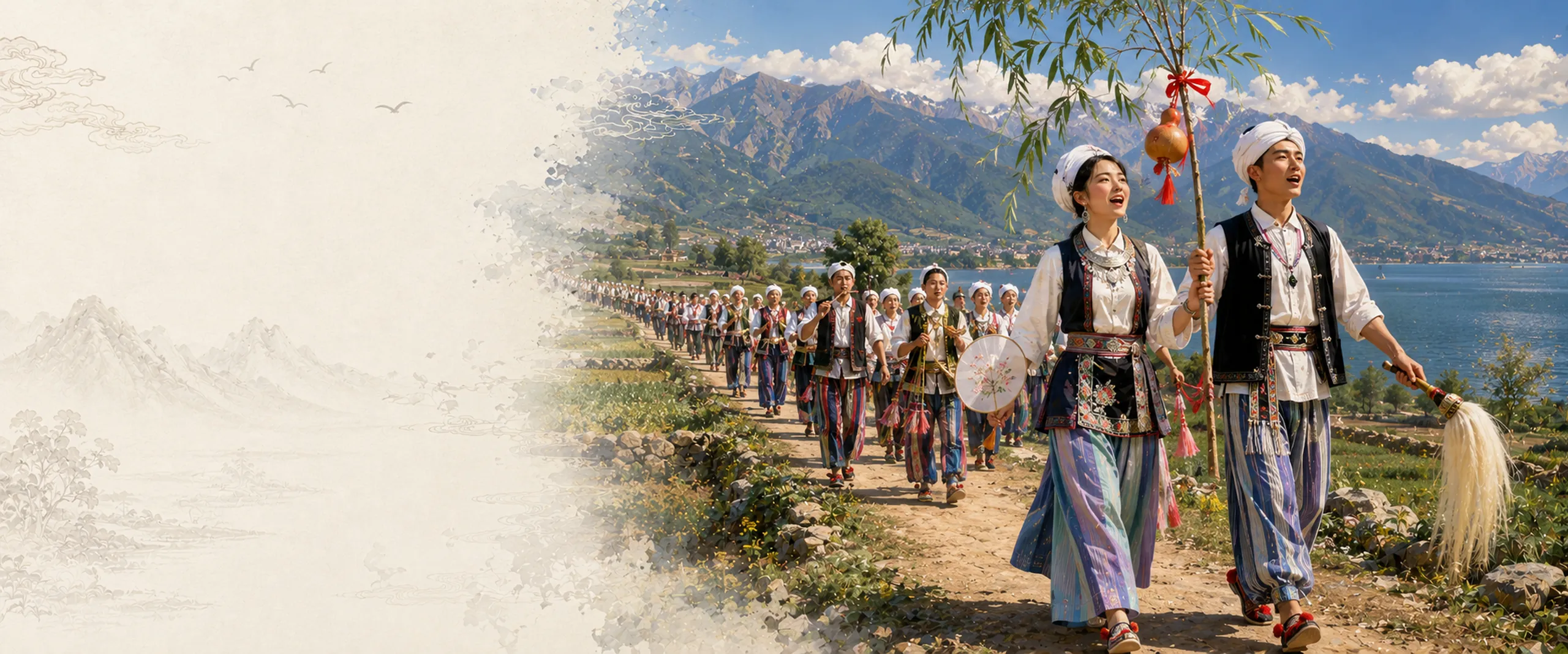
Other 白族Raosanling processions are organized by village, and each group forms a flowing “single-file long-snake formation.” The Raosanling dance ensemble includes four forms: the Zhishu Dance, Bawangbian Dance, Octagonal Drum Dance, and Shuangfeiyan Dance. The procession follows a fixed order. Two people carrying willow branches lead the way; one serves as the principal singer and the other provides humorous interjections. This is known as the “Zhishu Dance,” and is popularly called “Daboqu” or “Dabaiqu,” while the willow branch itself is also called “Dabo.” They are followed by several performers singing Bai tunes, playing short flutes, and whistling or blowing on leaves, collectively known in folk usage as “Hualiuqu.” Behind them comes the main body of the dance procession.
At the front of each group are an elderly man and woman—sometimes two men or two women—known as the Hualiu Tree Elders. They wrap their heads in large white headcloths, wear snow-white front-opening garments, brightly colored silk trousers, and multicolored sandals decorated with red pom-poms, creating a highly playful appearance. Together they support a willow branch from which hang a gourd and a strip of colored silk. The gourd symbolizes the maternal womb, while the red silk symbolizes menstrual blood. One holds a fly whisk, while the other carries a red fan or waves a white towel; as they dance, the two exchange lines of the Bai “Hualiuqu.”
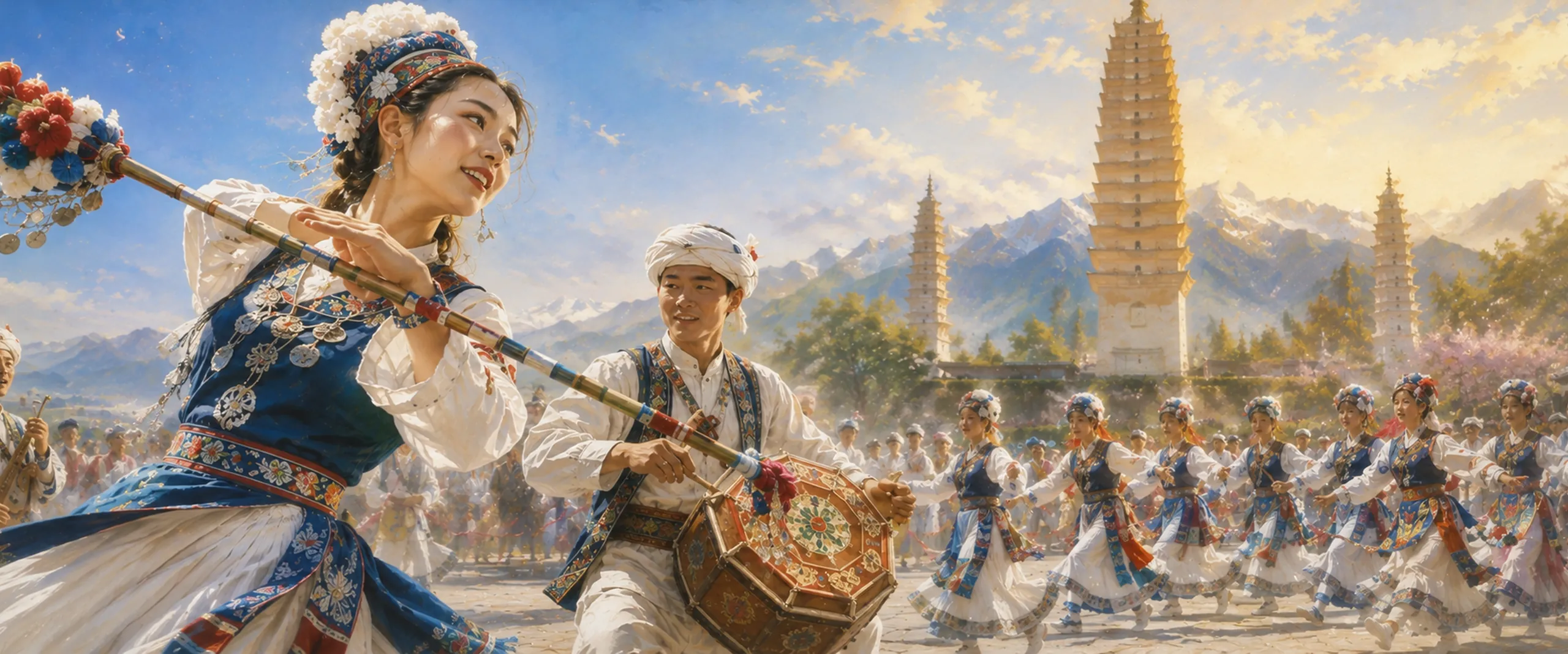
The different dances within the Raosanling ensemble are distinguished by their props. In the middle of the procession are male and female dancers performing with bawangbian, octagonal drums, and Shuangfeiyan props. At the rear is one performer blowing on a leaf, followed by several dozen women who both sing and dance while carrying fans or straw hats. Led by the Hualiu Tree Elders, the entire group forms a “single-file long-snake formation,” creating a spring outing involving tens of thousands of participants.
In the Bai language, each of these three dances has its own distinctive name. “Bawangbian” is called “Dawangbian” or “Dedidouxue”; the “octagonal drum” is called “Jinjigu”; and “Shuangfeiyan” is called “Shuangfeiyi.” Their movements are based on actions recorded in Qing-dynasty sources such as “臂旋转” and “拍身承击.” Through modern evolution, techniques such as wrist-turning and shoulder-swaying have been added, forming more than ten standardized movement patterns including “蛇蜕皮” and “心连心.”
Readers’ Comments
Calendar and traditional culture enthusiasts from around the world, sharing the same moon.
Sign in or register to join the conversation. Your comment account is created automatically the first time you use a connected account.
No comments yet
Share your thoughts with readers around the world.