Shibi
Other 羌族Connecting Heaven and Earth
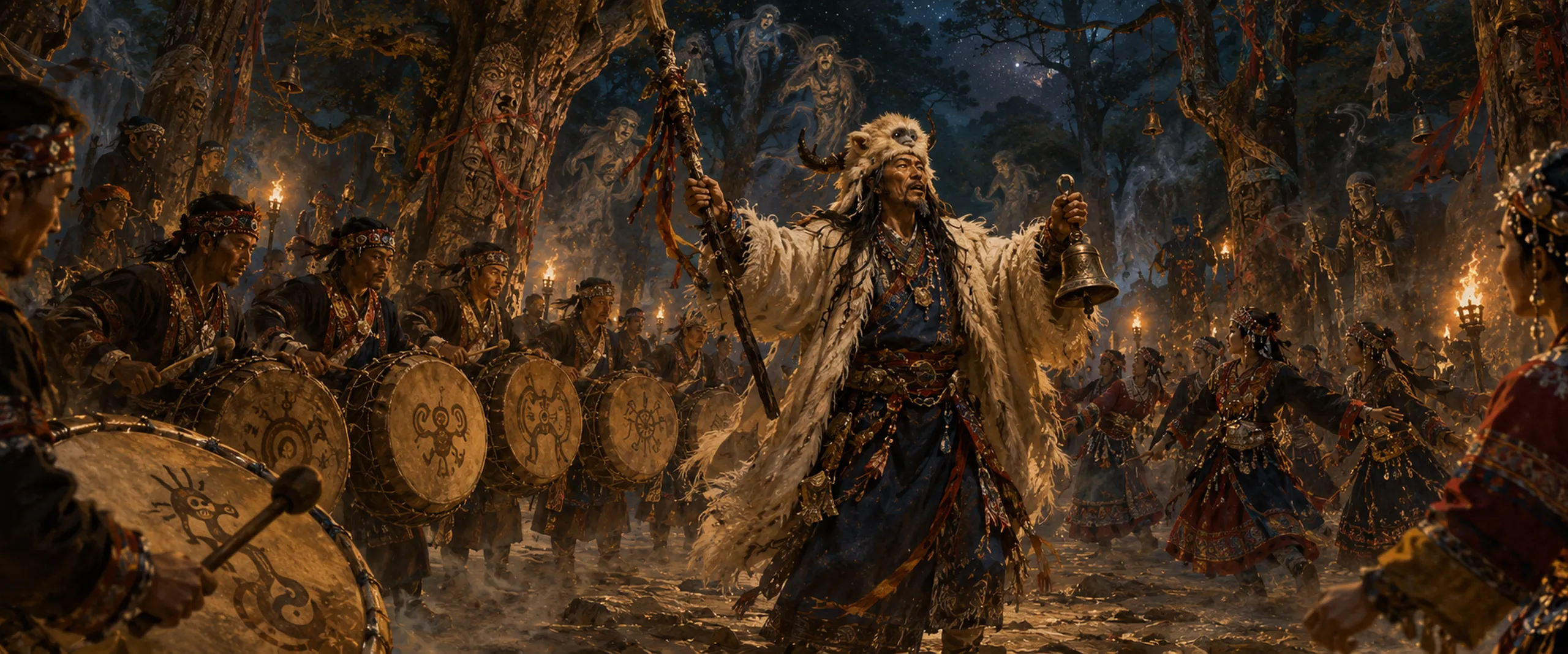
The Shibi—called “许” in the Qiang language, or respectfully “阿爸许”—are the most authoritative cultural figures and repositories of knowledge among the Qiang people, regarded as those who connect the worlds of life and death and communicate directly with the spirits. They are priests and physicians, shamans and chroniclers alike, and are the most important transmitters and guardians of Qiang culture. Through oral and heart-to-heart transmission, Shibi pass down the tradition of chanting sacred texts, and through a wide range of ritual activities they present ethnic literature, music, dance, and other forms while transmitting the contents of Shibi culture.
Because the Qiang people traditionally had no writing system of their own, the continuity of Qiang culture over thousands of years could only depend upon “oral and heart-to-heart transmission.” The ancient Shibi chants likewise rely entirely on transmission from one Shibi to another and have been preserved in the memories of successive generations of Shibi. Shibi culture is rich in content, encompassing the people’s philosophical thought, folk literature, ethnic music, ethnic dance, customs, and much more, and constitutes an important part of Qiang intangible cultural heritage. The Shibi plays a central role throughout the sacrificial ceremonies of Qiang New Year—the Qiang New Year “苏布士” activities proceed in sequence under the Shibi’s direction, and the Shibi primarily conducts a peace ritual consisting of nine chapters.
Shibi Chanting
Shibi chanting is the oldest oral tradition of the Qiang people. “释比的经书反映了羌族的历史、文化、生产、生活,是羌族的‘荷马史诗’和百科全书”. Rich in content, Shibi chants are an important part of Qiang cultural heritage. From the perspective of folk literature, Shibi chanting may be regarded as a form of rhythmic poetry.
The Qiang Shibi Cultural Corridor reminds visitors in precisely these words: “释比的经书反映了羌族的历史、文化、生产、生活,是羌族的‘荷马史诗’和百科全书”. Local gazetteers compiled in Maoxian in recent years likewise state that “由释比保存的古唱经,是羌民族传统文化中的核心部分”.
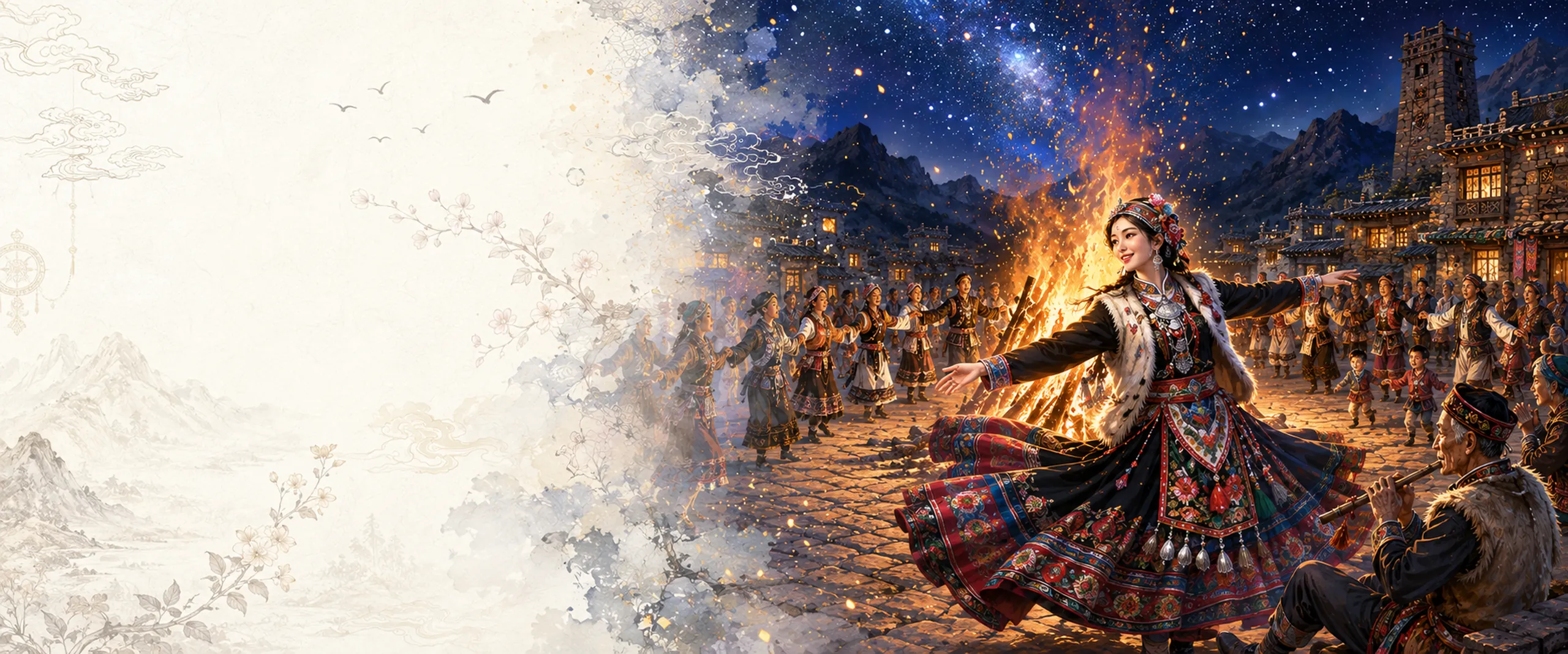
During Qiang New Year rituals, Shibi chant traditional Qiang epics, while people in the village sing, drink, exchange food, and celebrate to their hearts’ content. The epics 《木姐珠》 and 《羌戈大战》, recited through the voices of Shibi during Qiang New Year rituals, praise the ancestors and recount history, and through years of transmission have helped form a shared cultural identity. 《颂神禹》, known as one of the four great Qiang epics, comes from Shibi chanting and is a long narrative ritual song.
Of particular note, Shibi beat sheepskin drums while chanting the Qiang historical and cultural epics 《天路之歌》 and 《围阿诺》, which together extend to 16,000 lines. They are among the longest folk oral narrative-and-song epics still in circulation anywhere in the world today, and their content concerns the ancient social history of the Qiang people. This epic of tens of thousands of lines has been passed down from generation to generation among Qiang Shibi through oral and heart-to-heart transmission and is one of the most precious treasures of Qiang folk arts.
Although Chinese is also widely used in Qiang regions, Shibi chants are almost entirely performed in ancient Qiang language. This ancient linguistic medium has enabled Shibi chanting to preserve the most original cultural genes of the Qiang people and has made it the most sacred and irreplaceable part of Qiang New Year folk arts.
Readers’ Comments
Calendar and traditional culture enthusiasts from around the world, sharing the same moon.
Sign in or register to join the conversation. Your comment account is created automatically the first time you use a connected account.
No comments yet
Share your thoughts with readers around the world.