
Green-Leaf Banquet
OthersBasic Information
- Category: Communal banquet
- Popular Areas: Jingpo-inhabited areas of Dehong, Yunnan, especially Longchuan County
- Main Ingredients: Banana leaves, wild vegetables, grilled meats, leaf-wrapped roasts, pounded dishes, bamboo-tube rice, and others
- Also Known As: Jingpo Green-Leaf Banquet, Green-Leaf Long-Street Banquet
Historical Origins
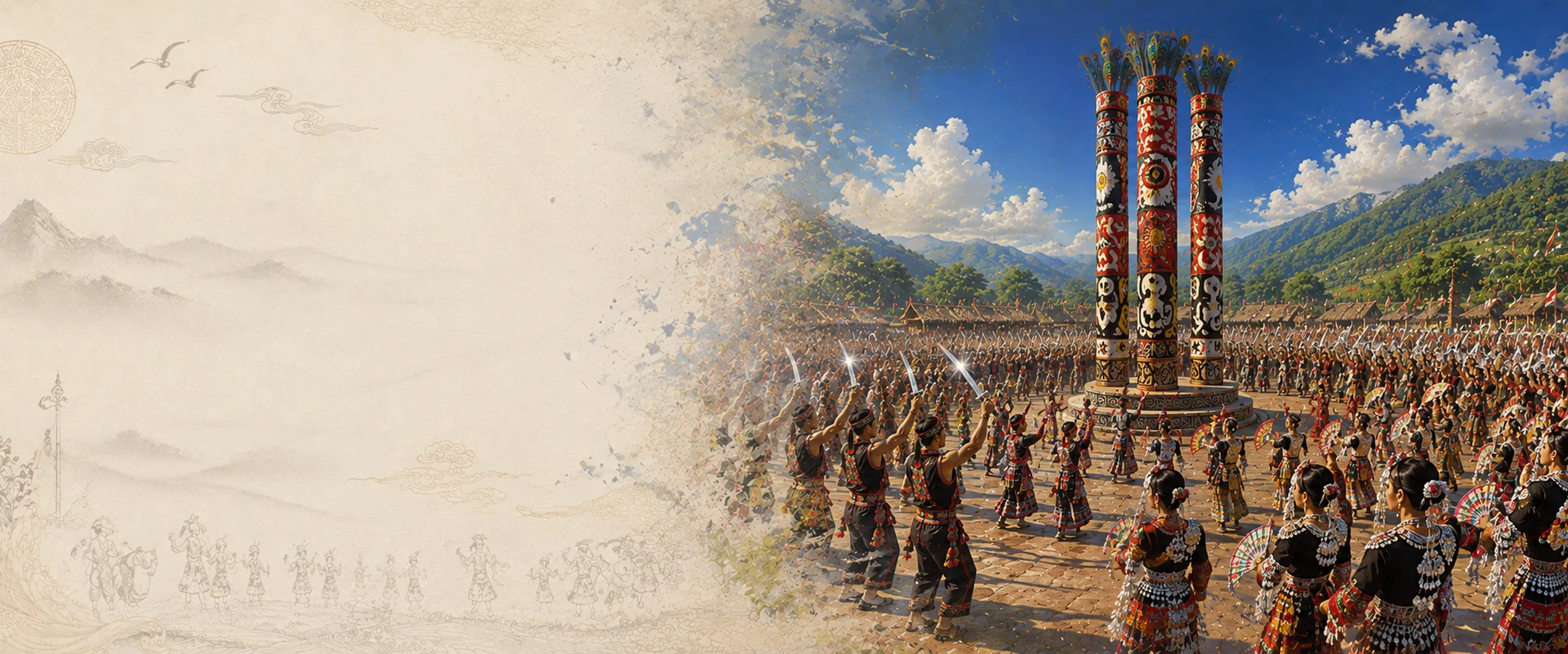
The Green-Leaf Banquet is the most iconic culinary form of Jingpo culture and an indispensable grand feast during the Munao Zongge Festival. Long celebrated in Jingpo mountain villages, it is prepared from the region’s exceptionally abundant natural plant and animal resources. More than a meal, the Green-Leaf Banquet is a culinary expression of Jingpo simplicity, local custom, and communal life. During Munao Zongge, the spectacular sight of a thousand people sharing a Green-Leaf Banquet returns year after year.
Its origins are closely tied to the mountain life of Jingpo ancestors. The Jingpo live primarily in the uplands of Dehong, Yunnan, where a complex mountainous environment helped shape a people known for boldness and resilience. In an age before conventional bowls, chopsticks, and tableware, their ancestors used what the mountains provided: broad leaves became plates, bowls, and even dining surfaces. From this emerged a distinctive culture of eating with green leaves. As a Jingpo folk song puts it: “山里的东西,绿的是菜,动的是肉”. Birds, beasts, fish, insects, flowers, grasses, fruits, and trees could all become part of the Jingpo search for food. The Green-Leaf Banquet is therefore one of the clearest embodiments of the Jingpo ecological ethic of “taking from nature while honoring nature,” and it is also regarded as the highest form of hospitality offered to distinguished guests.
Cultural Meaning
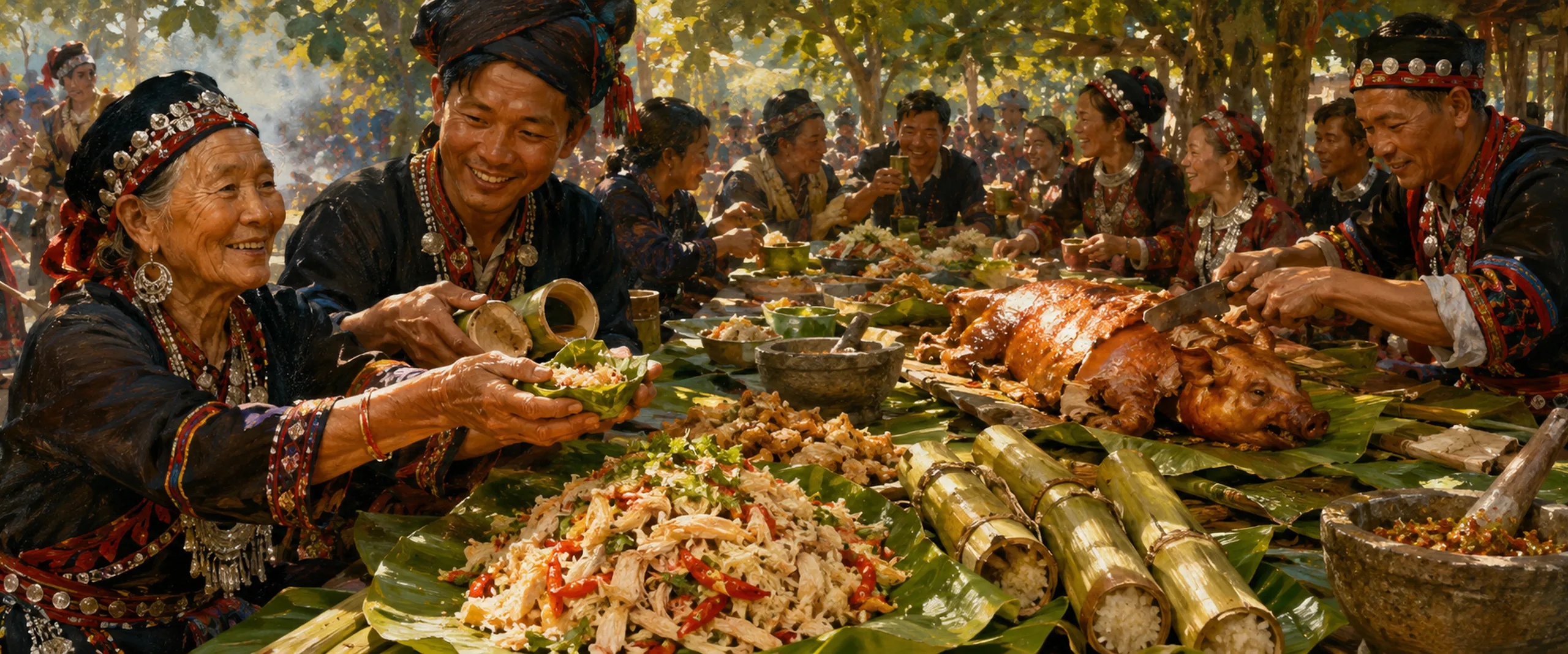
The dishes of a Green-Leaf Banquet can broadly be divided into pounded, roasted, boiled, chopped, fried, preserved, and cold-mixed preparations. Typical dishes include Jingpo Ghost Chicken, fish and meats roasted in green leaves, meat and fish cooked in bamboo tubes, kneaded wild vegetables, pounded dishes, boiled mountain delicacies and wild greens, and cold chicken preparations. Particularly characteristic foods include bamboo-tube roasted meat, green-leaf braised meat, fire-roasted fish, Jingpo Ghost Chicken, pounded dried beef, kneaded wild vegetables, cold-dressed eggs, and boiled vegetables. Staple foods include chicken congee and bamboo-tube rice.
At the Green-Leaf Banquet, banana leaves take the place of bowls, while wild vegetables, grilled meats, leaf-wrapped dishes, and pounded specialties cover the table. Everywhere one looks, there is green—even the table itself is laid entirely with leaves. Each broad leaf becomes a distinctive “plate,” filled with the mountain delicacies and wild flavors of Jingpo cuisine.
Each guest receives an individual portion at the Green-Leaf Banquet. Bowls and chopsticks are unnecessary. Diners simply wash their hands, open the green-leaf wrapping, and eat directly, returning in a vivid and uninhibited way to the elemental character of nature. Drinking cups and soup spoons are likewise fashioned from fresh bamboo and leaves. Everything is taken from nature and, symbolically, returned to nature. Rather than relying on conventional tableware, the Jingpo wash their hands and open the wrapped food directly before eating.
The Green-Leaf Banquet carries some of the highest ideals of Jingpo culinary culture. First, “returning to nature.” Leaves become table, plate, and bowl, recalling and honoring the mountain life of Jingpo ancestors. Second, “revering Heaven and cherishing nature’s gifts.” “山里的东西,绿的是菜,动的是肉”: birds, beasts, fish, insects, flowers, plants, fruits, and trees all fall within the Jingpo world of food, reflecting gratitude for and careful use of what nature provides. Third, “the highest hospitality.” The Green-Leaf Banquet is the most honored form of hospitality in Jingpo culture. During Munao Zongge, a thousand people sharing the feast together brings the Jingpo spirit of communal eating to its fullest expression. Fourth, “a thousand people at one feast.” The mass Green-Leaf Banquet is a collective ritual of celebrating auspiciousness, happiness, and a good harvest.
Readers’ Comments
Calendar and traditional culture enthusiasts from around the world, sharing the same moon.
Sign in or register to join the conversation. Your comment account is created automatically the first time you use a connected account.
No comments yet
Share your thoughts with readers around the world.