

Hand-Held Mutton
Meat & SeafoodBasic Information
- Category: Stewed meat
- Popular Areas: Throughout Inner Mongolia, especially Xilingol and Hulunbuir
- Main Ingredients: Free-range grassland sheep, preferably around two years old, salt
- Also Known As: Hand-pulled mutton, hand-grabbed mutton, Mongolian hand-held mutton
Historical Origins
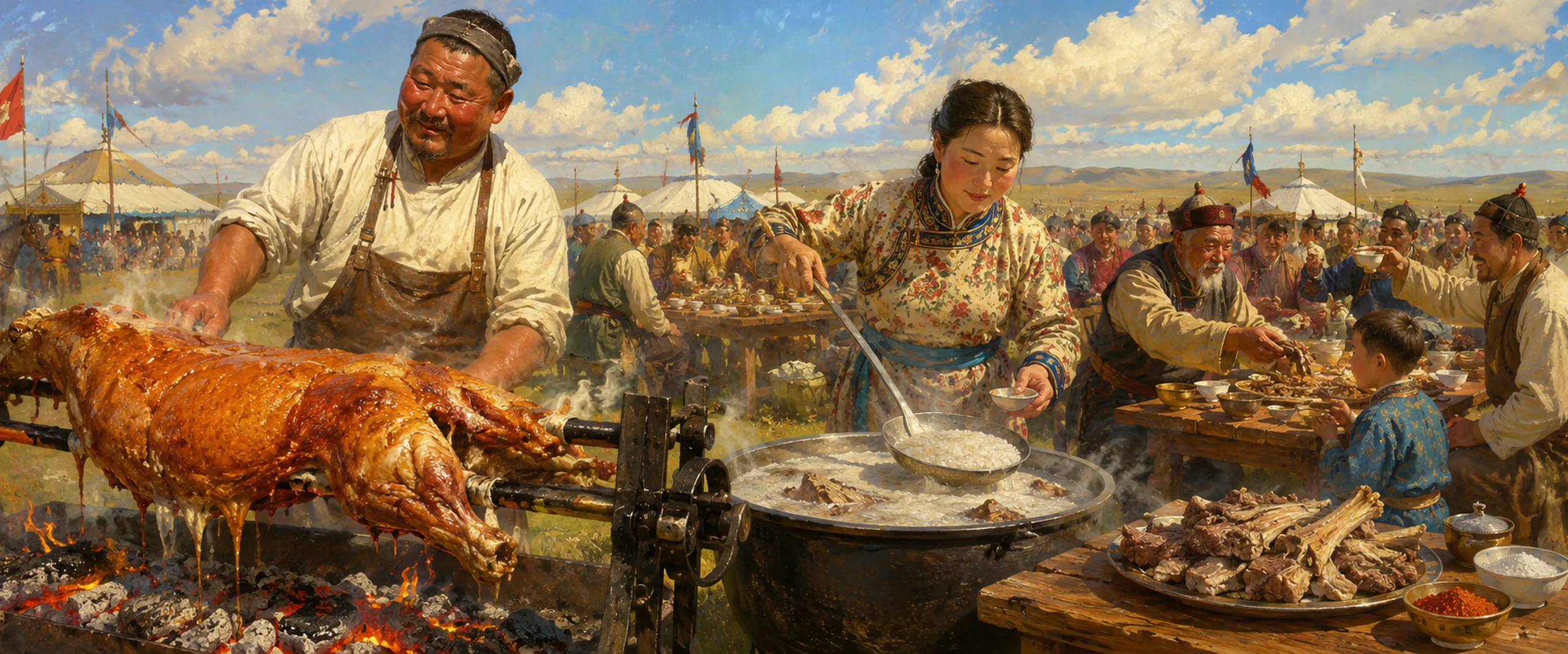
Hand-held mutton has been part of Mongolian food tradition for centuries, and it is said that only on the grasslands can one taste the dish in its most authentic form. Its name comes directly from the way it is eaten. After washing the hands, one grips the meat with one hand and holds a knife in the other, cutting every strip of flesh cleanly from the bone.
Yet hand-held mutton is more than a method of cooking or eating. It has become a cultural symbol, “holding within it our love for the grasslands, our reverence for our ancestors, and our enthusiasm for life.” At Naadam, it belongs to the festival’s most solemn forms of feasting. When guests arrive at home, it becomes one of the most sincere expressions of welcome. During holidays and festivals, it is associated with reunion.
Its history is inseparable from centuries of Mongolian nomadic life. Generation after generation lived by herding on the grasslands, where sheep were among the most important animals in pastoral society. Through long experience, Mongolian ancestors discovered that lamb needed little embellishment: simmered in plain water and seasoned with no more than a handful of salt, it could yield an exceptionally fresh and satisfying flavor. Such simplicity is not a lack of technique, but a distilled expression of the nomadic philosophy of “taking from nature while respecting nature.”
Cultural Meaning
Hand-held mutton is usually made from a well-fattened, tender sheep, often around two years old and raised on grassland pasture. The lamb is cut into several large pieces and placed in a pot of plain water to simmer. Seasoning remains deliberately restrained: only a small handful of salt is added, or the meat is salted shortly before being removed from the pot.
When cooked properly, the meat is done without becoming tough, tender and flavorful, neither overly gamey nor greasy, and easy to digest. Sheep raised by herders feed on wild onions and many varieties of grass; with meat shaped by this pasture, little more than water and salt is needed.
The way hand-held mutton is eaten is unmistakably grassland in character. A piece is lifted while still hot, or simply taken in the hand and brought straight to the mouth. The meat is chewed in broad, hearty mouthfuls; torn fibers mingle with rich juices before being swallowed with satisfaction.
If the richness begins to linger, a few bites of sour, salty pickled vegetables quickly refresh the mouth and stimulate the appetite. One may then raise a mug and drink a generous serving of baijiu or beer.
Hand-held mutton carries several layers of meaning within Mongolian food culture. First, “the highest hospitality.” It is among the most sincere dishes offered to guests. Second, “the flavor of the festival.” At Naadam, hand-held mutton belongs to the most solemn expressions of festive dining. Third, “the flavor of reunion.” During holidays and celebrations, it becomes a symbol of people coming together. Fourth, “the beauty of original flavor.” Simmering lamb in plain water with little more than salt is perhaps the clearest expression of confidence in the meat itself.
Simple Preparation
- Ingredients: 1,000 g grassland lamb ribs or leg, salt as needed
- Steps:
- Cut the lamb into large pieces, approximately 200–300 g each, and place them in a pot of cold water.
- Bring to a boil over high heat, skim off the foam, then reduce to medium heat and simmer for about 40–50 minutes, adjusting according to the size of the pieces.
- Add salt shortly before removing from the pot; alternatively, serve with salt for dipping.
- Eat while hot, holding the meat in the hand, accompanied by chive-flower sauce or garlic chili sauce.
Tip: Free-range grassland sheep are preferred for their fuller natural flavor. Add enough water at the beginning and do not replenish it during cooking. Hand-held mutton should be “cooked through without becoming tough”; control of the heat is essential.
Readers’ Comments
Calendar and traditional culture enthusiasts from around the world, sharing the same moon.
Sign in or register to join the conversation. Your comment account is created automatically the first time you use a connected account.
No comments yet
Share your thoughts with readers around the world.